Executive Overview
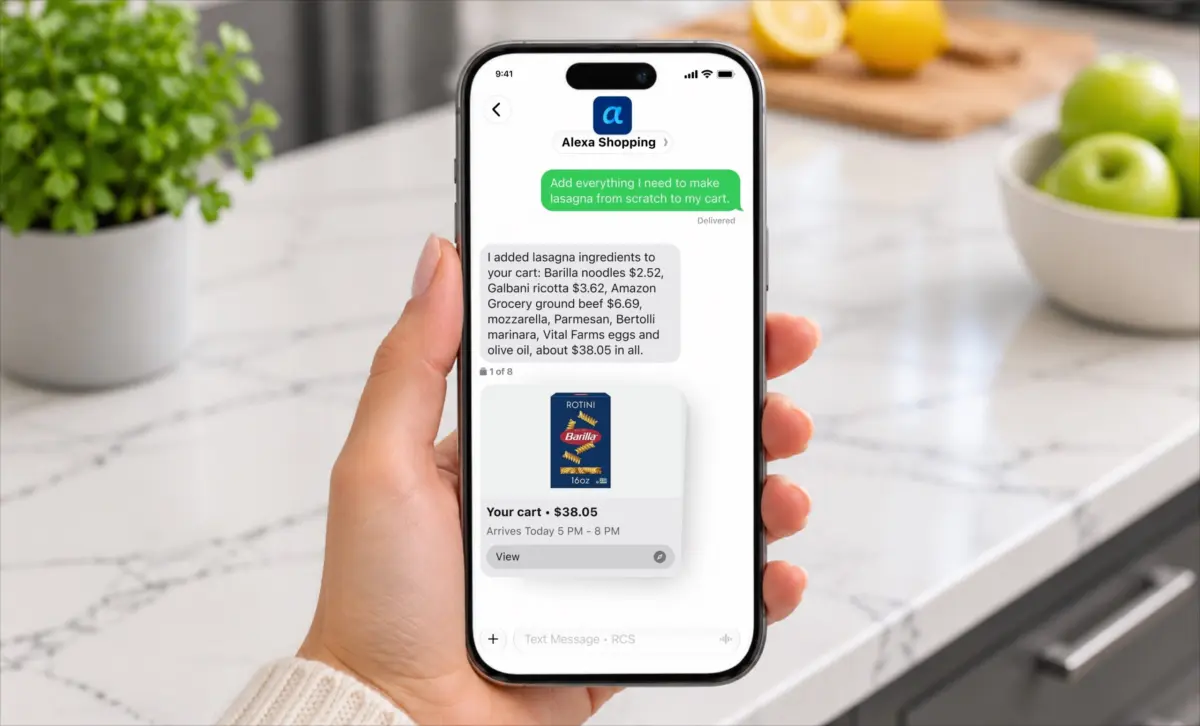
In a decisive move designed to consolidate its dominance over digital retail, Amazon on Friday unveiled a text-based shopping feature powered by its modernized Alexa artificial intelligence agent. The service allows select U.S. customers to conduct end-to-end e-commerce transactions directly through SMS and text messaging—spanning natural language product discovery, automated reordering, price tracking, visual search, and subscription management.
The debut of text-based Alexa shopping comes at a critical juncture for the e-commerce industry. Arriving just ahead of the peak holiday shopping season, the launch marks Amazon’s bid to capture the growing consumer demand for action-oriented AI agents. Crucially, the move follows a series of aggressive protective measures by Amazon to safeguard its valuable commerce data, including blocking third-party AI scrapers and agents such as Meta’s Muse from querying its site.
By transitioning Alexa from a voice-centric smart-home assistant into an omnipresent, text-based personal shopper, Amazon is defending its retail moat while pioneering a new front in ambient commerce. As third-party platforms struggle to monetize external AI traffic, Amazon’s proprietary approach establishes a direct line into consumer messaging threads, fundamentally altering how products are searched, recommended, and bought online.
Detailed Chronology: The Evolution toward Agentic Retail
The launch of Amazon’s text-based Alexa shopping agent is the culmination of a multi-year pivot toward agentic AI—autonomous systems capable of executing complex workflows on behalf of users. The timeline leading up to this deployment reflects both rapid technical iteration and intense platform competition.
+-----------------------------------------------------------------------------------+
|                                 TIMELINE OF EVENTS                                 |
+-----------------------------------------------------------------------------------+
| Sept 2026   │ Amazon blocks Meta's Muse AI agent from querying its platform.      |
|             │ DoorDash launches proprietary text-ordering AI assistant.           |
+-------------+---------------------------------------------------------------------+
| Oct 29, 2026│ Amazon upgrades Alexa core: adds list management, subscription      |
|             │ tracking, and dynamic delivery instruction controls.                |
+-------------+---------------------------------------------------------------------+
| Oct 30, 2026│ DoorDash reveals third-party AI agents placed only "hundreds" of    |
|             │ orders, reinforcing need for direct first-party text tools.         |
+-------------+---------------------------------------------------------------------+
| Nov 6, 2026 │ Amazon officially launches text-based Alexa shopping agent in U.S.  |
|             │ opens public waitlist (amazon.com/text-alexa-shopping).             |
+-----------------------------------------------------------------------------------+
September 2026: Guarding the Retail Data Moat
The competitive framework for text-based shopping crystallized when Amazon moved to block Meta’s flagship AI agent, Muse, from querying Amazon.com’s database. As general-purpose AI platforms sought to act as intermediary shopping assistants, Amazon recognized the existential risk of losing direct consumer contact, search telemetry, and advertising revenue. By severing Meta’s access, Amazon sent a clear market signal: commercial interactions within its catalog would remain strictly under its own technological umbrella.
Simultaneously, alternative commerce networks began experimenting with text interface models. Delivery platform DoorDash launched its own proprietary SMS ordering agent in late September, acknowledging that messaging apps provided higher user retention and lower friction than dedicated mobile applications or third-party web scrapers.
Late October 2026: Laying the Technical Infrastructure
On October 29, 2026, Amazon executed a massive underlying upgrade to Alexa’s core transactional capabilities. The enhanced system introduced sophisticated tooling designed specifically for retail execution, including expanded subscription tracking, automated customer-support routing, dynamic list management, and the ability to update localized delivery instructions in real time.
A day later, DoorDash disclosed a telling metric: third-party AI agents had processed only several hundred transactions across its platform since launch. The figure underscored a growing industry reality—external generic agents lacked the deep API integration, trust, and execution mechanics necessary for transactional scale. For platforms like Amazon and DoorDash, building native, direct-to-consumer text interfaces was no longer optional; it was mandatory.
November 6, 2026: Official Launch of Text-Based Alexa Shopping
On Friday, November 6, 2026, Amazon formally launched its text-based Alexa shopping assistant. Rolled out initially to select U.S. customers via targeted invitation, the system provides a continuous, text messaging interface through which users can issue complex shopping queries, receive curated recommendations, upload photos for visual matching, and complete purchases using 1-Click execution. Uninvited users were directed to a public waitlist (amazon.com/text-alexa-shopping), with Amazon promising broader availability in subsequent weeks ahead of Black Friday.
Supporting Context & Technical Metrics
Shift from Voice to Text-Based AI Interfaces
For over a decade, Amazon positioning Alexa as a home voice-assistant yielded mixed results for transaction execution. While voice excels at low-stakes utilities (setting timers, playing music, checking weather), it faces severe friction when applied to complex commerce:
- Lack of Visual Feedback: Voice interfaces cannot easily display product variants, customer reviews, or price variations.
- Asynchronous Interaction: Voice requires real-time focus, whereas text messaging allows users to pause, evaluate, and reply at their convenience.
- High Transacting Friction: Dictating delivery preferences or payment confirmations out loud creates privacy concerns and security bottlenecks.
By transferring Alexa’s intelligence into native text threads, Amazon resolves these systemic limitations while retaining natural language processing.
+-----------------------------------------------------------------------------------+
|                        INTERFACE COMPARISON FOR COMMERCE                          |
+-----------------------------------------------------------------------------------+
| Feature                      │ Voice Assistant (Echo) │ Text-Based AI (SMS/Text)  |
+------------------------------+------------------------+---------------------------+
| Visual Inspection            │ Non-existent/Limited   │ Rich thumbnails & links   |
| Asynchronous Shopping        │ Low                    │ High                      |
| Multimodal Input (Photos)    │ No                     │ Yes (MMS / Direct Upload) |
| Friction for Complex Queries │ High                   │ Low                       |
| User Privacy in Public       │ Low                    │ High                      |
+------------------------------+------------------------+---------------------------+
Core Features & Technical Mechanics
The text-based Alexa shopping agent incorporates several foundational capabilities:

- Multimodal Visual Search: Users can text photos of physical products, street outfits, or furniture to the agent. Using computer vision models integrated into Amazon’s visual search index, Alexa identifies the exact item or generates list suggestions for visual matches available on the platform.
- Contextual Memory & Long-Term Personalization: Over time, the agent synthesizes purchase history, brand preferences, sizing profiles, and recurring order cycles. If a user texts "I need more dog food," Alexa infers the exact brand, bag size, and flavor previously ordered without requiring precise parametric inputs.
- Autonomous Cart & Checkout Management: Users can command the agent to hold items in their cart, apply eligible promotional coupons, monitor price changes, or complete immediate purchases using stored billing and shipping defaults.
- Post-Purchase Support Tracking: Beyond purchasing, users can query delivery status ("Where is my package?"), alter delivery notes ("Leave behind the gate"), or modify recurring Subscribe & Save schedules directly through the text conversation.
Official Statements & Industry Reactions
Amazon’s rollout underscores a broader industry shift toward owned AI channels and zero-click commerce environments.
Corporate Stance & Strategy
In releasing the feature, Amazon emphasized meeting consumers within their existing daily communication habits, presenting the text agent as a frictionless extension of the shopping experience.
"Select U.S. customers will get a text asking them to enable the shopping feature. Those with access can text Alexa to shop on Amazon using natural language queries, spanning everything from searching for items, adding them to cart, and purchasing."
— Amazon Corporate Statement
Company officials noted that the continuous feedback loop inherent in messaging will accelerate Alexa’s contextual awareness, enabling hyper-personalized discovery cycles over time.
The Walled Garden Debate
Industry analysts view the simultaneous launch of Alexa Text Shopping and the blocking of Meta’s Muse as a textbook walled-garden maneuver. By walling off its product catalog, price history, and inventory status from third-party LLMs like Meta’s Muse or OpenAI’s ChatGPT, Amazon ensures that high-intent commercial prompts remain monetizable within its own ecosystem.
Independent retail analysts point out that if consumer product search shifts from traditional search bars to conversational text agents, controlling the underlying assistant becomes as critical as controlling the search engine was in the web era.
Future Outlook: The Battle for Ambient Commerce
The introduction of text-based Alexa shopping signals a shift in digital retail: the transition from destination commerce (visiting a site or app) to ambient commerce (completing transactions wherever messaging occurs).
Key Trends Shaping the Next Phase
-
Monetization of Conversational Search:
As shoppers migrate from traditional search bars to text-based AI threads, Amazon will likely introduce sponsored product placements within Alexa’s conversational responses. Brands may soon bid for top-ranked placement in conversational AI recommendations much as they do for Amazon Search ads today. -
Integration Across Messaging Ecosystems:
While the initial rollout utilizes standard SMS/MMS protocols and direct app messaging links, future expansions could see Alexa integrating into wider RCS (Rich Communication Services) channels, Apple’s iMessage framework, or WhatsApp, expanding Amazon’s reach into international markets where standard SMS is less dominant. -
Autonomous Agent-to-Agent Commerce:
As personal consumer agents mature, the industry is moving toward a framework where a user’s personal agent negotiates with a merchant platform’s agent. By establishing Alexa as a native text endpoint, Amazon ensures it dictates the terms, transaction standards, and data governance for these automated exchanges.
Amazon’s text-based Alexa agent is more than a pre-holiday feature launch; it is an infrastructure play designed to redefine conversational commerce. By blending visual search, deep personalization, and single-text purchasing within a closed platform, Amazon is taking control of the AI commerce paradigm—setting the stage for a dramatic reshuffling of consumer buying behavior in 2027 and beyond.