Executive Overview
It is late September, and US cinemas have just unlocked their doors to Primetime, a startling, hyper-stylized narrative feature directed by 30-year-old filmmaker Lance Oppenheim. Speaking over a video call from Los Angeles, Oppenheim is riding a wave of nervous anticipation. Word has just reached him that Chris Hansen—the iconic, suited television host whose real-life crusade against online predators inspired the film—has just finished watching it.
“Chris Hansen just watched the film,” Oppenheim says, a mixture of amusement and anxiety breaking through his composure. “He’s doing a live stream at 4 PM on his social media. I’m so curious about what he’s going to say.”
What Hansen says, as it turns out, is characteristically blunt. Having previously rejected an offer from distributor A24 to view an early cut at their offices, Hansen had dismissed the project as “an insult” and “a complete work of fiction attached to a real name.” Hours after our initial interview, Hansen takes to his YouTube channel to review the picture, evaluating Robert Pattinson’s performance with a harsh “D” grade and quipping, “Tough grade, but I’m kind of the only guy that counts.” Responding to Oppenheim’s description of the film as a love letter, Hansen dryly notes: “If that’s a love letter, I’d hate to get a poisoned pen letter from this director.”
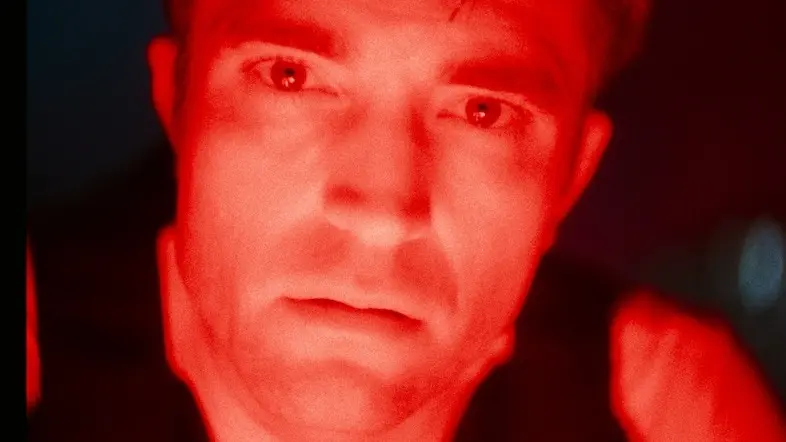
Yet, this friction is precisely what Oppenheim courted. Rather than pursuing a safe, conventional biopic that required the subject’s direct blessing or creative control, the director sought to construct something phantasmagorical. Primetime—written by Ajon Singh and starring Robert Pattinson as a manic, wired incarnation of Hansen—operates closer to a fever dream than a standard dramatization. It is an exploration of the manufactured reality, the high-stakes television ratings wars, and the grim human toll of NBC’s culturally seismic reality series To Catch a Predator.
By blending the lurid aesthetics of 1970s and 80s thrillers with the uncanny psychological weight of modern true crime, Primetime forces audiences to confront an uncomfortable question: How do we process the collective entertainment derived from human tragedy? As the film opens in UK cinemas, this deep-dive examination explores its origins, its stylistic triumphs, and the complicated cultural legacy it interrogates.
Detailed Chronology: From To Catch a Predator to Cinematic Mythmaking
The Rise of a Televised Inquisition
To understand the manic energy driving Primetime, one must return to the mid-2000s television landscape. From 2004 to 2007, To Catch a Predator—a segment and eventual spin-off for NBC’s Dateline—was an undeniable pop-cultural juggernaut. Hosted by Chris Hansen, the show deployed a repeatable, high-tension formula: decoy actors posing as underage youths on internet chat rooms arranged physical meetings with adult men. Upon arriving at a designated suburban house, the targets were greeted by a youthful-looking decoy before being dramatically ambushed by Hansen and an embedded camera crew.
The psychological impact on the targets was immediate and total. Within moments, they realized their reputations were utterly incinerated and their humiliation would be broadcast into millions of American living rooms. At the height of its cultural footprint, the show was mainstream enough that Hansen became a ubiquitous fixture of late-night television. Jimmy Kimmel famously dubbed the show “Punk’d for paedophiles,” and Hansen even parodied his own gravitas by playing himself on sitcoms like 30 Rock.
The Genesis of Primetime
Primetime traces this meteoric rise and its eventual, tragic collapse. Inspired by a comprehensive 2009 Esquire article, the film captures the fierce corporate pressures behind the show’s creation. In the narrative, Hansen is directly challenged by NBC executive Jeff Zucker (playing himself) to defeat the ratings juggernaut Lost. Alongside this corporate chess match is a tense power struggle between Hansen and his fiercely protective producer, Andie, brilliantly portrayed by Merritt Wever.
However, the glossy veneer of prime-time triumph came crashing down in November 2006. Bill Conradt, an assistant district attorney in Texas, committed suicide with a firearm as police and Hansen’s camera crew approached his home during a sting operation. This dark milestone ultimately catalyzed the show’s cancellation and cast a long, complex shadow over its legacy.
The Path to the Screen
Lance Oppenheim’s route to narrative filmmaking is rooted in his background as a distinctive documentary director, known for esoteric, observational works like Spermworld, Ren Faire, and Some Kind of Heaven. The seeds of Primetime were planted somewhat serendipitously. Following the release of Spermworld, Oppenheim’s wife purchased a Cameo video from Chris Hansen to congratulate her husband.
While subsequently discussing a different project with Robert Pattinson, Oppenheim showed the actor the Cameo video. The exchange caught fire, leading to Pattinson being handed the script for Primetime.
“I saw a path to creating something phantasmagorical, almost honouring the spirit of movies like Body Double or JFK,” Oppenheim reflects. Rather than aiming for historical realism, the director wanted to examine the mythology. “It’s like creating a superhero movie where I have the guy who plays Batman playing Chris Hansen.”
Supporting Context & Metrics: Aesthetics, Tone, and Ethical Questions
Mimicking the Id of Television
Visually and tonally, Primetime refuses to play by conventional rules. Oppenheim enlisted cinematographer David Bolen—a key collaborator from his documentary work—to drench the film in a murky, unsettling blue reminiscent of the CRT monitors that defined the era. Oppenheim describes the color palette as feeling like “being lost inside a CRT monitor.”
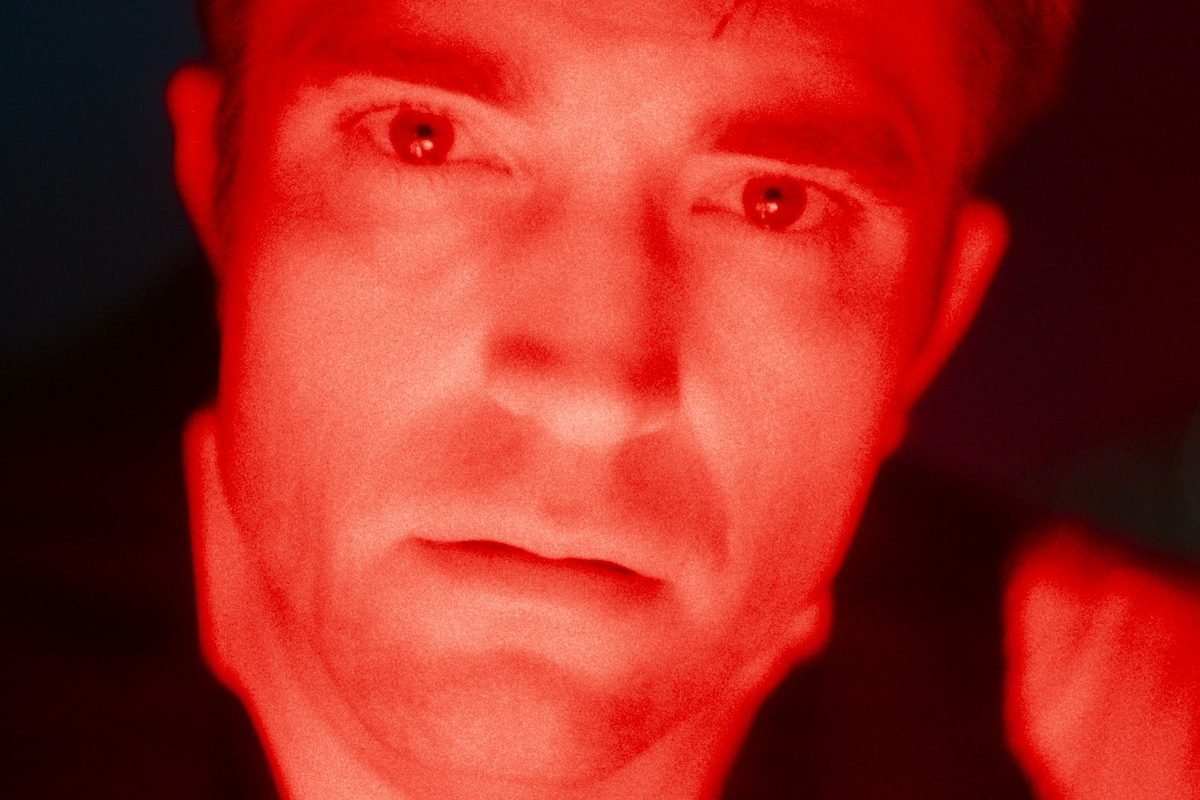
The performances match this feverish intensity. Skyler Gisondo and musician Phoebe Bridgers—who also contributes a haunting vocal performance over the end credits—are cast as the decoys. Bridgers, in particular, commands the screen with dark comedic timing, effortlessly convincing middle-aged men of her adolescent identity simply by pulling down a baseball cap and lowering her vocal register.
Pattinson, meanwhile, leans fully into the slimy, hyper-driven desperation of a media personality running on fumes. Oppenheim recalls giving his lead actor a direct note during the second week of production: “You’ve got the mannerisms and voice down, but you’re also doing Dracula and Jerry Maguire.”
Navigating the Ethical Tightrope
A narrative built around a premise this lurid inevitably invites intense ethical scrutiny. Is it morally permissible to find dark amusement in a story that ultimately culminates in a real person’s suicide?
Oppenheim is acutely aware of the tightrope he is walking. “If there’s comedy to be found in the movie, it’s located in how this group were catching predators like Pokémon,” the director explains. “I never wanted the film to come off as glib. To me, it’s mimicking how the show felt. I wanted to depict the suicide in a way that wasn’t gratuitous, but so we could experience the emotional toll on the people who created it.”
Even today, Hansen remains unapologetic regarding Bill Conradt’s death, having gone on record stating that he slept soundly on the night it occurred. Yet, Oppenheim’s film probes the psychological fallout of living in an environment where one spends more time confronting the darkest fringes of humanity across a kitchen island than interacting with one’s own family.
“I see Chris Hansen as a journalist and entertainer—but also an artist,” Oppenheim says. “He created this manufactured reality that’s so odd and particular… I wanted to capture this state of mind of moving 1,000 miles a minute, and you’ve been handed everything you ever dreamed, and it slowly turns into a nightmare. The movie operates in this register that’s almost pure id.”
Official Statements and Industry Perspectives
The release of Primetime intersects intriguingly with a broader cultural re-examination of the mid-2000s true-crime boom. Notably, the film shares thematic space with Predators, an incisive 2025 documentary directed by David Osit, which covers Conradt’s suicide using raw archival footage, interviews decoy actors, and explores the phenomenon of online copycats.
Oppenheim admits he was initially disheartened when he learned Osit was tackling the same subject. “Before the Primetime script got in my hands, I heard David was making a documentary about Chris Hansen. I was a little bummed, because I thought, ‘David’s going to absolutely body that thing. He’s such a great filmmaker. He got there first.’”
Upon viewing Predators during postproduction, however, Oppenheim recognized that Osit had approached the material from an entirely different angle—one focused on the fundamental unknowability of Hansen himself, a man seemingly insulated from self-reflection regarding the darker psychological machinery of his creation. Osit ultimately provided feedback on an early cut of Primetime, cementing a mutual respect between the two filmmakers.
For Oppenheim, the whirlwind release schedule—featuring a surprise Telluride screening of You Can See Everything, a three-hour documentary about Elizabeth Holmes co-directed with Nathan Fielder—has left him in a state of suspended animation. “I feel like I’m floating,” he admits. “I’m also anxious, generally. I overthink everything.”
Future Outlook
As Primetime rolls out internationally—landing in UK cinemas on October 30—its ultimate legacy will likely mirror the polarizing nature of its subject matter. It is a film designed to provoke, disorient, and challenge audiences who consumed the original broadcasts as late-night guilty pleasures.
Whether Chris Hansen’s dismissive “D” grade and public critiques will dampen audience enthusiasm remains to be seen, but history suggests that controversy only fuels the mythos. In capturing the kinetic, manic energy of a man who treated suburban living rooms like a cinematic battleground, Oppenheim has crafted a cinematic artifact that is as hypnotic as it is disturbing.
Primetime does not offer neat moral resolutions. Instead, it invites us to peer directly into the blue glow of the cathode-ray tube, where entertainment, justice, and tragedy blur into a singular, unforgettable American nightmare.