Executive Overview
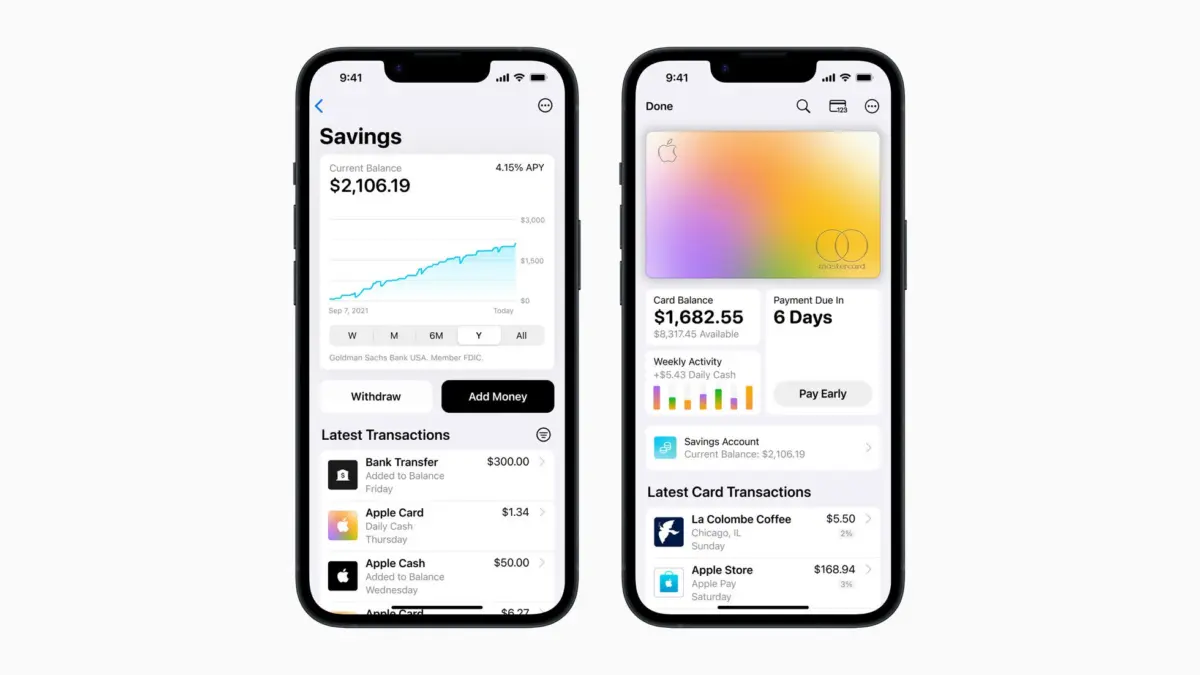
In a strategic maneuver that further blurs the lines between Silicon Valley and traditional Wall Street, Apple—in partnership with banking titan Goldman Sachs—officially launched a high-yield savings account tailored specifically for Apple Card holders. Announced on a Monday morning, this new financial instrument allows users to automatically deposit their "Daily Cash" rewards into an interest-bearing account boasting an Annual Percentage Yield (APY) of 4.15%.
While the headline-grabbing figure is designed to attract everyday consumers looking to optimize their personal finances, the broader implications of the launch signal a fundamental shift in how technology conglomerates approach consumer banking. By offering an APY that dwarfs the national average—and towers over the meager 0.01% APY offered by legacy institutions like Bank of America—Apple is not merely providing a perk for loyal device users. It is executing a calculated play to capture primary banking relationships, disintermediate traditional financial institutions, and cement the iPhone as the undisputed hub of the modern consumer’s financial life.
Beyond the automated routing of cashback rewards, the service empowers users to transfer external funds directly from linked bank accounts up to a Federal Deposit Insurance Corporation (FDIC)-insured limit of $250,000. This flexibility transforms the Apple Wallet from a digital billfold into a legitimate wealth-management staging ground. Coming on the heels of the tech giant’s "Buy Now, Pay Later" (BNPL) rollout, the high-yield savings account demonstrates that Apple’s ambitions in the fintech sector are compounding rapidly. As regulatory scrutiny mounts and traditional banks scramble to stem the outflow of deposits, Apple’s latest offering serves as a masterclass in ecosystem lock-in, marrying high-yield incentives with frictionless user experience.
Detailed Chronology
To fully understand the gravity of Apple’s entry into consumer savings, it is necessary to trace the deliberate, multi-year evolution of the company’s financial services strategy. Apple has long recognized that hardware sales, while lucrative, face eventual market saturation. Consequently, the company has pivoted aggressively toward services, leveraging its installed base of over two billion active devices to generate recurring, high-margin revenue.
The Genesis: Apple Pay and the Wallet App
The foundational architecture for Apple’s financial ecosystem was laid in 2014 with the introduction of Apple Pay. Initially viewed by traditional banks as a mere tokenized conduit for credit and debit transactions, Apple Pay gradually accustomed consumers to the idea of leaving physical wallets at home. Over the ensuing half-decade, Apple steadily expanded this real estate, adding transit cards, driver’s licenses, student IDs, and event tickets to the iOS Wallet app.
The Hardware-Fintech Synergy: Apple Card
The critical turning point arrived in August 2019 with the debut of the Apple Card, launched in collaboration with Goldman Sachs and backed by Mastercard. Designed to integrate deeply with the iPhone’s hardware and software, the Apple Card introduced a novel value proposition: instant cashback, dubbed "Daily Cash," paid out immediately upon transaction clearance rather than at the end of a monthly billing cycle.
While financial analysts initially questioned Goldman Sachs’ willingness to underwrite subprime risk and absorb high delinquency rates—particularly given the card’s lack of annual, late, or foreign transaction fees—the partnership provided Apple with the regulated banking partner it desperately needed. Because Apple is not a chartered bank, it relies on Goldman Sachs to handle the heavy regulatory lifting, underwriting, and compliance, while Apple maintains total control over the user interface, customer experience, and branding.
The BNPL Precursor
Just weeks prior to the launch of the high-yield savings account, Apple continued its financial expansion by introducing "Apple Pay Later." This built-in Buy Now, Pay Later service allows consumers to split purchases into four equal payments spread over six weeks, entirely free of interest and late fees. By stepping directly into the short-term lending space, Apple positioned itself in direct competition with established fintech heavyweights such as Klarna, Affirm, and Block’s Afterpay. The rollout of BNPL established a crucial behavioral loop: users were encouraged to finance purchases through Apple, use the Apple Card to earn Daily Cash, and manage their repayment schedules seamlessly within the Wallet app.
The Savings Account Debut
The logical culmination of these preceding steps arrived on a Monday in April, when Apple and Goldman Sachs formally activated the high-yield savings account feature. By allowing users to route their Daily Cash directly into a 4.15% APY savings vehicle—while simultaneously opening the floodgates for external personal deposits—Apple completed the transactional lifecycle. Consumers could now earn, spend, borrow, and save entirely within the walled garden of the iOS ecosystem.
Supporting Context & Metrics
To contextualize the competitive threat Apple poses to legacy financial institutions, one must examine the macroeconomic environment and the stark disparities in retail banking yields.
The Macroeconomic Backdrop
For over a decade following the 2008 financial crisis, interest rates hovered near historic lows, rendering traditional savings accounts virtually useless as wealth-building tools. However, as the U.S. Federal Reserve aggressively raised benchmark interest rates to combat inflation throughout 2022 and 2023, the cost of capital soared. While online-only neobanks and fintech startups quickly passed these higher yields on to consumers to capture liquidity, traditional brick-and-mortar institutions dragged their feet.
Major legacy banks continued to offer near-zero yields (such as Bank of America’s standard 0.01% APY) on traditional savings accounts, banking on customer inertia and convenience to retain trillions of dollars in low-cost deposits. Apple’s 4.15% APY slices through this consumer inertia, offering a rate that sits comfortably above the national average for high-yield savings accounts (which hovered around 3.5% to 4.5% during the launch period) while providing an interface that requires zero friction to navigate.
Comparative Yield Analysis Table
| Financial Institution / Product | Annual Percentage Yield (APY) | Account Minimums | FDIC Insured | Primary Interface |
|---|---|---|---|---|
| Apple Savings (via Goldman Sachs) | 4.15% | $0 | Yes (up to $250k) | iOS Wallet App |
| Bank of America (Regular Savings) | 0.01% | $25 (Monthly fee waivers apply) | Yes | Branch / App / Web |
| Chase Bank (Savings) | 0.01% | $300 (Monthly fee waivers apply) | Yes | Branch / App / Web |
| Marcus by Goldman Sachs | ~4.15% – 4.30% | $0 | Yes | Web / App |
| Ally Bank (Online Savings) | ~4.00% – 4.25% | $0 | Yes | Web / App |
The Mechanics of Daily Cash and External Deposits
The genius of the Apple Savings product lies in its automated compounding mechanics. Under the legacy system, Daily Cash accumulated in a non-interest-bearing Apple Cash card, functioning primarily as digital pocket change to be spent on future transactions or transferred manually to an external bank account.
With the new integration, users can toggle a single switch in their iOS settings to route all future Daily Cash directly into the Goldman Sachs-backed savings account. Given that the Apple Card offers 3% back on Apple purchases and select partner merchants (such as Uber, Walgreens, and ExxonMobil), 2% back on all Apple Pay transactions, and 1% back on physical card swipes, heavy users can accumulate hundreds of dollars in passive cashback annually.
More importantly, the ability to deposit external funds up to the $250,000 FDIC insurance limit transforms the feature from a novelty cashback receptacle into a serious competitor for emergency funds and liquid cash reserves. Users can initiate ACH transfers from external checking accounts with a few taps on their iPhone screen, bypassing the archaic authentication hurdles, branch visits, and paperwork traditionally associated with opening high-yield accounts at online banks.
Official Statements
The corporate positioning surrounding the launch emphasized user empowerment, financial wellness, and the seamless integration of services—core tenets of Apple’s overarching marketing philosophy.
In an official corporate statement released alongside the announcement, Jennifer Bailey, Apple’s vice president of Apple Pay and Apple Wallet, articulated the company’s strategic vision:
"Our goal is to build tools that help users lead healthier financial lives, and building Savings into Apple Card in Wallet enables them to spend, send, and save Daily Cash directly and seamlessly — all from one place."
Bailey’s framing is intentional. By casting the feature as a tool for "healthier financial lives," Apple positions its foray into personal finance not as an aggressive corporate land grab, but as a public service designed to rescue consumers from the low yields of traditional banking.
Meanwhile, Goldman Sachs—operating largely behind the scenes as the chartered financial institution holding the deposits—found itself playing a crucial enabling role. While Goldman has faced internal friction and strategic pivots regarding its broader consumer lending ambitions (such as scaling back its Marcus personal loan portfolio), the partnership with Apple remains its crown jewel in consumer deposit acquisition. By leveraging Apple’s unparalleled customer acquisition funnel, Goldman secures a massive influx of sticky retail deposits at a time when liquidity is at a premium across the banking sector.
Financial analysts noted that while Apple’s 4.15% APY is competitive, it is technically not the absolute highest rate available on the open market, as certain specialized neobanks occasionally push past 5%. However, industry experts emphasize that raw yield is secondary to convenience. For the hundreds of millions of iPhone users already embedded in the Apple ecosystem, the marginal utility of hunting for an extra 0.25% APY at an unfamiliar online bank is outweighed by the frictionless convenience of managing their savings directly inside the native iOS Wallet application.
Future Outlook
As the dust settles on the initial rollout of Apple’s high-yield savings account, financial technologists and banking executives are forced to confront a sobering reality: the tech giants are no longer content playing in the periphery of finance. They are building the infrastructure for a post-branch financial system.
Regulatory and Competitive Pressures
Apple’s rapid ascent in financial services has not gone unnoticed by regulators. Antitrust watchdogs and lawmakers in Washington have begun casting a wary eye over the company’s tight integration of hardware and software services, questioning whether Apple leverages its control over the iPhone operating system to stifle third-party wallet competitors and payment processors (such as the ongoing European Union antitrust investigations into Apple Pay’s NFC chip access).
Furthermore, as Apple deepens its financial footprint via Goldman Sachs, systemic questions arise regarding consumer data privacy, risk management during macroeconomic downturns, and the concentration of retail deposits within a single tech-enabled partnership. If economic volatility causes sudden surges or flights of capital from traditional banks into tech-backed high-yield accounts, regulatory frameworks will inevitably face severe stress tests.
What Comes Next for Apple Financial Services?
Looking forward, industry watchers expect Apple to continue expanding its financial flywheel. Having established a triad of spending (Apple Card), borrowing (Apple Pay Later), and saving (High-Yield Savings), the natural evolutionary steps point toward broader wealth management, investment products, and perhaps even insurance offerings.
- Automated Personal Finance Management (PFM): Future iOS updates will likely incorporate predictive AI algorithms that analyze spending habits, automatically sweep surplus checking account balances into the savings vault, and suggest personalized budgeting strategies based on real-time cash flow.
- Micro-Investing and Equities: Following the playbook of fintech disruptors like Robinhood and Cash App, Apple could eventually integrate low-cost brokerage services, allowing users to buy fractional shares of stock or exchange-traded funds (ETFs) directly from the Wallet app.
- Global Expansion: Currently restricted to the United States, the high-yield savings account and Apple Card ecosystem face significant regulatory hurdles in international markets due to fragmented banking laws, interchange fee caps (particularly in the European Union), and compliance frameworks. However, scaling these services globally remains the ultimate horizon for Apple’s services division.
Conclusion
Apple’s launch of its 4.15% APY high-yield savings account is much more than a routine product update; it is a masterclass in ecosystem retention and a direct challenge to the supremacy of traditional retail banking. By combining attractive yields, robust FDIC insurance, automated cashback routing, and the unmatched user experience of the iPhone, Apple and Goldman Sachs have created a compelling financial magnet. As consumers increasingly vote with their thumbs—moving money with a tap rather than a teller—the traditional banking sector faces an urgent mandate to modernize, lest they find themselves entirely disintermediated by the Cupertino juggernaut.