Executive Overview
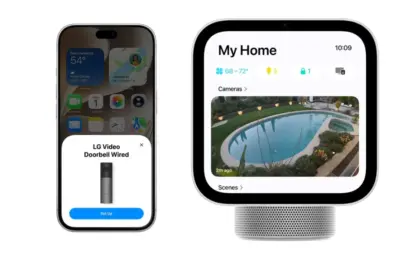
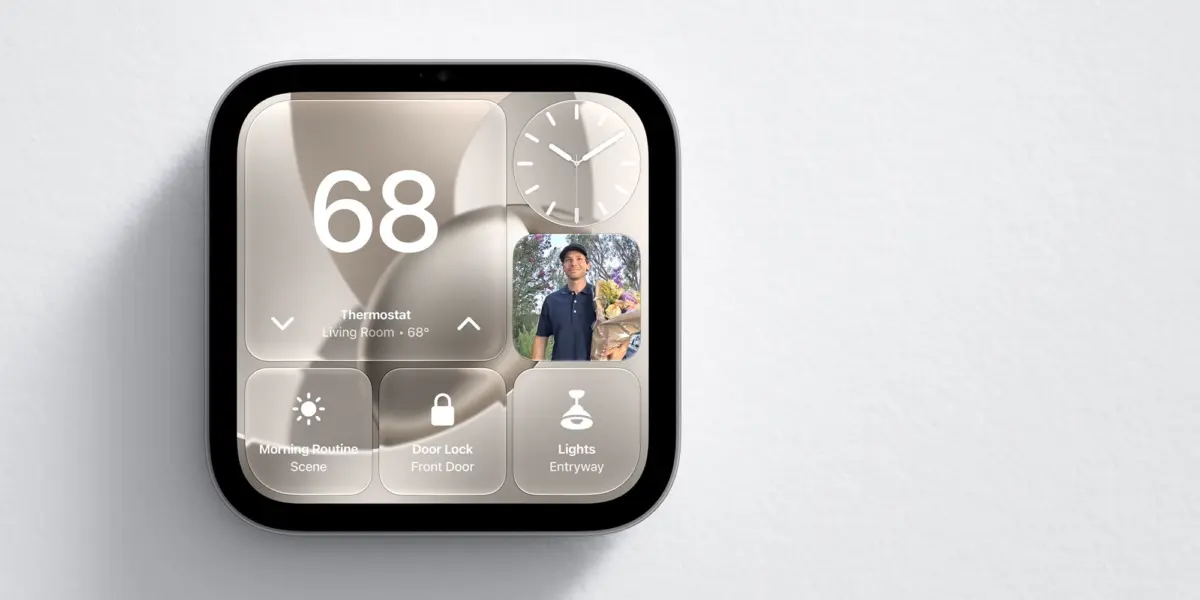
Apple’s recent product launches have consistently sparked conversations regarding the company’s unyielding philosophy toward minimalist packaging and ecological responsibility. However, the tech giant’s latest home automation hardware release—the wall-mounted HomeView—has elevated these discussions into full-scale consumer frustration. Following earlier confirmations that the wall-mounted iteration ships completely devoid of an in-box power adapter or a mounting bracket, Apple has published a detailed official support document outlining the exact technical power specifications required to operationalize the device.
For consumers looking to seamlessly integrate Apple’s new smart home display into their living spaces, the reality is proving more complex—and potentially more costly—than initially anticipated. According to Apple’s newly minted documentation, the HomeView (Wall Mounted) model demands a specific caliber of electrical delivery. Users must either source a compatible USB-C power brick adhering to strict voltage and wattage minimums or invest in specialized third-party hardware capable of hardwiring the unit directly into residential electrical lines.
This comprehensive report breaks down Apple’s precise power mandates, explores the financial and logistical implications for early adopters, examines the ecosystem of required third-party accessories, and analyzes what this launch signals for the future of Apple’s smart home hardware trajectory.
Detailed Chronology
The unfolding narrative surrounding the HomeView product family highlights a swift succession of product announcements, consumer realizations, and subsequent corporate clarifications.
Early Morning Confirmation: The Missing Essentials
The controversy began early in the day when Apple officially pulled back the curtain on its latest smart home initiative. While tech enthusiasts initially focused on the software capabilities, interface design, and deep HomeKit integration of the HomeView lineup, hardware analysts quickly zeroed in on the fine print.
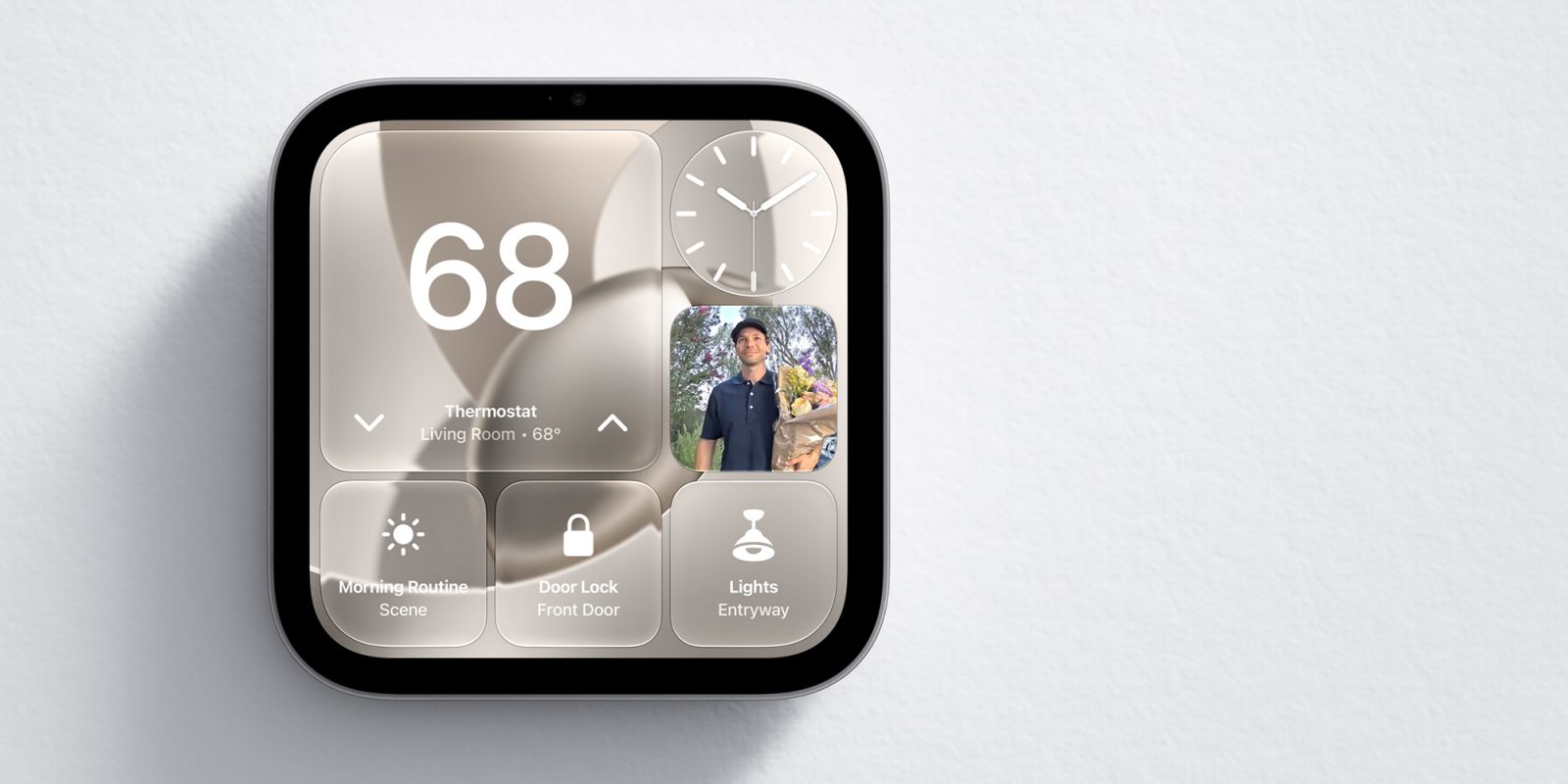
It was revealed that unlike the standard desktop or countertop variant of the HomeView—which includes the necessary cabling and power brick out of the box—the wall-mounted alternative arrives as a standalone piece of hardware. Crucially, the box contains neither a wall mount nor a power adapter.
The Mid-Day Financial Reality Check
As the news circulated throughout the tech community, reporters quickly mapped out the hidden costs associated with the device. Industry analysts calculated that purchasing the required hardware extras would instantly inflate the base cost of ownership. Reports surfaced detailing that Apple’s approved mounting options start at a baseline of $59, with a broader portfolio of specialized mounting solutions slated to roll out in early 2027.
The Afternoon Support Document Publication
In an effort to curb misinformation and guide consumers through the complex setup process, Apple published an official support document late in the day. Documented under support article ID 127951, the release provides exact parameters for powering the device safely, explains troubleshooting procedures for common power errors, and formally sets the technical standards third-party manufacturers must meet to remain compatible with Apple’s ecosystem.
Supporting Context & Metrics: Power Specifications Breakdown
Navigating Apple’s power specifications requires careful attention to detail. Utilizing an underpowered adapter or incompatible cable can result in system instability, continuous reboots, or a complete failure to boot accompanied by a persistent error code.
Standard HomeView vs. HomeView (Wall Mounted)
To better understand the divergence in Apple’s power requirements between the two form factors, consider the following technical breakdown:
-
Standard HomeView (Countertop/Desktop):
- In-Box Inclusions: Includes a dedicated power cable and a matching USB-C power adapter.
- Minimum Power Requirement: Requires a USB-C power adapter rated at at least 30W.
- Voltage/Amperage Profile: Must explicitly support 15V at 2A or higher to handle the processing load and display brightness of the standard unit.
-
HomeView (Wall Mounted):
- In-Box Inclusions: Zero adapters, zero mounts, and separate power infrastructure required.
- Minimum Power Requirement: Requires a USB-C power adapter rated at at least 20W.
- Voltage/Amperage Profile: Must support 9V at 2.22A or higher.
- Failure State: If these exact power delivery profiles are not met by the connected power supply, the HomeView (Wall Mounted) screen will illuminate to display a distinct warning message: "Not Enough Power."
Hardwiring and Third-Party Mount Integration
For users who prefer a clean, wire-free aesthetic without dangling USB-C cords running down the drywall to a standard wall outlet, the wall-mounted HomeView offers an alternative installation vector. Depending on the engineering of the chosen third-party mount, the device can bypass USB-C adapters entirely and connect straight to a home’s internal alternating current (AC) electrical wiring.
However, this hardwiring approach shifts the responsibility of electrical safety, transformer integration, and local building code compliance squarely onto the consumer and their chosen installer, adding another layer of complexity to what is traditionally positioned as a consumer-friendly smart home product.
Official Statements and Documentation Analysis
Apple’s official guidance, pulled directly from the newly updated support channels, outlines the parameters explicitly to prevent hardware damage and manage consumer expectations.
In its official guidance document, Apple states:

"HomeView ships with a power cable and adapter. HomeView (Wall Mounted) requires a compatible third-party mount and power solution for operation, sold separately. Depending on the mount, you can use a separate power cable and adapter or connect to line power (hardwired).
- HomeView: Use a USB-C cable and a USB-C power adapter that’s at least 30W and supports 15V at 2A or higher.
- HomeView (Wall Mounted): Use a USB-C cable and a USB-C power adapter (both sold separately) that’s at least 20W and supports 9V at 2.22A or higher."*
Furthermore, Apple has preemptively directed consumers toward specific first-party ecosystem products, such as their available dynamic power adapters (including options like the 40W Dynamic Power Adapter with 60W max output), while establishing rigorous troubleshooting protocols for users who encounter the "Not Enough Power" warning dialog during initial setup.
Industry Reaction and Consumer Impact
The decision to ship the wall-mounted HomeView without foundational installation hardware has drawn sharp critiques from consumer advocacy groups and smart home reviewers alike.
The "Unbundling" Backlash
While Apple continues to champion environmental sustainability—citing reduced carbon footprints, smaller packaging dimensions, and the elimination of redundant electronic waste as primary justifications for removing power bricks from product boxes—critics argue that the policy feels increasingly punitive when applied to specialized hardware categories.
Unlike an iPhone or an Apple Watch, where legacy USB-C power bricks are statistically common in most modern households, a wall-mounted smart home display represents a unique installation category. Very few homeowners have loose 20W USB-C power supplies terminating inside their drywall or conveniently positioned at eye level next to a light switch. Consequently, the vast majority of buyers will be forced to make secondary purchases, neutralizing both the financial expectations set by the initial device price and the environmental savings achieved by shrinking the primary product packaging.
Ecosystem Fragmentation Concerns
Another prominent critique centers on reliance on third-party manufacturers. Because Apple is not manufacturing an expansive proprietary suite of wall mounts at launch—instead relying on partner ecosystems with prices starting at $59 and scaling upward—consumers face a fragmented marketplace. Ensuring that a third-party mount safely houses the device while properly routing the requisite power delivery without triggering thermal throttling or the dreaded "Not Enough Power" warning places an undue technical burden on the end-user.
Future Outlook
As the HomeView (Wall Mounted) rolls out to early adopters, its reception will likely serve as a litmus test for Apple’s broader smart home hardware strategy.
- Maturation of the Accessory Market: Over the coming months, expect a surge of certified "Made for Apple" third-party wall mounts and integrated low-voltage power kits designed specifically to bridge the gap left by Apple’s minimalist packaging choices. Manufacturers that successfully bundle compliant 20W (or higher) concealed power transformers into their mounting brackets will likely capture the lion’s share of the market.
- Potential Policy Re-evaluation: If consumer friction surrounding the "Not Enough Power" warnings and hidden installation costs reaches critical mass, Apple may face pressure to adjust its bundling strategy for subsequent hardware revisions—or at minimum, curate bundled bundle-kits through the online Apple Store that package the device, mount, and certified power adapter together.
- Smart Home Evolution: Despite the early turbulence regarding power adapters and brackets, the HomeView represents a serious push by Apple to reclaim mindshare in the smart home command center category. How well the device performs in real-world deployments—and how smoothly users navigate the installation hurdles—will dictate whether Apple’s wall-mounted vision becomes a ubiquitous household standard or remains a niche luxury for dedicated ecosystem loyalists.