Executive Overview
As the technology industry approaches the anticipated autumn hardware and software release cycle, developers and early adopters testing the waters of Apple’s upcoming software ecosystem have encountered distinct friction points. Over the course of the summer beta testing window, users running the watchOS 27 developer and public betas noticed a frustrating anomaly: a significant subset of third-party applications consistently failed to launch, crashing immediately or refusing to open entirely upon tap.
Rather than placing the onus squarely on third-party developers to recompile, test, and resubmit their software ahead of the official public launch, Apple has taken matters into its own hands. In an unprecedented operational move, the Cupertino-based tech giant has initiated a proactive, automated remediation campaign. Apple is actively intercepting, recompiling, and updating affected watchOS applications on behalf of developers through the App Store infrastructure.
This intervention is designed to resolve a precise binary compatibility bug tied to the arm64 architecture slice of older watchOS binaries. By stepping in directly, Apple ensures that the user experience on the upcoming watchOS 27 operating system remains stable and robust, mitigating potential launch-day friction where users find their favorite wrist-based tools broken upon updating their devices. According to communications sent out to the developer community, this automated re-signing and updating process is scheduled to reach total completion by August 31, just weeks ahead of the expected mid-September public rollout of watchOS 27, iOS 27, and the broader portfolio of next-generation operating systems.
Detailed Chronology of the watchOS 27 Binary Incompatibility Crisis
The discovery of the app-launch failures began quietly shortly after Apple unveiled its next-generation operating systems at its Worldwide Developers Conference (WWDC) earlier this summer. Almost immediately, the first developer betas of watchOS 27 were pushed out to registered testers. While the primary focus of early beta cycles typically revolves around foundational system stability, battery drain, and new user interface paradigms, power users and developers rapidly identified a glaring regression: a portion of their installed application libraries simply refused to execute.
Phase 1: Identification and Initial Reports (Early Summer)
In the initial weeks of the beta lifecycle, sporadic reports surfaced across developer forums, Reddit communities, and social media platforms. Testers noted that when tapping certain app icons on their Apple Watch displays, the application would attempt to open, stall, and immediately dump the user back to the watch face.
Initially, these crashes were frequently misdiagnosed as standard beta-stage instability—routine bugs expected when running bleeding-edge software. However, as subsequent beta builds rolled out, the pattern became undeniable. The failures were not random; they affected specific older apps that had not recently been recompiled against the latest software development kits (SDKs).
Phase 2: Root Cause Analysis and Internal Discovery
Behind the scenes, Apple engineers began diagnosing the systemic failures. Investigations revealed that the root cause lay deep within the compilation pipeline, specifically concerning the arm64 architecture slice of certain watchOS application binaries.
As Apple continues to optimize its wearable operating system for modern hardware architectures, stricter compiler requirements and runtime checks are enforced. Certain legacy apps contained binary structures within their arm64 slices that triggered fatal exceptions when executed under the watchOS 27 kernel. Because many smaller indie developers or teams focused on larger projects had not yet re-targeted their legacy watchOS apps for the new SDK, a vast inventory of the App Store ecosystem was suddenly at risk of becoming unusable on day one of the watchOS 27 public launch.
Phase 3: The Automated Intervention Strategy (August)
Realizing that relying solely on individual developer action could result in widespread app breakage upon the general public release, Apple opted for an aggressive, automated intervention. Rather than waiting for developers to notice the build failures, pull down their codebases, fix the arm64 slice issues, and push manual updates through App Store Connect, Apple engineered an automated script and pipeline to handle the heavy lifting.
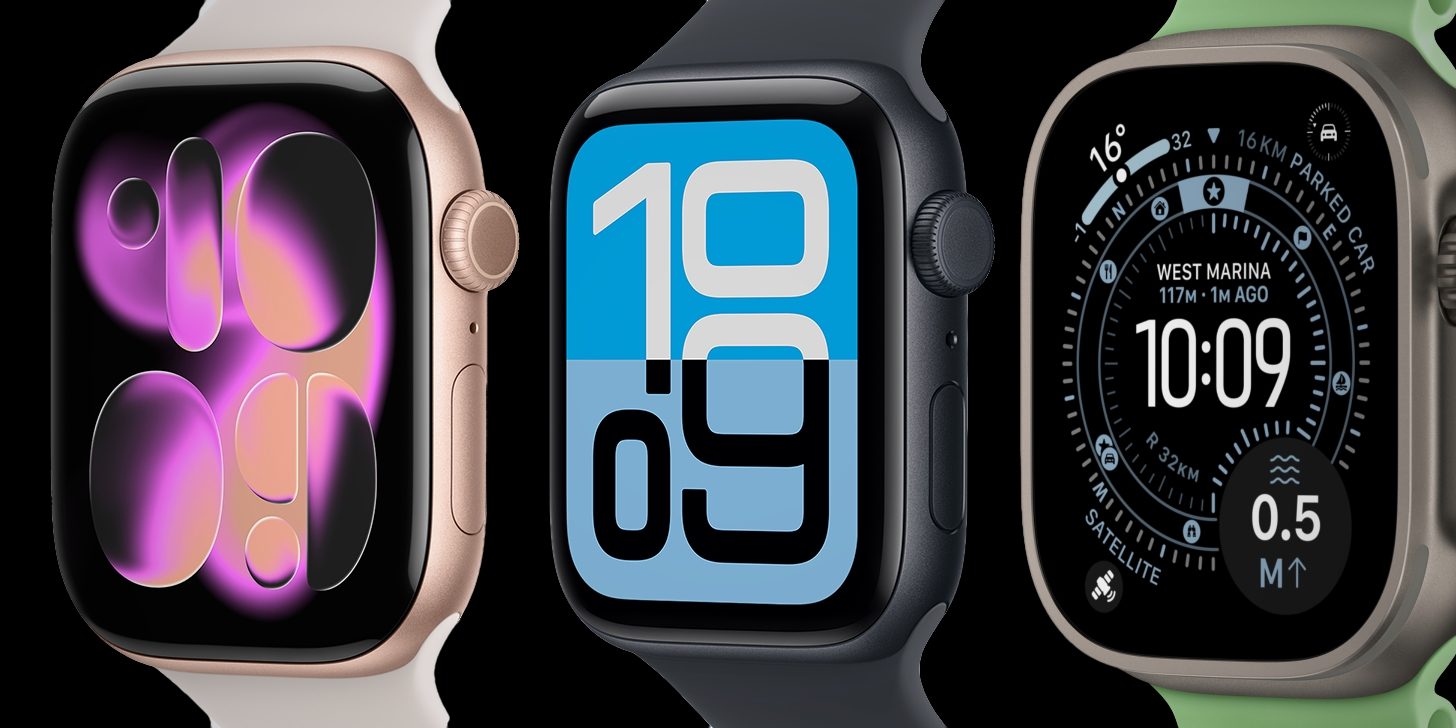
Throughout August, users began spotting updated apps downloading automatically in the background on their paired iPhones and Apple Watches. Checking the App Store update logs revealed a uniform, standardized note:
"This app has been updated by Apple to prepare for watchOS 27 compatibility. No new features are included."
Apple subsequently confirmed this administrative action to the developer community via formal communications, assuring stakeholders that the automated reprocessing would systematically sweep through the affected catalog and resolve all binary incompatibilities well ahead of the commercial software launch window.
Technical Context: Decoding the arm64 Slice Dilemma
To fully understand the magnitude and mechanical necessity of Apple’s intervention, one must examine the underlying software engineering architecture that powers modern watchOS devices.
The Evolution of Apple Watch Architecture
For years, Apple’s wearable ecosystem has transitioned through various silicon iterations, starting from initial custom 32-bit architectures up to the sophisticated 64-bit multi-core System in Packages (SiPs) found in modern devices like the Apple Watch Series and Apple Watch Ultra lineups. With the universal adoption of 64-bit computing across all active Apple hardware lines, the arm64 instruction set architecture has become the mandatory standard for software execution.
When a developer compiles an application for watchOS, Xcode generates a fat binary (or more accurately in modern terms, a bundle containing slices for targeted architectures). This binary contains compiled machine code instructions that the device’s processor can execute directly.
The Binary Incompatibility Explained
In watchOS 27, Apple tightened security parameters, memory management expectations, and execution rules within the runtime environment. Certain older binaries—often compiled using older versions of Xcode or relying on deprecated build settings—struggled with these tighter execution boundaries. Specifically, anomalies within the arm64 slice caused the dynamic linker (dyld) to reject the binary upon execution, viewing the structural layout as non-compliant or potentially hazardous to system stability.
When dyld encounters an incompatible binary slice that it cannot properly parse or verify under the new operating system rules, the application fails to launch entirely.
How Apple’s Automated Reprocessing Works
Executing a binary fix at scale across thousands of third-party applications is a monumental engineering feat. Apple achieved this by leveraging its centralized App Store distribution and ingestion infrastructure:

- Catalog Scanning: Apple’s internal testing systems automatically scanned the entire App Store repository of watchOS applications against internal watchOS 27 runtime environments to isolate crashing binaries.
- Binary Extraction and Disassembly: For apps flagged with the
arm64execution bug, Apple’s automated pipelines extracted the source package, isolated the binary, and analyzed the structural mismatch. - Re-signing and Repackaging: Using advanced automated code-transformation and re-compilation tools, Apple adjusted the binary headers, re-aligned the
arm64slices to comply with strict watchOS 27 runtime checks, and re-signed the apps using secure internal distribution certificates. - Automated App Store Distribution: The modified binaries were then pushed back through the App Store update pipeline, complete with the standardized explanatory release note, ensuring seamless deployment to user devices without requiring developer intervention.
Official Statements and Industry Implications
Apple’s decision to directly modify third-party application binaries is an extraordinary measure, highlighting the company’s absolute commitment to a frictionless user experience. Historically, Apple maintains a strict boundary between its own platform code and the software provided by third-party developers. Developers are expected to maintain their applications, adhere to deprecation schedules, and ensure compatibility with annual operating system updates.
Setting a New Precedent for Ecosystem Stewardship
By stepping in to patch third-party binaries, Apple has signaled a shifting philosophy regarding ecosystem maintenance—at least during critical major OS transitions. Industry analysts have pointed out both the benefits and potential concerns of this approach:
- The Consumer-Centric Benefit: For the average consumer, software compatibility is often viewed through a simple lens: if an app worked yesterday, it should work today. When users upgrade to watchOS 27 in September and find that half their utility, transit, and productivity apps no longer open, the frustration is frequently directed at Apple, not the individual app developer. By proactively neutralizing this issue, Apple preserves brand goodwill and prevents early review bombs or customer support bottlenecks.
- The Developer-Centric Debate: While many indie developers and small teams have expressed relief that their abandoned or legacy apps were saved from obsolescence without requiring immediate emergency coding sessions, the move also raises questions about developer responsibility. Some purists argue that automatic binary patching by platform owners borders on code tampering, potentially masking underlying technical debt that developers should ideally address themselves.
Communication Transparency
Apple mitigated potential pushback by maintaining clear, transparent communication channels. By explicitly appending the "This app has been updated by Apple to prepare for watchOS 27 compatibility. No new features are included" note to every automatically modified app, the company ensured total clarity for both users and developers. Users immediately understand that the update is structural rather than feature-driven, while developers are quietly alerted that their app has been patched to survive the transition to the new OS.
Future Outlook: The Road to watchOS 27 and Beyond
With the August 31 completion deadline fast approaching, the immediate crisis surrounding watchOS 27 app launch failures is effectively neutralized. Developers, beta testers, and everyday consumers can look forward to a much smoother software transition when the final gold-master build is signed and deployed to the public.
The Mid-September Public Launch Window
Following Apple’s traditional release cadences, watchOS 27, alongside iOS 27, iPadOS 27, and other companion operating systems, is widely expected to debut to the general public by mid-September, closely following the annual iPhone hardware special event.
During this transition window, millions of users worldwide will update their smartwatches. Thanks to Apple’s proactive binary remediation campaign, the catastrophic app-launch failures experienced during the early summer beta testing phase will be entirely absent for the vast majority of the app catalog.
Long-Term Architectural Takeaways
Looking beyond this specific software cycle, the watchOS 27 incident serves as a vital case study in modern platform management. As mobile and wearable operating systems become increasingly complex, security-hardened, and architecturally strict, the margin for error in binary compatibility narrows significantly.
Whether Apple will need to deploy similar automated remediation pipelines in future software cycles remains to be seen. However, the success of the current initiative demonstrates that Apple possesses the technical infrastructure required to enforce ecosystem stability from the top down—ensuring that the Apple Watch software experience remains seamless, reliable, and frustration-free for every user on day one.