Executive Overview
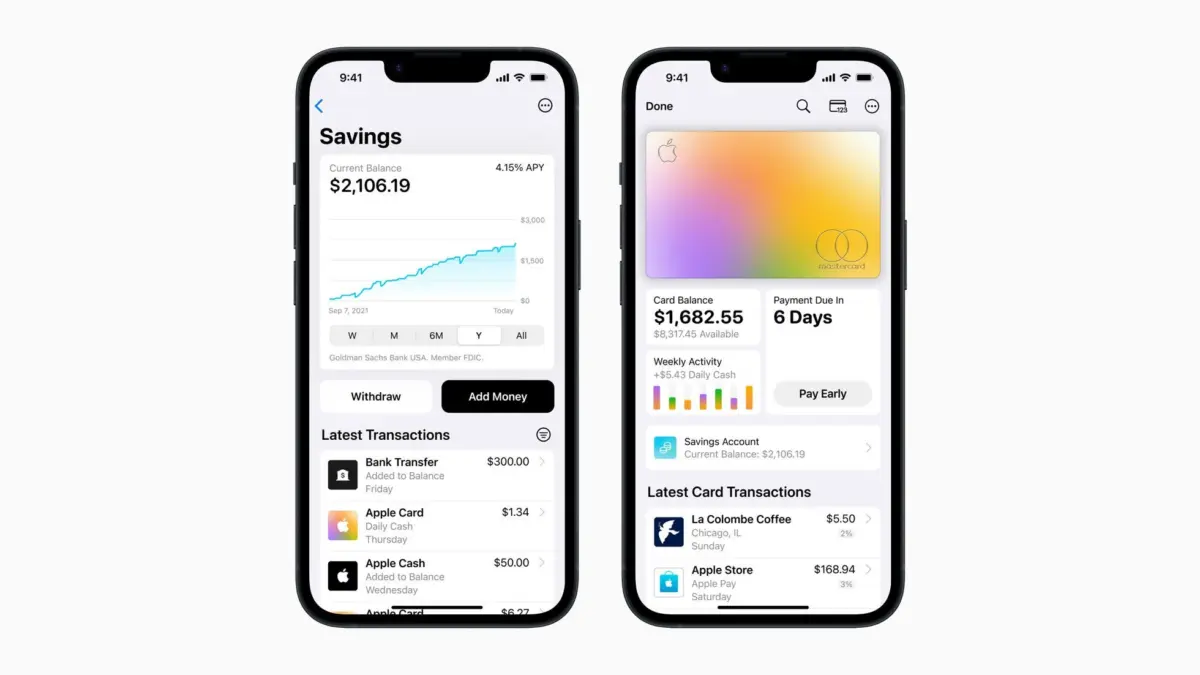
In a strategic maneuver that further blurs the traditional boundaries between Silicon Valley and Wall Street, Apple—in partnership with banking titan Goldman Sachs—has officially rolled out a high-yield savings account exclusively for Apple Card users. Announced on a Monday that sent immediate ripples through the consumer banking sector, the feature allows everyday consumers to effortlessly funnel their "Daily Cash" rewards into an interest-bearing account yielding an impressive 4.15% Annual Percentage Yield (APY).
For the average consumer accustomed to the negligible returns offered by legacy brick-and-mortar financial institutions—where standard savings accounts frequently languish at a microscopic 0.01% APY—Apple’s offering represents an attractive, frictionless alternative. Beyond merely housing cash back rewards, the service empowers users to transfer personal funds directly from external bank accounts up to a federally insured limit of $250,000.
This development is far from a standalone consumer perk; it is the latest, and perhaps most aggressive, milestone in Apple’s calculated march into the financial services ecosystem. Coming on the heels of the recent "Buy Now, Pay Later" (BNPL) rollout, the high-yield savings account transforms the native iOS Wallet app from a simple digital passbook into a formidable neo-banking hub. By combining the sleek user experience of consumer technology with the regulatory and financial backing of a premier investment bank, Apple is actively challenging the hegemony of traditional retail banking. This comprehensive report explores the mechanics of Apple’s new financial product, analyzes its broader industry implications, contextualizes its rates within the current macroeconomic environment, and evaluates what this means for the future of personal finance.
Detailed Chronology: The Evolution of Apple’s Financial Ecosystem
To fully understand the gravity of the Apple-Goldman Sachs high-yield savings account, it is necessary to examine the chronological progression of Apple’s foray into financial technology (fintech). What began as a modest loyalty program has steadily evolved into a comprehensive suite of financial products designed to lock users deeper into the iOS ecosystem.
The Foundation: Apple Pay and the Apple Card
Apple’s journey into consumer finance began in earnest with the 2014 launch of Apple Pay, which digitized credit and debit cards for use on iOS devices. While initially met with skepticism from traditional merchants and banks, Apple Pay laid the essential groundwork for contactless transactions and built foundational trust in Apple’s secure hardware-software integration.
In August 2019, Apple took a much bolder step by launching the Apple Card, engineered in collaboration with Goldman Sachs and backed by Mastercard. Eschewing traditional credit card fees (no annual fees, foreign transaction fees, or late fees), the Apple Card introduced "Daily Cash"—an instant cash-back incentive deposited directly onto the user’s Apple Cash card after every purchase. Ranging from 1% to 3% depending on the merchant, Daily Cash provided an immediate, tangible reward that set the card apart in a crowded market.
Expanding the Toolkit: Installments and BNPL
As the Apple Card user base matured, Apple steadily layered on features to increase utility and capture a larger share of consumer spending. The introduction of Apple Card Monthly Installments allowed users to purchase Apple hardware interest-free over set periods, financed through their credit line.
This trajectory culminated shortly before the savings account announcement with the launch of Apple Pay Later. Allowing users to split purchases into four payments spread over six weeks with zero interest or fees, the BNPL feature positioned Apple in direct competition with established fintech heavyweights such as Klarna, Affirm, and Block’s Afterpay. By controlling the point of sale, the credit mechanism, and now the consumer’s savings, Apple constructed a closed-loop financial ecosystem that rivals traditional commercial banks.
The Savings Account Debut
The logical next step in this financial evolution was wealth retention. On a Monday morning, Apple officially flipped the switch on the Apple Card high-yield savings account. By integrating the savings mechanism directly into the Wallet app, Apple eliminated the friction traditionally associated with opening an account, funding it, and tracking returns. Users could now transition their money seamlessly from spending to saving without ever downloading a third-party banking application or visiting a physical branch.
Supporting Context & Metrics: The Numbers Behind the Move
To evaluate the true value of Apple’s high-yield savings account, one must examine the prevailing macroeconomic climate, compare it against legacy banking competitors, and analyze the underlying mechanics that make such a yield possible.
The Macroeconomic Environment and APY Comparisons
Apple’s 4.15% APY arrives during a period of shifting monetary policy. Following aggressive interest rate hikes by the Federal Reserve to combat inflation, yields on short-term fixed-income assets and high-yield savings vehicles surged across the broader market throughout 2022 and 2023.
While online-only neo-banks and digital-first brokerages quickly adapted by raising their savings rates to attract liquidity, traditional brick-and-mortar institutions dragged their feet. Major legacy banks—such as Bank of America, Chase, and Wells Fargo—largely kept their standard savings account rates near the absolute floor at 0.01% APY. For a consumer keeping $10,000 in a traditional savings account yielding 0.01%, the annual return is a meager $1. In stark contrast, that same $10,000 placed in the Apple/Goldman Sachs account at 4.15% generates approximately $415 in interest over the course of a year (assuming the rate remains constant).
| Financial Institution / Product | Annual Percentage Yield (APY) | Account Minimums | Monthly Fees |
|---|---|---|---|
| Apple / Goldman Sachs Savings | 4.15% | $0 | $0 |
| Bank of America (Standard Savings) | 0.01% | Varies ($500+) | Varies (Waivable) |
| Chase Bank (Savings) | 0.01% | Varies ($300+) | Varies (Waivable) |
| Typical Online High-Yield Bank | 4.00% – 5.00%+ | $0 | $0 |
| National Average (FDIC Data) | ~0.35% – 0.45% | Varies | Varies |
As demonstrated above, while Apple’s 4.15% APY is not the absolute highest available on the open market—some specialized online banks and money market funds push past 5%—it dramatically outperforms national averages and legacy institutions. Crucially, the convenience factor of in-app management shifts the competitive calculus for everyday consumers.
Account Mechanics, Limits, and FDIC Insurance
Behind the consumer-facing Apple interface lies the heavy lifting performed by Goldman Sachs Bank USA, the issuing bank. This partnership ensures that deposits made into the Apple savings account are protected by the Federal Deposit Insurance Corporation (FDIC) up to the statutory limit of $250,000 per depositor.
Key operational metrics of the account include:
- No Minimums: Users are not required to maintain a minimum balance to earn interest or avoid monthly maintenance fees.
- Funding Flexibility: Beyond automated Daily Cash deposits, users can link external bank routing numbers to transfer personal funds manually or set up recurring deposits.
- Variable Rates: Apple and Goldman Sachs have explicitly noted that the 4.15% APY is variable and subject to change based on market conditions, meaning it could rise or fall in tandem with future Federal Reserve rate adjustments.
- US Geographic Restriction: At launch, the feature is restricted exclusively to US-based Apple Card holders verified within the Wallet application.
Official Statements and Industry Perspective
The launch of the savings account elicited strong reactions across the technology and financial sectors, shedding light on Apple’s overarching corporate strategy.
In an official corporate statement accompanying the launch, Jennifer Bailey, Apple’s vice president of Apple Pay and Apple Wallet, articulated the company’s core philosophy:
"Our goal is to build tools that help users lead healthier financial lives, and building Savings into Apple Card in Wallet enables them to spend, send, and save Daily Cash directly and seamlessly — all from one place."
This statement underscores Apple’s long-standing strategy of ecosystem lock-in through superior user experience. By framing financial management as an aspect of personal wellness ("healthier financial lives"), Apple frames its suite of services not merely as profit-driven financial products, but as essential lifestyle utilities.
Financial analysts point out that the partnership is equally advantageous for Goldman Sachs. Having aggressively expanded its consumer-facing footprint through its Marcus platform, Goldman benefits from acquiring a massive, loyal deposit base without the massive capital expenditures required to build independent physical bank branches or consumer marketing funnels. By plugging directly into Apple’s installed base of over two billion active devices, Goldman Sachs secures a steady stream of retail deposits to fund its broader banking operations.
However, industry watchdogs have also highlighted potential friction points. Regulatory scrutiny over big tech companies entering the financial sector remains high. Lawmakers and regulators closely monitor how consumer data is shared between tech platforms and banking partners, as well as the systemic implications of massive digital deposit migration away from community and regional banks.
Future Outlook: The Intersection of Big Tech and Banking
As the dust settles on the initial rollout of the Apple Card high-yield savings account, industry observers are already looking toward the horizon to predict the next phase of Apple’s financial evolution.
What Comes Next for Apple Financial Services?
- International Expansion: Currently limited to the United States, scaling the Apple Card and its associated high-yield savings infrastructure to international markets is the logical next hurdle. Regulatory hurdles, varying banking laws, and international currency frameworks present complex challenges, but the immense global footprint of iOS users makes international expansion an inevitability.
- Deepening Wealth Management: Having conquered everyday spending (Apple Pay), credit (Apple Card), short-term liquidity (Apple Pay Later), and basic savings, Apple is well-positioned to move further up the wealth management ladder. Could automated investing, fractional stock trading, or retirement accounts integrated into the Wallet app be on the horizon? Financial analysts consider these logical extensions of Apple’s platform strategy.
- The Pressure on Legacy Institutions: Traditional banks can no longer afford to ignore the existential threat posed by tech-driven financial services. As consumer expectations are reshaped by frictionless, zero-fee digital interfaces, legacy banks will be forced to modernize their digital infrastructure, raise their savings yields, or risk losing successive generations of customers to Apple, Google, and other tech giants.
Conclusion
Apple’s introduction of a high-yield savings account in partnership with Goldman Sachs is much more than a routine product update; it is a masterclass in ecosystem expansion. By offering a competitive 4.15% APY directly within the iOS Wallet app, Apple has successfully bridged the gap between daily consumer spending and long-term capital retention. While the yield may not be the absolute highest on the market, the seamless integration, zero-fee structure, and robust FDIC protection make it an irresistible option for millions of Apple Card users. As Apple continues to execute its financial blueprint, the traditional banking establishment is put on notice: the future of finance is increasingly digital, frictionless, and anchored in the palm of your hand.