Executive Overview
For decades, the landscape of long-acting reversible contraception (LARC) in the United States has remained frustratingly static. While modern medicine has revolutionized nearly every sector of healthcare, individuals seeking non-hormonal, long-term birth control have faced a glaring lack of options. For many, the choice has essentially boiled down to a single device: the Paragard copper IUD, a design that has remained virtually unchanged since its Food and Drug Administration (FDA) approval in 1984.
This paucity of choices forces many American patients to navigate a labyrinth of uncertainty, balancing the desire for reliable pregnancy prevention against the well-documented side effects of rigid, legacy devices—namely, severe cramping, heavy bleeding, and deep procedural pain. Some patients have even crossed international borders to Canada, where a wider variety of low-profile, non-hormonal alternatives are readily available.
However, a monumental shift is finally on the horizon. Following its regulatory greenlight, the Miudella—a next-generation copper intrauterine device developed with a flexible nitinol frame and a targeted copper distribution mechanism—represents the first new copper IUD to enter the U.S. market in over forty years.
Yet, the journey from clinical trial to pharmacy shelf underscores a broader structural flaw in the American pharmaceutical ecosystem: FDA approval is merely the first hurdle. The complex interplay of corporate acquisitions, supply chain logistics, specialized provider training mandates, and health insurance formulary approvals means that even a groundbreaking medical device can take months, if not years, to reach the hands of the patients who need it most.
Detailed Chronology: From Concept to Commercialization
The history of the Miudella—originally developed under the moniker VeraCept—is a masterclass in the protracted, high-stakes timeline of pharmaceutical development, clinical evaluation, and corporate handoffs.
- 2018: Early-stage clinical evaluations begin. Participants enroll in safety and efficacy trials to test the device’s performance, tracking variables such as expulsion rates, bleeding patterns, and procedural pain metrics over multiple years.
- Early Conception and Venture Phase: The device is initially conceptualized and engineered by ContraMed, a nimble medical device startup focused on reimagining non-hormonal contraception.
- Acquisition by Sebela Pharmaceuticals: Recognizing the commercial and clinical potential of a modernized copper IUD, midsize pharmaceutical firm Sebela Pharmaceuticals acquires ContraMed. Sebela steers the device through the rigorous Phase 3 clinical trial process, culminating in comprehensive data collection involving over 1,600 participants.
- February 2025: The FDA formally approves the Miudella for up to three years of continuous use, sparking widespread anticipation among OB-GYNs, reproductive health advocates, and patients seeking non-hormonal options. The manufacturing entity subsequently files petitions to double its approved lifespan to six years based on accumulating longitudinal data.
- The Organon Handshake: In a strategic commercial move, Sebela Pharmaceuticals licenses the global commercialization and distribution rights of Miudella to the publicly traded women’s health giant Organon in a deal valued at $27.5 million, plus performance-based milestones. Organon brings established muscle to the table, leveraging its existing infrastructure with major brands like the Nexplanon implant and NuvaRing.
- Late 2025 – 2026: Organon initiates a specialized healthcare provider training pipeline under an FDA-mandated Risk Evaluation and Mitigation Strategy (REMS) program, laying the groundwork for a broader commercial rollout slated before the end of the year.
Supporting Context & Metrics: Redesigning the IUD
To understand why the medical community views the Miudella as a paradigm shift, one must examine the fundamental engineering differences between legacy copper IUDs and this new generation of contraceptive technology.
1. The Frame: From Rigid Plastic to Flexible Nitinol
The standard Paragard IUD relies on a rigid, T-shaped polyethylene plastic frame wrapped in copper wire. For many patients—particularly nulliparous individuals or those with smaller uterine cavities—this rigidity can cause chronic discomfort, anatomical mismatch, or expulsion.
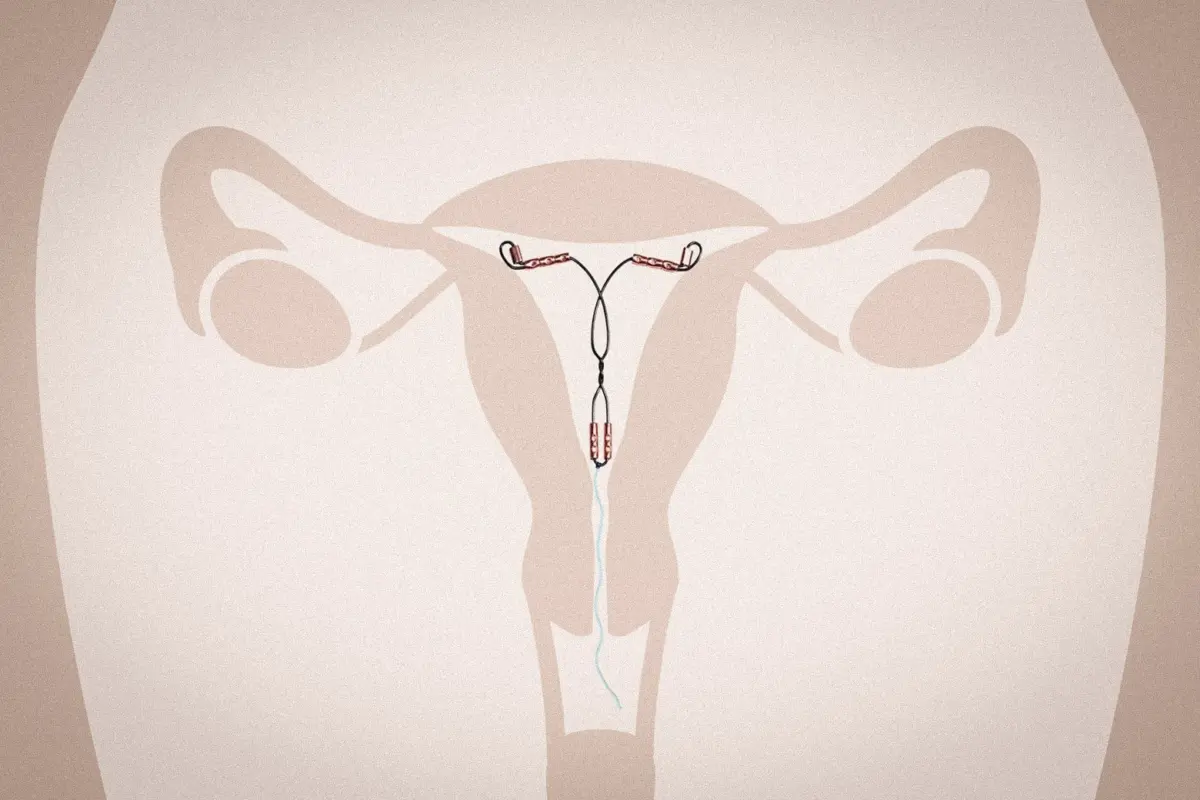
In contrast, the Miudella replaces the rigid plastic stem with nitinol, a shape-memory alloy composed of nickel and titanium. Widely utilized in cardiovascular stents and other complex medical interventions, nitinol possesses remarkable super-elastic properties. It can be compressed into a narrow insertion tube, travel smoothly through the cervical canal, and effortlessly expand to contour itself to the natural architecture of the uterus.
2. Targeted Copper Placement vs. Total Volume
Traditional copper IUDs function by flooding the endometrial cavity with copper ions, creating a localized inflammatory response that proves hostile to sperm. However, high copper volumes are directly correlated with adverse side effects, including severe menstrual cramping and hypermenorrhea (heavy bleeding).
The Miudella utilizes less than half the total copper mass found in the Paragard. Crucially, this copper is strategically concentrated in cuffs at the base of the device (near the internal os) and along its arms (positioned near the fallopian tubes). By placing the spermicidal agent directly at the anatomical chokepoints that sperm must traverse to fertilize an egg, researchers achieved high efficacy while mitigating the systemic side effects of excess metal. Both devices boast a typical pregnancy prevention efficacy rate of approximately 99%.
3. The Insertion Experience and Pain Reduction
Procedural pain during IUD insertion remains a notorious barrier to uptake, frequently dismissed or minimized in clinical settings. The Miudella addresses this through two primary design changes:
- Preloaded, Thinner Inserter: The device comes preloaded within a specialized inserter tube boasting a diameter of just 3.7 mm, compared to the Paragard’s 4.75 mm.
- Atraumatic Tip: The inserter features a rounded, flexible tip designed to navigate the nerve-dense cervical canal with significantly less resistance, reducing the incidence of severe vasovagal reactions and sharp pelvic pain.
| Metric / Feature | Paragard Copper IUD | Miudella Copper IUD |
|---|---|---|
| Frame Material | Rigid Polyethylene Plastic | Super-elastic Nitinol (Nickel-Titanium Alloy) |
| Total Copper Mass | High volume distributed across entire stem/arms | Less than 50% of Paragard; strategically cuffed |
| Inserter Diameter | 4.75 mm | 3.7 mm |
| FDA Approval Year | 1984 | 2025 |
| Approved Lifespan | Up to 10 years | Up to 3–6 years (pending review) |
Official Statements and Clinical Perspectives
The clinical enthusiasm for the Miudella is tempered by the pragmatic realities of healthcare distribution. Experts in obstetrics, gynecology, and pharmaceutical commercialization have weighed in on what this device means for the future of reproductive medicine.
"The Paragard design is an effort to essentially deliver as much copper as possible into the endometrial cavity, where you can mess with sperm. The approach with Miudella is to say, ‘Hey, we don’t need all of that.’"
— Dr. David Turok, OB-GYN and Professor at the University of Utah (Lead investigator on pharmaceutical-funded clinical studies for Miudella)
Speaking on the logistical rollout of the product, Juan Camilo Arjona Ferreira, Organon’s Chief Medical Officer and Head of Research and Development, emphasized that accessibility will scale progressively rather than instantaneously:
"It’s not going to be available to everybody all at once. Guaranteeing insurance formulary placement and training specialized providers across multiple health systems requires a methodical, step-by-step framework."
Clinical trial data tracks closely with patient reports. Longitudinal studies evaluating over 1,600 participants revealed that while 69% of users experienced heavy bleeding in the initial three months post-insertion—a typical physiological adjustment period for copper devices—that figure dropped sharply to 25% between months three and six, and dwindled to just 2.5% by the fifth year of use. Furthermore, randomized comparative trials demonstrated that participants assigned the Miudella model reported higher continuation rates than those utilizing legacy designs.
Future Outlook: Navigating the Access Gap
As Organon ramps up its commercial distribution channels through late 2025 and 2026, the primary battleground for patients will no longer be the question of if a better non-hormonal IUD exists, but how to access it.
The structural hurdles are manifold:
- REMS Training Requirements: Providers must undergo specific training mandated by the FDA to safely deploy and manage the nitinol-based insertion system. Patients must actively consult provider locators (such as the official Miudella REMS participant registry) to find certified practitioners.
- Insurance Formulary Integration: Under the Affordable Care Act (ACA), private insurers are mandated to cover at least one product within every recognized method of contraception without cost-sharing. However, adding novel medical devices to specific insurance formularies requires individual administrative negotiations between manufacturers and health plans.
- Overcoming Medical Deserts: For patients living in rural areas or states with restricted reproductive healthcare infrastructure, finding a stocked clinic that employs a certified provider may still necessitate traveling significant distances—a modern echo of the cross-border trips American women previously made to Canadian clinics.
Ultimately, the arrival of the Miudella marks a long-overdue milestone in contraceptive technology. It proves that innovation in women’s health is possible, even if the arduous pathway from laboratory bench to clinical exam table demands profound patience from the very individuals it aims to serve.