Executive Overview
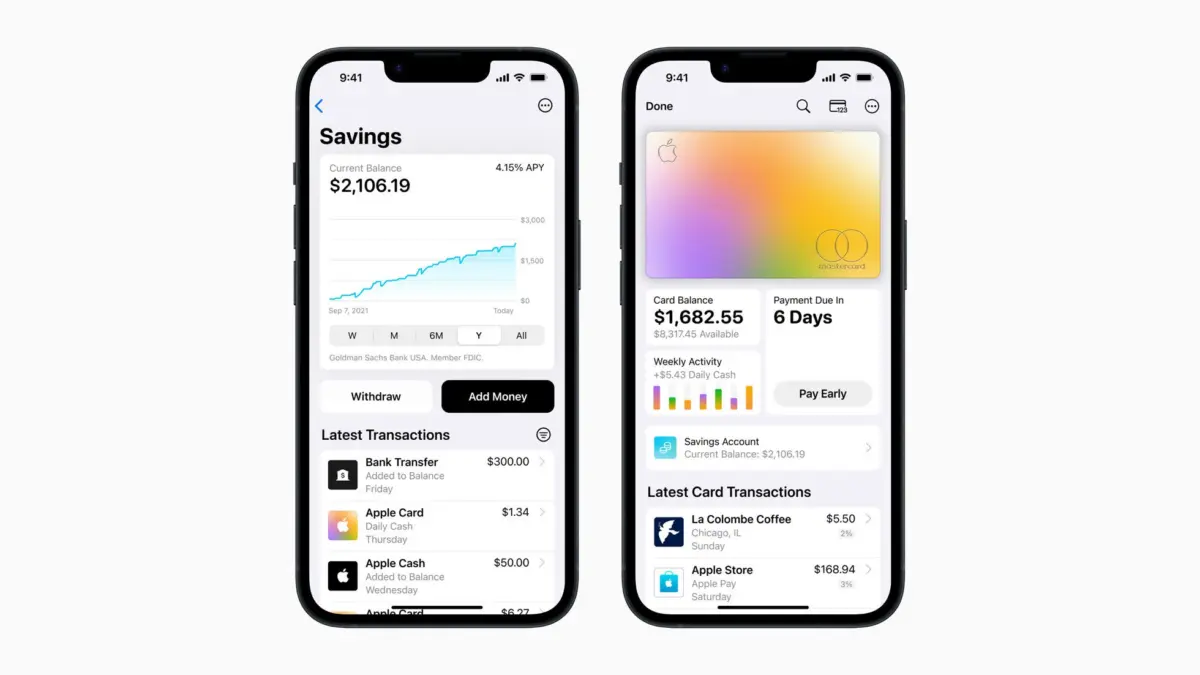
In a strategic maneuver that further blurs the lines between Silicon Valley and Wall Street, Apple—in partnership with banking titan Goldman Sachs—officially launched a high-yield savings account exclusively for Apple Card users. Announced on a Monday that sent immediate ripples through the traditional banking sector, this new financial product allows consumers to deposit their "Daily Cash" rewards into an account boasting an impressive 4.15% Annual Percentage Yield (APY).
For the average consumer, this translates to a return that dwarfs the abysmal 0.01% APY offered by legacy institutions like Bank of America on standard savings accounts. However, the true significance of Apple’s latest foray into personal finance extends far beyond automated cashback hoarding. By permitting users to fund the account directly from external bank accounts up to a federally insured limit of $250,000, Apple is no longer just playing in the sandbox of minor credit card rewards. It is positioning itself as a legitimate, highly attractive digital bank alternative.
This rollout represents the latest chapter in Apple’s aggressive, methodical expansion into financial services—a multi-pronged strategy that recently saw the introduction of a zero-interest "Buy Now, Pay Later" (BNPL) service, pitting the tech conglomerate against established fintech players like Klarna and Affirm. By tightly integrating these services into the native iOS Wallet app, Apple is constructing a frictionless, walled-garden financial ecosystem designed to capture, retain, and grow its users’ capital.
While the 4.15% APY, subject to change at any time, is not strictly the highest ceiling available in the fiercely competitive high-yield savings market, the unmatched convenience of managing accumulated wealth directly from an iPhone makes it a compelling proposition. This comprehensive report examines the mechanics of Apple’s new offering, the timeline of its financial services integration, the macroeconomic context surrounding high-yield products, and what this means for the future of consumer banking.
Detailed Chronology: The Evolution of Apple’s Fintech Ambitions
To fully understand the gravity of Apple’s high-yield savings account launch, one must trace the deliberate, calculated evolution of the company’s financial services strategy over the past decade. Apple’s entry into finance was not an overnight pivot; it has been a meticulously orchestrated campaign to embed its hardware and software deeper into the daily economic lives of its users.
Phase 1: The Digital Wallet (2014)
The foundation was laid in October 2014 with the introduction of Apple Pay. Initially met with skepticism by traditional merchants and banks alike, Apple Pay transformed the iPhone into a secure, tap-to-pay digital wallet. By abstracting the physical credit card into a tokenized digital identifier, Apple conditioned millions of users to view their iPhones as the primary conduit for commerce. Over the years, Apple Pay expanded from in-store purchases to in-app transactions, public transit ticketing, and peer-to-peer payments via Apple Cash.
Phase 2: Entering Credit (2019)
The next major milestone arrived in August 2019 with the launch of the Apple Card, created in partnership with Goldman Sachs and backed by Mastercard. Eschewing traditional credit card paradigms, the Apple Card prioritized digital-first management through the Wallet app, featured no annual or foreign transaction fees, and introduced an innovative rewards structure dubbed "Daily Cash." Unlike standard credit cards that force users to wait for monthly statement cycles to collect points or miles, Daily Cash was deposited instantly into the user’s Apple Cash card, offering up to 3% back on purchases made with Apple and select merchant partners.
Phase 3: Expanding the Credit Ecosystem (Early 2023)
Building upon the Apple Card foundation, Apple steadily introduced features designed to keep users within its financial umbrella. In early 2023, the company rolled out its long-awaited "Buy Now, Pay Later" (BNPL) service, officially known as Apple Pay Later. This feature allowed qualified users to split purchases ranging from $50 to $1,000 into four equal payments spread over six weeks, entirely free of interest and late fees. By entering the BNPL space, Apple directly challenged fintech stalwarts like Klarna, Affirm, and Afterpay, leveraging its frictionless user interface and device security to capture market share.
Phase 4: The High-Yield Savings Account (April 2023)
The launch of the high-yield savings account on Monday marked the convergence of Apple’s credit and payment ecosystems. By allowing users to automatically route their Daily Cash into a high-yield account—and subsequently supplement those earnings with outside funds—Apple closed the loop on a self-sustaining financial cycle. Users spend money via Apple Pay, earn Daily Cash, automatically invest that cash into a high-yield savings account, and manage the entire lifecycle of their wealth without ever visiting a bank branch or downloading a third-party financial app.
Supporting Context & Metrics: Analyzing the Yield and Market Impact
Apple’s introduction of a 4.15% APY savings account arrives at a fascinating intersection of macroeconomic trends, monetary policy, and consumer banking fatigue. To evaluate the true value of Apple’s offering, industry analysts and financial experts must examine the broader economic landscape and weigh it against legacy banking standards.
The Macroeconomic Environment
Following a prolonged era of near-zero interest rates, aggressive monetary tightening by the Federal Reserve in response to soaring inflation dramatically altered the savings landscape. Central bank rate hikes forced financial institutions to reprice deposit rates, breathing new life into high-yield savings accounts (HYSAs) and certificates of deposit (CDs). However, while online-only banks and specialized fintech platforms rapidly raised their yields to compete for deposits, traditional brick-and-mortar retail banks lagged far behind.
The Traditional Banking Disconnect
The disparity between traditional checking/savings yields and modern high-yield products has never been starker. Consider the following comparative metrics:
- Bank of America (Standard Savings): 0.01% APY
- Chase Bank (Standard Savings): 0.01% APY
- Wells Fargo (Standard Savings): 0.01% APY
- Apple / Goldman Sachs Savings Account: 4.15% APY
For customers parking $10,000 in a traditional brick-and-mortar savings account at 0.01%, the annual return is a negligible $1. In stark contrast, the same $10,000 deposited into Apple’s high-yield savings account at 4.15% would yield approximately $415 in annual interest, assuming the rate remains constant.
Is Apple’s Rate the Best on the Market?
While a 4.15% APY represents an astronomical upgrade over traditional high-street banks, financial purists are quick to note that it is not the absolute highest rate available in the broader market. At the time of the launch, several online banks, credit unions, and fintech platforms were offering yields hovering between 4.50% and 5.05% APY.
Yet, comparing Apple solely on the raw percentage point misses the fundamental psychological and structural advantage of the product. The friction of opening a new account with an unfamiliar online bank—requiring separate identity verification, linking routing numbers, and managing a standalone app—often deters everyday consumers from chasing the absolute highest yield. Apple eliminates this friction entirely. For existing Apple Card holders, setting up the savings account takes mere seconds directly inside the iOS Wallet app, transforming optimization from a chore into a seamless extension of device ownership.
Deposit Limits and Security
Crucially, Apple’s partnership with Goldman Sachs ensures that deposits made into the high-yield savings account are afforded the protections expected of regulated financial products. Accounts are FDIC-insured up to the standard statutory limit of $250,000 per depositor, matching the security guarantees of traditional banking institutions. Furthermore, users can fund these accounts directly from external bank accounts, making it a viable repository for significant personal capital, not just micro-rewards from daily coffee purchases.
Official Statements and Corporate Strategy
The underlying philosophy guiding Apple’s aggressive push into financial services was articulated clearly by company leadership during the rollout. Far from viewing the savings account as a mere marketing gimmick, Apple is positioning itself as an active participant in improving the financial health of its consumer base.
The User-Centric Vision
In an official statement accompanying the launch, Jennifer Bailey, Apple’s vice president of Apple Pay and Apple Wallet, emphasized the holistic design of the ecosystem:
"Our goal is to build tools that help users lead healthier financial lives, and building Savings into Apple Card in Wallet enables them to spend, send, and save Daily Cash directly and seamlessly — all from one place."
This statement encapsulates Apple’s master playbook: ecosystem lock-in achieved through radical convenience. By consolidating spending (Apple Card), peer-to-peer transfers (Apple Cash), short-term financing (Apple Pay Later), and now long-term wealth accumulation (High-Yield Savings), Apple transforms the iPhone into an indispensable financial dashboard.
The Goldman Sachs Partnership
Behind the consumer-facing interface of the Apple Wallet lies the heavy machinery of Goldman Sachs. As the issuing bank for the Apple Card and the underlying financial institution holding the savings deposits, Goldman Sachs provides the necessary regulatory framework, banking license, and capital reserves.
For Goldman Sachs, this partnership represents a vital pivot toward consumer banking ("Marcus") at scale. While Goldman historically built its reputation on elite investment banking and institutional trading, partnering with Apple grants the firm direct access to hundreds of millions of affluent, tech-savvy consumers without the astronomical customer acquisition costs typically associated with retail banking.
Future Outlook: The Intersection of Big Tech and Global Finance
The launch of Apple’s high-yield savings account is much more than a product update for iPhone users; it is a watershed moment that signals the accelerating convergence of big tech and global finance. As traditional banking boundaries dissolve, several key trends and future implications emerge for consumers, competitors, and regulators alike.
1. Intensified Pressure on Traditional Banks
High-street banks with massive physical branch networks rely heavily on consumer inertia—the tendency for customers to leave large sums of money in low-yielding accounts simply out of habit or convenience. Apple’s 4.15% APY, paired with the prestige and simplicity of the Apple brand, threatens to accelerate the migration of deposits away from legacy institutions. Traditional banks will be forced to either drastically increase their digital savings yields or risk losing a critical base of low-cost capital to tech-backed alternatives.
2. The Expansion of Financial Super-Apps
Apple is steadily constructing what industry observers refer to as a "super-app" ecosystem—a model popularized in Asian markets by platforms like WeChat and Alipay, where users can handle virtually every aspect of their digital and financial lives within a single application. As Apple continues to iterate on its financial stack, industry analysts speculate on what features might come next:
- Checking Accounts and Debit Cards: A logical extension would be offering primary checking accounts with physical or virtual debit cards, challenging neo-banks like Chime, Revolut, and Monzo.
- Investment and Wealth Management: Integrating fractional share trading or automated portfolio management (robo-advising) directly into the Wallet app could turn Apple into a formidable competitor against retail brokerages like Robinhood or Charles Schwab.
3. Geographic and Regulatory Hurdles
Currently, the Apple Card savings account is strictly limited to the United States. Expanding these financial services internationally presents a complex maze of localized regulatory hurdles, compliance frameworks, and varying interest rate environments across the European Union, the United Kingdom, and Asia-Pacific markets. Furthermore, as big tech companies amass vast troves of financial and transactional data, regulatory scrutiny regarding data privacy, anti-trust concerns, and systemic financial risk will inevitably intensify. Lawmakers and central bankers are closely monitoring whether tech giants like Apple wield too much unchecked influence over consumer credit and monetary flows.
Conclusion
Apple’s high-yield savings account, backed by Goldman Sachs at a competitive 4.15% APY, is a masterclass in product design and ecosystem synergy. By seamlessly bridging the gap between everyday rewards spending and long-term wealth building inside the iOS Wallet, Apple has transformed the iPhone into a powerful financial instrument.
While the interest rate may fluctuate with macroeconomic tides, and while specialized fintech platforms may occasionally edge out Apple on pure yield, the true power of the offering lies in its frictionless integration. As Apple continues to disrupt traditional banking norms with tools designed for the modern consumer, the boundary between Silicon Valley and Wall Street grows thinner by the day—marking the dawn of a new era in personal finance.