Executive Overview
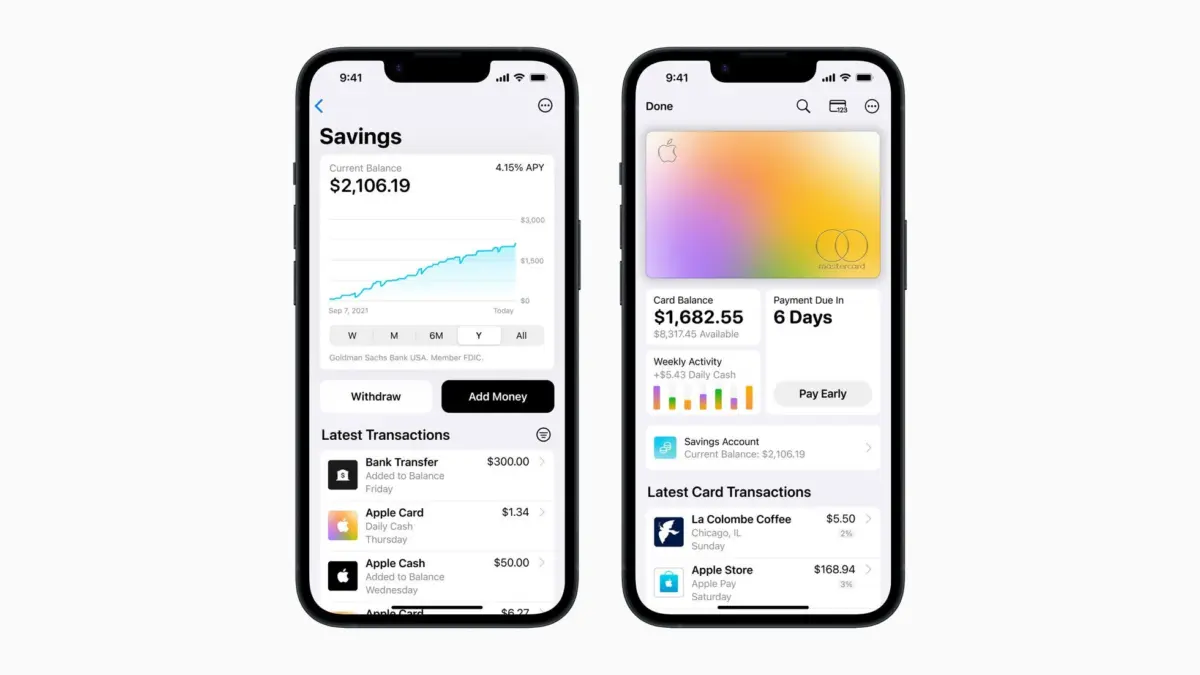
In a strategic maneuver that blurs the traditional lines between Silicon Valley and Wall Street, Apple—in partnership with banking titan Goldman Sachs—officially launched a high-yield savings account tailored exclusively for Apple Card users. Unveiled on a Monday morning and routed directly through the ubiquitous Apple Wallet application, this new financial product offers an annual percentage yield (APY) of 4.15%.
For the average consumer, this means that the minor cashback rewards accrued through everyday card purchases, known as "Daily Cash," no longer have to sit idle. Instead, they can be automatically funneled into an interest-bearing vehicle that dwarfs the returns offered by legacy brick-and-mortar financial institutions. To put this into perspective, traditional financial giants like Bank of America offer standard savings rates hovering around an anemic 0.01% APY. Apple’s offering is more than 400 times higher, positioning the tech conglomerate as a formidable, disruptive force in consumer personal finance.
However, the ambitions of Apple and Goldman Sachs extend far beyond merely housing automated cashback rewards. The account also allows users to deposit external funds directly from linked traditional bank accounts, up to a maximum FDIC-insured balance of $250,000. This turns the iPhone into a legitimate, high-interest digital savings hub capable of competing directly with online-only neo-banks and high-yield fintech platforms.
This rollout represents the latest in a rapid succession of bold moves by Apple to cement its foothold in the financial services sector. Coming hot on the heels of the recent introduction of its "Buy Now, Pay Later" (BNPL) service—which puts Apple in direct competition with established industry heavyweights like Klarna and Affirm—the high-yield savings account signals a profound paradigm shift. Apple is no longer just a hardware and software ecosystem; it is rapidly evolving into a comprehensive financial institution designed to own every facet of its users’ digital wallets.
Detailed Chronology: The Evolution of Apple Financial Services
To fully understand the gravity of Apple’s latest financial play, it is essential to trace the deliberate, methodical evolution of the company’s fintech strategy over the past decade. Apple’s journey into financial services has not been a hasty experiment, but rather a carefully orchestrated expansion designed to increase user lock-in while monetizing its massive global device footprint.
2014–2018: Laying the Infrastructure with Apple Pay
The foundation for Apple’s financial ecosystem was laid in 2014 with the launch of Apple Pay. Initially met with skepticism by traditional credit card issuers and retailers, Apple Pay slowly gained traction by digitizing physical credit and debit cards within the secure enclave of the iPhone. By leveraging Near Field Communication (NFC) technology and biometric authentication (Touch ID and Face ID), Apple established a secure, frictionless payment standard. Over the next four years, the service expanded globally, laying the psychological groundwork for consumers to trust their Apple devices with sensitive financial transactions.
2019: The Birth of the Apple Card
The true turning point arrived in March 2019, when Apple announced the Apple Card, engineered in collaboration with Goldman Sachs and built on the Mastercard network. Launched later that summer, the card was heralded for its clean, titanium physical design and its deep integration with the iPhone’s Wallet app.
Crucially, Apple introduced "Daily Cash"—an instantaneous cashback reward program that deposited funds back onto the user’s Apple Cash card immediately after a purchase settled. Unlike traditional credit cards that required users to wait until the end of a billing cycle or accumulate a minimum threshold to redeem rewards, Daily Cash offered instant gratification. It also tied consumers deeper into the Apple ecosystem by incentivizing them to use Apple Pay for everyday purchases.
2022–Early 2023: Expanding the Credit Ecosystem
As macroeconomic conditions shifted and interest rates began to rise globally, Apple recognized an opportunity to offer more robust financial tools. In March 2023, Apple rolled out its long-awaited "Buy Now, Pay Later" service, branded as Apple Pay Later. This feature allowed users to split purchases into four equal payments spread over six weeks, entirely free of interest and late fees. By entering the BNPL arena, Apple directly challenged established fintech players and kept users within its native checkout flows.
April 2023: The High-Yield Savings Account Debut
The logical culmination of these preceding steps arrived in mid-April 2023 with the official launch of the Apple Card high-yield savings account. By integrating an interest-bearing vehicle directly into the infrastructure of the Apple Card and Wallet app, Apple closed the loop between spending, sending, and saving money. Users could now seamlessly transfer their accumulated Daily Cash—or outside funds—into a high-yield account with just a few taps on their screen, bypassing the friction, paperwork, and branch visits historically associated with traditional banking.
Supporting Context & Metrics: How Apple Stacks Up Against Traditional Banking
Apple’s entry into the high-yield savings market arrives at a fascinating macroeconomic crossroads. For over a decade, interest rates remained near historic lows, rendering traditional savings accounts virtually useless as wealth-building tools. However, as central banks raised interest rates to combat inflation, consumers became acutely aware of the disparity between what banks earned on deposits and what they passed on to account holders.
The Numbers Game: APY Comparisons
At 4.15% APY, Apple’s savings account offers a compelling return compared to legacy financial institutions. Consider the following landscape:
- Bank of America: Offers a standard savings APY of approximately 0.01%.
- Chase Bank: Similarly hovers around 0.01% to 0.02% for standard savings tiers.
- Wells Fargo: Provides standard savings yields near 0.01%.
- Apple / Goldman Sachs: Offers 4.15% APY.
- Online Competitors (e.g., Marcus by Goldman Sachs, Ally Bank, Wealthfront): Historically fluctuate between 4.00% and 5.00% APY depending on federal rate adjustments.
While Apple’s 4.15% APY is undeniably attractive when compared to the big traditional banks, industry analysts point out that it is not the absolute highest rate on the market. Several specialized online-only fintech platforms and neobanks offer yields pushing past 5.00%.
However, Apple’s competitive edge does not rely solely on having the absolute highest number on the yield board. Instead, its primary advantage is seamless convenience and ecosystem integration. For an iPhone user already managing their credit card, peer-to-peer payments (Apple Cash), and digital boarding passes within the Wallet app, opening an account takes less than a minute. There are no separate login credentials to remember, no external apps to download, and no complex identity verification steps for existing Apple Card holders. Furthermore, the account features no fees, no minimum deposits, and no minimum balance requirements, lowering the barrier to entry for everyday savers.
The Goldman Sachs Partnership and FDIC Insurance
Behind the sleek user interface of the Apple Wallet lies the heavy lifting of a chartered bank. Because Apple is not a federally chartered bank, it relies on its partnership with Goldman Sachs Bank USA to hold deposits and issue the Apple Card.
This distinction is crucial for consumer confidence. Deposits held in the Apple savings account are backed by the Federal Deposit Insurance Corporation (FDIC) up to the statutory limit of $250,000 per depositor. This provides users with the same institutional security they would expect from a legacy banking institution, married to the frictionless software experience of Silicon Valley.
Official Statements and Industry Reception
The launch of the savings account generated intense media coverage and widespread commentary from financial analysts, tech historians, and consumer advocates alike. Executives from Apple were eager to frame the move as part of a broader mission to empower users financially.
The Apple Perspective
In an official company press release and subsequent statements, Jennifer Bailey, Apple’s vice president of Apple Pay and Apple Wallet, articulated the vision behind the product:
"Our goal is to build tools that help users lead healthier financial lives, and building Savings into Apple Card in Wallet enables them to spend, send, and save Daily Cash directly and seamlessly — all from one place."
Apple’s messaging consistently emphasizes simplicity, transparency, and user empowerment. By wrapping complex financial instruments in intuitive, consumer-friendly software design, Apple aims to demystify personal finance for demographics that may feel alienated or intimidated by traditional banking institutions.
Market and Competitor Reactions
Wall Street and the fintech sector watched the rollout with a mixture of admiration and apprehension. Traditional banks, long insulated by customer inertia and geographic convenience, suddenly found themselves facing an existential threat. When a technology company with over two billion active devices worldwide makes it effortless for users to sweep cash out of traditional checking accounts and into a 4.15% yield vehicle, the cost of customer acquisition for legacy banks skyrockets.
At the same time, fintech competitors offering high-yield accounts—such as Betterment, Wealthfront, and Marcus—recognized that Apple’s marketing machine and brand loyalty represent a formidable challenge. While these startups rely on aggressive digital marketing campaigns and specialized financial planning tools to attract customers, Apple enjoys a captive audience of hundreds of millions of affluent consumers who carry their financial dashboard in their pockets every single day.
However, consumer advocates have also raised important caveats. Financial journalists and advisors have been quick to remind users that Apple’s 4.15% APY is variable. As noted in the initial product disclosures, the rate can fluctuate at any time based on market conditions and Federal Reserve policy adjustments. Savers should not view the rate as permanently locked in, a reality common to all high-yield savings vehicles.
Future Outlook: Where Does Apple Go From Here?
The introduction of the high-yield savings account is merely a waypoint on Apple’s roadmap toward total integration within the consumer financial landscape. As we look to the future, several strategic questions and potential developments emerge.
1. International Expansion
Currently, the Apple Card, Apple Pay Later, and the high-yield savings account are restricted exclusively to users within the United States. This geographical limitation stems from the complex, fractured nature of global banking regulations, credit bureau systems, and interchange fee structures.
However, industry observers widely anticipate that Apple will eventually seek to export these financial products to key international markets, particularly in Europe, the United Kingdom, and parts of Asia. Doing so will require navigating distinct regulatory hurdles—such as varying deposit insurance schemes and open banking mandates—but the massive revenue potential of globalizing Apple’s financial services arm makes expansion an inevitability.
2. Deeper Wealth Management and Investment Products
By successfully convincing users to park up to $250,000 of their liquid savings into an Apple-branded, Goldman Sachs-backed account, Apple has proven that consumers trust the company with substantial sums of money. This sets the stage for future incursions into adjacent financial verticals.
Could Apple launch automated investing, fractional stock trading, or retirement planning tools (such as digital IRAs) directly within the Wallet app? Many financial analysts believe so. By partnering with established brokerages or expanding its partnership with Goldman Sachs—which operates Marcus Invest—Apple could easily transition from a passive savings hub into an active wealth management platform.
3. The Super-App Ambition
In regions like Asia, "super-apps" such as WeChat and Alipay have successfully consolidated messaging, social media, shopping, ride-hailing, and comprehensive financial services into a single digital interface. While Western markets have historically resisted super-apps due to fragmented market dynamics and intense regulatory scrutiny regarding anti-competitive behavior, Apple is uniquely positioned to achieve a similar status in the West.
By unifying hardware (iPhone, Apple Watch), operating system software (iOS, Wallet), communication (Messages, FaceTime), commerce (App Store, Apple Pay Later), and now banking (Savings, Apple Card), Apple is constructing a self-contained digital universe. Users who spend, send, save, borrow, and invest entirely within the Apple ecosystem have vanishingly few incentives to leave it.
Conclusion
Apple’s partnership with Goldman Sachs to introduce a high-yield savings account paying 4.15% APY is much more than a minor product update or a clever perk for credit card holders. It is a calculated, aggressive step by the world’s most valuable technology company into the heart of the traditional banking sector.
By pairing an attractive interest rate with the frictionless, elegant design of the Apple Wallet, Apple has eliminated the administrative friction that has historically kept consumers shackled to low-yielding traditional checking and savings accounts. While the APY remains variable and faces stiff competition from specialized fintech firms, the sheer convenience of the offering makes it an irresistible option for millions of iPhone owners.
As Apple continues to weave financial services deeper into the fabric of its hardware and software ecosystem, the boundary lines separating Silicon Valley from Wall Street continue to dissolve. For legacy financial institutions, the message is unmistakable: the future of banking is digital, mobile, and increasingly designed in Cupertino.