For generations, the post-Halloween ritual followed a precise, nearly sacred algorithm for children across America. Pillowcases dragged home from chilly suburban streets were emptied onto bedroom floors, triggering hours of meticulous sorting. Smarties, Tootsie Rolls, and Dum Dums formed the baseline utilitarian pile. Fun-size chocolate bars—Snickers, Reese’s Peanut Butter Cups, and Baby Ruths—constituted the reliable heavy hitters. But the true crown jewels—Skittles, Warheads, Starbursts, and Sour Patch Kids—were sequestered into a prized cache, rationed out slowly through the bleak weeks of November while the rest remained fair game.
These childhood taxonomies of sugar are governed by intensely personal, highly idiosyncratic rules. Yet today, a far more consequential classification system is taking shape at the highest levels of American governance, driven by Health and Human Services Secretary Robert F. Kennedy Jr. Under his stewardship, a new line is being drawn straight through the center of the candy aisle, dividing the nation’s treats into a stark binary: those manufactured with petroleum-based synthetic dyes, and those manufactured without them.
Kennedy’s crusade against synthetic food colorings is hardly a recent development, but it has graduated from alternative health circles to become a cornerstone directive of the "Make America Healthy Again" (MAHA) movement. Last year, the federal government initiated aggressive plans to phase petroleum-based synthetic dyes out of the domestic food supply, with Kennedy arguing publicly that major corporations "shouldn’t be feeding it to the rest of us."
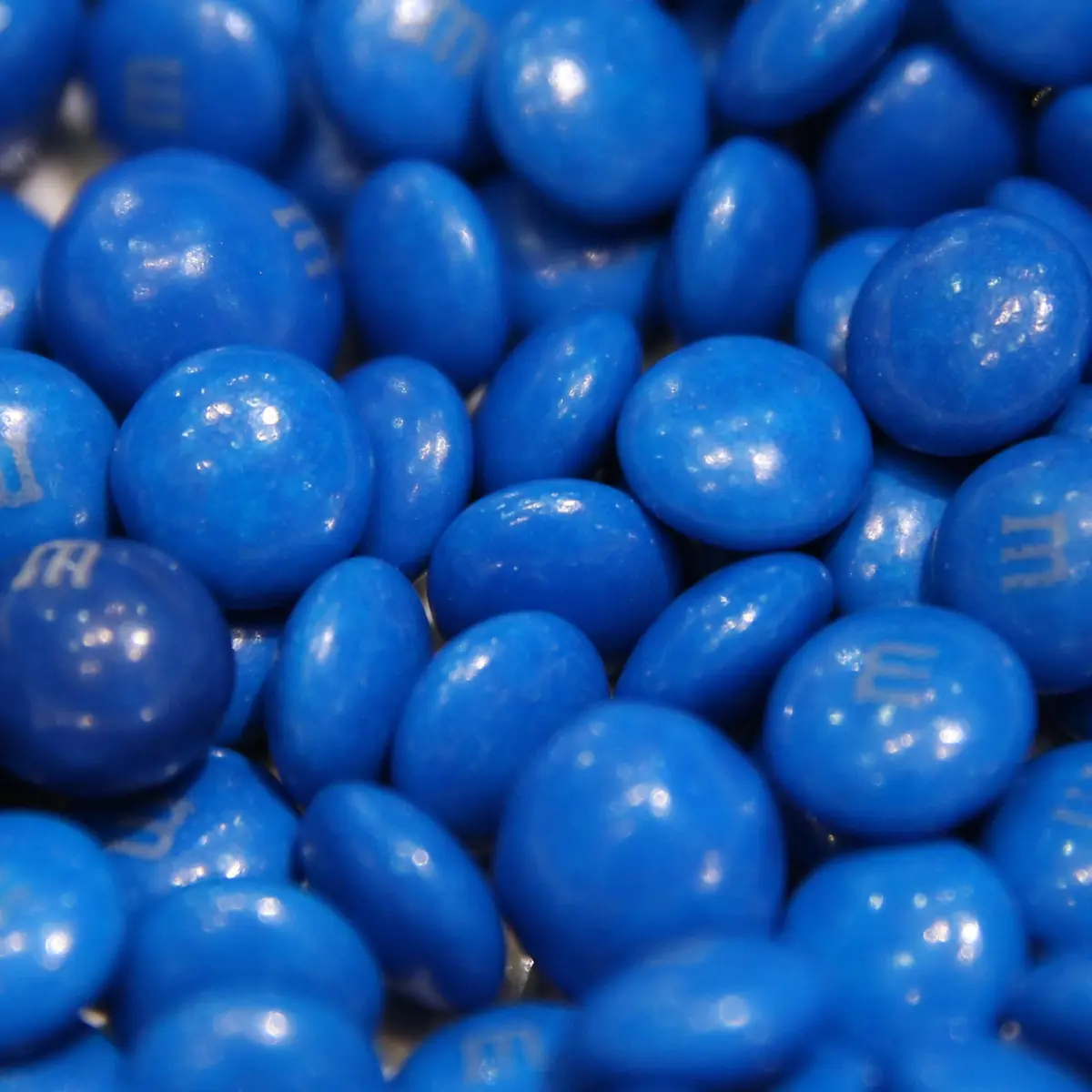
That regulatory pressure has triggered a cascade of multi-million-dollar headaches for the global confectionery giant Mars, the maker of M&Ms. Last year, the company made a sweeping public commitment to develop all-natural iterations of its iconic chocolate treats. However, as investigative reporting by the Wall Street Journal revealed this summer, the initial rollout of this natural makeover bears a glaring omission: the beloved, vibrant blue M&M is entirely missing from the bag.
Executive Overview: A High-Stakes Collision of Public Policy and Industrial Confectionery
The friction between the federal government’s nutritional reform agenda and the multi-billion-dollar snack industry highlights a fascinating engineering and economic dilemma. M&Ms are far from the sole target of Secretary Kennedy’s crosshairs. In various public addresses and media appearances, he has trained his sights on Doritos, Cheez-Its, Cap’n Crunch, and standard gummy bears, frequently dismissing their constituent ingredients as "a lot of poisons." In appearances on networks like Fox News, Kennedy has colorfully characterized American children’s diets as consisting of "food-like substances," going so far as to point out that portions of these foods trace their origins back to petroleum refineries.
The reality on the ground, however, is considerably more complex. For decades, the Food and Drug Administration (FDA) has classified numerous synthetic dyes as safe for human consumption under established regulatory frameworks, even while acknowledging that a subset of children may exhibit heightened sensitivities to them. Kennedy’s sweeping indictments bypass these nuanced regulatory definitions, casting a wide net that has forced food manufacturers to radically rethink foundational recipes developed decades ago.
Re-engineering mass-market snacks to satisfy the MAHA mandate is neither simple nor inexpensive. The ongoing saga of the missing blue M&M serves as a masterclass in the unintended friction points that occur when political mandates crash head-first into the unforgiving laws of industrial chemistry and fluid dynamics.
To understand how a simple candy coating became a focal point of national health policy, Today, Explained co-host Noel King spoke with Wall Street Journal food reporter Jesse Newman, who went directly inside a heavily guarded Mars manufacturing facility in Topeka, Kansas, to witness the industrial pivot firsthand.
Detailed Chronology: From Washington Mandates to the Topeka Factory Floor
The trajectory that led to Topeka’s production lines began years prior, fueled by growing consumer skepticism and the political ascendance of the MAHA movement. As pressure mounted from federal regulators and public health advocates demanding the removal of synthetic chemicals from the American diet, corporate leadership at Mars faced a pivotal choice: push back against the administration or attempt to reform their flagships.
The Target: Blue 1
At the heart of the blue M&M dilemma is Blue 1 (Brilliant Blue FCF), a synthetic coal-tar derivative utilized for decades to achieve the striking, electric hue that consumers associate with the candy. Secretary Kennedy and other critics contend that synthetic dyes like Blue 1 are linked to hyperactivity in children, potential neurological hurdles, and unverified carcinogenic risks.
While federal bodies like the FDA have historically maintained that approved dyes are safe when managed within specific regulatory limits, state-level bodies—such as agencies in California—have published findings pointing toward links between synthetic colorings and behavioral shifts in minors. For critics, the argument ultimately boils down to a simple philosophical question: since these chemicals serve a purely cosmetic function with zero nutritional value, why should they be tolerated in the human diet at all?
Inside the Topeka Plant
To grasp the immense engineering hurdle of replacing Blue 1, one must look at how mass-market candy is actually manufactured. Jesse Newman’s reporting took her deep into the guts of the Mars industrial plant in Topeka, Kansas—a sprawling, highly automated facility where millions of small chocolate orbs, affectionately known within the industry as "lentils," are processed daily.
[Chocolate Centers ("Lentils")]
       ↓
[Massive Rotating "Pans" (Tumble Dryers)]
       ↓
[Precision Spraying Systems] → (Synthetic vs. Natural Dyes Applied)
       ↓
[Cooling & Packaging (Millions of Units/Day)]
The process relies on massive, rotating industrial drums known as "pans," which function essentially like high-tech industrial tumble dryers. Inside these tumbling chambers, the chocolate lentils cascade continuously while precision sprayers coat them in successive layers of sugary syrup and color. At scale, the operation must run with clockwork precision, churning out millions of units a day without interruption.
The Spirulina Bottleneck
To replace artificial blue, Mars turned to spirulina, a natural blue-green pigment derived from edible cyanobacteria (algae). While natural, spirulina introduced an unprecedented cascade of mechanical and chemical engineering problems:
- State of Matter Discrepancies: Traditional Blue 1 is delivered to factories as a liquid, mixing easily with sugary syrups and flowing seamlessly through plant plumbing. Spirulina, by contrast, arrives as a dry powder. Incorporating a powder into a liquid syrup formulation completely alters the rheology (flow properties) of the mixture.
- Viscosity and Clogging: Because spirulina is fundamentally a protein-based substance, the resulting dye mixture is significantly thicker than its synthetic predecessor. This heightened viscosity caused the liquid to choke and clog factory piping, stalling production lines.
- Microbiological Hazards: The proteinaceous nature of spirulina meant that it readily coated and adhered to the internal machinery. Over time, this buildup created severe food safety hazards, presenting breeding grounds for mold and bacteria if not constantly scrubbed and maintained.
Supporting Context & Metrics: The Financial and Visual Cost of a "Natural" Makeover
While Mars has declined to publicly disclose the exact financial tab of its ongoing plant retrofits, industry insiders acknowledge that the enterprise has cost the company millions of dollars.
The operational overhaul required retrofitting roughly 300 distinct types of machinery across their production footprint. This was not a minor tweak to an existing recipe; it demanded a total engineering redesign of industrial coating systems to accommodate the temperamental nature of algal-based proteins.
Furthermore, elementary school color theory dealt the engineering team a heavy blow. In confectionery dyeing, blue is a foundational primary color required to formulate secondary and tertiary shades, including green and brown. Without a stable, cost-effective, and scale-ready natural blue, formulating authentic green and brown M&Ms proved exceedingly difficult.
Ultimately, engineers found they could successfully manufacture green M&Ms because the required concentration of spirulina was low enough to avoid mechanical catastrophe. However, true blue and traditional brown remained out of reach due to the massive pigment loads required.
As a result, Mars rolled out a bifurcated product strategy earlier this year. Their artificially dyed M&Ms—the classic, brightly colored candies consumers have known for decades—remained completely untouched on store shelves. Simultaneously, they introduced a secondary, naturally dyed product line featuring red, orange, yellow, and green pieces.
Reviewers and consumers quickly noted the visual difference. Lacking the vibrant pop of synthetic dyes, the naturally dyed M&Ms presented a muted, earthy aesthetic—prompting one observer to describe them as "autumnal" or looking like "a mature person’s M&M."
Official Statements and Industry Perspective
The ongoing dialogue between journalists, corporate executives, and regulatory figures underscores a broader cultural reckoning over processed foods. As Jesse Newman noted during her conversation on Today, Explained:
"They didn’t come out and say we’re eliminating artificial dyes. And so folks should be really clear about that: Their artificially dyed M&Ms aren’t going anywhere. They are still on shelves. What they said is that they’re going to come out with an option that is naturally dyed."
When questioned about the ultimate health implications of switching to these natural, autumnal candies, the reality check is sobering. Eating a naturally dyed candy bar or chocolate lentil does not magically transform an individual into a paragon of wellness:
"It means very little," Newman explained. "I would say you are, hopefully, still enjoying that sugary treat and the pick-me-up in the afternoon as you’re starting to tire. But you’re still eating candy; you’re still eating sugar. It really hasn’t changed very much."
Future Outlook: Where Do We Go From Here?
The clash over the blue M&M is emblematic of a broader cultural and regulatory shift in the United States. As the Make America Healthy Again movement maintains its pressure on federal agencies and corporate boardrooms, food manufacturers find themselves walking an increasingly precarious tightrope.
On one side lies consumer nostalgia and the immense economic efficiencies of mass-produced, chemically stabilized ingredients. On the other lies a rising tide of health-conscious consumer demand and aggressive federal oversight aiming to strip synthetic compounds from the American pantry.
For Mars and its competitors, the challenge moving forward is clear: either find breakthrough technological innovations that make natural food colorings as cheap, stable, and vibrant as their petroleum-based counterparts, or prepare to manage consumer expectations for a more muted, "mature" looking candy aisle.
Until biochemical engineering catches up to political rhetoric, the iconic blue M&M will remain a striking monument to the limits of industrial food transformation—a reminder that changing the color of America’s favorite sweet treat is easy to demand in Washington, but extraordinarily difficult to pull off on the factory floor in Kansas.