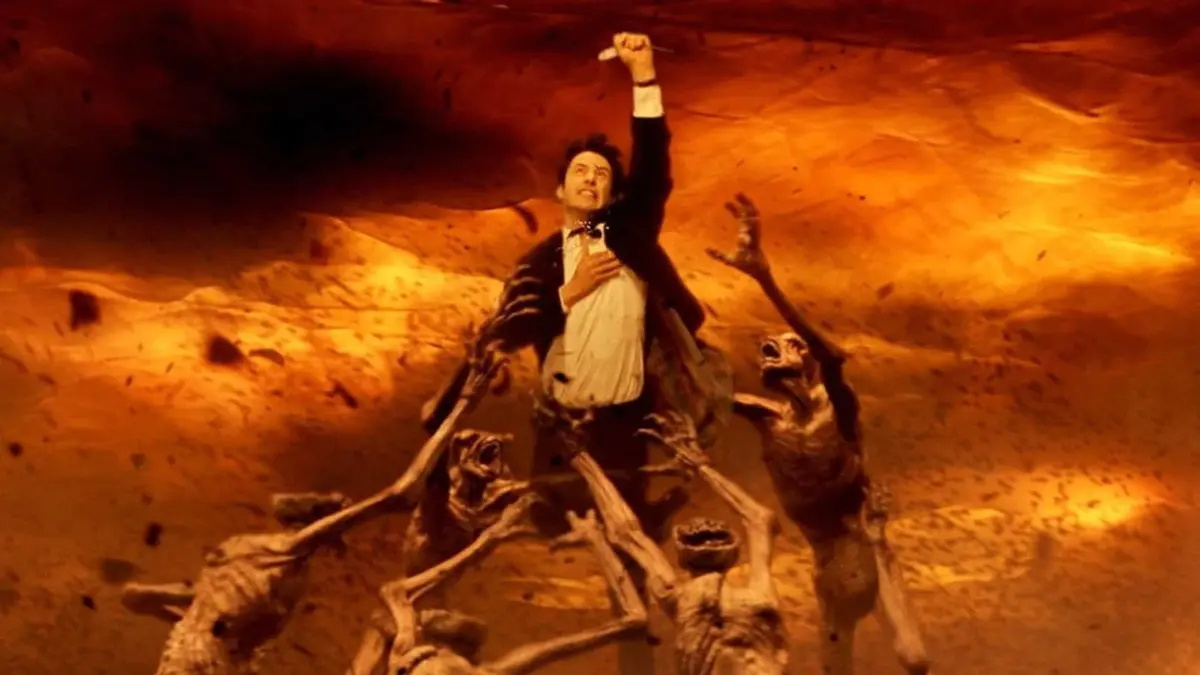
Executive Overview
Two decades after Keanu Reeves first lit a cigarette and squared off against the legions of hell in 2005’s supernatural cult classic Constantine, the prospect of a long-awaited sequel has never felt closer—or more complicated. Following a sudden and unexpected corporate changing of the guard at DC Studios that saw James Gunn and Peter Safran step back from key operational roles, Hollywood has once again been thrown into a state of speculative flux. Yet, where fans and industry insiders see instability, veteran blockbuster director Francis Lawrence sees an unprecedented opening.
In a recent interview while promoting his upcoming cinematic venture, The Hunger Games: Sunrise on the Reaping, Lawrence pulled back the curtain on a 20-year creative struggle. Alongside Reeves, producer Akiva Goldsman, and executive producer J.J. Abrams, Lawrence has spent the better part of two decades attempting to breathe life into Constantine 2. According to the director, the previous regime at DC Studios served as a persistent roadblock, actively stifling their efforts to continue the story of the cynical, chain-smoking occult detective.
Now, with the studio’s leadership landscape shifting once more, the creative team feels a renewed sense of optimism. However, the path forward is far from straightforward. While Lawrence and Reeves are fiercely passionate about delivering a true, uncompromised "hard-R" sequel—even going so far as to express a willingness to take pay cuts to keep the budget lean and scrappy—DC Studios is simultaneously exploring other avenues for the character. Most notably, recent developments indicate that Evil Dead Wrath filmmaker Francis Galluppi has been tapped to write a separate John Constantine project for DC.
As the comic book adaptation landscape navigates a tumultuous era of corporate restructuring, the fate of the 2005 film’s universe hangs in the balance. This in-depth report examines the history of the stalled sequel, the impact of DC’s shifting leadership, the creative battles over rating restrictions, and what the future holds for cinema’s most famous Hellblazer.
Detailed Chronology: A Twenty-Year Battle to Bring Back the Hellblazer
To understand the tenacity behind the push for Constantine 2, one must look back at the rocky origin and enduring legacy of the original film. Released in February 2005 and directed by Lawrence in his feature film directorial debut, Constantine adapted the gritty, esoteric tone of DC/Vertigo’s Hellblazer comic books. While initial critical reception was mixed, the film resonated deeply with audiences over time, eventually achieving legendary status as a benchmark of mid-2000s dark fantasy cinema.
Despite grossing over $230 million worldwide against a production budget of roughly $100 million—a respectable box office haul for an R-rated supernatural thriller at the time—a direct sequel failed to materialize immediately. Over the next two decades, the project languished in development hell, plagued by shifting studio priorities, rights issues, and changing cinematic universes.
- The Mid-2000s to 2010s (The Dormant Era): Immediately following the film’s release, talk of a sequel circulated intermittently. However, Warner Bros. Pictures was hesitant to commit to a dark, R-rated comic book property during an era when superhero cinema was rapidly shifting toward the interconnected, family-friendly paradigms of the burgeoning Marvel Cinematic Universe.
- The 2020 Revival Push: Hope was reignited when Reeves, Lawrence, and Goldsman publicly campaigned for the project, revealing that they were actively trying to secure the rights from Warner Bros. to make the film a reality.
- The 2023–2025 Pitch Phase: Reports surfaced that Keanu Reeves had directly pitched Constantine 2 to DC Studios executives, leading to confirmation that a script was actively being developed. However, progress stalled once more amid the broader structural shake-ups under James Gunn and Peter Safran’s tenure.
- The Present Day (The Post-Leadership Shift): With Gunn and Safran stepping away from aspects of the corporate hierarchy, Lawrence has openly admitted that the prior administration functioned as an "impediment" to the project, breathing new life into the possibility that the sequel might finally escape development hell.
Supporting Context & Metrics: Navigating Studio Politics and Budgets
The primary hurdle facing Constantine 2 has never been a lack of creative enthusiasm; rather, it has always been a collision of corporate risk management and budgetary realities. In his recent disclosures, Francis Lawrence emphasized that the creative team is acutely aware of the economic constraints required to make an R-rated supernatural sequel viable in today’s risk-averse Hollywood environment.
The Financial Blueprint: Scrappy Filmmaking Over Blockbuster Bloat
During the peak of the superhero boom, sequels to established intellectual properties routinely command production budgets exceeding $150 million to $200 million. Lawrence, however, is quick to dismiss this approach for a potential Constantine follow-up.
"We want to make it," Lawrence stated regarding the financial side of the equation. "This is not the kind of movie that I would charge full freight and Keanu could charge full freight. It’s something we have to do, because we love and want to take a gamble on it, and do it responsibly. And so, we’ve been thinking about that same idea for 20 years, that we’re not going to do it for $100 million. We have to be scrappy about it."
By voluntarily lowering their standard compensation demands, Reeves and Lawrence aim to bypass the financial anxiety that typically plagues studio greenlights. A leaner budget grants the filmmakers greater creative autonomy, shielding the project from the studio meddling that often dilutes the edge of mature-rated adaptations.
The Dual-Constantine Dilemma at DC Studios
Compounding the budgetary and logistical discussions is DC Studios’ broader multi-platform strategy. Earlier this month, industry reports confirmed that filmmaker Francis Galluppi (Evil Dead Wrath) had been hired by DC Studios to pen a brand-new John Constantine feature film. It remains unconfirmed whether Galluppi will also direct, or whether his script represents a total reboot of the character designed to integrate into Gunn and Safran’s broader shared universe plans.
This creates a fascinating cinematic paradox: Warner Bros. and DC may soon find themselves weighing two distinct visions for the character—a fresh, potentially universe-integrated reboot, and the legacy sequel starring Keanu Reeves. Addressing this exact scenario, Lawrence expressed absolute indifference toward shared-universe integration, provided his team is simply allowed to finish what they started:

"Personally, I don’t even care if somebody has a plan for some sort of shared universe, and they want to do another version of Constantine. If they just let us do the sequel to our version, they can coexist."
Official Statements: Inside the Mind of Francis Lawrence
The transparency offered by Lawrence provides a rare look into the mechanics of Hollywood development cycles. His comments to Collider illuminate the frustrations shared by creators whose artistic visions clash with corporate bureaucracy.
Overcoming Institutional Roadblocks
When asked about the sudden departure of James Gunn and Peter Safran from their direct executive roles at DC Studios, Lawrence was careful not to celebrate professional setbacks, framing the shift strictly through the lens of creative opportunity.
"Not that I want anybody to lose their jobs, so this is not like a schadenfreude kind of thing, but I will say that we’ve been trying to make Constantine 2 for twenty-something years, and we have an idea, and we have a script, and we’ve been wanting to make it, and the people that were at DC were an impediment to us making it."
This frank admission highlights a historical friction point between auteur-driven genre filmmaking and the macro-management strategies typical of major comic book intellectual property holders.
The Vengeance for a Hard-R Rating
One of the most passionate segments of Lawrence’s recent commentary centered on the MPAA rating of the 2005 original. Contrary to popular belief, the first film was never intentionally designed from day one to be an R-rated vehicle. Instead, the production aimed for a commercial PG-13 rating, only to be slapped with an R by ratings boards regardless of their adjustments.
"So, part of the idea from the very beginning was, because we followed all the rules to make a PG-13 movie and we got hit with an R, they told us, ‘You can’t do anything about it. It’s going to be an R no matter what.’ We tried to fight them on it, and they said, ‘Nope. It’s an R,’ but really, it’s an R-rated PG-13 movie, which pisses me off," Lawrence recalled.
That lingering frustration has served as a creative rallying cry for the sequel. Freed from the commercial constraints of chasing a younger demographic, Lawrence confirmed that the upcoming installment will fully embrace its mature nature without compromise:
"And so we all kind of came back and said, ‘Okay, when we do this next time, we’re making the hard-R version of Constantine.’ So when we do it, it’s going to be the hard-R version of Constantine."
Future Outlook: Will the Stars Align for Constantine 2?
As Hollywood enters a new fiscal and creative cycle, the window of opportunity for Constantine 2 hangs precariously in the balance. The convergence of several key factors will ultimately dictate whether the project transitions from script pages to principal photography:
- Corporate Reorganization at Warner Bros. Discovery: With leadership roles at DC Studios continuously evolving, the incoming executives will hold the final keys to the kingdom. Securing cross-studio approval between Warner Bros. Pictures and DC’s managerial board remains the final hurdle.
- Keanu Reeves’ Schedule: As one of the industry’s most in-demand action stars—fresh off the continued success of the John Wick franchise and other high-profile ventures—coordinating Reeves’ availability with Lawrence’s packed directorial calendar will require precise timing.
- Coexistence with DC’s Main Slate: Whether studio heads will permit a standalone, legacy R-rated franchise to run parallel to their core shared-universe initiatives remains to be seen. However, Lawrence’s willingness to keep budgets modest removes one of the primary financial arguments against greenlighting the film.
For millions of fans who have kept the flame alive for two decades, the latest updates offer a potent mix of validation and cautious optimism. John Constantine has spent his entire fictional existence cheating death, defying divine bureaucracy, and walking the razor-thin line between heaven and hell. It is perhaps fitting that his cinematic counterpart is forced to do the exact same thing in the real world of Hollywood development.
Whether Francis Lawrence, Keanu Reeves, and their dedicated creative cohort can finally break through the studio gates remains one of the most compelling narratives in modern entertainment journalism. One thing is certain: if the Hellblazer does finally return to the silver screen, he won’t be pulling any punches—or holding back on the rating.