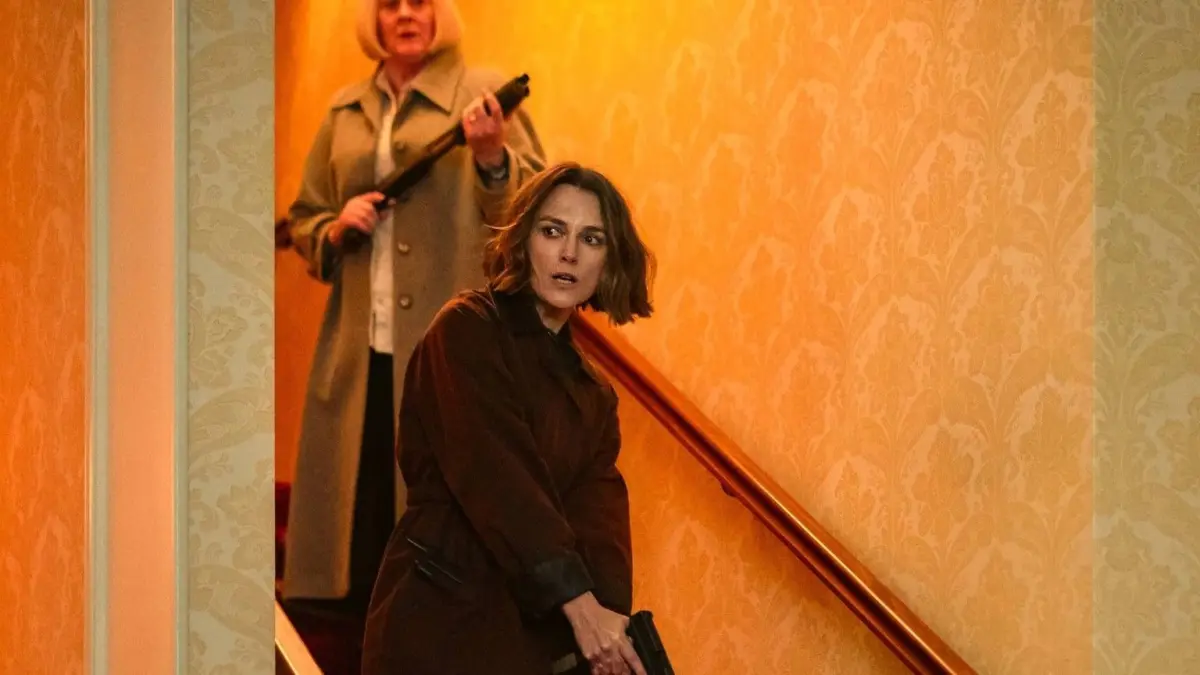
The landscape of prestige television has long been defined by high-stakes espionage, labyrinthine conspiracies, and morally compromised protagonists. Yet, few contemporary entries have captured the zeitgeist quite like Netflix’s British spy thriller Black Doves. Following its highly anticipated return for a second season on November 5, 2026, the series has rapidly ascended to the upper echelons of global streaming charts, cementing its status as one of the platform’s premier dramatic offerings.
Led by two-time Academy Award nominee Keira Knightley—whose career has increasingly gravitated toward sharp, tenacious characters in perilous circumstances—Black Doves blends intimate character drama with high-octane international intrigue. The second season wasted little time proving its enduring appeal, climbing to No. 2 globally on FlixPatrol within days of its premiere and pulling in a staggering 3.8 million views during its opening window.
As streaming platforms compete fiercely for audience retention through high-production-value genre fare, Black Doves stands out not merely as a temporary distraction, but as a critical and commercial darling. With both seasons earning stellar marks from critics—culminating in a remarkable 96% approval rating for Season 2 on Rotten Tomatoes—the series represents a masterclass in modern espionage storytelling. This report provides an exhaustive examination of the show’s trajectory, plot mechanics, audience reception, and long-term future within Netflix’s sprawling content ecosystem.
Detailed Chronology: From Concept to Global Phenomenon
The journey of Black Doves from an ambitious British television pitch to an international streaming juggernaut spans several years of meticulous development, strategic releases, and critical recalibration.
The Genesis and Season 1 Launch (December 2024)
When Netflix first dropped the six-episode first season of Black Doves on December 5, 2024, it arrived with a distinct pedigree. Centered around the creative vision of its writer and creator, the series was designed to subvert traditional tropes of the spy genre. Instead of focusing solely on field operatives operating in exotic foreign locales, the narrative chose to anchor its espionage in the mundane, suburban domesticity of London political life.
Season 1 introduced audiences to Helen Webb (Keira Knightley), a seemingly benign politician’s wife who secretly funneled state secrets to a shadowy organization known only as the "Black Doves." The initial run of episodes meticulously established Helen’s precarious balancing act: maintaining her facade as a doting mother and loyal spouse while serving as an intelligence asset. The catalyst for the entire narrative occurred when her secret lover, Jason (played by Andrew Koji), was brutally murdered. This inciting incident forced Helen into an alliance with her long-time handler and friend, Sam Young (Ben Whishaw), an assassin whose internal struggles matched the external threats closing in on them.
Upon its debut, Season 1 was met with widespread critical acclaim, securing a 92% approval rating on Rotten Tomatoes. While initial audience scores were slightly more polarized at 64%, viewers quickly warmed to the series’ unique blend of cynical British humor, brutal action sequences, and deeply human emotional beats.
The Production Gap and Anticipation (2025–Late 2026)
Following the breakout success of the inaugural season, Netflix greenlit a follow-up order to expand upon the sprawling conspiracy unearthed by Helen and Sam. The production team used the intervening months to elevate the scale of the series, moving deeper into the murky underworld of international politics and high-level British crime syndicates.
As promotional materials began rolling out in late 2026, anticipation reached a fever pitch. Knightley’s involvement continued to serve as a major marketing anchor, drawing comparisons to her previous tour-de-force performances in suspense-driven projects like Official Secrets, Boston Strangler, and the nautical Netflix mystery The Woman in Cabin 10.
The Season 2 Premiere and Surge (November 2026)
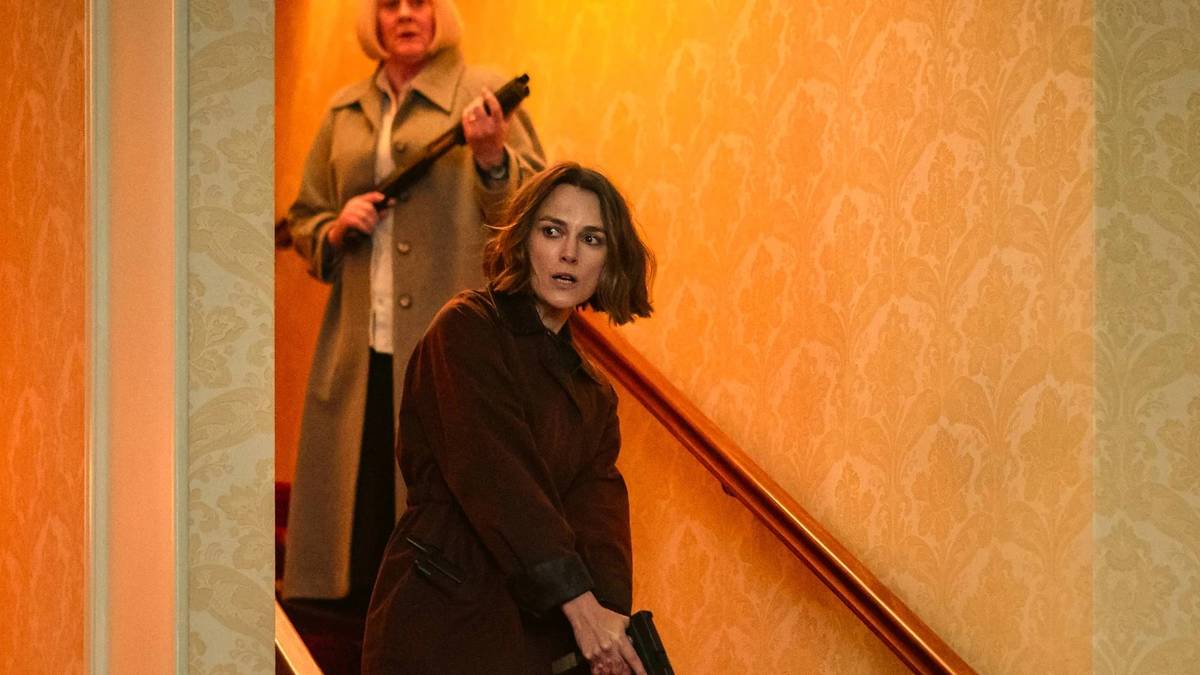
Arriving on November 5, 2026, the six-episode second season picked up the narrative threads left dangling in the wake of the initial conspiracy. The rollout was carefully managed by Netflix’s distribution arm, instantly capitalizing on the colder autumn viewing window when prestige thrillers traditionally perform best.
Within hours of going live, Black Doves began dominating social media discourse, driving a wave of binge-watching that propelled the series to the upper tiers of global metrics within its first week of availability.
Supporting Context & Metrics: Decoding the Success of Black Doves
To understand the magnitude of Black Doves‘ current dominance, one must look closely at the quantitative data driving its resurgence. Streaming success is rarely accidental; it is the byproduct of algorithmic alignment, star power, and sustained critical validation.
Global Viewing Figures and Chart Dominance
According to data compiled by FlixPatrol immediately following the Season 2 premiere, Black Doves surged to No. 2 on the global Netflix TV chart, outperforming numerous returning heavyweights and reality television juggernauts.
Furthermore, Netflix’s proprietary weekly engagement metrics for the window of November 2 to November 8, 2026, revealed that Season 2 pulled in 3.8 million views. This impressive metric firmly established the series as the fourth most-watched English-language television series on the entire platform for that specific tracking period. Given that these numbers represent only the first few days of availability, industry analysts expect cumulative viewing figures to scale exponentially over the standard 28-day measurement window.
Critical Reception vs. Audience Sentiment
The critical consensus surrounding Black Doves has been overwhelmingly positive across both narrative iterations, a rare feat for sophomore seasons in the thriller genre.
- Season 1: Achieved a 92% critics’ score and a 64% audience score on Rotten Tomatoes, indicating that while critics immediately recognized its sophisticated writing and stellar performances, it took a brief period for the broader public to discover its charms.
- Season 2: Improved upon its predecessor critically, capturing an astounding 96% critics’ score, while the audience score ticked upward to 66%.
Reviewers have routinely singled out the palpable on-screen chemistry between Keira Knightley and Ben Whishaw as the series’ beating heart. While the plotting involves convoluted geopolitical machinations and corporate espionage, the emotional anchor provided by Helen and Sam’s platonic, trauma-bonded partnership prevents the show from devolving into a sterile exercise in style over substance.
Official Statements and Industry Perspective
While traditional press tours for streaming releases are often heavily curated, statements from the creative minds behind Black Doves and Netflix executives paint a clear picture of why the series was conceptualized and how it fits into the broader television landscape.
Industry analysts have noted that Black Doves represents a strategic shift for Netflix in how it procures British content. By partnering with top-tier UK talent—both in front of and behind the camera—the streaming giant has effectively bridged the gap between traditional BBC-style prestige dramas and the binge-able pacing expected by global audiences.

Keira Knightley herself has previously discussed the appeal of playing multi-dimensional women who operate within gray moral landscapes. In interviews discussing her recent string of thriller projects, Knightley emphasized that modern audiences are increasingly fatigued by cleanly demarcated heroes and villains. In Black Doves, Helen Webb is neither a saint nor a simple mercenary; she is a mother trying to protect her children while reckoning with the fact that her entire adult life has been built on a foundation of state-sanctioned deceit.
Ben Whishaw’s portrayal of Sam Young has likewise received high praise from industry insiders. Whishaw, known for his ability to infuse vulnerable humanity into hardened or eccentric characters (such as his work in No Time to Die and Paddington), brings a quiet, melancholic menace to the role of the assassin-for-hire. Their dynamic has been cited by showrunners as the primary engine driving the narrative forward across its multi-season arc.
Future Outlook: What’s Next for the World of Black Doves?
As Black Doves continues to dominate viewing charts around the world, speculation has naturally turned toward the long-term future of the franchise.
Expanding the Spy Universe
Given the vast scope of the conspiracy introduced in Season 2—which digs deep into the symbiotic relationship between corporate greed, organized crime, and parliamentary politics in the United Kingdom—the narrative universe is ripe for further expansion. The conclusion of the second season leaves several major narrative threads unresolved, providing ample runway for a potential third season.
Netflix has historically evaluated returning series based on a complex matrix of completion rates, production costs, and cultural footprint. Given that Black Doves has cleared the critical threshold with flying colors (boasting a 96% Rotten Tomatoes score) and demonstrated strong initial viewership numbers (3.8 million views in its first partial week), the financial incentive for a renewal is exceptionally high.
The Rise of the Prestige British Thriller on Netflix
The success of Black Doves also signals a broader trend within Netflix’s content strategy. High-end, serialized British thrillers have proven to be exceptionally resilient export products. By combining cinematic cinematography, sharp dialogue, and globally recognized movie stars like Keira Knightley, Netflix has created a repeatable blueprint for international television success.
For now, subscribers logging onto the platform will find Black Doves sitting comfortably near the top of their recommendation queues. Whether viewers are drawn in by the promise of high-stakes espionage, the intricate cat-and-mouse dynamics between Helen and her adversaries, or simply the magnetic presence of Knightley and Whishaw, the series has firmly cemented its place as a modern staple of the espionage genre. As the dust settles on Season 2’s explosive revelations, one thing is abundantly clear: the Black Doves are flying high, and viewers are more than willing to follow them into the dark.