Executive Overview
In the grand pantheon of cinematic history, few movements are as revolutionary as the Spaghetti Western subgenre of the mid-1960s. At the absolute center of this cultural seismic shift was Italian visionary Sergio Leone and a then-fledgling American television actor named Clint Eastwood. When A Fistful of Dollars debuted in 1964, it tore down the idealized, black-and-white moral architecture of classical Hollywood Westerns. It introduced global audiences to a dusty, amoral frontier where survival superseded righteousness and the protagonist was a self-interested mercenary rather than a shining knight.
Yet, while its predecessor is universally celebrated as a game-changer, and its successor, The Good, the Bad and the Ugly (1966), is canonized as an undisputed masterpiece, the middle chapter of Leone’s legendary "Dollars Trilogy"—1965’s For a Few Dollars More—often gets overshadowed. Straddling the line between a modest sleeper hit and the sprawling epic of the trilogy’s conclusion, this forgotten sequel is frequently treated as a transitional bridge.
This assessment is profoundly mistaken. For a Few Dollars More did not merely bridge the gap; it refined, deepened, and expanded the psychological and aesthetic vocabulary that made the trilogy iconic. Boasting a larger budget, a more complex web of antiheroes, a chillingly humanized villain, and the iconic pairing of Clint Eastwood and Lee Van Cleef, the film remains a masterclass in tension, pacing, and moral ambiguity. For modern film enthusiasts, this unjustly overlooked milestone is widely available to stream on platforms like MGM Plus, making it prime for a long-overdue critical and popular re-evaluation.
Detailed Chronology: From Humble Beginnings to Trilogy Mastery
The 1964 Catalyst: A Fistful of Dollars
To understand the monumental achievement of For a Few Dollars More, one must first examine the precarious conditions under which its predecessor was born. In 1964, Sergio Leone directed A Fistful of Dollars on a shoestring budget of roughly $200,000. An unofficial, unauthorized adaptation of Akira Kurosawa’s timeless samurai classic Yojimbo (1961), the film was shot largely in the arid deserts of Spain and Italy.
The production faced financial hurdles, language barriers, and industry skepticism. Hollywood executives largely dismissed the European-made Western—often patronizingly labeled a "Spaghetti Western." However, when the film hit international markets, it shattered expectations. It proved three undeniable truths:
- Audiences were hungering for a grittier, cynical deconstruction of the American frontier mythos.
- The United States no longer held a global monopoly on crafting the Western genre.
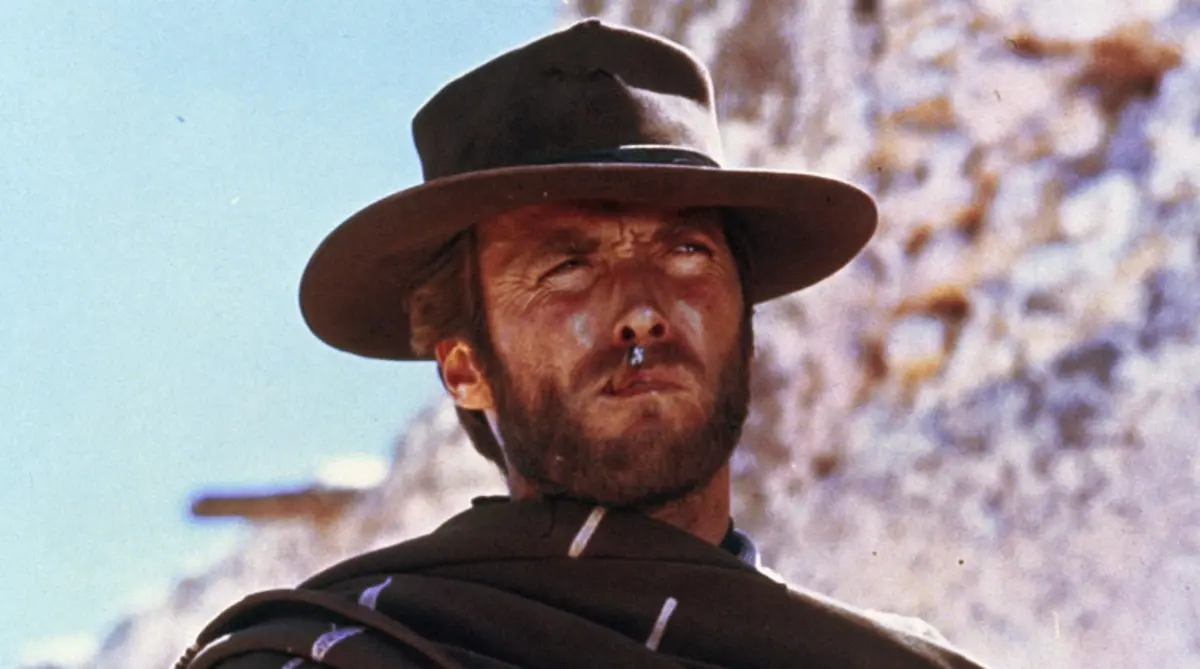
- Clint Eastwood—with his squinting, poncho-clad stoicism and effortless cool—was an undeniable, bankable cinematic icon.
The 1965 Elevation: For a Few Dollars More
Capitalizing immediately on the unexpected commercial windfall of the first film, producer Alberto Grimaldi and director Sergio Leone secured a significantly increased budget—roughly three times that of the original, at approximately $600,000. This financial injection allowed for grander ambitions.
Production kicked off in late 1964 and early 1965, utilizing the Tabernas Desert in Almería, Spain, alongside expansive purpose-built sets. Rather than recycling the micro-budget mechanics of a single, isolated town like San Miguel, Leone and his crew engineered the bustling, multi-layered frontier hub of El Paso.
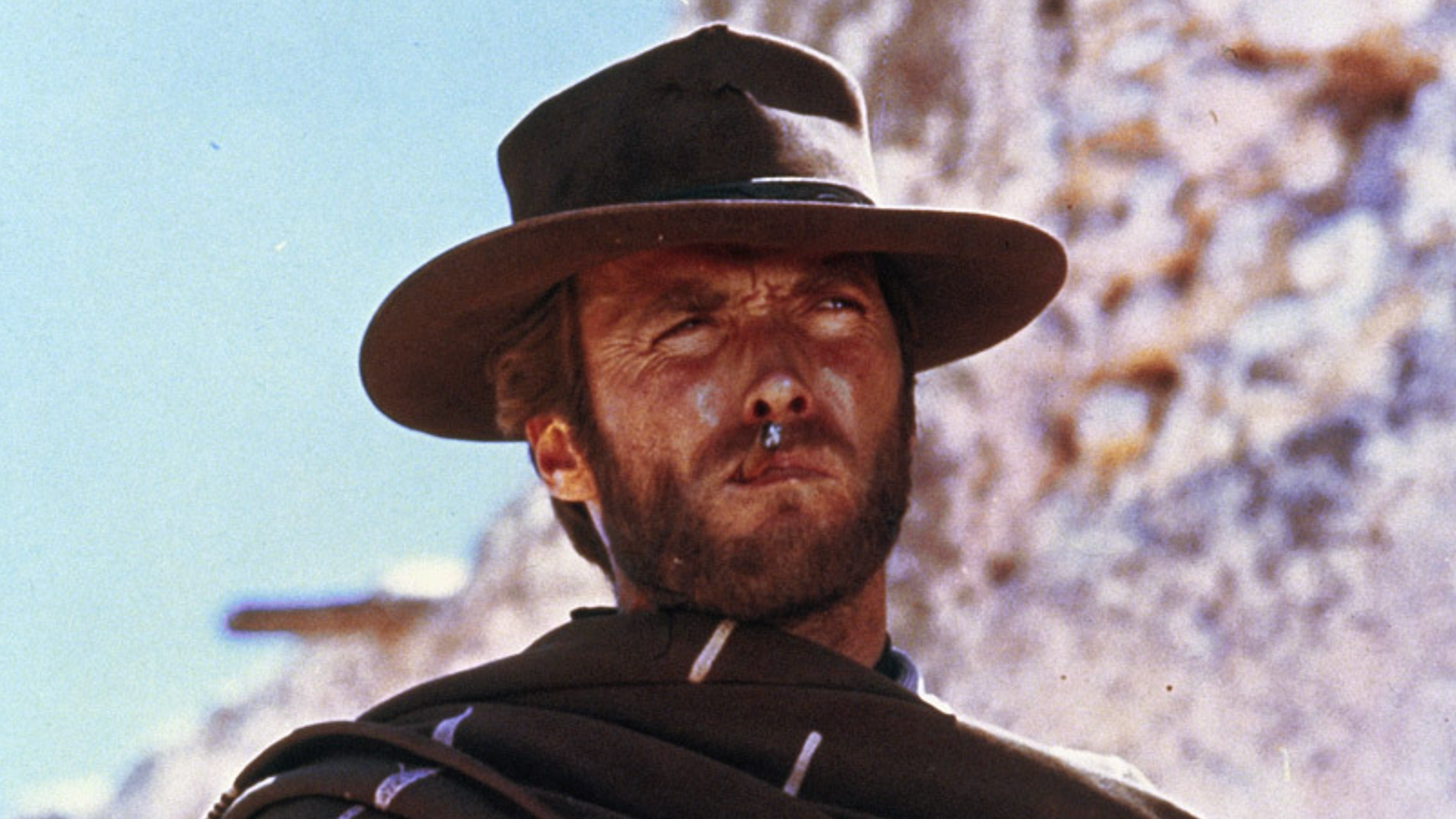
The narrative thrust introduced a structural evolution: instead of one drifter playing two gangs against each other, the sequel introduced a complex dual-protagonist dynamic. Clint Eastwood returned as the laconic bounty hunter (credited as "The Man with No Name" in marketing, though called "Manco" in the film), but he was now paired against—and matched by—Colonel Douglas Mortimer, played with icy, calculating precision by veteran character actor Lee Van Cleef.
The plot revolves around these two distinct bounty hunters tracking down El Indio (Gian Maria Volonté), a ruthless, drug-addled bank robber recently sprung from prison. As Manco and Mortimer realize they share a target, they forge an uneasy alliance, infiltrating Indio’s gang not just for the bounty, but for a massive, heavily guarded bank stash.
The 1966 Culmination: The Good, the Bad and the Ugly
Buoyed by the immense success of the second film, Leone, Grimaldi, and Eastwood reunited just one year later for the grand finale: The Good, the Bad and the Ugly (1966). Operating on a budget exceeding $1 million, the third film expanded the canvas to the American Civil War, weaving an epic treasure hunt involving three morally bankrupt gunslingers.
While The Good, the Bad and the Ugly would ultimately capture the lion’s share of public adoration—cemented permanently in pop culture by Ennio Morricone’s immortal whistling score and the breathless three-way graveyard standoff—it was For a Few Dollars More that proved Leone’s cinematic formula was not a one-hit fluke, but a sustainable, expanding universe of artistic brilliance.
Supporting Context & Metrics: Box Office Performance and Production Scale
To truly grasp why For a Few Dollars More deserves greater appreciation, one must analyze the raw economic and technical metrics of its production and theatrical run.
Financial Trajectory of the Dollars Trilogy
| Film Title | Release Year | Estimated Budget | Estimated Box Office Gross | Return on Investment |
|---|---|---|---|---|
| A Fistful of Dollars | 1964 | ~$200,000 | ~$20.0 Million | 100x |
| For a Few Dollars More | 1965 | ~$600,000 | ~$25.0 Million | 41.6x |
| The Good, the Bad and the Ugly | 1966 | ~$1,200,000 | ~$38.9 Million | 32.4x |
As the metrics illustrate, For a Few Dollars More represented a massive transitional leap in scale. While the first film relied on tight framing, sparse locations, and a lean narrative, the sequel demonstrated that Leone could handle an expanded canvas without sacrificing the intimate, sweat-beaded tension of his close-up cinematography.
Architectural and Technical Expansion
The construction of the El Paso set in Spain stands as a testament to the film’s expanded production values. Unlike the fleeting wooden facades of the first film, the El Paso set was built with striking architectural permanence. It was designed to mimic a bustling border town experiencing the throes of industrial and economic expansion. Today, portions of these historical sets still stand in the Almería region, functioning as living monuments and tourist destinations for cinephiles making the pilgrimage to the birthplace of the European Western.

Furthermore, the cinematography by Massimo Dallamano utilized sweeping crane shots and deep-focus lenses that contrasted sharply with the claustrophobic framing of A Fistful of Dollars. The sound design, tightly integrated with Ennio Morricone’s avant-garde score—featuring whip cracks, howling winds, and the haunting, music-box chimes of El Indio’s pocket watch—pushed the boundaries of how audio could dictate emotional pacing in an action sequence.
Official Statements & Critical Perspectives
While contemporaneous American critics in the mid-1960s were often slow to embrace the "Spaghetti Western" as high art—frequently dismissing them as violent, derivative exploitation pictures—subsequent generations of filmmakers and critics have aggressively course-corrected this narrative.
Prominent directors have long championed the structural genius of For a Few Dollars More. Filmmakers such as Quentin Tarantino and Edgar Wright have frequently cited Sergio Leone’s pacing, framing, and use of silence as foundational influences on modern cinema.
In retrospective analyses, film historians have frequently highlighted the unique chemistry between Clint Eastwood and Lee Van Cleef. In interviews reflecting on his career, Eastwood often noted the invaluable contribution Van Cleef brought to the screen:
"Lee had a weathered face that spoke volumes before he even opened his mouth. Working opposite him in For a Few Dollars More elevated everything I was trying to do with the character. We weren’t just playing heroes; we were playing professionals plying a brutal trade with a strange, unspoken code of mutual respect."
Gian Maria Volonté’s portrayal of the antagonist, El Indio, has also received critical reappraisal as one of the most psychologically complex villains in Western history. Unlike traditional villains driven purely by greed or malice, Indio is haunted by a deep, drug-addled trauma, symbolized by the haunting pocket watch he uses to govern his lethal duels. Critics have lauded Leone and Volonté for refusing to sanitize the character while giving him a tortured human dimension that makes his final showdown with Colonel Mortimer all the more emotionally devastating.
Future Outlook: Re-Discovering a Neglected Masterpiece in the Streaming Age
As the cinematic landscape continues to evolve, dominated by massive intellectual properties, computer-generated spectacles, and serialized streaming content, the stark, tactile artistry of films like For a Few Dollars More offers a vital reminder of the power of pure visual storytelling.
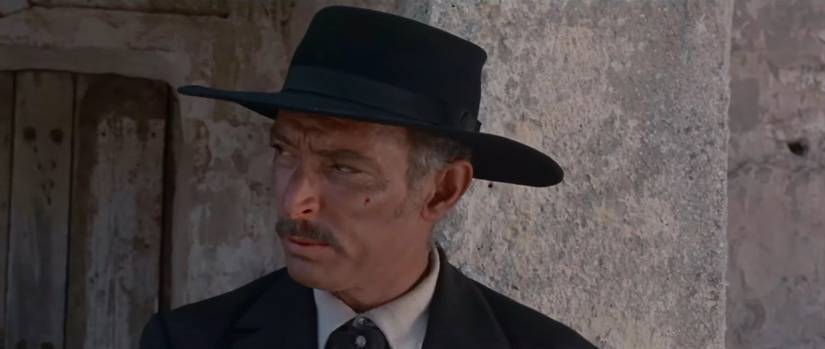
For decades, experiencing films of this vintage required tracking down worn-out VHS tapes, late-night television broadcasts, or specialized revival screenings at independent art-house cinemas. However, the modern digital landscape has fundamentally democratized access to film history.
With For a Few Dollars More readily available for streaming on subscription platforms such as MGM Plus, alongside broad availability across digital video rental storefronts, a new generation of filmgoers has the unprecedented opportunity to experience Leone’s middle masterpiece in pristine, restored high definition.
Why It Matters Today
In an era where modern action and thriller cinema frequently relies on hyper-kinetic editing and deafening sound design to manufacture excitement, For a Few Dollars More serves as a masterclass in delayed gratification. Sergio Leone understood that true cinematic tension does not come from constant motion, but from the agonizing pause before the motion—the lingering shot of a sweating brow, the wind blowing tumbleweeds across an empty square, and the slow, deliberate glide of a hand hovering near a holstered revolver.
The film proves that a sequel does not have to merely repeat the formula of its predecessor to succeed; it can build upon its foundations, deepen its philosophical inquiries, and expand its aesthetic horizons. While The Good, the Bad and the Ugly may forever hold the mainstream crown, For a Few Dollars More remains the beating heart of the Dollars Trilogy—a gritty, brilliant, and unjustly underappreciated jewel of cinematic history that demands to be revisited, analyzed, and celebrated anew.