Executive Overview
The smart home landscape has long awaited a definitive entry from Apple—a device capable of anchoring the ecosystem with the seamless unification of HomeKit, spatial computing, and intelligent automation. Following years of exhaustive research, technical roadblocks, and heavily publicized development delays tied to the modernization of Siri and the rollout of Apple Intelligence, the Cupertino-based tech giant finally pulled back the curtain on its debut smart display: HomeView.
Priced at $299, the standard HomeView is designed to serve as an interactive, wall-mountable or tabletop command center for the modern connected home. However, even as the device hits store shelves, early adopters and consumer technology critics have quickly zeroed in on a fundamental ergonomic limitation: if placed on a central surface like a kitchen island or living room table, the static display cannot adjust to users moving around the room. It demands manual intervention—a physical push or pivot—to face a new user.
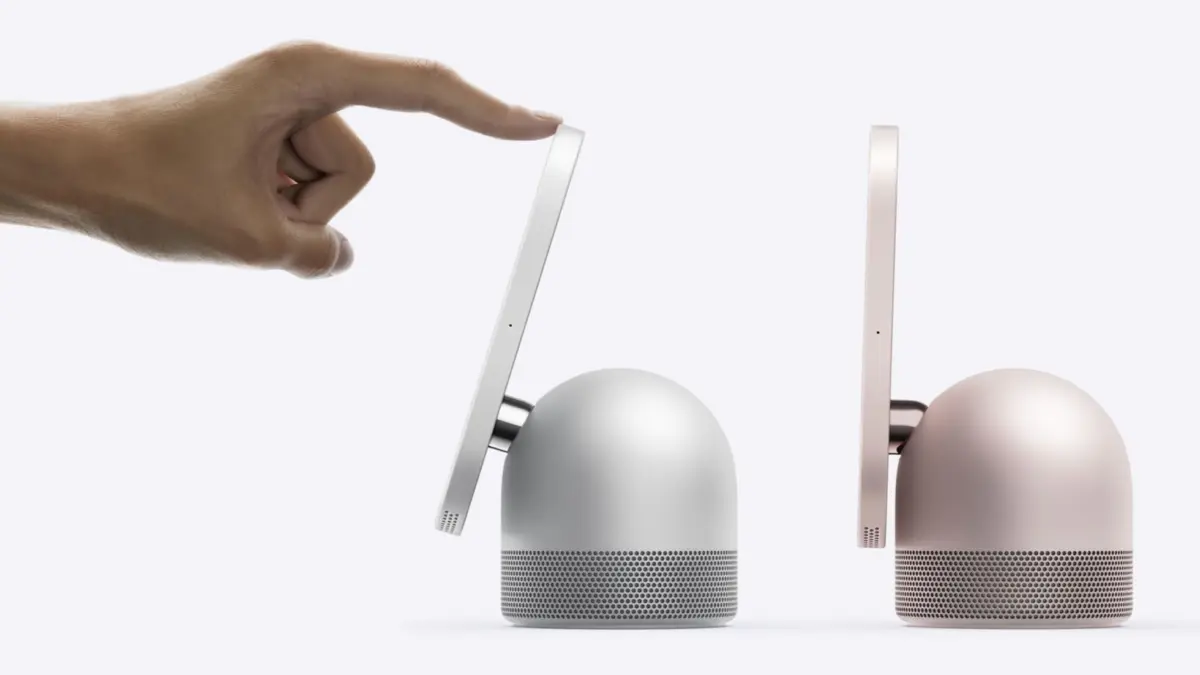
Fortunately, internal leaks and industry supply chain reports indicate that Apple is already engineering a definitive hardware-driven solution to this problem. According to recent intelligence shared by Bloomberg’s Mark Gurman, Apple is actively developing a high-end, motorized iteration of the device. Codenamed J595 and tentatively expected to arrive between 2027 and 2028, this premium variant—widely anticipated to be branded as the HomeView Pro—will feature a larger display and an integrated robotic arm capable of full 360-degree rotation.
By marrying advanced on-device voice recognition, spatial audio tracking, and robotics, this upcoming flagship accessory aims to transform the smart display category from a static screen into an active, responsive household companion. This report provides an in-depth look at the genesis of HomeView, the engineering challenges behind its evolution, the mechanics of the upcoming robotic arm model, and what this means for the future of Apple’s ambient computing strategy.
Detailed Chronology: From Concept to Commercial Launch and Beyond
To understand the strategic importance of the HomeView and its forthcoming robotic sibling, one must examine the protracted timeline that brought Apple to this juncture.
The Long, Tortuous Road to Launch (2020–2026)
Rumors regarding an Apple-branded smart home display have circulated within the tech industry for the better part of a half-decade. Initially envisioned as a natural extension of the HomePod line—combining audio hardware with a visual interface—the project faced continuous internal recalibrations.
- The Siri Bottleneck: The primary catalyst for delay was not hardware manufacturing, but software intelligence. Apple’s legacy Siri architecture proved fundamentally incompatible with the complex, context-aware demands of a modern smart home hub. The realization that a smart display required a deeply integrated, context-driven AI engine led to the conceptualization and development of Apple Intelligence. As Apple engineers raced to overhaul Siri with large language model capabilities, the smart home display project was repeatedly pushed back.
- The Software Breakthrough: By late 2025, the groundwork for a smarter, more capable Siri had matured sufficiently to greenlight the final production runs of the base HomeView.
- The Commercial Debut: Apple officially announced the HomeView at a price point of $299. Positioned as an accessible entry point into the Apple smart home ecosystem, the device immediately garnered attention for its sleek aesthetic, tight integration with iPadOS-derived smart home widgets, and robust privacy controls.
The Ergonomic Paradox of Static Displays
Despite the initial commercial enthusiasm, early hands-on reviews and consumer feedback highlighted a glaring architectural compromise. Traditional smart displays—such as those offered by competitors in the Amazon Echo Show and Google Nest Hub lineups—are inherently static. They sit in a fixed position, meaning that interactions are optimized only for individuals directly seated or standing in front of the screen.
In dynamic, multi-person environments like a busy family kitchen or a shared living room, a static display creates friction. If User A walks to the side of the table to prep dinner while User B is interacting with the device, the screen remains stubbornly pointed in the opposite direction. While pivoting the base manually is a trivial physical act, it breaks the illusion of ambient, hands-free automation that Apple has spent decades cultivating.

The Horizon: Project J595 and the Robotic Era (2027–2028)
Apple’s leadership recognized this ergonomic hurdle early in the development cycle. Rather than attempting to compromise the price point and footprint of the entry-level $299 HomeView with complex motorized components, the company bifurcated the product strategy.
The standard HomeView remains the affordable, stationary pillar of the lineup. Meanwhile, skunkworks teams inside Apple’s hardware engineering and robotics divisions accelerated work on a secondary, ultra-premium device. Codenamed J595, this advanced variant is slated for a commercial release window between 2027 and 2028. It represents Apple’s formal entry into consumer robotics, a field the company has quietly explored through various exploratory patents and R&D initiatives over the last several years.
Supporting Context, Hardware Metrics, and Specifications
A comparative analysis of the current baseline HomeView and the rumored J595 robotic variant highlights the distinct market segments Apple intends to capture.
| Feature / Specification | Standard HomeView (Current) | HomeView Pro / J595 (Expected 2027/2028) |
|---|---|---|
| Price Point | $299 | Premium / Significantly Higher |
| Display Size | 7 inches | ~9 inches |
| Movement Mechanics | Stationary (Manual tilt/pan only) | Motorized 360-degree robotic swivel |
| Tracking Technology | Standard camera / Fixed orientation | Voice-recognition tracking & spatial audio orientation |
| Target Use Case | Fixed wall mount, bedside, or desktop hub | Centralized multi-user kitchen, living room, or office space |
| Primary Input | Touch, Siri voice commands | Advanced conversational Siri + automated physical tracking |
Dissecting the Hardware: What We Know About Project J595
According to supply chain leaks and insider reports detailed by Bloomberg, the J595 device introduces several significant hardware upgrades over the baseline model:
- Enlarged Visual Canvas: The screen size is slated to increase from the standard 7-inch panel to approximately 9 inches. This additional screen real estate will accommodate richer multitasking widgets, expanded security camera grid views, and more immersive FaceTime communication interfaces.
- The Motorized Robotic Arm: The defining characteristic of the J595 is its mechanical base. Unlike simple rotating docks available from third-party manufacturers, Apple’s integrated robotic arm is engineered for silent, fluid, 360-degree rotation. The motor architecture is designed to handle continuous adjustments without wearing down or producing distracting mechanical noise.
- Advanced Auditory and Visual Tracking: To determine where to turn, the device will not rely solely on facial recognition cameras—a feature that can raise privacy concerns among cautious consumers. Instead, Apple is leaning heavily on advanced voice recognition and multi-microphone beamforming arrays. By analyzing the acoustic signature and directional origin of a user’s voice, the device calculates the precise angle required, swiveling smoothly to face the speaker. This represents an evolution of the "Center Stage" video framing technology found in iPads and Macs, translated from software pan-and-scan into physical motion.
Official Statements and Industry Insights
While Apple has maintained its customary corporate silence regarding unannounced products beyond the current generation, industry analysts and insiders have provided vital context regarding the company’s long-term smart home and robotics roadmap.
Mark Gurman, writing in his widely followed Power On newsletter, underscored the strategic rationale behind Apple’s phased approach:
"The good news is that Apple is on track to solve that problem with a souped-up version of the HomeView planned for release in 2027 or 2028. Code-named J595, this version looks like the current HomeView but has a roughly 9-inch screen (up from 7 inches) and a motorized robotic arm that lets the display swivel a full 360 degrees. Using voice recognition, the machine is designed to identify who’s speaking and automatically turn toward that person."
This perspective highlights a classic Apple playbook: introduce a reliable, well-built baseline product to establish a market foothold and test software ecosystems, followed by a halo product that pushes the boundaries of hardware engineering for power users willing to pay a premium.

Furthermore, supply chain monitors have noted that Apple’s exploration of robotics is not limited to tabletop displays. Over the last several years, Apple’s advanced research teams have filed numerous patents detailing mobile robotic devices, personal assistant units with articulated limbs, and automated desktop arms. The J595 serves as the commercial proving ground for these underlying kinetic technologies.
Future Outlook: The Strategic Implications for Apple’s Ecosystem
The development and eventual release of a robotic smart display carry profound implications for Apple’s broader hardware and software strategy.
1. Elevating Ambient Computing
Ambient computing relies on technology receding into the background until it is needed, yet remaining instantly accessible when called upon. A stationary smart display requires the user to adapt to the device’s physical positioning. A robotic smart display, by contrast, adapts to the user. By turning to face the active speaker, the device maintains an intimate, conversational connection with the user, whether they are cooking across the room, pacing during a phone call, or gathering around a table for a family meeting.
2. Monetizing the Smart Home
With the $299 HomeView, Apple has established a competitive baseline to capture mainstream smart home consumers away from Google and Amazon. However, the smart home market has historically struggled with high hardware churn and low profit margins. By introducing a high-end, premium-priced robotic variant (likely commanding a significantly higher price tag), Apple can capture high-net-worth consumers, tech enthusiasts, and early adopters who demand bleeding-edge automation features.
3. The Gateway to Advanced Consumer Robotics
The transition from static screens to motorized, kinetic devices is widely viewed within the tech sector as a stepping stone toward more ambitious consumer robotics. While rumors of an Apple-branded domestic robot that roams the house autonomously remain in early exploratory phases, the lessons learned in motor control, spatial mapping, obstacle awareness, and voice-tracking mechanics through the J595 project will provide an invaluable engineering foundation.
Conclusion
Apple’s entry into the smart home display market with the $299 HomeView marks the end of a long wait and the beginning of a new chapter for HomeKit and Apple Intelligence. Yet, as consumer feedback already demonstrates, static screens represent yesterday’s paradigm. By actively developing Project J595—a 9-inch motorized variant equipped with a 360-degree robotic arm and acoustic tracking—Apple is preparing to redefine what a smart home hub can do. When it arrives in 2027 or 2028, the robotic HomeView may well prove that the future of ambient computing is not just intelligent, but physically responsive.