Executive Overview
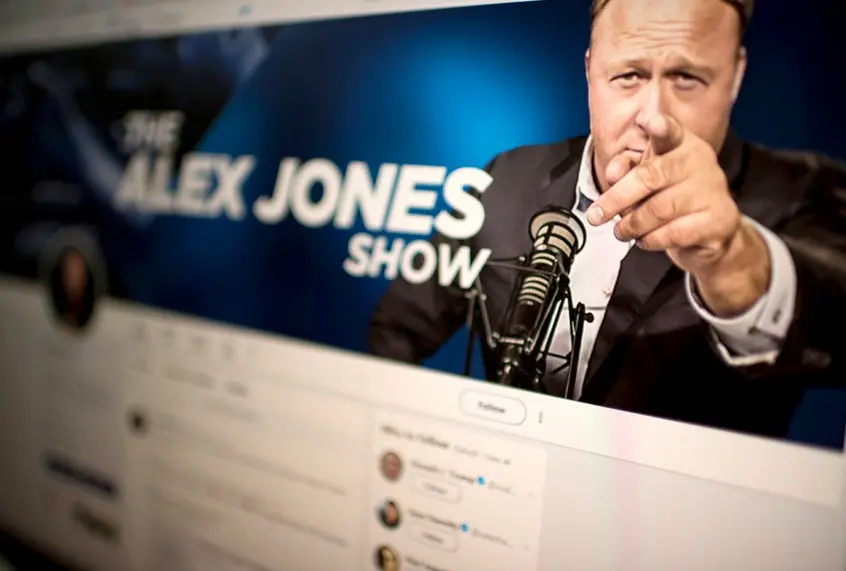
In a watershed moment for content moderation and digital governance, Twitter enacted a temporary seven-day suspension against right-wing conspiracy theorist and Infowars founder Alex Jones in August 2018. The decision marked an abrupt and significant reversal for the microblogging platform, which had previously defended its stance of permitting Jones to maintain active accounts on the grounds that his past postings had not explicitly violated the company’s terms of service.
The suspension followed a coordinated wave of private-sector deplatforming initiatives that saw Silicon Valley giants—including Apple, Facebook, YouTube, Spotify, and Pinterest—severely restrict or entirely purge Jones and Infowars content from their ecosystems. Twitter’s initial reluctance to act drew intense public scrutiny, placing CEO Jack Dorsey at the center of a raging national debate concerning free speech, corporate responsibility, and the arbitrary nature of online policing.
This retrospective report examines the sequence of events leading to Twitter’s pivot, the rationale articulated by its leadership during high-profile media interviews, the broader industry context surrounding the suppression of hate speech and incitement, and the long-term implications of these moderation policies for the digital public square.
Detailed Chronology: The Escalation to Suspension
The crescendo of punitive actions against Alex Jones in the summer of 2018 was preceded by years of escalating controversy, legal battles, and mounting pressure from civil rights organizations, digital watchdogs, and the general public.
The Industry-Wide Purge
At the beginning of August 2018, a threshold was crossed across the technology sector. Major platforms determined that the cumulative weight of Jones’s broadcasts—ranging from vicious harassment campaigns to stochastic terroristic threats—violated policies against hate speech and harassment.
- Apple removed the vast majority of The Alex Jones Show podcasts from its Podcasts directory, citing rules against posting content that encourages hatred or discrimination.
- Facebook took down four pages maintained by Jones and Infowars, citing repeated violations of policies regarding hate speech and bullying.
- YouTube (owned by Google) terminated multiple channels associated with Jones and Infowars, erasing thousands of hours of video archives.
- Spotify and Pinterest similarly purged Jones-related content from their servers.
Despite these sweeping industry measures, Twitter remained an outlier. For days, company executives maintained that Jones’s presence on the platform did not trigger internal enforcement thresholds, sparking public outrage and putting Dorsey in the crosshairs of media interrogators.
The Catalyst: The "Battle Rifles" Tweet
The turning point for Twitter arrived when Jones crossed the line from noxious conspiracy mongering into explicit incitement of physical violence. In August 2018, Jones published a post on Twitter explicitly urging his followers to get their "battle rifles" ready to confront various adversaries, including journalists and mainstream media outlets.
This direct appeal violated Twitter’s core safety policies, which explicitly prohibit individuals or organizations from using or promoting violence against civilians to advance ideological or political causes. Reacting to the clear policy breach, Twitter moved swiftly to lock Jones’s personal account and the official Infowars account into a seven-day "timeout," effectively stripping the accounts of tweeting and retweeting capabilities during the penalty window.
Supporting Context & Metrics: A History of Harm
To understand why Twitter’s enforcement action—and its initial hesitation—sparked such fierce debate, it is necessary to examine the broader body of work that defined Alex Jones’s media enterprise. For decades, Infowars operated as a high-volume incubator for dangerous hoaxes and defamatory narratives.
A Portfolio of Defamation and Conspiracy
Jones built a lucrative digital empire by monetizing fear, outrage, and disinformation. Notable inflection points in his broadcasting history include:
- The 9/11 "Truther" Movement: Jones frequently propagated the baseless theory that the September 11 terrorist attacks were an "inside job" orchestrated by elements within the United States government.
- The Sandy Hook Elementary School Massacre: Perhaps most notoriously, Jones spent years telling his audience that the 2012 mass shooting at Sandy Hook Elementary School—which claimed the lives of 20 children and six educators—was a "hoax" staged by actors and government entities. This relentless campaign subjected grieving families to years of targeted harassment, death threats, and stalking by Infowars adherents. These actions ultimately triggered devastating defamation lawsuits in Texas and Connecticut that resulted in verdicts exceeding $1 billion against Jones.
- Targeted Harassment Campaigns: Jones frequently aimed unfounded accusations of criminal conduct, pedophilia, and treason at public officials, journalists, and private citizens alike. Targets ranged from survivors of school shootings to special counsel Robert Mueller and tech executives like Mark Zuckerberg.
The Weight of Digital Footprints
Prior to the August 2018 ban, Jones commanded an audience of millions across multiple platforms. His digital footprint was not merely a collection of fringe opinions; it represented a formidable distribution network capable of mobilizing thousands of loyal followers. Civil rights advocates and watchdog groups, such as Media Matters for America and researchers like Jared Holt, spent years documenting how Infowars leveraged social media architectures to radicalize users, monetize merchandise sales, and amplify systemic disinformation.
When platforms like Twitter allowed accounts with massive reach to operate uninhibited despite recurring infractions, critics argued that tech corporations were passively complicit in the real-world harms generated by stochastic terror and targeted harassment.
Official Statements and Leadership Rationale
The public justification for Twitter’s policy shift was articulated primarily by CEO Jack Dorsey during a series of interviews and public statements following the suspension. The discourse highlighted the immense philosophical challenges faced by executives attempting to govern global communication networks.
The NBC News Interview with Lester Holt
In an exclusive interview with Lester Holt on NBC Nightly News, Dorsey defended his initial reluctance to ban Jones, explaining that the company strove to avoid arbitrary enforcement based on subjective political preferences.
"We can’t build a service that is subjective just to the whims of what we personally believe," Dorsey told Holt.
Dorsey acknowledged that while external pressure to remove Jones had been mounting for months, Twitter’s internal governance models required concrete, verifiable policy violations before punitive actions could be taken. Once Jones published the tweet calling for his supporters to ready their "battle rifles," that objective threshold was met.
The Philosophy of the "Timeout"
Addressing the efficacy of a seven-day suspension, Dorsey argued that temporary bans serve as a behavioral correction mechanism, forcing bad actors to confront the consequences of their digital conduct.
"I feel any suspension, whether it be a permanent or a temporary one, makes someone think about their actions and their behaviors," Dorsey stated. However, when pressed by Holt on whether a lifelong purveyor of conspiracy theories would fundamentally alter his behavior after a weeklong restriction, Dorsey conceded the limits of corporate deterrence: "Whether it works within this case to change some of those behaviors and change some of those actions, I don’t know. But this is consistent with how we enforce."
Clarifying via Social Media
Following the broadcast of the interview, Dorsey took to Twitter to clarify his remarks, emphasizing that his philosophical defense of timeouts was intended as a broad policy overview rather than a guarantee of rehabilitation for any single individual.
"To clarify: I was speaking broadly about our range of enforcement actions, when asked why we timeout functionality on Twitter," Dorsey tweeted. "I don’t assume everyone will change their actions. Enforcement gets tougher with further reported violations."
Future Outlook: The Precedent Set by the 2018 Crackdown
The seven-day suspension of Alex Jones in August 2018 served as a vital transitional phase in the evolution of modern content moderation. It laid bare the deep tensions inherent in Silicon Valley’s attempt to balance open expression with public safety.
The Limits of Temporary Enforcement
While a weeklong timeout temporarily silenced Jones on Twitter’s primary interface, it highlighted the loopholes inherent in fragmented multi-platform empires. Even after being barred from Facebook, YouTube, Apple, and temporarily restricted on Twitter, Jones retained access to Twitter-owned video-streaming subsidiary Periscope. This exposed the operational vulnerabilities of piecemeal deplatforming, demonstrating that bad actors could often pivot to adjacent auxiliary services within the same corporate family.
A Turning Point for Digital Governance
Ultimately, the events of August 2018 marked the end of an era in which social media companies could claim absolute neutrality regarding the veracity or social impact of content hosted on their servers. The coordinated action against Alex Jones established a powerful precedent: private technology corporations possess both the capacity and, under intense public pressure, the willingness to excise influential figures who persistently subvert public safety and democratic norms.
As misinformation and digital radicalization continue to evolve, the debates sparked by Jack Dorsey’s 15-minute interview and Twitter’s delayed reckoning remain foundational case studies for legal scholars, policymakers, and technologists striving to chart the future of free speech in the digital age.