Executive Overview
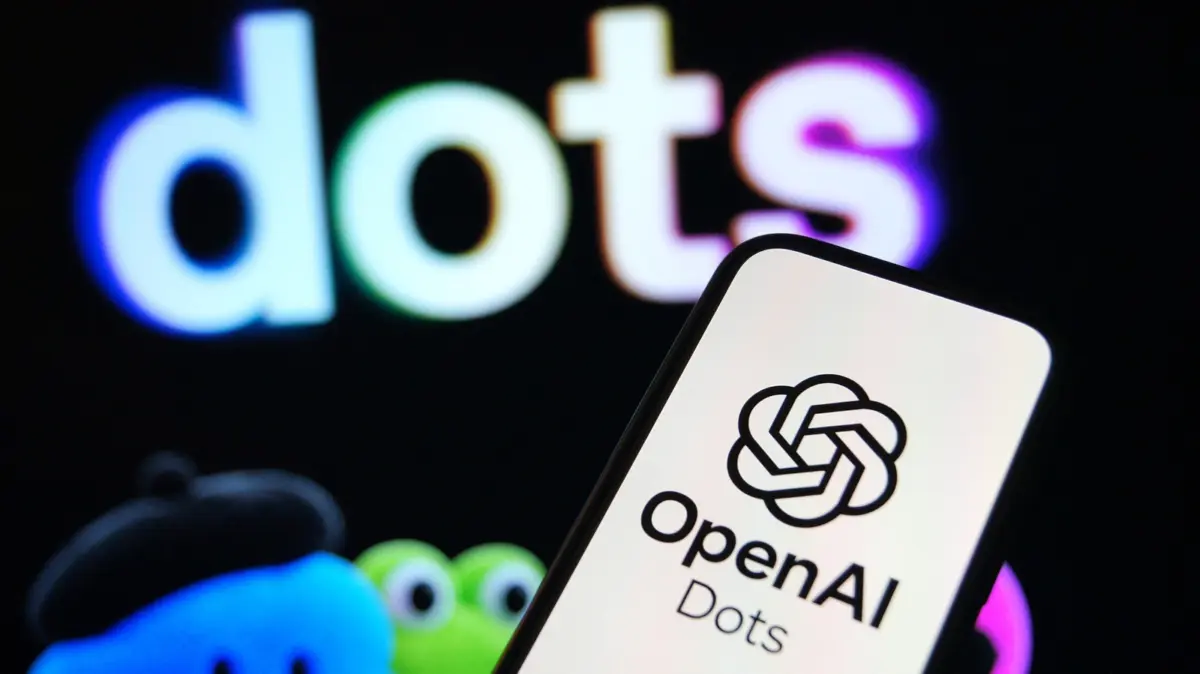
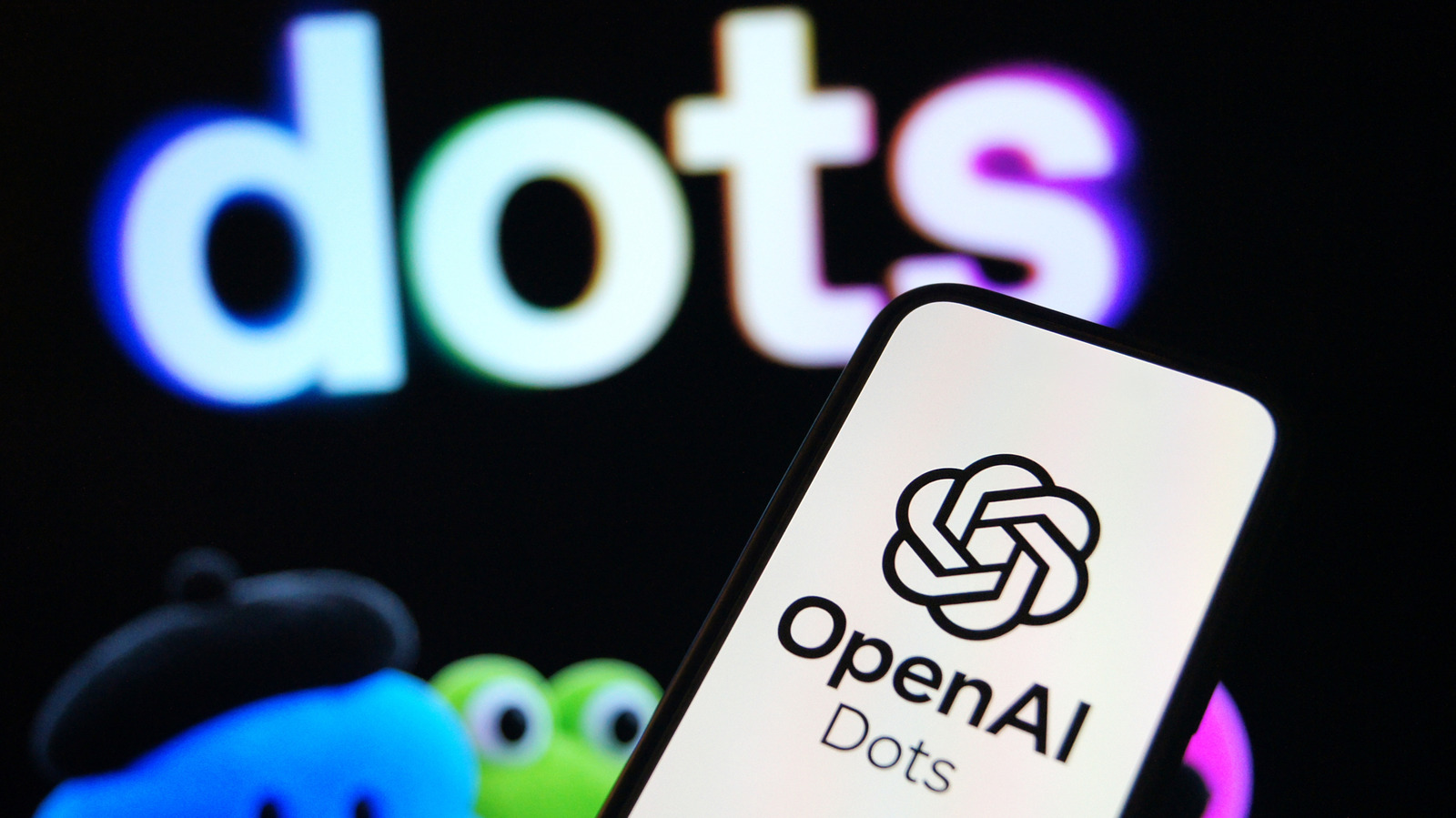
The landscape of artificial intelligence is shifting rapidly from reactive chat interfaces to proactive, autonomous execution. OpenAI has officially announced a significant expansion of "Dots," its flagship line of always-on personal AI agents designed to perform complex, multi-step workflows without continuous human supervision.
Previously restricted to high-tier enterprise subscribers and elite ChatGPT Pro users, Dots are now rolling out to a curated cohort of subscribers on the $20-per-month ChatGPT Plus tier. Simultaneously, OpenAI is making the capability universally available to all ChatGPT Business Standard users.
This strategic deployment represents a major milestone in OpenAI’s commercial roadmap. By democratizing access to autonomous agents capable of interacting with over 4,000 third-party applications, integrating deeply with operating systems like iOS, and running advanced underlying models such as GPT-6.1 Terra, OpenAI is lowering the barrier of entry for automated personal and professional productivity. However, this expansion also introduces critical questions regarding resource allocation, data privacy, subscription economics, and the psychological shift required as human workers transition from executing tasks to supervising autonomous digital entities.
Detailed Chronology: The Evolution of OpenAI’s Agent Ecosystem
To fully understand the significance of the current rollout, it is essential to trace the trajectory of OpenAI’s agent development over the past several operating cycles:
- The Genesis of Proactive Agents: OpenAI first conceptualized Dots to solve a fundamental limitation of traditional Large Language Models (LLMs): conversational passivity. While standard chat models wait for a user prompt, Dots were engineered to monitor, anticipate, and execute tasks proactively.
- Initial Enterprise and Pro Deployment: The technology debuted exclusively on high-end subscription tiers, notably ChatGPT Pro and select enterprise plans. These early iterations served as stress-tests, allowing OpenAI to refine agent safety protocols, memory management, and error-recovery algorithms in closed environments.
- The Integration of GPT-6 Architecture: Early Dots models were powered by GPT-6 Astra. However, rapid iteration led to the adoption of GPT-6.1 Terra, endowing the agents with enhanced logical reasoning, improved handling of long-horizon tasks, and sharper contextual awareness.
- The Mobile and Cross-Platform Push: OpenAI expanded Dots beyond the browser, introducing iOS widgets, Apple Shortcuts integration, iMessage and RCS support, and direct iOS notification replies, effectively embedding agents into daily mobile workflows.
- The Plus and Business Standard Expansion: In a milestone announcement shared by ChatGPT engineering lead Thibault "Tibo" Sottiaux, OpenAI confirmed the live testing of Dots for a pilot group of ChatGPT Plus ($20/month) subscribers, alongside an immediate, platform-wide rollout for all ChatGPT Business Standard accounts.
Core Capabilities: What Are "Dots" and How Do They Work?
Unlike standard chatbot interactions where users prompt, receive, and refine outputs line-by-line, Dots function as independent digital workers. Their technical architecture and operational scope redefine consumer-grade AI:
1. True Autonomy and Background Execution
Dots do not require constant user prompting. Once given a high-level objective—such as "compile market research from these five sources, format them into a spreadsheet, and draft an executive email"—a Dot breaks down the goal into a sequence of sub-tasks and executes them sequentially. Crucially, they continue working even when the user closes the application or steps away from their device.
2. Massive Ecosystem Integration
Powered by an extensive plugin and API framework, Dots can interface with over 4,000 distinct software applications. Whether moving data between enterprise resource planning (ERP) tools, parsing code repositories, or managing cloud storage systems, the agents bridge disparate digital silos natively.
3. PC Control and Virtual Workspace Access
One of the most powerful—and scrutinized—features of Dots is their ability to connect directly to a user’s personal computer. Through secure virtual environments or direct OS bridges, Dots can operate software programs on the user’s behalf. Users can monitor this activity in real-time by opening a dedicated "computer" view window to observe the agent navigating user interfaces, clicking buttons, and populating forms.
4. Omnichannel Mobile Integration
With native support for iOS widgets, Shortcuts, iMessage, and RCS, Dots are no longer bound to a web browser window. Users can delegate tasks or receive status updates via text message or quick-action home screen widgets, blending agentic workflows into mobile communication habits.
Supporting Context & Metrics
The rollout of Dots to lower-tier pricing brackets highlights several underlying operational dynamics within OpenAI:
- Cost vs. Utilization Economics: Running an autonomous agent that maintains persistent state, queries external APIs, and executes multi-step logic requires significantly more compute resources than generating a standard text response. Extending this feature to the $20/month Plus tier suggests that OpenAI has made substantial strides in model efficiency and inference optimization.
- Subscription Value Rebalancing: For months, ChatGPT Plus subscribers have watched advanced agentic features remain exclusive to high-priced tiers. Bringing Dots to Plus helps justify the $20 monthly price point in an increasingly competitive AI market where rivals like Anthropic, Google, and independent open-source models are offering aggressive feature sets.
- Usage Quota Mechanics: For high-tier Pro and Business Premium subscribers, interactions with Dots historically do not count against regular usage caps, provided the tasks remain within defined complexity thresholds. As of this rollout, OpenAI has not explicitly clarified whether Plus or Business Standard users will enjoy the same quota exemptions, sparking speculation within developer and power-user communities regarding potential throttling or usage caps.
Official Statements and Industry Response
The announcement was disseminated via developer channels, most notably through a statement by Thibault "Tibo" Sottiaux, ChatGPT Engineering Lead at OpenAI, posted on X (formerly Twitter):
"Heads up, we’re starting to test dots with a small number of ChatGPT Plus users. Looking forward to the continued feedback as we expand and I’m recently seeing a lot more positives around how good the proactivity has been after many improvements. We’re also bringing dots to all ChatGPT Business Standard users starting today."
Industry analysts have reacted to the news with a mixture of enthusiasm and caution. Proponents emphasize that autonomous agents represent the long-awaited "personal assistant" promise of consumer AI—taking mundane, administrative chores entirely off human plates.
Conversely, cybersecurity experts and enterprise risk officers have raised valid concerns. Giving an AI agent autonomous control over a personal computer and access to over 4,000 software applications dramatically expands the digital attack surface. If a Dot is compromised through prompt injection or malicious third-party API payloads, the potential for unauthorized data exfiltration or unintended system modifications increases exponentially.
Future Outlook: The Road Ahead for Autonomous AI Agents
As OpenAI transitions Dots from exclusive enterprise trials to mass-market availability on the Plus and Business Standard tiers, several critical questions will shape the immediate future of the platform:
- Permanent Tier Integration: While current Plus availability is described as a test, market pressure suggests that proactive agents will eventually become a permanent staple of the $20 tier. The deciding factor will be whether inference costs remain sustainable at scale.
- Safety and Guardrails: As millions of new users unleash Dots on their personal computers and connected apps, OpenAI will undoubtedly encounter edge cases in agent behavior. Robust permission models, fail-safe kill switches, and transparent activity logs will be vital to maintaining user trust.
- The Shift in Human Labor: The widespread adoption of Dots marks a profound psychological transition for knowledge workers. We are moving away from an era where humans act as doers assisted by AI, toward an era where humans act as managers overseeing teams of autonomous digital agents.
Ultimately, OpenAI’s decision to scale Dots signals that the era of passive conversational AI is drawing to a close. The future belongs to active, persistent digital entities capable of transforming high-level intent into executed reality—and the battle for the autonomous desktop has officially begun.