Executive Overview
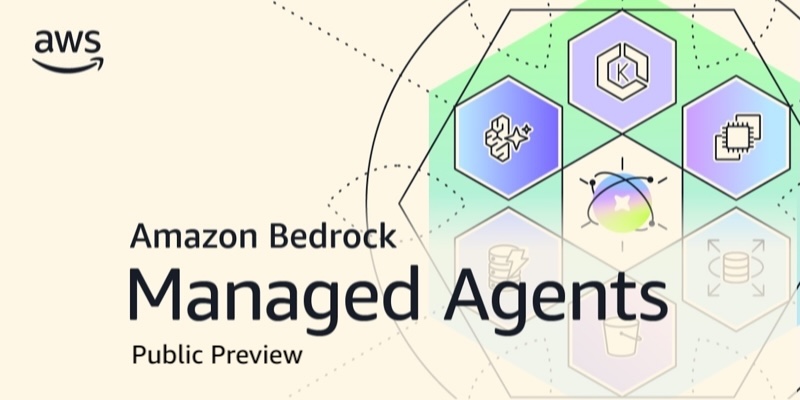
The cloud computing landscape continues to evolve at a relentless pace, with enterprise artificial intelligence, governance, and infrastructure management remaining at the forefront of digital transformation. In a major announcement from the AWS News Blog, Amazon Web Services (AWS) has officially launched the public preview of Amazon Bedrock Managed Agents powered by OpenAI. This strategic integration brings a customized version of OpenAI’s Agents API natively into the AWS ecosystem, offering developers and enterprise architects a seamless way to deploy intelligent agents backed by OpenAI models while maintaining strict corporate governance, granular identity and access management (IAM), and robust security controls.
Beyond this milestone artificial intelligence release, AWS has continued its steady cadence of platform enhancements, frontier model expansions, and operational updates. Concurrently, the cloud giant has issued its late-September 2026 product lifecycle updates. These notifications outline crucial service transitions—moving select legacy offerings into maintenance, sunset, and end-of-support phases—designed to help engineering teams streamline workloads, adopt modern alternatives, and mitigate operational disruption.
In this comprehensive report, we examine the technical architecture of Amazon Bedrock Managed Agents, explore the execution environments available to developers, analyze the broader implications of AWS’s latest platform expansions, and review the structural lifecycle changes affecting cloud administrators globally.
Detailed Chronology & Technical Architecture of Amazon Bedrock Managed Agents
The introduction of Amazon Bedrock Managed Agents powered by OpenAI marks a significant bridge between two of the industry’s most powerful generative AI ecosystems. Historically, organizations utilizing OpenAI models had to manage disparate integration layers, external API management tools, and custom security wrappers to connect intelligent agents with enterprise cloud data residing within AWS.
Bridging AWS and OpenAI Natively
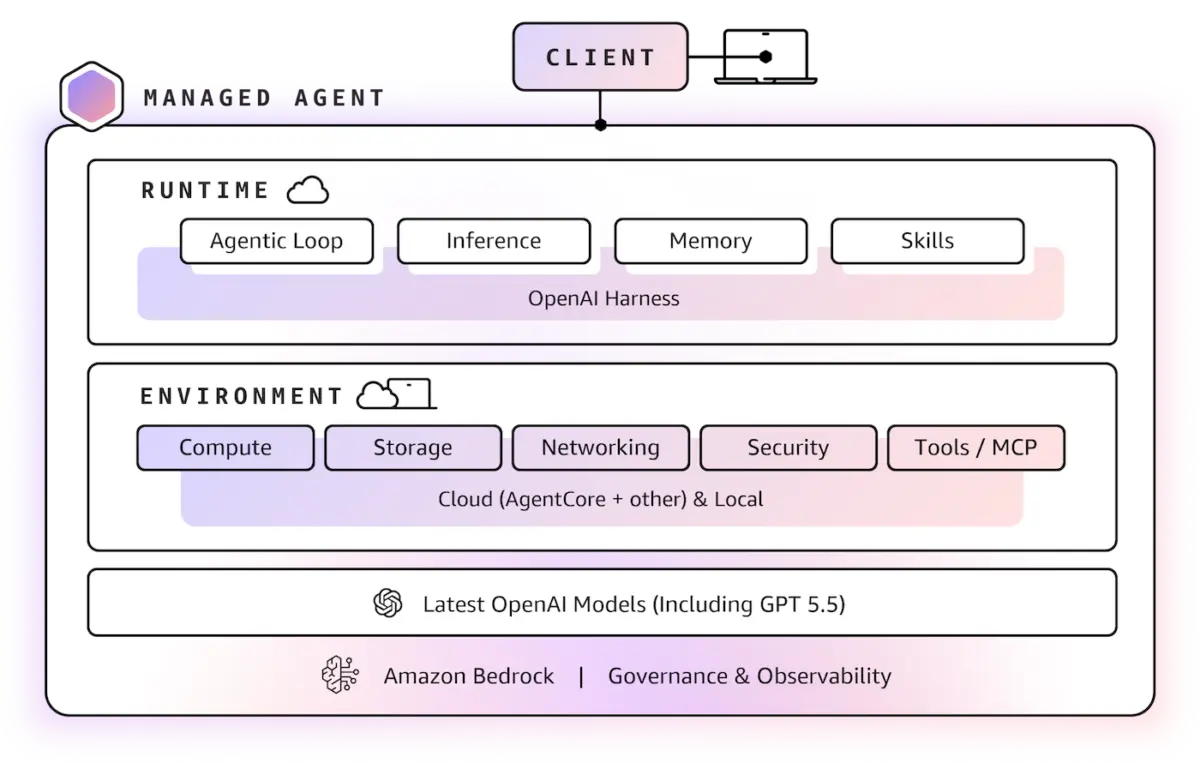
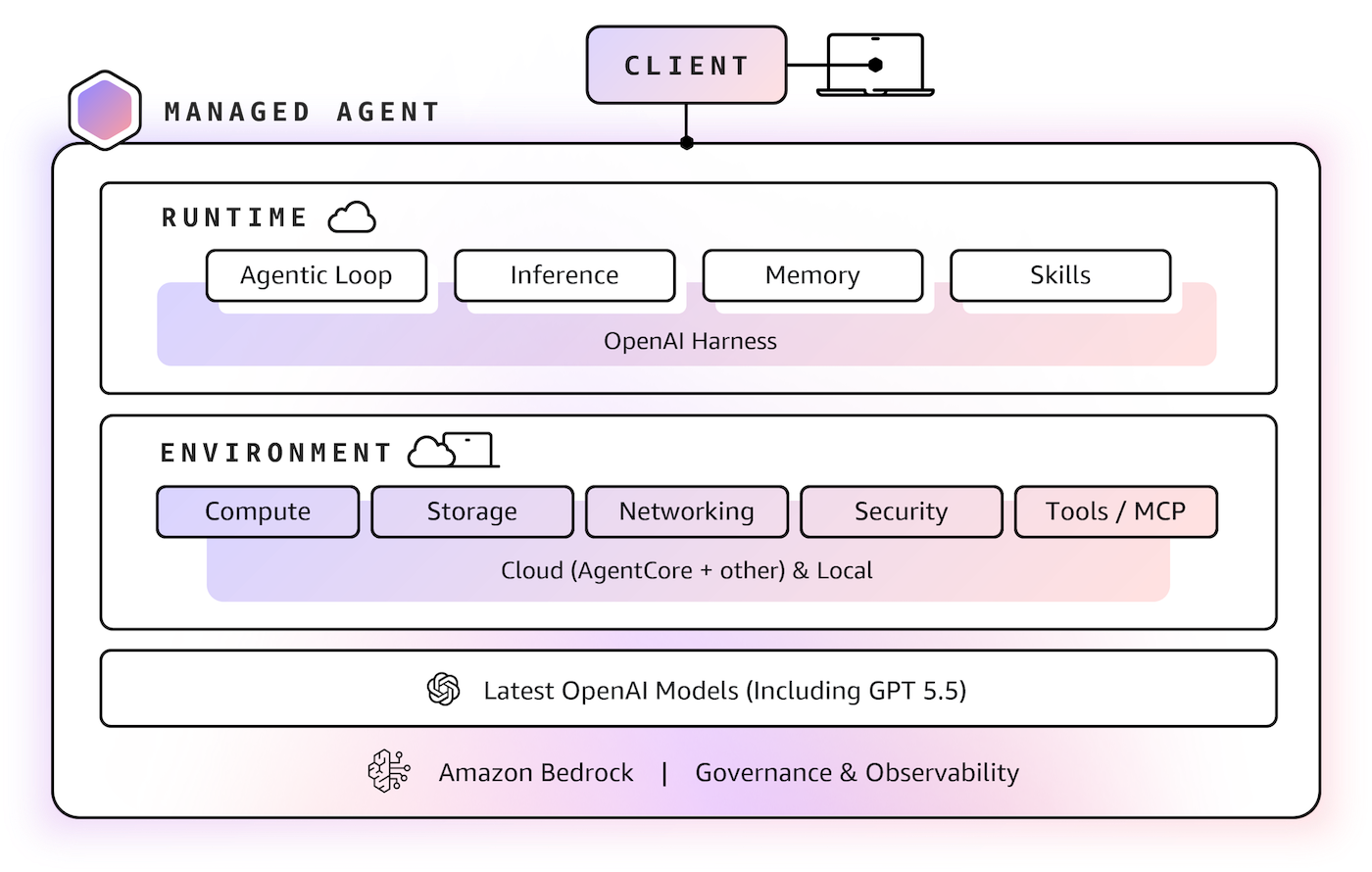
Built upon a customized iteration of OpenAI’s Agents API, the newly introduced preview allows builders to construct, orchestrate, and deploy sophisticated AI agents optimized specifically for OpenAI models. Crucially, these agents do not operate in a security vacuum. Instead, they run entirely inside the customer’s AWS environment, fully integrated with native AWS services.
This integration means that organizations can leverage their existing:
- AWS Identity and Access Management (IAM): Enforce strict least-privilege access for agents interacting with databases, storage buckets, and application microservices.
- Security, Identity, and Compliance Controls: Utilize AWS Key Management Service (KMS) for encryption keys, AWS CloudTrail for comprehensive audit logging, and Amazon CloudWatch for real-time monitoring and anomaly detection.
- Data Governance Frameworks: Ensure that sensitive enterprise data processed by agents remains within compliant, boundary-defined virtual private clouds (VPCs).
Flexible Execution Environments
To accommodate diverse enterprise development workflows and infrastructure requirements, AWS provides two primary execution environments for Amazon Bedrock Managed Agents:
- Self-Hosted Compute: For developers who require granular control over their runtime environments, this option enables teams to run agents using existing local development machines, customized Docker containers, or internal enterprise compute infrastructure. This flexibility is ideal for teams with specialized continuous integration and continuous deployment (CI/CD) pipelines or unique regulatory hardware requirements.
- Amazon Bedrock AgentCore Runtime: For organizations seeking a fully managed, serverless approach, the Bedrock AgentCore Runtime provides managed runtime sessions alongside configurable, secure storage directly within the user’s AWS account. This environment abstracts away underlying server management, scaling dynamically to handle fluctuating query volumes while maintaining strict data isolation.
Architectural documentation and deployment guides are currently available via the official Amazon Bedrock Documentation Portal, allowing early adopters to test and prototype enterprise-grade workflows during the public preview phase.
Expanding Frontier Model Choices on Amazon Bedrock
In tandem with the managed agents preview, AWS continues to broaden its catalog of frontier foundation models on Amazon Bedrock. As generative AI use cases mature from basic conversational chatbots to complex, multi-step autonomous workflows, enterprises require access to specialized models optimized for reasoning, coding, data synthesis, and multimodal processing.
By continuously onboarding industry-leading models into Bedrock, AWS ensures that developers are not locked into a single proprietary ecosystem. Instead, builders can select, benchmark, and switch between models based on price, latency, context window size, and task-specific accuracy. This model-agnostic philosophy remains a core value proposition of Amazon Bedrock, empowering engineering leaders to future-proof their applications as the AI landscape rapidly shifts.
Service Lifecycle Updates and Infrastructure Maintenance
Cloud platform maturity requires the systematic deprecation of older features and services to make way for modern, high-performance, and secure architectures. In the September 29, 2026 product lifecycle update, AWS outlined critical changes to service availability, establishing clear timelines for maintenance, sunsetting, and end-of-support phases.
Understanding AWS Lifecycle Classifications
AWS manages product transitions through structured stages to give enterprise customers ample time to plan, refactor, and migrate workloads:

- Maintenance: Services or features entering this phase are no longer accessible to new customers (effective October 29, 2026, for the latest batch). Existing customers retain access but are strongly encouraged to evaluate alternatives.
- Sunset: Services in this category are actively winding down, with diminishing support windows and restricted regional availability.
- End of Support: Reached as of September 29, 2026, these offerings no longer receive technical assistance, security patches, or bug fixes.
Mitigating Operational Impact
Infrastructure and DevOps teams managing enterprise environments must cross-reference their current resource inventories against the AWS Product Lifecycle Changes portal. Abrupt changes in service availability can introduce vulnerabilities or disrupt automated pipelines if not addressed proactively. AWS provides comprehensive migration guides and technical documentation for each deprecated service, and the AWS Support team remains available to assist organizations in architecting seamless transitions to modern replacements.
Supporting Context, Metrics, and Developer Community Engagement
As cloud architectures grow increasingly complex, community collaboration and continuous education are vital for engineering success. AWS maintains an active ecosystem of events, startup programs, and developer hubs designed to foster innovation and knowledge sharing.
Upcoming Events and Engagement Channels
Cloud builders looking to deepen their technical expertise can participate in a wide variety of upcoming engagements:
- AWS-Led In-Person and Virtual Events: Structured learning paths covering advanced cloud architecture, security best practices, and generative AI deployment.
- Startup Events: Tailored programs designed to help early-stage companies leverage AWS Activate credits, scale infrastructure efficiently, and connect with venture capital networks.
- Developer-Focused Events: Specialized workshops, hackathons, and webinars hosted via the AWS Builder Center, offering direct access to AWS solutions architects and product managers.
- Flagship Conferences: Anticipation is steadily building for the upcoming AWS re:Invent conference and regional AWS Community Days, where the next wave of major cloud innovations will be unveiled.
Developers are encouraged to join the AWS Builder Center to collaborate with peers, contribute open-source reference architectures, and access technical whitepapers tailored to modern software development lifecycle (SDLC) challenges.
Future Outlook: The Convergence of Managed AI and Enterprise Cloud
The introduction of Amazon Bedrock Managed Agents powered by OpenAI signals a broader industry trend: the merging of cutting-edge foundational AI models with enterprise-grade cloud infrastructure governance. For years, organizations struggled to balance the speed of AI innovation with the rigidity of corporate compliance frameworks. By embedding OpenAI’s orchestration capabilities directly into AWS-native permission boundaries, IAM roles, and storage layers, Amazon is lowering the barrier to entry for secure enterprise AI deployment.
Looking ahead to the remainder of 2026 and beyond, we can expect cloud providers to compete heavily on the depth of their managed agent ecosystems. The ability to deploy autonomous agents that securely read from private databases, execute multi-step workflows, and adhere to strict auditing standards will define the next generation of enterprise software.
For AWS customers, the immediate priority should be auditing current generative AI roadmaps, evaluating the new Amazon Bedrock Managed Agents in non-production environments via the public preview, and reviewing infrastructure inventories against the latest product lifecycle deprecations.
As always, staying informed through the official What’s New with AWS page and the AWS Blogs will remain essential for engineering leaders navigating this dynamic technological landscape.
Check back next Monday for another comprehensive Weekly Roundup from the AWS ecosystem.