Executive Overview
The artificial intelligence landscape is experiencing a period of accelerated maturation, marked less by theoretical breakthroughs and more by relentless optimization, cross-platform unification, and practical application. For modern business owners, content creators, and enterprise strategists, the pace of change presents a recurring operational challenge: keeping up with an endless stream of tools while ensuring that daily workflows remain efficient and resilient.
Recent industry developments highlight a definitive shift from siloed AI experimentation to deeply integrated, cross-functional ecosystems. Major players—including Anthropic, Google, and OpenAI—have rolled out substantial infrastructure updates. These include Anthropic’s cost-efficient Claude Sonnet 5.5, Google’s real-time multimodal updates via Gemini 3.8 Live and its advanced Text-to-Speech variants, and OpenAI’s massive DevDay 2026 rollout, featuring GPT-6 Sol and Luna alongside expanded persistent agent architectures.
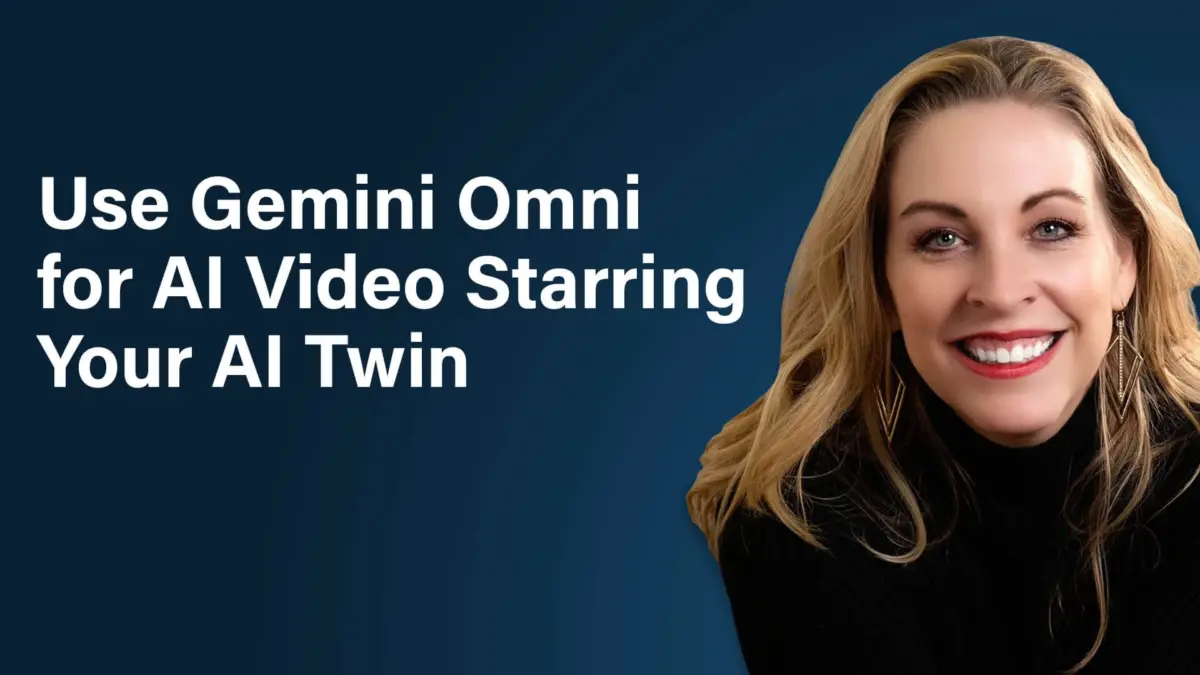
Simultaneously, the tactical playbook for marketing professionals is evolving. The traditional friction points of design, video production, and workflow continuity are being actively dismantled. Practitioners can now seamlessly bridge the gap between AI-generated drafts and human-directed execution—whether by combining ChatGPT’s conceptual layout tools with Canva’s Magic Layers, or by leveraging Google’s Gemini Omni for zero-friction professional video generation.
Ultimately, the overarching lesson for modern organizations is clear: while tools will continue to evolve at a dizzying pace, operational systems must remain portable and platform-agnostic. This report examines the technical upgrades, operational strategies, and industry shifts defining the current era of artificial intelligence.
Detailed Chronology of Recent Industry Developments
The past several weeks have introduced a wave of foundational model updates and platform expansions that are redefining how enterprises, developers, and everyday professionals interact with artificial intelligence.
Anthropic Launches Claude Sonnet 5.5
Anthropic officially released Claude Sonnet 5.5, engineered specifically for high-velocity coding, intricate professional workflows, and scaled content creation. Building upon the solid framework of Sonnet 5, this iteration delivers notable performance gains across a variety of industry evaluations. Most importantly for enterprise users, Sonnet 5.5 generates responses more than 30% faster while consuming fewer tokens per task, directly addressing operational overhead and API costs. Positioned strategically between the high-volume Haiku 5.5 and the heavily analytical Opus 5.5, Sonnet 5.5 is now globally accessible across major cloud ecosystems and the native Claude Platform.
Google Enhances the Gemini Family: Live Avatars, Connected Apps, and Advanced TTS
Google has systematically expanded its Gemini ecosystem across three major fronts:
- Gemini 3.8 Live with Live Avatar: Aimed squarely at enterprise applications, this release integrates animated visual personas into conversational AI interfaces. Combining real-time speech generation, advanced video synthesis, and multimodal understanding, Live Avatar supports 97 languages and background tool execution. This allows AI agents to maintain expressive, fluid interactions while simultaneously processing complex operational tasks. Organizations can deploy fully customized avatars that reflect distinct brand identities via Gemini Enterprise.
- Expanded Third-Party Integrations: Gemini’s utility as a central hub has been supercharged through deep integrations with prominent productivity and creative applications, including Airtable, Linear, monday.com, Adobe, Squarespace, and Webflow. Users can now coordinate project management, track metrics, design visuals, and build websites directly within their conversational workspace, minimizing the friction of switching between disparate apps.
- Gemini 3.8 Flash TTS & Flash-Lite TTS: Google’s new text-to-speech models introduce highly granular voice generation and replication tools. Creators can establish original vocal identities, coordinate multi-speaker dialogue using straightforward natural-language instructions, and produce long-form, multilingual audio. To address safety and authenticity concerns, Google has embedded built-in consent verification and AI-content credentials into its voice replication pipelines.
OpenAI’s DevDay 2026: The Agent and Developer Revolution
OpenAI reshaped the developer and enterprise software landscape with more than 20 major announcements at DevDay 2026. The company’s core strategy centers on transitioning ChatGPT from a purely conversational assistant into an expansive platform for persistent agents, collaborative team environments, and third-party software integration.
- Dots Agents & Spaces: The introduction of always-on "Dots" agents and "ChatGPT Space" gives teams persistent environments to collaborate alongside AI models.
- Ecosystem Expansion: OpenAI opened its doors wider to external developers by introducing plugin extensions, "Sign in with ChatGPT," and a dedicated marketplace designed to connect independent developers with a reported 1.2 billion weekly users.
- GPT-6 Sol and Luna: Building on the architectural groundwork of GPT-6 Astra, OpenAI introduced the Sol and Luna models. These variants optimize performance across factual reliability, coding proficiency, computer use, and communication while cutting API pricing by 50%. Furthermore, upgraded prompt caching significantly reduces latency and cost for long-running agent workflows.
Supporting Context & Metrics: The Practical Marketing Playbook
Beyond sweeping enterprise updates, day-to-day marketing operations are being fundamentally reshaped by practical, tactical integrations of artificial intelligence. Professionals are moving past the novelty phase and into hyper-efficient execution.
Streamlining Print Design: ChatGPT Meets Canva
Marketers are frequently forced to wear dozens of hats—balancing brand strategy, analytics, content creation, and customer engagement. Graphic design often becomes an unwelcome bottleneck. However, modern workflows allow for rapid conceptualization and execution using a two-step generative pipeline:

- Client-Style Briefing in ChatGPT: To achieve usable results, users must brief ChatGPT as they would a human graphic designer. This involves defining the exact collateral piece, providing raw copy, specifying exact print dimensions, and uploading brand style guides.
- Art Direction and Iteration: Rather than accepting the first output, users can utilize ChatGPT’s built-in editing tools to clean up the draft, remove backgrounds, or mark precise areas for modification.
- Refinement in Canva: Once a solid draft is established, the asset is exported to Canva. Using features like Magic Layers, the design is broken down into individually editable elements. Creators can then easily correct shifted typography, adjust spatial padding, and finalize the layout for professional print production.
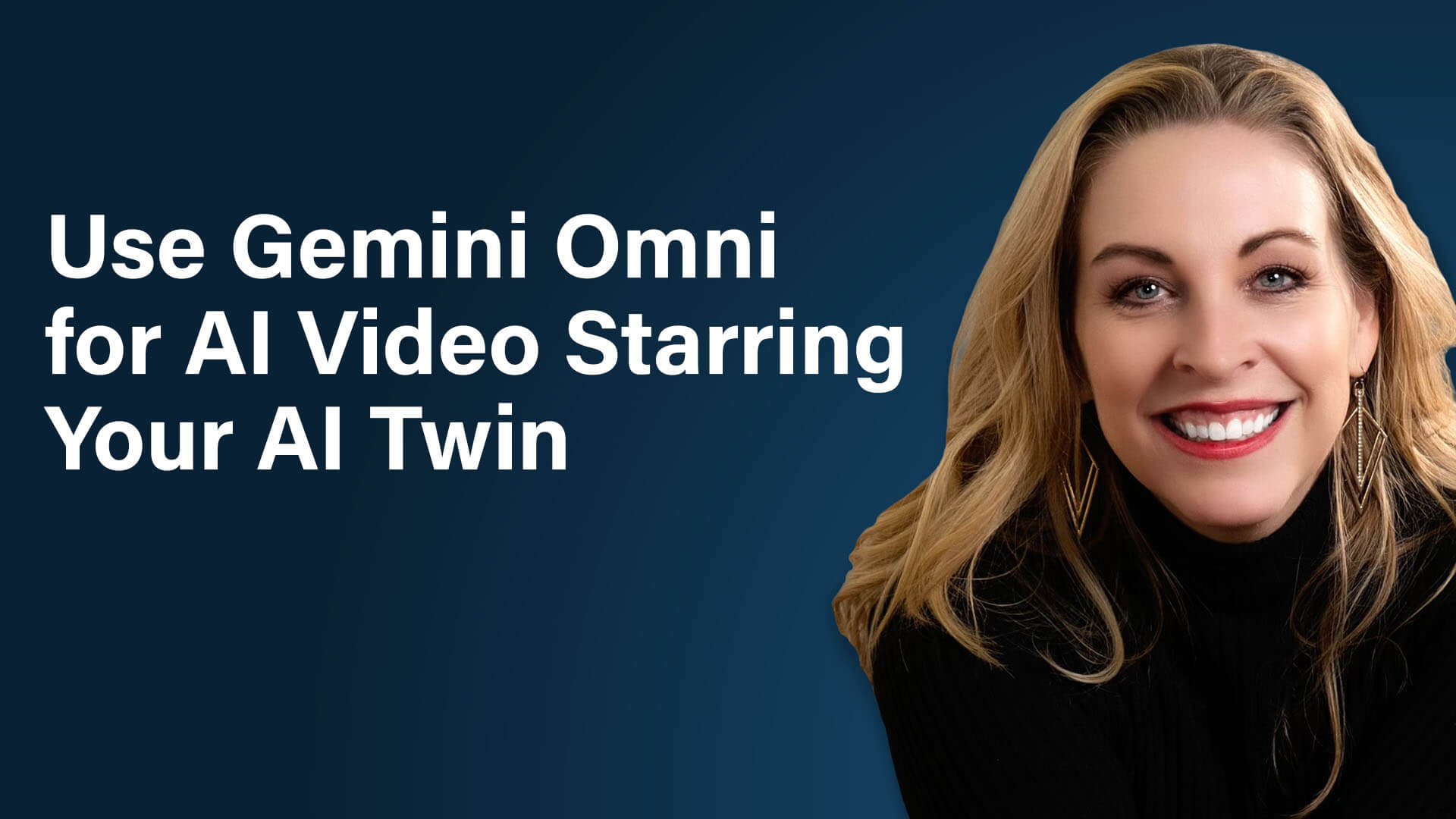
Zero-Friction Video Production with Gemini Omni
The technical barriers to producing professional video content have plummeted. Small business owners and solo creators no longer require dedicated film crews or advanced prompt-engineering expertise to create high-impact multimedia. Utilizing Google’s Gemini Omni, creators can leverage specific production strategies:
- Creating AI Twins: Realistic avatars can be generated in minutes. Creators must follow strict recording parameters to avoid common audio-visual capture mistakes that force AI models to fill in missing details unnaturally.
- Cinematic Directing via Natural Language: By adopting a TV director’s mindset regarding camera angles, pacing, and framing within simple prompt structures, marketers can evoke specific emotional responses from their audience.
- Scroll-Stopping Hooks & Raw Footage Editing: AI-generated hooks can be seamlessly spliced onto traditional talking-head videos. Furthermore, creators can alter seasons, change digital backgrounds, swap outfits, or introduce motion graphics onto pre-recorded footage without reshooting.
- Pre-Production for Long-Form Content: Because generative video tools typically output in short clips, successful producers rely on modular pre-production planning to string clips together seamlessly without jarring temporal jumps.
Official Statements & Industry Perspectives
The rapid convergence of multi-platform ecosystems and practical automation has prompted leading industry voices to emphasize the importance of system resilience over tool loyalty.

During a recent live demonstration, AI strategist Nicole Leffer experienced a sudden service outage with Claude mid-presentation. Rather than halting her workflow, she seamlessly transferred her active session into ChatGPT, which picked up the task without missing a beat. Industry experts point to this moment as a defining philosophy for modern artificial intelligence adoption: Tools will inevitably change, experience downtime, or shift in pricing; therefore, your operational workflows and frameworks must remain entirely portable.
Furthermore, thought leaders across the digital marketing and enterprise landscape—such as Michael Stelzner, founder of Social Media Examiner and the AI Business Society—stress that navigating the weekly wave of AI headlines requires deliberate, community-driven education. Attempting to master every new framework in isolation leads to costly guesswork. By engaging directly with active practitioners in hands-on implementation labs, organizations can filter out superficial trends and focus exclusively on infrastructure that drives measurable business value.

Future Outlook: What to Expect in the AI Landscape
As the industry looks toward the remainder of 2026 and beyond, several clear trajectories are beginning to emerge:
- The Consolidation of Agentic Workflows: The transition from passive chat interfaces to active, persistent agents (such as OpenAI’s Dots and Google’s Live Avatars) means that AI will increasingly operate autonomously in the background. Businesses will shift from managing software applications to supervising networks of collaborative AI agents.
- Ecosystem Interoperability: As walled gardens face pressure from open developer marketplaces and universal API standards, the ability to port prompts, memory structures, and workflows across competing platforms (Anthropic, OpenAI, Google) will become a baseline requirement for enterprise continuity.
- Hyper-Personalized Multimodal Media: With real-time visual avatars, advanced text-to-speech voice replication, and automated video generation maturing simultaneously, the production value of bespoke, localized marketing content will skyrocket while production costs approach zero.
- The Premium on Human Strategy: As technical execution becomes fully commoditized through automated design, coding, and media production, the true differentiator for businesses will not be how they build assets, but why and where they deploy them. Strategic vision, brand authenticity, and robust operational frameworks will remain the ultimate domain of human ingenuity.