Executive Overview
When Disney Plus launched The Mandalorian in November 2019, it didn’t just introduce a cultural phenomenon; it fundamentally redefined the technological and creative boundaries of the Star Wars franchise. Spearheaded by Jon Favreau and Dave Filoni, the series grounded a galaxy far, far away in tactile grit, pioneering the use of real-time virtual production through Industrial Light & Magic’s (ILM) StageCraft LED volume technology.
Yet, transitioning television’s favorite bounty hunter and his Force-sensitive foundling from the living room to the global theatrical stage presented an entirely unprecedented set of hurdles. The Mandalorian and Grogu, marking the first cinematic Star Wars release in seven years, had to scale up its visual fidelity, narrative scope, and technical infrastructure without losing the intimate, character-driven charm that endeared audiences to Din Djarin and Grogu in the first place.
Ahead of the film’s streaming debut on Disney Plus following its theatrical run, key members of the visual effects and creative teams—including ILM Senior Visual Effects Supervisor John Knoll and Animation Supervisor Hal Hickel—sat down to reveal the meticulous craft hidden behind the finished frames. From translating elephant seal biomechanics into the brutal, hyper-kinetic movements of a teenage Rotta the Hutt, to engineering a culinary crossover with Martin Scorsese that merges fast-talking New York cadence with a four-armed alien short-order cook, the production of The Mandalorian and Grogu was a masterclass in hybrid practical-digital artistry. Furthermore, by utilizing spatial computing tools like the Apple Vision Pro, the creative team rewrote the rulebook for framing massive, IMAX-scale blockbusters, ensuring that the transition from small-screen intimacy to sweeping theatrical grandiosity remained seamless.
Detailed Chronology & Technical Genesis
The Post-Cinematic Shift: Scaling Up the Mandoverse
The journey to The Mandalorian and Grogu began years before cameras rolled, born out of a desire to see how the episodic television format could evolve into a high-octane cinematic event. While previous seasons of the show utilized the LED volume to capture sweeping landscapes with in-camera visual effects, a theatrical release demanded higher resolution assets, more dynamic lighting scenarios, and a radically refocused approach to action choreography.
For the visual effects pipeline at ILM, the mandate was clear: expand the toolkit. The team could not simply rely on oversized television workflows. Every texture on Din Djarin’s beskar armor, every individual hair on Grogu’s peach-fuzz head, and every square inch of alien terrain had to withstand the microscopic scrutiny of a 40-foot IMAX screen. This pressure catalyzed a collaborative environment where practical effects houses like Legacy Effects worked hand-in-hand with digital artists to iterate, discard, and reinvent characters on the fly.
Sculpting Rotta the Hutt: From Elephant Seals to Gladiator Arenas
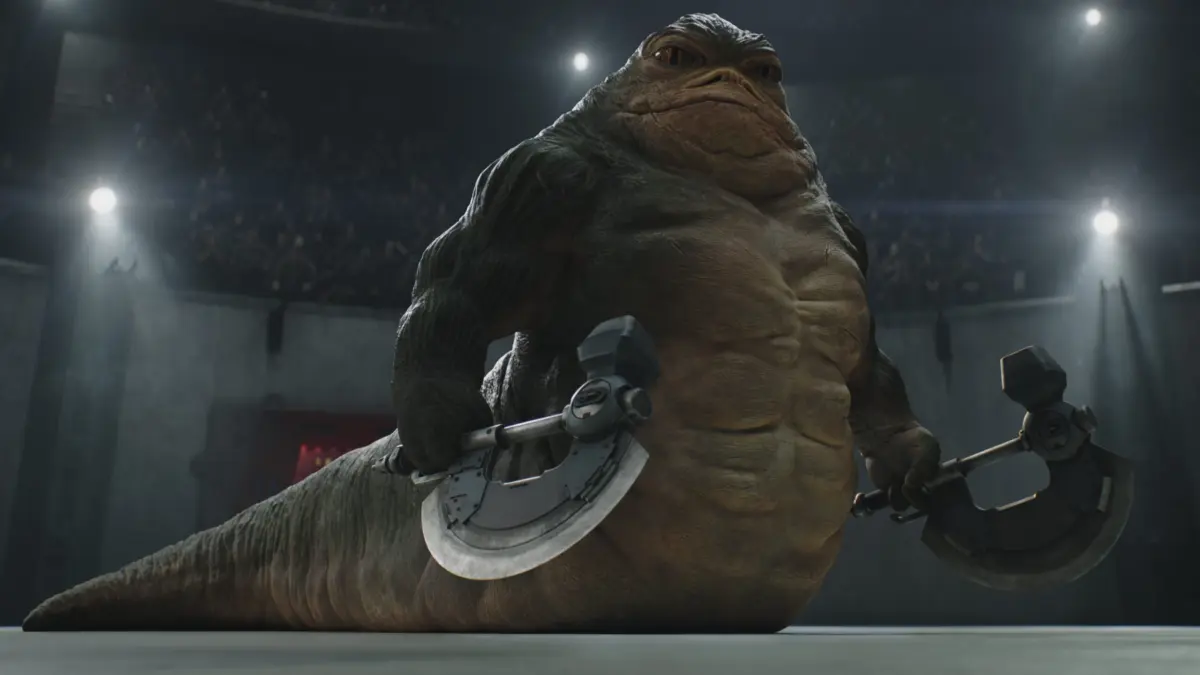
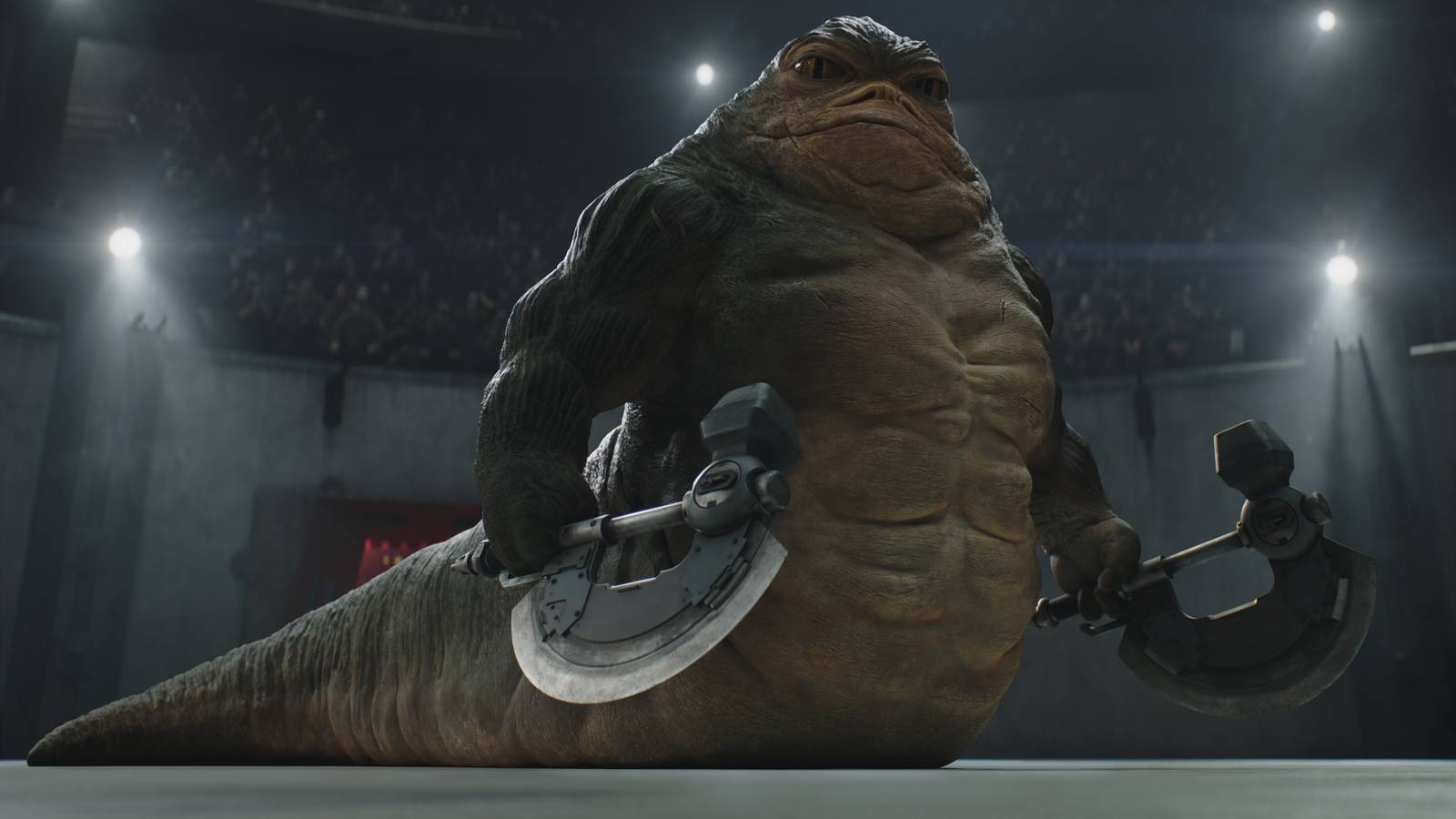
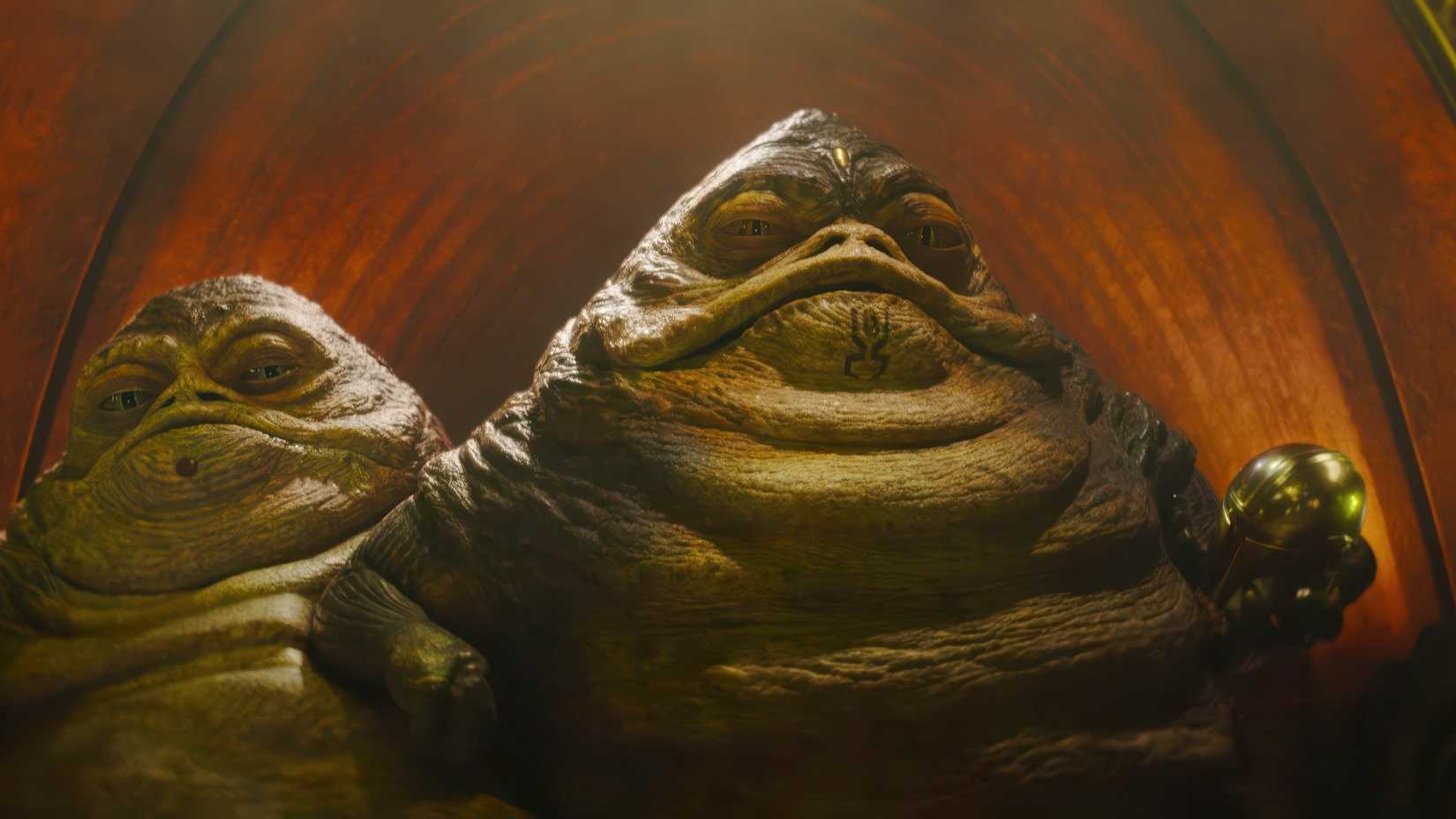
One of the most daunting narrative and technical hurdles for the film was the introduction of Rotta the Hutt as a fully realized, athletic combatant. Fans remember Rotta as the diminutive, sickly slug-pup pushed in a hovering cart by Ahsoka Tano in the 2008 animated Clone Wars movie. In The Mandalorian and Grogu, however, Rotta has grown into a physically imposing gladiator—a stark contrast to the famously sedentary, fat, and slug-like Hutt Lords of the original trilogy.
“We’ve seen these fat and sedentary versions of Hutts in the past, but this one is an athlete that is fit and can move fast and speaks English,” explains ILM Senior VFX Supervisor John Knoll. “How does something with no legs move quickly? Does he move like an inchworm? Like a snake?”
To solve this biomechanical riddle, the animation team turned to the natural world. Knoll drew inspiration from National Geographic documentaries showcasing elephant seals. Weighing up to four tons, these massive marine mammals possess an astonishing capability for rapid, explosive motion when charging rivals over territory during breeding seasons. The visceral, heavy-impact combat between Rotta and his adversaries in the film’s gladiatorial arena was meticulously choreographed using these real-world weight dynamics.
“Whenever we are looking at animating creatures, we try to look to real-world analogs to help inform the decision,” Knoll notes. “You see what you can learn to help make the experience feel more plausible.”
The process wasn’t entirely digital out of the gate. Legacy Effects initially built a physical, practical Rotta head for the actors to interact with on set. However, as principal photography wrapped and editorial began, creative doubts surfaced regarding the character’s aesthetic lineage.

“Jon started to have some misgivings about it, and we all kind of thought, ‘You know, he’s right. It doesn’t look enough like Jabba’s son,’” recalls Animation Supervisor Hal Hickel. “I think we tried to make him too friendly. Since we already had a CG version of the character, we went and started working on the models and textures again, so that was quite a long journey.”
Supporting Context & Cultural Crossovers
The Chef Connection: Martin Scorsese’s Four-Armed Alien Cameo
Jon Favreau has a well-documented penchant for inserting unexpected culinary motifs into his projects. In 2014, he wrote, directed, and starred in the indie critical darling Chef, a film about a disgraced celebrity chef rediscovering his passion by serving Cuban sandwiches out of a mobile food truck. For that production, Favreau enlisted acclaimed chef Roy Choi—the visionary behind the famous Kogi Korean BBQ truck—to consult on kitchen operations and design menus.
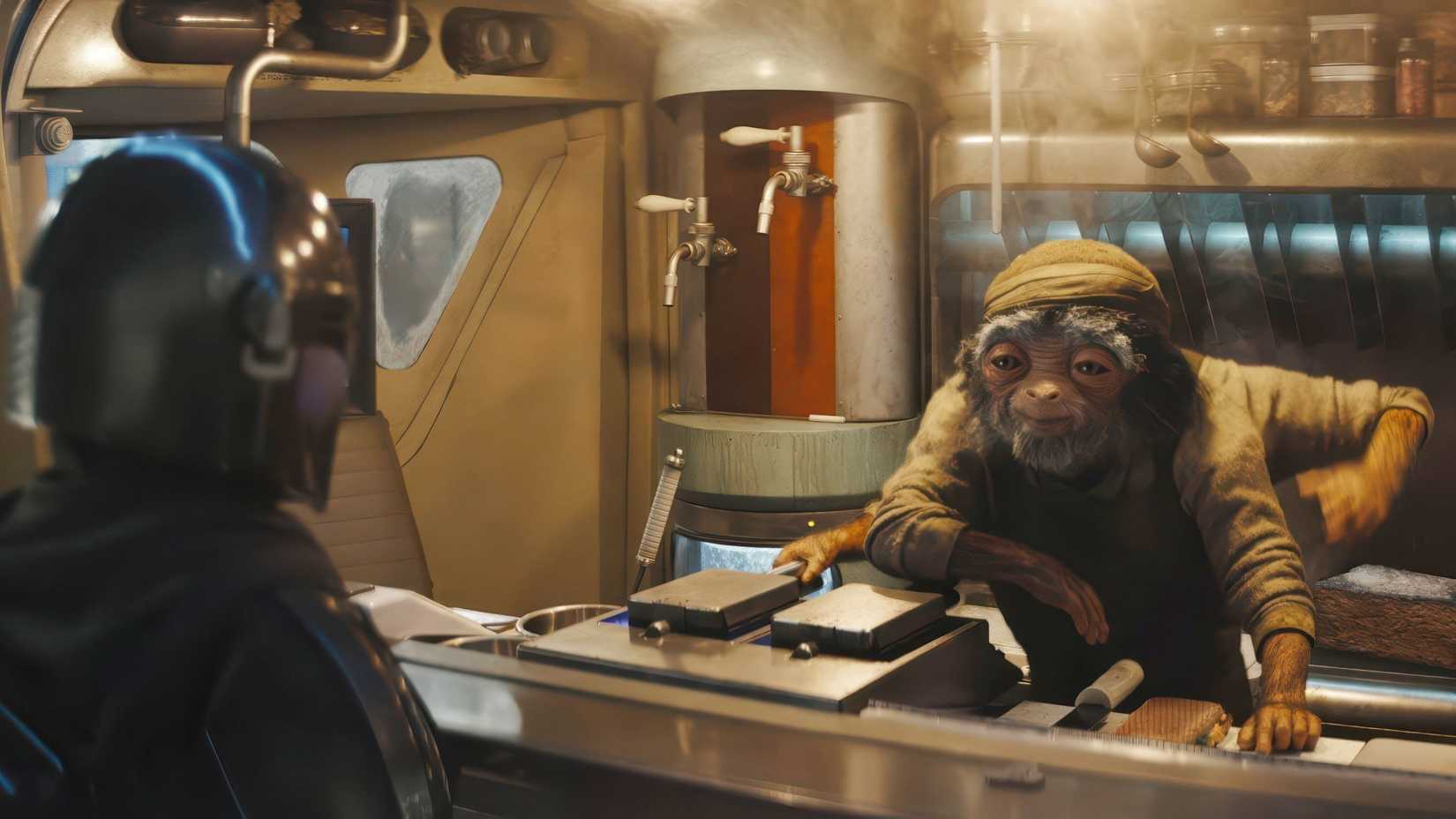
Fast-forward to The Mandalorian and Grogu, and Favreau found an inventive way to bridge his love for gastronomy with deep-space world-building. Choi was once again brought into the Star Wars fold to help design a space-faring food truck operating on the planet Shakari, down to the specialized sandwiches prepared by an alien short-order cook named Hugo Durant.
Hugo Durant is canonically related to Rio Durant, the Ardennian pilot played by Favreau himself in 2018’s Solo: A Star Wars Story. But the true stroke of genius lay in the casting and digital likeness of Hugo: legendary filmmaker Martin Scorsese.
To bring Scorsese into the Star Wars universe as a four-armed alien food truck proprietor, Lucasfilm’s Executive Creative Director Doug Chiang and his creature design team meticulously tweaked the facial geometry, eye placement, and skin textures of the Ardennian species to evoke the iconic director’s unmistakable visage.
“Jon Favreau laughed out loud the first time we showed him those tests,” Hickel reveals. “We knew we were on the right track. Marty’s fast talking combined with this sort of nervous, fast-moving little chef with four arms puttering around his little food truck was just a super fun thing to do.”
The food truck concept proved so popular during internal development that Disney eventually showcased a physical recreation of the set at the D23 Expo, with plans to integrate it as a specialty dining and merchandise booth within the domestic Disney theme parks.
Official Statements & Production Innovation
Rewriting the IMAX Rulebook via Spatial Computing
Perhaps the most technically demanding pivot in the making of The Mandalorian and Grogu was shifting the visual language from television’s standard aspect ratios to the towering, immersive immersion of IMAX. When grading and composing for a streaming series, filmmakers typically evaluate framing on standard large monitors designed to replicate living room viewing environments. IMAX, however, radically alters human peripheral vision.
“A large monitor is used to evaluate the composition of shots when making a streaming show to replicate how it will look to viewers at home,” Knoll explains. But IMAX screens force viewers to take in an enormous field of view, meaning fast-paced action can easily induce visual fatigue or disorientation if characters and objects move too close to the camera lens.
To solve this, the visual effects and editorial departments engineered an entirely novel workflow utilizing spatial computing. The team developed a custom application for the Apple Vision Pro, allowing filmmakers to view live-action and digital effects footage directly through VR headsets. This application enabled directors and compositors to inspect scenes exactly as they would appear when projected onto a colossal IMAX screen, guiding both on-set camera setups and post-production editorial trims.
The spatial app proved essential during the film’s breathtaking opening sequence, which features massive Imperial AT-AT walkers navigating treacherous mountain cliff sides.
“In the opening sequence with the big AT-ATs on the mountain cliffside, for The Mandalorian series, we would have been much more in the action, really close to the feet of the vehicles and the explosions,” Hickel notes. “We watched it in IMAX and found we had to back up. It was a learning experience how to present the action so it didn’t just press you back in your seat and crush you with stuff you couldn’t even parse visually.”
Future Outlook
The release of The Mandalorian and Grogu marks a watershed moment for Lucasfilm’s ongoing multimedia strategy. By successfully bridging the episodic intimacy of streaming television with the hyper-detailed technical demands of global theatrical exhibition, Disney and ILM have laid down a blueprint for how legacy franchises can scale their universes without alienating their core audience.
The integration of spatial computing tools like the Apple Vision Pro into the core editorial and VFX pipelines signals a permanent shift in how blockbuster films will be framed and reviewed moving forward. As directors harness real-time immersive visualization tools to gauge theatrical scale and spatial composition during production, the traditional boundaries between pre-production, principal photography, and post-production continue to dissolve.
With The Mandalorian and Grogu now available to stream on Disney Plus following its theatrical run, fans have the unique opportunity to study the meticulous layers of craftsmanship embedded in every frame. Whether examining the elephant-seal-inspired musculature of Rotta the Hutt, marveling at the manic culinary energy of Martin Scorsese’s four-armed alien chef, or appreciating the expansive horizon lines crafted through spatial computing, the film stands as a testament to the relentless evolution of practical-digital hybrid filmmaking in the modern era.