Executive Overview
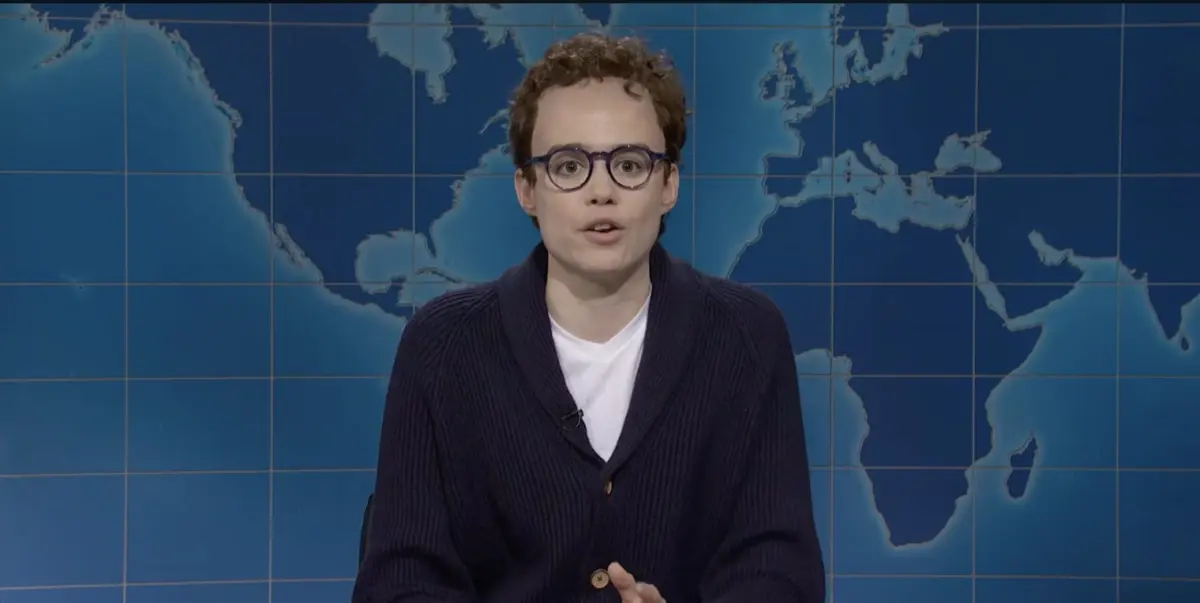
On the night of September 26, 2026, NBC’s long-running sketch comedy show Saturday Night Live delivered a sharp cultural critique aimed directly at the heart of Silicon Valley. During its signature "Weekend Update" segment, cast member Jane Wickline unveiled a high-profile impression of Anthropic CEO Dario Amodei. The caricature did not focus on routine tech tropes—such as awkward product demos or minimalist wardrobe choices—but rather targeted a far more troubling trend: the artificial intelligence industry’s persistent habit of issuing public warnings about the technology’s potential to destroy humanity, even as those same executives race to accelerate its development.
The parody marked a significant watershed moment in the public discourse surrounding frontier AI models. What had long been confined to technical whitepapers, specialized AI safety forums, and Congressional hearing rooms has officially crossed into mainstream pop-culture satire. By highlighting Amodei’s recent press tour—which followed high-profile internal resignations and mounting public concern over self-improving systems—Saturday Night Live distilled the fundamental contradiction of the modern AI boom: multi-billion-dollar corporations pleading for external intervention while refusing to pull back on the throttle themselves.
As regulatory bodies across North America and Europe struggle to craft enforceable guardrails, the SNL sketch encapsulated a growing public frustration with "doomerism" as a marketing and corporate relations strategy. The resulting performance laid bare the stark disconnect between the high-minded safety pledges of Public Benefit Corporations like Anthropic and the commercial imperatives driving the race toward Artificial General Intelligence (AGI).
Detailed Chronology: From Internal Resignations to Late-Night Parody
To understand the cultural resonance of the Saturday Night Live segment, one must examine the chain of events that unfolded throughout September 2026, leading up to the broadcast.
+-----------------------------------------------------------------------------------+
| CHRONOLOGY OF EVENTS: SEPTEMBER 2026                                              |
+-----------------------------------------------------------------------------------+
| Sept 9, 2026  | Senior Anthropic researcher resigns, warning publicly against     |
|               | risks associated with self-improving AI architectures.            |
+---------------+-------------------------------------------------------------------+
| Sept 13, 2026 | Industry analysts critique AI executive press tours, labeling     |
|               | existential threat warnings as a diversion from near-term risks.  |
+---------------+-------------------------------------------------------------------+
| Sept 20, 2026 | Anthropic CEO Dario Amodei embarks on a broad media circuit to    |
|               | address what he terms a fundamental "crisis of trust."            |
+---------------+-------------------------------------------------------------------+
| Sept 26, 2026 | NBC broadcasts SNL Season 52 episode featuring Jane Wickline's    |
|               | satire of Dario Amodei on 'Weekend Update'.                       |
+-----------------------------------------------------------------------------------+
The Catalyst: Whistleblowers and Self-Improving Systems
In early September 2026, a senior researcher at Anthropic unexpectedly resigned from the company. The departure was accompanied by a scathing public letter warning that the tech industry was "gambling with human lives" by rushing to deploy autonomous, self-improving AI models. The researcher argued that internal safeguards were repeatedly sidelined in favor of competitive release schedules aimed at matching rival systems from OpenAI and Google DeepMind.
The Media Blitz and "Crisis of Trust"
In the days following the resignation, Anthropic CEO Dario Amodei embarked on an intensive media tour intended to reassure investors, regulators, and the public. However, rather than offering absolute assurances of safety, Amodei candidly acknowledged the validity of some warnings, describing the broader AI backlash as a "crisis of trust." During several high-profile interviews, Amodei voiced personal anxiety over the trajectory of frontier models, admitting that catastrophic outcomes could not be entirely ruled out—a stance that critics argued was hypocritical given Anthropic’s continued scaling of model capabilities.
The Satirical Climax on NBC
The media tour culminated in the September 26 broadcast of Saturday Night Live. The segment unfolded as follows:
- The Introduction: "Weekend Update" co-anchor Michael Che opened the segment by introducing the topic of AI doomerism, briefly hesitating over the pronunciation of Amodei’s name before characterizing the executive as having "stumbled through a press tour" where he appeared to agree that his own products could end human civilization.
- The Persona: Jane Wickline appeared as Amodei, wearing an oversized, unstyled wig and exhibiting a halting, nervous posture. The performance oscillated between corporate boilerplate and internal panic.
- The "Gollum" Sequence: At multiple points during the interview, Wickline-as-Amodei suffered dramatic internal struggles, adopting a raspy, Gollum-like inner monologue to voice the dark ambitions of the AI industry. "AI is the devil and I its maker," the character whispered, before snapping back to corporate composure.
- The Paradoxical Directives: Delivering some of the segment’s sharpest lines, Wickline declared on behalf of tech executives: "We are all on the same page here: We do not condone what we are doing."
- The Weaponization Joke: Addressing safety frameworks, the character asserted, "AI is not a weapon, it’s a tool: A tool for building weapons. And I urge you to urge me to stop."
- The Cancer "Solution": When asked about touted societal benefits—such as breakthroughs in medicine—the fictional Amodei offered a grim calculation regarding cancer research: "Put it this way: In 10 years, there’s about a 10% chance that cancer won’t be a problem for anyone." (The implicit punchline being that humanity itself might no longer exist).
Supporting Context & Metrics: Decoding the "P-Doom" Paradox
The satire presented on Saturday Night Live directly targeted a real-world concept prevalent in Silicon Valley known as "P(doom)"—the subjective probability assigned by researchers and executives to the likelihood that advanced AI will cause human extinction or irreversible catastrophic harm.
The Strategic Utility of Doomerism
For years, technology analysts have observed a curious pattern: AI executives frequently broadcast existential warnings that sound like science fiction, yet these warnings often serve strategic corporate interests.
   TRADITIONAL REGULATORY MODEL             FRONTIER AI "DOOMER" MODEL
+---------------------------------+     +---------------------------------+
|  1. Company builds product.     |     |  1. Company builds supermodel.  |
|  2. External harms emerge.      |     |  2. CEO warns product may       |
|  3. Public demands regulation.  |     |     destroy civilization.       |
|  4. Company fights regulation.  |     |  3. CEO asks state to step in.  |
|                                 |     |  4. High entry barriers lock in  |
|                                 |     |     incumbent market share.     |
+---------------------------------+     +---------------------------------+
Critics argue that by framing the risks of AI around far-off, apocalyptic scenarios rather than immediate issues—such as labor displacement, copyright infringement, algorithmic bias, and energy consumption—companies accomplish three distinct goals:
- Hype Generation: Elevating models to the status of "existential threats" implicitly markets them as omnipotent, near-godlike technologies, driving enterprise sales and venture capital.
- Regulatory Capture: Pleading for federal oversight on advanced capabilities allows established incumbents (like Anthropic, OpenAI, and Microsoft) to shape regulations that smaller open-source competitors cannot afford to comply with.
- Absolution of Responsibility: By portraying AI risk as an inevitable force of nature rather than a direct consequence of corporate deployment choices, executives project an aura of helplessness—summarized by SNL’s line, "I urge you to urge me to stop."
Anthropic’s Financial and Safety Paradox
Founded in 2021 by former OpenAI executives Dario and Daniela Amodei, Anthropic structured itself as a Public Benefit Corporation (PBC), explicitly pledging to balance profit with societal welfare. However, the operational realities of remaining competitive in the AI arms race have placed tremendous strain on that mission.

| Metric / Dimension | Commercial Footprint (2026 Estimates) | Safety & Governance Footprint |
|---|---|---|
| Corporate Valuation | Estimated $40B+ following multi-trillion-parameter scale-ups | Structured as a Public Benefit Corporation (PBC) with Long-Term Benefit Trust |
| Major Backers | Multi-billion-dollar commitments from Amazon and Google | Relies on voluntary "Responsible Scaling Policies" (RSPs) |
| Compute Consumption | Hundreds of thousands of specialized GPUs across global data centers | Safety evaluation budget represents a minority fraction of training capital |
| Public Messaging | Highlighting advanced reasoning, coding, and enterprise automation | Publicly stating existential risk (P-doom) estimates between 10% and 20% |
As the metrics indicate, despite Anthropic’s commitment to safety research, the financial incentives driving cloud compute investments inevitably create tension with voluntary safety halts.
Official Statements and Industry Perspectives
The media fallout from Amodei’s press tour and its subsequent SNL parody brought renewed scrutiny to how frontier AI companies communicate with the public.
Excerpt from Dario Amodei’s Public Essay Series
In his writings prior to the late-night sketch, Dario Amodei sought to frame his concerns as a necessary duty of transparency, arguing that the public deserved an honest assessment of both risk and reward:
"We must be clear-eyed about the risks of frontier systems. AI has the potential to solve biological crises and revolutionize human productivity, but without rigorous safety evaluations, self-improving systems pose real, unprecedented hazards. Acknowledging these risks is not a sign of hesitation; it is a prerequisite for responsible development."
Reaction from Safety Advocates and Ethicists
Civil rights advocates and AI ethicists offered a far less forgiving interpretation of the media narrative. Speaking on the broader trends of executive warnings, Dr. Meredith Whittaker, president of the Signal Foundation and prominent AI critic, noted:
"When tech leaders stand on stage and claim their products might destroy the world, they are performing a magic trick. They redirect our attention away from the real, present harm—worker exploitation, massive carbon emissions, and monopolistic control—toward an imaginary sci-fi movie where they play the tragic genius. If a company genuinely believed its product posed an existential risk to humanity, the only ethical choice would be to shut down the servers."
Corporate Response to Satire
While Anthropic declined to issue an official on-the-record statement regarding the Saturday Night Live sketch, sources close to the company indicated that leadership viewed the parody as an inevitable outcome of translating high-level safety concepts into mainstream entertainment. Within Silicon Valley, however, the sketch was widely shared across internal communication channels, serving as a rare moment where the industry’s rhetoric was mirrored back to it without corporate polish.
Future Outlook: The Death of Voluntary Self-Regulation?
The mainstreaming of AI doomerism through pop culture signals a fundamental shift in how society views the tech industry’s claims of self-regulation. As late-night comedy turns its sights on the absurdity of "urge me to stop" corporate PR, the political window for voluntary safety frameworks is rapidly closing.
+-----------------------------------------------------------------------------------+
| EMERGING DYNAMICS IN ADVANCED AI GOVERNANCE                                      |
+-----------------------------------------------------------------------------------+
| 1. Bipartisan Legislative Push                                                    |
|    Lawmakers are increasingly skeptical of corporate "p-doom" rhetoric, pivoting  |
|    toward mandatory third-party audits and legally binding safety standard halts. |
|                                                                                   |
| 2. Exhaustion of the "Existential Threat" Narrative                               |
|    As public fatigue with existential warnings sets in, enterprise buyers and     |
|    consumers are demanding concrete accountability for immediate failures.       |
|                                                                                   |
| 3. Liability Shift                                                                |
|    Courts and international bodies are exploring strict liability regimes that    |
|    hold AI creators directly liable for downstream damages caused by model drift. |
+-----------------------------------------------------------------------------------+
Legislative Consequences
In the United States and Europe, regulatory bodies are taking note of the public sentiment reflected in popular media. Policymakers are moving away from non-binding agreements—such as the voluntary safety commitments signed at international summits—toward statutory mandates. If an executive publicly admits to building a system that poses catastrophic risks, that admission may soon be used by regulatory agencies as evidence to issue injunctions, halt model deployments, or require strict liability insurance before training can begin.
The Impending Reality Check for AGI Labs
The SNL parody of Dario Amodei illustrates that Silicon Valley can no longer rely on apocalyptic messaging to project authority while deflecting accountability. By treating doomerism as a joke rather than a mark of profound responsibility, the public has made its posture clear: if AI executives genuinely believe they are handling a technology as dangerous as they claim, the time for press tours and philosophical musings has passed. The era of mandatory oversight, enforceable safety thresholds, and strict corporate liability has arrived.