Executive Overview
The intersection of artificial intelligence, soaring energy demand, and climate change has transformed into one of the most volatile battlegrounds in modern politics. As tech giants race to build massive data centers to fuel the generative AI revolution, they are colliding directly with an increasingly organized and hostile public. This friction was on full display during Climate Week, where panel discussions featuring tech executives were repeatedly disrupted by climate activists shouting warnings about the industry’s reliance on fossil fuels.
While tech leaders attempt to position data centers as "good corporate citizens" that can modernize and stabilize the electrical grid, public opinion sits at historic lows. Voters and local communities are pushing back against proposed facilities across both red and blue states, enacting moratoriums, and shifting political landscapes. Behind the public outcry lies a stark reality: despite industry promises of green energy integration, independent analyses from groups like BloombergNEF show that the data center boom is actively triggering a massive, unexpected expansion of fossil fuel infrastructure—primarily natural gas.
This deep dive explores the escalating conflict between the tech industry’s insatiable thirst for energy and the communities, activists, and politicians fighting to protect their local environments, examining how data centers have quietly become the hottest—and most polarizing—issue of this political season.
Detailed Chronology: Protests, Panels, and the Clash at Climate Week
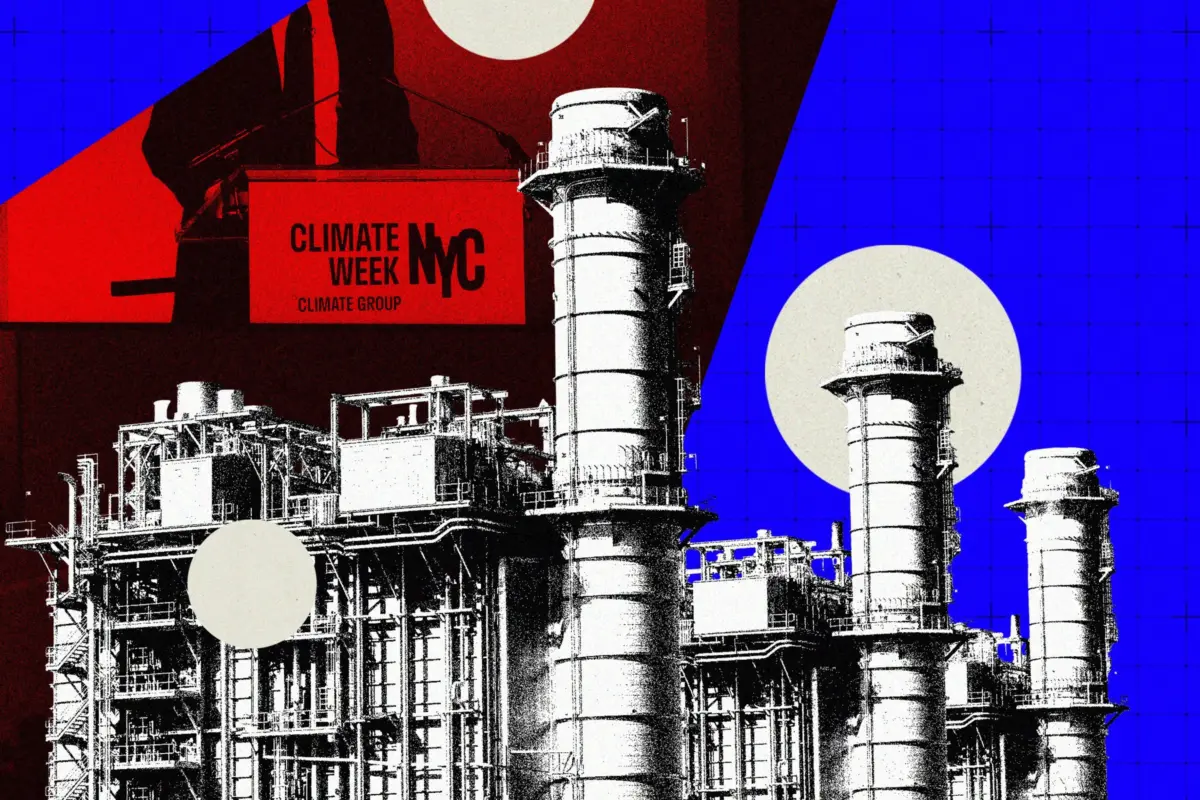
The tension defining the modern data center debate was crystallized in a matter of seconds during a post-lunchtime panel at Climate Week. The session, which brought together tech executives and infrastructure developers to discuss the nexus of AI and digital architecture, barely made it past its introductory remarks before the room erupted.
Just one minute into the discussion, a man stood up a few rows into the audience, his voice cutting through the microphone system. "The idea that we can keep running on fracked gas is a lie!" he shouted before security guards converged on him and hauled him out of the auditorium.
The panelists attempted to regain their composure and pivot back to their talking points. Yet, no sooner had the conversation resumed than a second audience member stood up and interrupted. This pattern repeated in a coordinated fashion over the next ten minutes. Members of Extinction Rebellion NYC staged a sequence of staggered interruptions, using the speakers’ own microphones to broadcast warnings about the ecological and social harms of unchecked AI expansion while panel members sat in visible frustration.
For nearly a decade, Extinction Rebellion has utilized high-profile public disruptions to draw attention to the global climate crisis, frequently targeting corporate-friendly summits. While such protests often elicit little more than polite silence or subtle eyerolls from veteran panelists waiting out the disturbance, the reaction this time was distinctly different.
Cully Cavness, cofounder and president of data center infrastructure firm Crusoe, admitted to the session’s moderator that he was still rattled by the interruptions several minutes after the final protester had been escorted from the room. The palpable edge among the tech executives was a clear micro-reflection of a much larger macro-crisis: data center defenders are currently navigating a grueling public relations nightmare, marked by rock-bottom public sentiment and a wave of local moratoriums spanning the political spectrum.
Supporting Context & Metrics: Local Anxieties Versus Global Climate Realities
While the protesters at Climate Week zeroed in on carbon emissions and the use of fracked gas, public opinion polling reveals a fascinating disconnect between climate-focused activists and the broader electorate.
According to comprehensive national data from organizations like Ipsos and the University of Massachusetts, climate change often ranks near the bottom of the list of concerns for everyday voters living near or facing proposed data center developments. Instead, local anxieties dominate the discourse. Citizens are primarily mobilized by:
- Water Usage: Massive cooling systems demand millions of gallons of water daily, straining local municipal supplies.
- Energy Bills: The localized surge in electricity consumption threatens to drive up monthly utility rates for residential ratepayers.
- Air and Noise Pollution: Backup diesel generators, turbine hum, and heavy construction traffic degrade immediate quality of life.
Tech leaders have been acutely aware of these localized rebellions. During the Climate Week panel, Crusoe’s Cavness suggested that most protesters likely did not live near an actual data facility and therefore failed to appreciate the substantial tax base and economic uplift these projects bring to local municipalities.
Varun Sivaram of Emerald AI took a similarly pragmatic approach, arguing that data centers could ultimately act as benevolent grid partners. By helping to finance new clean energy projects and balancing electricity demand, Sivaram argued, these facilities could accelerate the green transition. "Careful what you wish for," Sivaram cautioned the departed protesters, warning that depriving communities of tech developers also deprives them of deep-pocketed actors capable of helping modernize aging electrical grids.
Yet, this theoretical utopian vision contrasts sharply with ground-level data. Analysts at BloombergNEF (BNEF) have projected that data centers will likely account for more than 5 percent of global electricity demand by 2035—roughly tripling their current consumption. Crucially, BNEF’s analysis warns that the majority of this new demand will be met by new and existing natural gas plants, potentially boosting power sector emissions by up to 6 percent in under a decade.
This projection does not even factor in the growing trend of gas-fired power plants being built off-the-grid specifically to service standalone data centers. A separate BNEF evaluation of 99 proposed on-site gas generation projects concluded that if all are constructed, they could inflate US power sector emissions by an alarming 20 to 33 percent. Far from accelerating a clean energy transition, the immediate footprint of the AI boom is actively keeping aging coal plants online and fueling a fossil fuel renaissance.
Official Statements and Political Realities: The Michigan Case Study
The friction surrounding data centers is no longer confined to corporate boardrooms and activist circles; it is actively reshaping electoral politics.
In Michigan, William Lawrence is locked in a fiercely competitive race for the state’s 7th congressional district. A cofounder of the influential Sunrise Movement, Lawrence understands the mechanics of climate organizing intimately. However, in his bid for Congress, he has made opposition to unchecked AI and large-scale data center expansion a foundational pillar of his platform—a strategy that helped him secure a hard-fought Democratic primary victory.
Lawrence notes that at least three hyperscale data center projects are currently slated for his district. His newly released policy platform, the "Michigan First AI Plan," pulls no punches, stating bluntly that data centers "threaten our air, water, and quality of life."
Notably, Lawrence’s platform makes little explicit mention of global climate change. When questioned about this omission, Lawrence explained that while local constituents frequently approach him with climate anxieties, concerns regarding water scarcity and surging power bills consistently rank higher. He argues that a broader "environmental consciousness" animates the anti-data center movement—one that encompasses climate health without always being framed solely through the lens of carbon emissions.
"We have a small amount of billionaires and political insiders who have made it impossible to feel confident about the future," Lawrence said in an interview. "They’ve destabilized our ecological system. They’ve destabilized the political order."
Lawrence’s political success signals a warning to lawmakers nationwide: opposition to data centers is a potent populist rallying cry that unites working-class voters worried about utility bills with environmentalists worried about ecological degradation.
Future Outlook: Technological Innovations and the Road Ahead
As the data center gas buildout charges forward, the tech industry faces an existential imperative to mitigate its environmental damage. Even if operators manage to successfully pivot their public relations strategies to address local water use and consumer electricity prices, the sheer volume of greenhouse gases tied to the fossil fuel expansion remains an intractable threat.
Recognizing that the climate will need every technological advantage available, innovators are racing to engineer solutions. Recently, new startups have emerged aiming to deploy supercritical $textCO_2$ ($textsCO_2$) technology to dramatically improve the thermodynamic efficiency of dirty data center gas turbines. While $textsCO_2$ systems have been studied in academic and engineering circles for decades as a promising alternative to traditional steam cycles, they have struggled to achieve widespread commercialization.
The gamble now is that deep-pocketed tech giants, desperate for reliable power and pressured by regulatory bodies, will inject the necessary capital to scale the technology. Founders hope to use data centers as an early adopter market to bring down costs, eventually expanding the applications of $textsCO_2$ systems to supercharge carbon-free energy sources like advanced nuclear reactors.
Whether technological interventions can outpace the sheer speed of fossil fuel deployment remains the defining question of the AI era. As Extinction Rebellion’s disruptions at Climate Week demonstrated, the consequences of the digital revolution cannot be easily cordoned off inside server rooms. For millions of citizens living downstream, downwind, and on the grid, the digital future has arrived—and its carbon bill is coming due.