Executive Overview
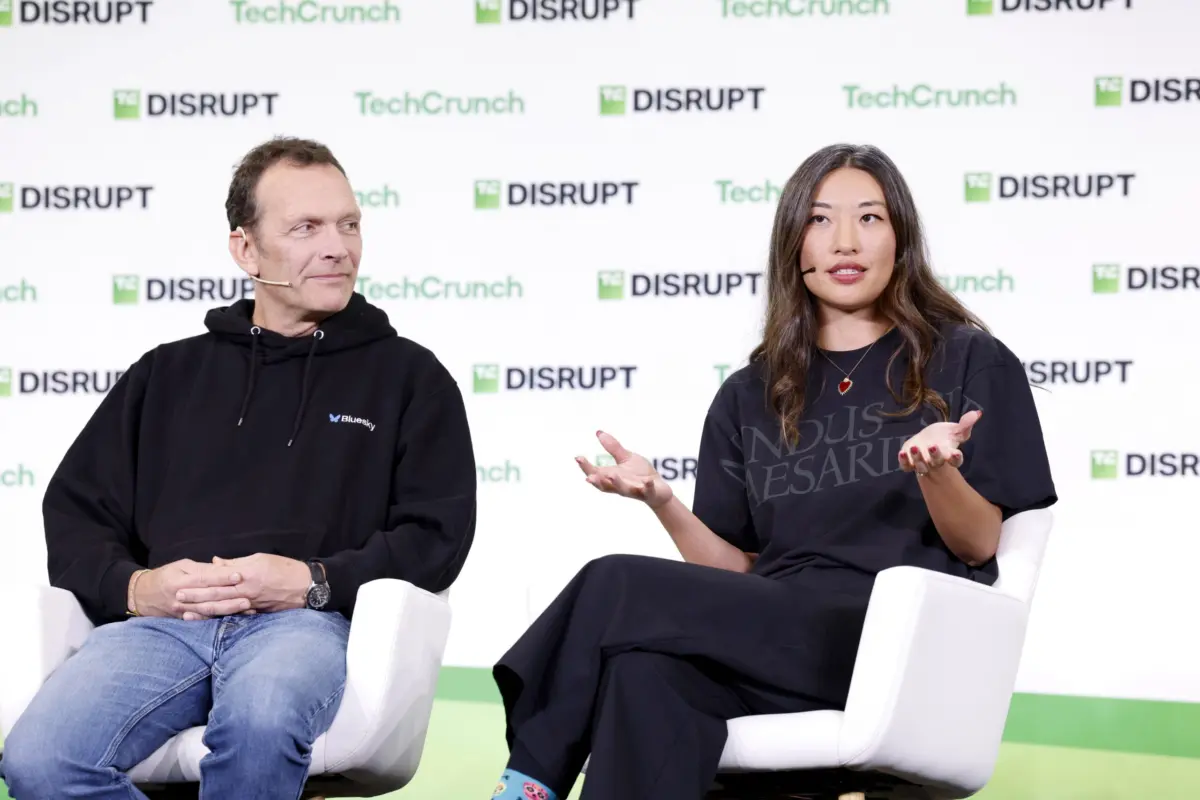
In a decisive move to challenge the dominant financial architecture of contemporary social media, Bluesky has announced plans to introduce native payment capabilities across its network in the coming months. Speaking at TechCrunch Disrupt, Chief Executive Officer Toni Schneider and Chief Operating Officer Rose Wang outlined a strategic blueprint designed to monetize the decentralized network without resorting to targeted advertising—the revenue engine that has historically defined consumer internet platforms.
The decision marks a fundamental departure from the monetisation playbooks of legacy tech giants like Meta and X (formerly Twitter). Rather than extracting value through surveillance advertising, algorithmically forced engagement, and user data commercialization, Bluesky intends to build a transaction layer that directly supports the peer-to-peer commerce, fundraising, and creator tipping already occurring organically on the platform.
       TRADITIONAL SOCIAL MONETIZATION            BLUESKY DECENTRALIZED MODEL
   +------------------------------------+    +------------------------------------+
   | Platform Lock-In & Surveillance    |    | Open AT Protocol Infrastructure    |
   | Monetizes via Targeted Ads         |    | Direct Monetization via Payments   |
   | Extract Revenue from User Data     |    | Value Retained by Ecosystem        |
   +------------------------------------+    +------------------------------------+
Central to this effort is Bluesky’s underlying architecture: the AT Protocol (Authenticated Transfer Protocol). By integrating payments into the protocol layer rather than restricting them to a proprietary application, Bluesky aims to allow alternative client apps, third-party developers, and creators across the entire open network to process transactions seamlessly. The executive team framed this model as an alternative to digital "feudalism," leveraging Schneider’s experience as former CEO of Automattic—the parent company behind WordPress—to build a multi-billion-dollar open-source ecosystem where the vast majority of economic value stays with network participants.
Detailed Chronology
Bluesky’s transition toward an open financial ecosystem represents the latest milestone in a multi-year project to rethink social networking infrastructure.
2019: Incubation inside Twitter (led by Jack Dorsey)
 │
2021: Spun off as an independent entity under CEO Jay Graber
 │
2023: Open beta launch of AT Protocol; invite-only growth phase
 │
Early 2024: Public registration opens; major influx during incumbent platform disruptions
 │
March 2026: Jay Graber steps down; former Automattic CEO Toni Schneider takes the helm
 │
Late 2026: TechCrunch Disrupt announcement: Native payment integration unveiled
The Origins and Independence (2019–2021)
Bluesky began in 2019 as an internal, Twitter-funded research initiative championed by then-CEO Jack Dorsey. The mission was to develop an open, decentralized standard for social media. In 2021, Bluesky decoupled from Twitter entirely, organizing as an independent Public Benefit Corporation (PBC) under founding CEO Jay Graber.
Protocol Development and Migration Waves (2022–2025)
Under Graber’s leadership, the team architected the AT Protocol, establishing federated identity, portable social graphs, and custom algorithmic feeds. As legacy social networks faced mounting criticism over policy changes, aggressive ad placement, and paywalled verification schemes, Bluesky experienced successive waves of user migration, transforming from a developer experiment into a mainstream network alternative.
Leadership Transition (March 2026)
In March 2026, Jay Graber stepped down from her position as CEO, prompting the board to appoint Toni Schneider as her successor. Schneider, who previously guided Automattic through years of expansion, brought expertise in scaling open-source web ecosystems. His appointment initially drew mixed reactions from platform regulars concerned about corporate monetization, but Schneider maintained that his goal was to preserve the open-web principles underlying the network.
The Payment Road Map Announcement (Late 2026)
At TechCrunch Disrupt, Schneider and COO Rose Wang formally announced that payments would be introduced in the coming months. The executives confirmed that early monetization features would focus on helping creators, cause-based fundraisers, and merchants process transactions directly within the social stream.
Supporting Context & Metrics
The Failure of the Ad-Centric Model
For two decades, social media platforms have relied on targeted advertising to generate revenue. While highly profitable for platform owners, this model creates structural misalignments between platforms and users:
| Feature | Legacy Ad-Driven Social Media | Bluesky Protocol-Level Commerce |
|---|---|---|
| Data Control | Monopolized, monetized via user tracking | Self-sovereign identity; user-owned data |
| Network Lock-In | Proprietary ("Walled Gardens") | Portable social graphs via AT Protocol |
| Monetization Mechanics | Interstitial ads, algorithmic feed manipulation | Direct tipping, peer-to-peer sales, subscriptions |
| Ecosystem Yield Distribution | Majority extracted by corporate platform | Majority retained by network creators & developers |
| Corporate Governance | Standard C-Corp (fiduciary priority to shareholders) | Public Benefit Corporation (PBC) |
By prioritizing engagement metrics to maximize ad impressions, legacy platforms often incentivize outrage and sensationalism. Furthermore, as platforms mature, they frequently alter algorithms to compress organic reach, requiring creators and businesses to "pay to play" through sponsored posts.
The WordPress/Automattic Blueprint
Bluesky’s leadership explicitly models its business strategy on Automattic’s enterprise framework. During Schneider’s tenure at Automattic, the open-source WordPress platform expanded into an ecosystem valued at an estimated $10 billion. Crucially, the parent company captured roughly $1 billion of that value directly, leaving the remaining $9 billion to be distributed among developers, hosting providers, plugin authors, creators, and agency services built on top of the underlying code.
AUTOMATTIC / WORDPRESS ECOSYSTEM VALUE DISTRIBUTION (ESTIMATED)
[████████████████████████████████████████] $10 Billion Total Ecosystem Value
[████] $1 Billion Captured by Automattic (10%)
[████████████████████████████████████] $9 Billion Retained by Ecosystem Creators/Devs (90%)
Bluesky aims to replicate this commercial model. Rather than serving as an exclusive tollbooth, the platform seeks to capture a small fraction of micro-transactions while enabling an open economic layer for developers building custom AT Protocol clients, feed generators, and moderation services.
Platform Portability as Accountability
A key safeguard in Bluesky’s architecture is its commitment to protocol federation and identity portability. On traditional networks, users cannot export their followers, posts, or social graph to a competing service. This lock-in allows platforms to introduce aggressive monetization tactics without immediate fear of user exodus.

Under the AT Protocol, a user’s handle and social graph are tied to decentralized identifiers (DIDs). If Bluesky introduces features, fees, or moderation policies that alienate its user base, users retain the technical capability to migrate their accounts and audience to another host server (Personal Data Server, or PDS) within the ecosystem. This architectural reality limits the company’s ability to extract excessive rents or impose unwanted platform changes.
Official Statements
Addressing attendees at TechCrunch Disrupt, Chief Executive Officer Toni Schneider highlighted that commerce is already taking place informally across the network, creating an opportunity to streamline transactions without relying on display ads:
"People are actually selling things, fundraising very successfully, supporting each other on the network. We want to make that easier, and the way we’re going to do this is if you see something on the network that you like and support, you can support that monetarily, and we want to do it in a way that works for Bluesky and for all the other apps out there as well, so that it works across the entire network."
Reflecting on his transition into the CEO role in March following Jay Graber’s departure, Schneider addressed community concerns regarding monetization and leadership changes:
"I think there was a sense of, ‘Oh no, here comes the business guy, it’s the beginning of the end.’ But the reality of our network keeps us accountable. Because of how Bluesky is built, users have choice. If we do things people don’t like, they can leave for another part of the network. That forces us to build features that genuinely add value."
Chief Operating Officer Rose Wang expanded on the philosophical distinction between ad-driven platforms and mission-aligned Public Benefit Corporations, criticizing traditional platform dynamics:
"I think there’s a story around monetization that feels like advertising is the inevitable thing we have to do that will ruin the network. What was really promising about having Toni join us is he built at WordPress Automattic a $10 billion business where a billion of it goes back to the parent company and the rest of it goes to the ecosystem."
Wang further critiqued the centralized social media landscape, describing legacy architectures as digital fiefdoms:
"Yes, we need to make money, but because of our infrastructure, we cannot lock people in. And so the thing that really matters for us is the people who are creating value on the networks these days are the ones who are getting the value that is coming in or the money that’s coming in. And I kind of think of it as like feudal society where we’re working for a few landlords and they dictate everything, and then we have to pay up our dues as tariffs. First, we’ll start with payments, but I think it’s about disrupting the actual infrastructure layer, which is what we’re doing, and not just building another app."
Future Outlook
Implementation Challenges and Technical Hurdles
While native protocol payments offer a compelling alternative to ad-based funding, the execution presents operational and legal complexities:
- Regulatory and Compliance Burden: Operating a cross-border, peer-to-peer payment layer requires adherence to global regulatory frameworks, including Anti-Money Laundering (AML) standards, Know Your Customer (KYC) requirements, and regional tax reporting mandates.
- Fraud Prevention and Network Abuse: Open payment protocols can attract spam, scam campaigns, and fraudulent fundraising. Bluesky will need robust moderation tools and trust metrics to maintain transaction safety without compromising its commitment to decentralization.
- Developer Interoperability: Ensuring payment protocols function uniformly across third-party AT Protocol applications (such as Grayscale, DeckBlue, or custom mobile clients) requires clear developer standards and secure API abstractions.
Competitive Dynamics: Bluesky, X, and Threads
Bluesky’s payment strategy positions it at the center of an evolving battle over the future of online social networks:
                      SOCIAL MEDIA LANDSCAPE PARADIGMS
                                     │
         ┌───────────────────────────┼───────────────────────────┐
         ▼                           ▼                           ▼
      PROPRIETARY                 FEDERATED                   DECENTRALIZED
     CENTRALIZED                 (ACTIVITYPUB)                (AT PROTOCOL)
   +--------------+            +--------------+            +--------------+
   |   X / Meta   |            |   Threads    |            |   Bluesky    |
   | Monopolistic |            | Interoperable|            | Self-Sovereign|
   | Direct Ads   |            | Corporate Fed|            | Micro-Commerce|
+--------------+ +--------------+ +--------------+- The Centralized Model (X): Elon Musk’s vision for X involves building an "everything app" where payments, banking, and media are centralized within a single proprietary ecosystem.
- The Interoperable Corporate Model (Meta’s Threads): Meta is selectively integrating Threads with the ActivityPub protocol, seeking to maintain its ad-based business model while connecting to the broader fediverse.
- The Decentralized Protocol Model (Bluesky): Bluesky is attempting to prove that a lean, protocol-focused platform can sustain itself financially through transaction fees and infrastructure services, prioritizing user autonomy over ad revenue.
If successful, Bluesky’s payment integration could offer a sustainable financial model for open-source social networks. By aligning corporate success with creator earnings and avoiding data exploitation, Bluesky aims to demonstrate that social networks can thrive without relying on traditional ad models.