For decades, the standard metric for a choice-driven role-playing game or interactive narrative has been scale. When players discuss titles like Baldur’s Gate 3 or the Mass Effect trilogy, the conversation inevitably drifts toward the sheer volume of permutations: hundreds of unique endings, sprawling divergence charts, and the profound satisfaction of altering the fates of entire digital civilizations. These sprawling epic structures make players feel like gods of their own customized universes, validating hours of calculated decision-making.
However, as the medium matures, this traditional framework of binary moral choices and massive macro-branching narratives has begun to feel predictable, even stale. The illusion of complete agency often reduces complex psychological frameworks into simplistic "good versus evil" meters or checklists of outcomes.
In response, a vanguard of innovative developers is discarding the blueprint of traditional RPG metrics. Titles such as Zero Parades: For Dead Spies, Slay the Princess, and The Hundred Line: Last Defense Academy demonstrate that player choice can mean something entirely different. Instead of focusing merely on macro-level plot permutations, these games explore internal psychological states, subvert the traditional mechanics of consequences, and weaponize narrative uncertainty. This deep-dive examines how these three distinct titles challenge conventional design philosophies and reshape our understanding of agency in interactive storytelling.
Detailed Chronology & Evolution of Choice-Driven Design
To understand why contemporary titles feel so radical, we must trace how choice-driven narratives evolved within the video game industry.
The Era of Binary Illusion
In early computer RPGs and text adventures, choices were largely transactional. You picked Option A to gain an item, or Option B to enter combat. As cinematic storytelling evolved in the 2000s and 2010s—spearheaded by studios like BioWare with Mass Effect and Dragon Age—choices became tethered to alignment systems or distinct narrative checkpoints.
Players quickly learned to game these systems, optimizing relationships and moral standings to secure ideal outcomes. While emotionally resonant, this style conditioned players to expect clear cause-and-effect loops: make a good choice, receive a rewarding outcome; make a bad choice, face tragedy.
The Modern Deconstruction
By the mid-2020s, indie and auteur developers began pushing past these comfortable parameters. They recognized that while games like Baldur’s Gate 3 excel at breadth, they rarely capture the messy, unpredictable nature of human decision-making.
October 23, 2023: Black Tabby Games releases Slay the Princess, forcing players into a claustrophobic, highly psychological narrative loop where the very act of defining the protagonist changes the fundamental reality of the world.
April 24, 2025: Too Kyo Games and Aniplex launch The Hundred Line: Last Defense Academy, introducing a monolithic, linear structure that suddenly explodes into over a hundred chaotic endings, upending traditional pacing and player expectations.
May 1, 2026: ZA/UM alumni and modern narrative designers release Zero Parades: For Dead Spies, shifting choice inward. Here, decisions do not just alter the plot; they govern psychological stability, trauma management, and how the protagonist perceives reality itself.
Supporting Context & Deep-Dive Analysis
Each of these three titles approaches player agency through a radically different lens, moving away from simple plot manipulation and toward thematic immersion.
+---------------------------------------------------------------------------------+
|                        THE NEW PARADIGM OF PLAYER CHOICE                        |
+---------------------------+----------------------------------+------------------+
| Game                      | Core Mechanic                    | Focus            |
+---------------------------+----------------------------------+------------------+
| Zero Parades              | Psychological stats & "Yes, And" | Internal State   |
+---------------------------+----------------------------------+------------------+
| Slay the Princess         | Instructive loops & perception   | Epistemic Weight |
+---------------------------+----------------------------------+------------------+
| Last Defense Academy      | Delayed structural explosion     | Total Chaos      |
+---------------------------+----------------------------------+------------------+
1. Zero Parades: For Dead Spies: Weaponizing the Internal State
Release Date: May 1, 2026
Platforms: Windows PC (Nintendo Switch 2 and PlayStation 5 versions slated for November 2026)
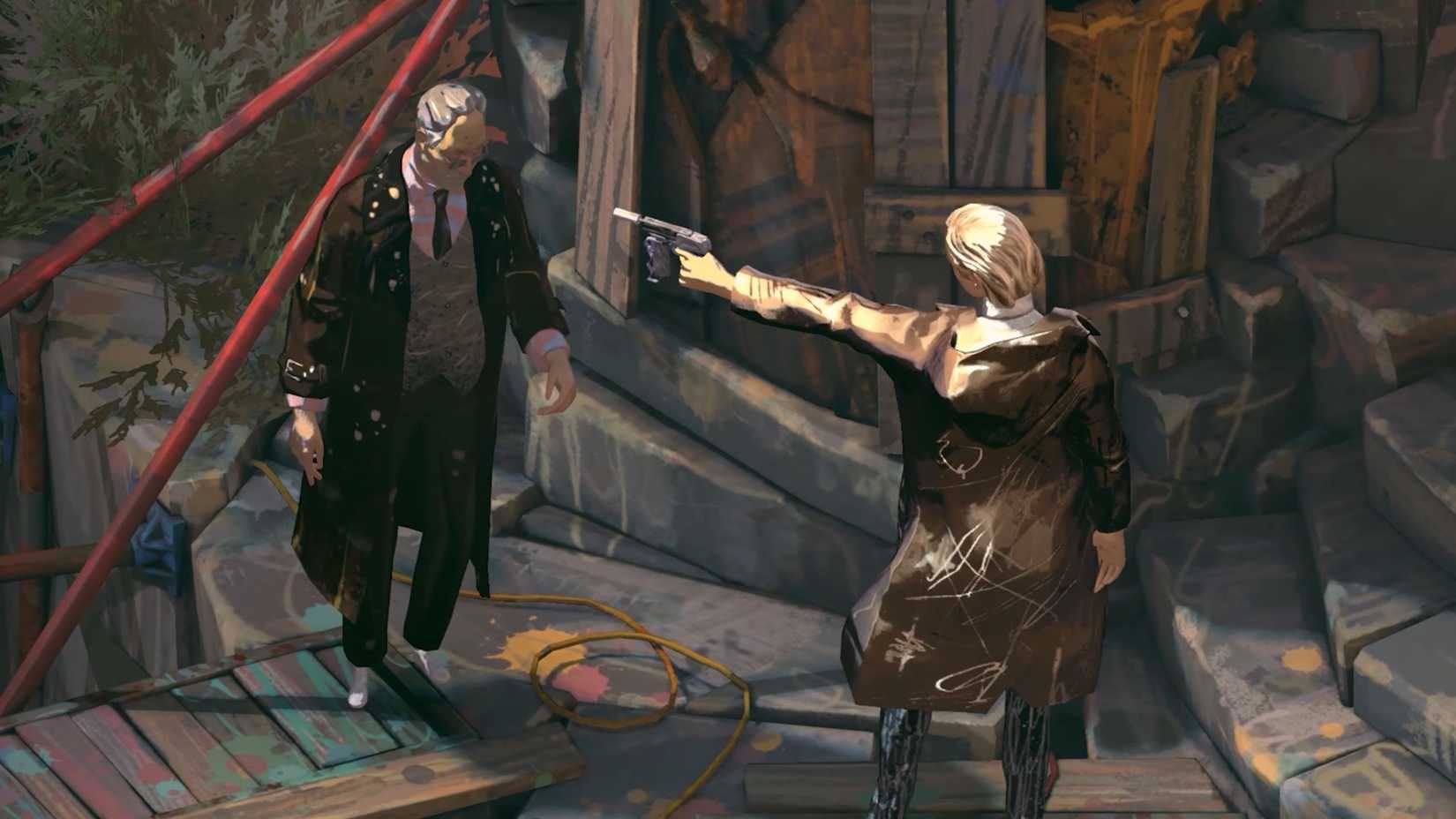
Zero Parades: For Dead Spies operates as a spiritual successor to the conceptual framework established by Disco Elysium, yet it takes the psychological mechanics a step further. The protagonist, Hershel, is a decommissioned spy trapped in the fictional, politically volatile town of Portofiro alongside a comatose stranger.
In traditional role-playing games, mental or social skills are tools used externally—keys to pick locks, charm merchants, or extract confessions. In Zero Parades, these skills actively sabotage or redefine your reality. High points in specific psychological attributes do not just unlock lore; they invite madness, form bizarre delusions, and cultivate anxiety.
The game utilizes a strict "yes, and" narrative philosophy. Even catastrophic choices—such as plunging deep into a psychotic break alongside a shady businessman—rarely result in an abrupt "Game Over" screen. Instead, the story pivots wildly, forcing the player to adapt to an unfamiliar, unmoored reality. This design ensures that players do not feel like omniscient directors steering a ship; rather, they feel precisely like a broken, overwhelmed spy trying to survive moment-to-moment uncertainty.
2. Slay the Princess: The Epistemic Weight of Perception
Release Date: October 23, 2023
Platforms: PC, PS4, PS5, Xbox One, Xbox Series X/S, Nintendo Switch
Black Tabby Games built Slay the Princess as an intentional experiment in containment. Tasked by an ominous Narrator with entering a secluded cabin and slaying a potentially world-ending entity in the basement, the player is immediately confronted with a fundamental narrative question: Can you trust the premise you are given?
What makes Slay the Princess remarkable is how it handles branching paths. While the game ultimately funnels its variations into a structured set of thematic resolutions, the journey there is entirely defined by perception. If the princess brutally kills you during your first encounter, your subsequent runs are colored by fear and vengeance. If you show empathy, the entire ontological nature of the entity shifts.
The choices matter not because they change a global political landscape, but because they fundamentally alter the psychological dynamic between the protagonist, the Narrator, and the Princess. It proves that a narrative can feel infinitely malleable without requiring an unmanageable explosion of hundreds of completely distinct final worlds.
3. The Hundred Line: Last Defense Academy: Total Structural Subversion
Release Date: April 24, 2025
Platforms: Windows PC, Nintendo Switch
Developed by Too Kyo Games, The Hundred Line: Last Defense Academy represents the most extreme end of structural choice design. For the first 30 hours of the experience, the game deliberately traps the player on a strictly linear path following a group of students granted blood magic to defend Tokyo from bizarre monsters.
Players grow accustomed to this linear progression, assuming their agency is restricted to tactical combat encounters. Then, the game concludes its initial arc and resets. A single, seemingly minor action shatters the established storyline, transforming the school’s social fabric and survival trajectory.
With 100 distinct endings—none of which are categorized as the single "canon" truth—Last Defense Academy rejects the traditional notion that a narrative must build toward a singular, definitive climax. Humor paths and absurd joke endings carry just as much narrative weight as traumatic, dramatic conclusions. By granting a single choice world-ending power while simultaneously stripping away the player’s ability to predict the consequences, Too Kyo Games completely upends traditional design expectations.
Official Statements and Industry Insights
The industry-wide shift toward experimental narrative structures has sparked intense debate among developers and critics alike regarding the future of interactive writing.
Industry analysts note that while massive, multi-branching epics like Baldur’s Gate 3 will always hold a vital place in the market, the sheer economic and logistical unsustainability of scaling those models has forced indie and mid-tier studios to innovate.
"When you tie player agency strictly to macro-level plot permutations, you inevitably hit a wall of diminishing returns," notes one prominent narrative designer. "The future of interactive storytelling isn’t about giving players the power to rewrite an entire galaxy with a single button press. It’s about making them feel the intimate, inescapable weight of their choices on the protagonist’s mind, soul, and immediate environment."
Furthermore, developers behind titles like Slay the Princess and Zero Parades have emphasized that narrative ambiguity is a powerful tool for engagement. By withholding absolute control and introducing erratic, unpredictable psychological variables, developers can evoke genuine emotional responses—fear, confusion, curiosity—that clean, predictable branching trees simply cannot replicate.
Future Outlook: Where Choice-Driven Gaming Goes From Here
As we look toward the horizon of game development, the lessons taught by Zero Parades, Slay the Princess, and Last Defense Academy point toward a richer, more diverse narrative landscape.
The Rise of Internal Agency: Expect future RPGs to invest more heavily in psychological stats, sanity meters, and perspective-shifting mechanics that alter how the player interprets the world, rather than just changing who lives or dies.
Controlled Subversion: Studios are recognizing that linear setups followed by massive, systemic structural shifts can be more impactful than offering open-ended choices from minute one. Constraining the player initially makes the eventual explosion of agency far more memorable.
Rejection of the "Canon" Mindset: The industry is moving away from the rigid pursuit of a single "true" ending. Embracing multiple, equally valid thematic conclusions—ranging from deep tragedy to surreal absurdity—allows writers to explore human nature from a wider array of artistic angles.
Ultimately, video games are uniquely positioned to make players not just witness a story, but live inside its psychological consequences. By moving past the tired formula of binary morality scales and endless macro-branches, modern narrative designers are proving that the most profound choices a player can make are the ones that change who they are, rather than simply altering the world around them.