Executive Overview
For decades, the video game industry has relied on visual shorthand to communicate gameplay mechanics to consumers. Upon encountering an isometric perspective—where the camera hovers above the action at a fixed, angled vantage point—players immediately anticipate specific structural paradigms. In the collective consciousness of modern gaming, isometric invariably equates to the roguelike genre. It summons immediate mental imagery of randomized dungeon runs, permanent death cycles, loop-based progression, and an incremental grind inspired by trailblazers like Diablo, Bastion, and, most prominently, Supergiant Games’ Hades.
Yet, during the high-octane spectacle of the 2026 Gamescom Opening Night Live showcase, British developer Dlala Studios stepped forward to challenge this entrenched design philosophy. Revealed to an eager audience, Murals immediately established itself as one of the most promising upcoming releases in the action genre. Developed by the studio previously renowned for 2020’s vibrant beat-em-up revival Battletoads and the charming family platformer Disney Illusion Island, Murals is a deliberate, dramatic pivot toward a darker, story-driven artistic vision.
At first glance, its meticulously crafted, painterly presentation and top-down perspective suggest a familiar roguelike loop. However, during an exclusive hands-off press preview at the convention, Dlala Studios CEO and game director Aj Grand-Scutton quickly cleared the air: Murals is entirely, intentionally, not a roguelike. Instead, it is a narrative-forward, chapter-based action game that marries the fluid, high-velocity traversal of modern isometric combat with the distinct crowd-control design philosophy of id Software’s landmark 2016 shooter, Doom. Scheduled for a Windows PC release in 2027, Murals promises to dismantle genre expectations, offering players the mechanical freedom and screen-clearing devastation usually reserved for random-drop runs—without ever threatening to strip away progress upon death.
Detailed Chronology: From Concept to Gamescom Reveal
The journey toward Murals began within the walls of Dlala Studios following the successful rollout of their prior projects. Having proven their technical versatility and reverence for classic franchises through Battletoads and Disney Illusion Island, the development team sought an opportunity to forge an entirely original intellectual property. The objective was to create a title that would stretch their creative muscles, combining mature narrative themes with inventive visual storytelling.
The Premise: Darker Fairy Tales and Artistic Contrasts
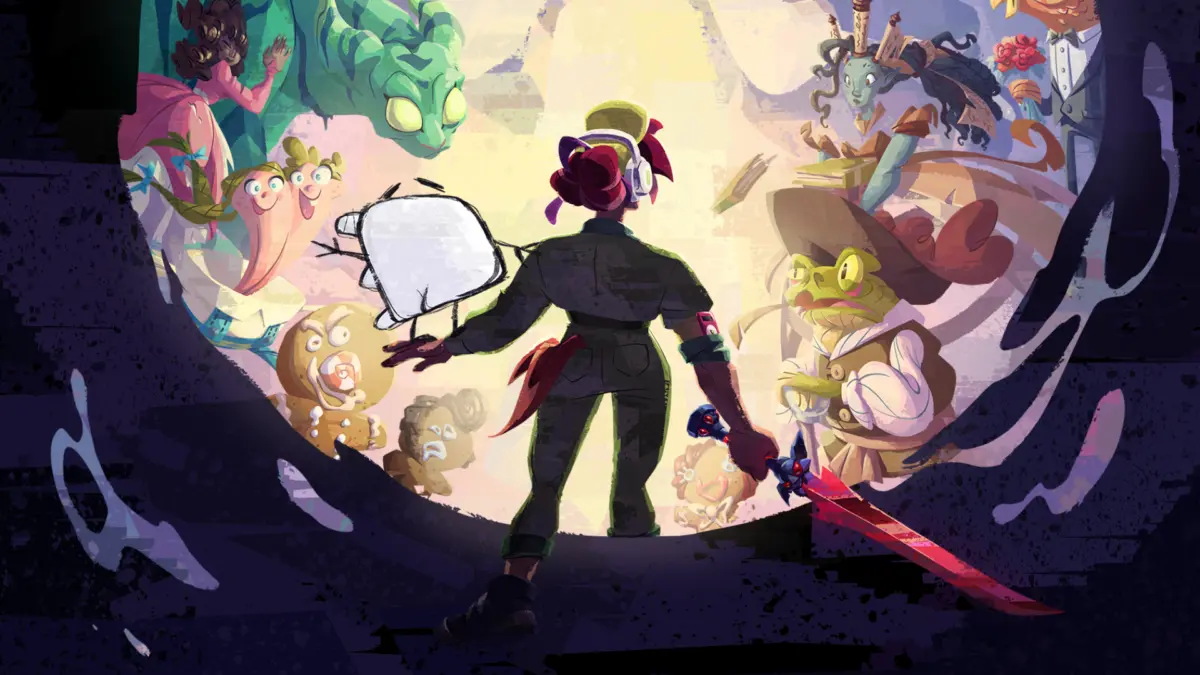
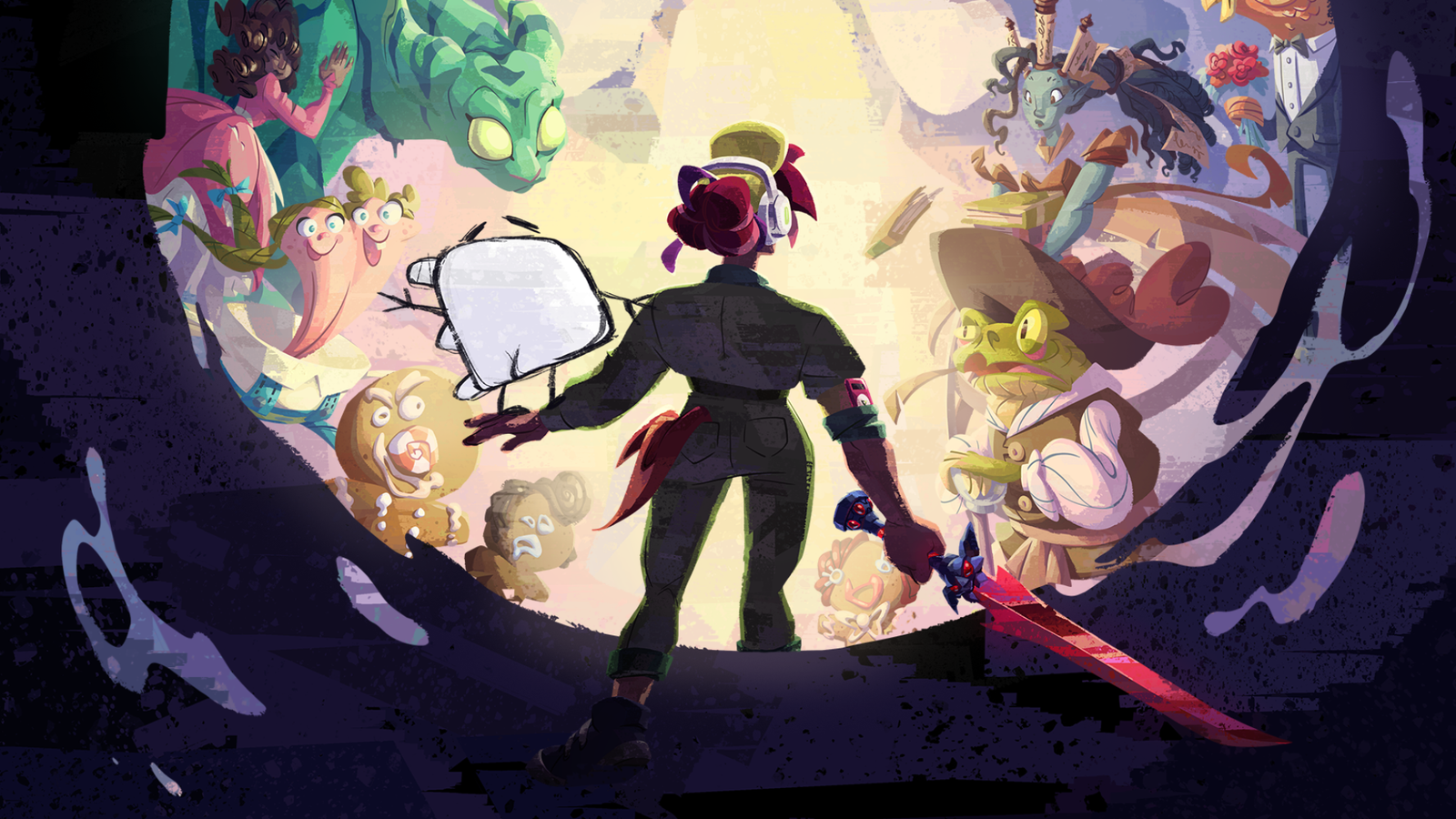
Murals casts players in the role of "The Hero," a stoic, brooding protagonist whose approach to communication is strictly physical. Accompanying this taciturn warrior is an eccentric, chatty anthropomorphic slice of bread named Loaf. This dynamic establishes the game’s distinct tonal balancing act: a blend of dark, folkloric gothic horror and self-aware, deadpan humor.
The game’s universe centers around twisted interpretations of classic fairy tales and folklore. Legendary stories such as Sleeping Beauty, Hansel and Gretel, and Little Red Riding Hood are thoroughly subverted. For instance, supplementary lore released via an official prequel comic reveals that the traditional trickster Rumpelstiltskin has been reimagined as a towering, arachnid nightmare reminiscent of Shelob.
These corrupted tales are housed within magical paintings known as murals, which serve as the game’s core level-selection mechanic. During the Gamescom preview, Dlala Studios showcased the title’s fifth chapter, transporting The Hero into a vibrant, sun-soaked aquatic realm modeled after The Little Mermaid. In classic comedic fashion, the journey is punctuated by Loaf’s dry observations, such as noting upon arrival that "this mural’s gonna be a beach."
The Mechanical Blueprint: Combat and Arena Design
Once inside a mural, gameplay shifts into high-gear action. Murals utilizes a traditional room-clearing structure: entering a combat chamber causes massive physical barriers to seal shut, trapping the player inside until every hostile entity has been eradicated.
Combat balances close-quarters engagement with responsive movement. Players can wield a fast-slashing sword for rapid strikes or opt for a lumbering, heavy hammer that deals devastating area-of-effect damage. Additionally, a robust suite of ranged attacks ensures that engagement distance remains fluid. Eschewing the defensive parry mechanics found in many modern titles, Murals leans heavily into agility. Players must constantly dash and zip across arenas to weave through dense patterns of incoming enemy fire.
Supporting Context & Metrics: Drawing Inspiration from Doom and Supergiant
While the visual framing and combat pacing immediately invite comparisons to Hades, Grand-Scutton and his team looked elsewhere when engineering the core challenge of their encounters. The primary design DNA for Murals does not stem from traditional dungeon crawlers, but rather from id Software’s critically acclaimed 2016 reboot of Doom.
The Doom Philosophy: Specialization Over Complex Move Pools
In Doom (2016), id Software engineered enemies with a specific behavioral philosophy: individual foes are not designed to overwhelm the player with exhaustive, complex move sets. Instead, every monster is hyper-competent at performing one or two specific actions. The true friction and tactical challenge in Doom arise not from memorizing a single boss’s intricate phases, but from the chaotic permutations of mixed enemy types populating an arena simultaneously.
Dlala Studios has imported this exact philosophy into an isometric framework. During the aquatic chapter preview, media outlets witnessed how this design plays out in practice. A player might comfortably manage a swarm of close-quarters spider crabs, only to be completely upended when a secondary contingent of horseshoe crabs unexpectedly bursts from the arena’s sandy floor, laying down a suppressing curtain of projectile fire. Success in Murals requires spatial awareness, target prioritization, and the ability to adapt on the fly to rapidly changing tactical landscapes.
Scoring, Killstreaks, and "Canvas Clears"
To reward aggressive play, Murals incorporates a dynamic killstreak system. As players string together uninterrupted eliminations, their XP multiplier climbs, granting bonuses that feed directly into the game’s progression systems. Internally, this system has sparked fierce competition at Dlala Studios, where development staff maintain a studio-wide leaderboard. According to Grand-Scutton, despite his executive and directorial status, he remains far from holding the top spot—a testament to how deeply the team engages with their own combat loop.
Beyond basic XP generation, aggressive combat builds a specialized meter known internally as the limit break gauge. When fully charged, this gauge enables a screen-filling, catastrophic attack known as a "Canvas Clear." True to its name, this ability wipes standard foes from the playfield in a brilliant display of painterly destruction, offering players a vital panic button when arenas become dangerously congested.
Official Statements & Design Philosophy: The Power of "Eeries"
One of the most defining aspects of Murals is its approach to player customization. In standard roguelikes, players build powerful, synergistic combinations of traits, buffs, and weapons, only to watch them vanish when their run ends in defeat. Murals upends this convention entirely by introducing accessories known as "Eeries."
Modifying Combat Through Eeries
Eeries act as modular modifiers that fundamentally alter The Hero’s combat capabilities. Some provide traditional statistical enhancements, boosting health pools or raw melee damage output. Others introduce elemental properties, allowing players to freeze groups of enemies solid or inflict cascading shock damage across the battlefield.

More radically, certain high-tier Eeries fundamentally rewrite the rules of engagement. During the presentation, developers highlighted a modifier that intentionally nerfs base weapon damage in exchange for a passive effect that deals that modified damage to every single enemy rendered on screen simultaneously.
Embracing the "Broken" Build
Speaking on the philosophy behind these modifiers, Grand-Scutton explained that Dlala Studios views Eeries not as temporary roguelike perks, but as permanent upgrades that players retain throughout their journey. Players can equip up to nine Eeries concurrently, opening the door to degenerate, exceptionally potent loadouts.
Crucially, the development team has consciously chosen to abandon rigid, microscopic game balancing. Rather than obsessing over whether a specific combination of Eeries trivializes content, Dlala’s ethos prioritizes player agency and pure, unadulterated fun.
"If a player is demolishing waves of enemies in a single-player game, and is having fun with the game as a result, who are they to stop it?" Grand-Scutton noted during the preview. "Isn’t that what it’s all about?"
This refreshing stance ensures that players who enjoy discovering game-breaking synergies will find a receptive, encouraging design framework rather than an aggressive patch cycle designed to nerf their favorite builds.
Future Outlook & Industry Impact
As the gaming industry looks past the immediate release calendar, Murals occupies a fascinating intersection of styles and expectations. By refusing to conform to the established laws of isometric game design, Dlala Studios is carving out a distinct niche for themselves.
The title’s visual direction—marrying 3D monstrous adversaries with 2D friendly companions like Loaf within breathtaking, painterly environments—demonstrates a high degree of artistic confidence. Furthermore, the hybrid mechanical identity of the game—blending the lightning-fast dash-and-slash momentum of modern action titles with the arena-management discipline of Doom and the permanent build-crafting freedom of a traditional RPG—positions it as a major tentpole release for 2027.
For Windows PC gamers yearning for a rich, narrative-driven action adventure that values player-driven power fantasies over punishing, repetitive death cycles, Murals represents a thrilling departure from the norm. As Dlala Studios continues fine-tuning the title ahead of its launch, the gaming community will undoubtedly be watching closely to see how this ambitious fairy-tale deconstruction sticks the landing.