Executive Overview
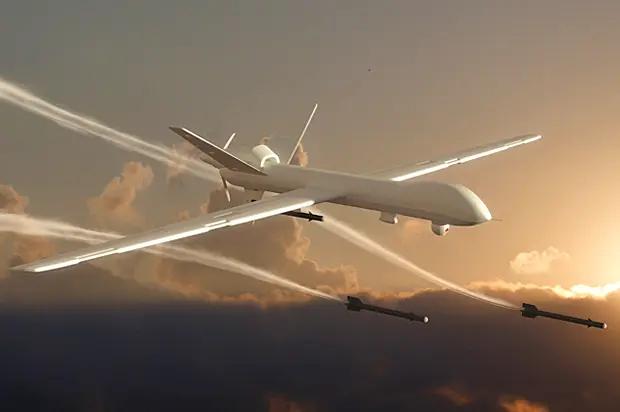
For over two decades, unmanned aerial vehicles (UAVs)—commonly referred to as drones—have served as the technological vanguard of the United States military’s global counterterrorism operations. Promoted by defense contractors, policymakers, and successive presidential administrations as the ultimate instrument of surgical warfare, drones are marketed as a clean, bloodless alternative to traditional boots-on-the-ground deployments. The prevailing public narrative insists that these flying machines can locate, track, and eliminate high-value targets halfway across the globe with near-perfect accuracy, all while keeping American service members out of harm’s way.
However, a comprehensive and unflinching report titled “Drone, Inc.: Marketing the Illusion of Precision Killing,” authored by award-winning investigative journalist and CorpWatch Executive Director Pratap Chatterjee, shatters this meticulously crafted facade. By dismantling the hardware, software, and human elements that govern these remote weapon systems, Chatterjee exposes a troubling reality: drones are not autonomous arbiters of absolute justice, but rather highly fallible collections of sensors, algorithms, and communications hardware operating on incomplete and often misleading data.
When these technological limitations converge with the cognitive traps of human operators—such as confirmation bias and profound cultural disconnects—the consequences are routinely catastrophic. Far from being an era of clinical precision, the U.S. drone campaign has functioned as a continuous, under-evaluated technological experiment deployed over populated regions of Pakistan, Yemen, Somalia, and Afghanistan. The fallout includes thousands of civilian casualties, deepening geopolitical instability, and a self-perpetuating cycle of violence that experts argue generates more enemies than it eliminates. This report examines the mechanics of these lethal shortcomings, the opaque nature of modern clandestine warfare, and the urgent need for systemic accountability.
Detailed Chronology: The Evolution and Exposure of Drone Warfare
To understand how the modern drone program reached its current state of systemic failure, one must trace both its operational expansion and the slow, arduous unravelling of its official secrecy over the past sixteen years.
The Post-9/11 Expansion and the Rise of the Predator
Following the events of September 11, 2001, the George W. Bush administration aggressively accelerated the militarization of UAV technology. What began primarily as a reconnaissance platform quickly evolved into an offensive strike capability equipped with Hellfire missiles and guided munitions. By the time the Obama administration took office in 2009, drone strikes became the weapon of choice for counterterrorism, touted as a politically expedient way to degrade insurgent networks without entangling the U.S. in massive, protracted ground wars.
However, as the scale of these operations expanded across the tribal regions of Pakistan and into Yemen and Somalia, independent human rights organizations and investigative journalists began documenting a stark discrepancy between official government claims of zero civilian casualties and the horrific realities on the ground.
2015–2016: Cracks in the Facade
The myth of flawless precision suffered severe blows mid-decade through a combination of high-profile tragedies and unprecedented intelligence leaks:
- The Karachi and Pakistani Border Strikes: In early 2015, a U.S. "signature" drone strike aimed at four suspected al-Qaeda compounds in Pakistan tragically claimed the lives of two innocent hostages: American aid worker Warren Weinstein and Italian aid worker Giovanni Lo Porto. Despite more than 400 hours of persistent overhead surveillance, the technological suite failed to identify the hostages, exposing profound systemic blind spots.
- The Drone Papers (2015): Investigative journalist Jeremy Scahill published The Drone Papers via The Intercept, releasing leaked military documents that laid bare the inner workings, internal debates, and catastrophic intelligence shortfalls plaguing the U.S. kill chain in Afghanistan, Yemen, and Somalia.
- National Bird (2017): Sonia Kennebeck’s critically acclaimed documentary National Bird brought the human toll of the drone program to the screen through the testimony of whistleblowers like former Distributed Common Ground System (DCGS) technician Lisa Ling. These insiders revealed the psychological trauma inflicted upon remote operators and the terrifying atmosphere of life under a perpetual buzz in foreign skies.
The Trump Administration and Decreased Transparency
As documented by whistleblowers and transparency advocates, the transition from the Obama administration to the Trump administration marked a further deterioration in public accountability. With operational authorities increasingly delegated to clandestine agencies and military commands, oversight dwindled to near-zero, insulating the mechanics of remote warfare from democratic review.
Supporting Context & Metrics: The Anatomy of Technological Failure
At the heart of the drone debate lies a fundamental misunderstanding of what a military drone actually is. As Pratap Chatterjee explained in interviews surrounding his report, a drone is not a sentient executioner; it is a complex agglomeration of commercial and military-grade sensors strung together by algorithms.
The Sensor Suite and Its Blind Spots
A typical Predator or Reaper drone relies on an array of tools to paint a picture for remote operators thousands of miles away. These include:
- High-definition optical cameras
- Cell phone and radio frequency trackers
- Standard radar and synthetic aperture radar
- Forward-Looking Infrared (FLIR) heat sensors
Each of these components possesses critical operational limitations. When optical cameras are obscured by weather, dust storms, or poor lighting, operators must lean heavily on thermal imaging (FLIR). Yet, FLIR sensors struggle fundamentally with urban environments. They cannot peer through dense foliage, see inside underground bunkers or basements, or reliably differentiate one human being from another.
Furthermore, environmental factors routinely trick infrared sensors. On a hot desert day, the ambient temperature of asphalt, rooftops, and vegetation can mimic or mask human heat signatures. Even something as simple as a well-placed wool blanket can sufficiently dissipate a human body’s heat signature, rendering a target invisible to thermal tracking systems from 10,000 feet in the air.
The Algorithmic Trap and Human Bias
When hardware fails to provide a crystal-clear image, the burden of decision-making falls squarely onto human operators and commanders who are forced to interpret fragmented data streams. This environment is a breeding ground for confirmation bias.
As Chatterjee notes, once an operator forms an initial hypothesis—believing a gathering of individuals or a specific movement pattern represents a hostile threat—subsequent intelligence gathering is often unconsciously filtered to confirm that initial theory rather than challenge it. The tragic targeting of Warren Weinstein and Giovanni Lo Porto exemplifies this exact phenomenon: despite hundreds of hours of surveillance, the inability of both optical cameras and heat sensors to properly identify the captives inside a compound resulted in lethal confirmation bias, killing everyone inside.
Official Statements and Whistleblower Perspectives
The human and psychological dimensions of drone warfare offer a harrowing counter-narrative to the clinical sanitized language emanating from defense departments.
Lisa Ling on the Cultural and Ethical Abyss
Lisa Ling, a former U.S. military drone surveillance technician who served in the DCGS program and featured prominently in the documentary National Bird, has become one of the most vocal critics of the military’s reliance on UAVs. Ling points out a profound cultural and generational hazard embedded within the operational structure of the program:
"We’re asking young people, the ages about 18 to 24, to recognize something in cultures that anybody from the outside really can’t understand fully from the ground, let alone a two-dimensional screen. How can it not be problematic?"
Ling emphasizes that young service members are consistently reassured by their superiors that their actions are righteous and precise, fostering an institutional detachment from the reality of the destruction they unleash. Reflecting on the psychological impact on targeted populations, Ling offers a sobering perspective on what the war on terror truly looks like from below:
"I don’t believe that we’re on the right side of history with armed drones. I don’t believe that we can continue to fight a war on terror with more terror… Imagine, if there was a drone over any one of us right now, and we didn’t know whether ordinance was going to fall out of the sky? And there’s nobody immune, there’s no profession, there’s no age group, there’s no gender, that really has not been blown up by drones. This is terror, and we’re seeing the blowback."
Intelligence Assessments on Blowback
This concept of "blowback" is not merely rhetorical; it is supported by internal government research. According to public records obtained via organizations like MuckRock, a 2011 FBI intelligence assessment concluded with "high confidence" that a broadening U.S. military footprint overseas—combined with the online outreach of Islamist ideologues—directly correlated with an 11 percent increase in plotted terror attacks against Western targets since 2006. By employing remote tactics that routinely kill civilians without transparent accountability, the global superpower risks accelerating the very radicalization it seeks to extinguish.
Future Outlook: Accountability, Public Engagement, and the Road Ahead
As the global proliferation of unmanned aerial technology accelerates—with state and non-state actors alike acquiring sophisticated drone fleets—the legal, ethical, and technological precedents set by the United States will shape the future of armed conflict for generations.
Yet, the core dilemmas identified in “Drone, Inc.” remain glaringly unaddressed:
- Undefined Metrics of Success: There is still no universally accepted definition of what constitutes a "terrorist" under international humanitarian law, nor is there a clear metric for winning a war where victory is measured purely by body counts rather than political stability.
- The Democratic Disconnect: As Lisa Ling observed, Western citizens maintain the profound luxury of engaging with these foreign wars exclusively through computer keyboards and television screens—and retain the ultimate privilege of changing the channel when uncomfortable realities surface.
- The Illusion of Political Expediency: Drones remain politically attractive to leaders because they project an image of decisive action without the domestic political fallout of flag-draped coffins returning from the battlefield. This illusion prevents genuine introspection and the pursuit of diplomatic or structural solutions.
Conclusion
If success in the war on terror is quantified solely by the volume of suspected militants eliminated via remote-controlled strikes, then the United States military apparatus has achieved unprecedented operational proficiency. However, if success requires building durable peace, upholding international law, protecting civilian lives, and diminishing global extremism, the current trajectory of drone warfare represents a profound strategic failure.
Without rigorous public discourse, independent journalistic oversight, and top-to-bottom institutional accountability, the lethal shortcomings of drone technology will remain shrouded in secrecy—leaving innocent civilians abroad, and the collective conscience at home, to bear the ultimate cost.