Executive Overview
Halloween remains an enduring cultural anomaly—a solitary calendar fixture consecrated entirely to the art of radical metamorphosis. For one evening each year, societal conventions are suspended, rigid behavioral codes are dismantled, and the populace is invited to transcend the mundane boundaries of identity. Through the alchemy of cosmetics, prosthetics, and theatrical costuming, individuals can manifest their deepest fantasies, deepest fears, or entirely alternate personas.
Yet, as the commercialization of Halloween has increasingly leaned toward the palatable, the pretty, and the conventionally cute, a counter-movement has emerged within alternative beauty spaces. For those seeking to subvert the traditional "sugar, spice, and everything nice" aesthetic, the intersection of high drag, cinematic horror, and avant-garde artistry offers a thrilling alternative.
Enter Vlad Von Kitsch, a luminary within the global drag and make-up artist (MUA) community. Renowned for pioneering the signature "gorelesque" aesthetic—a seamless synthesis of classic burlesque glamour, blood-soaked horror, and alternative subcultures—Von Kitsch has carved out a distinct niche that challenges conventional perceptions of beauty.
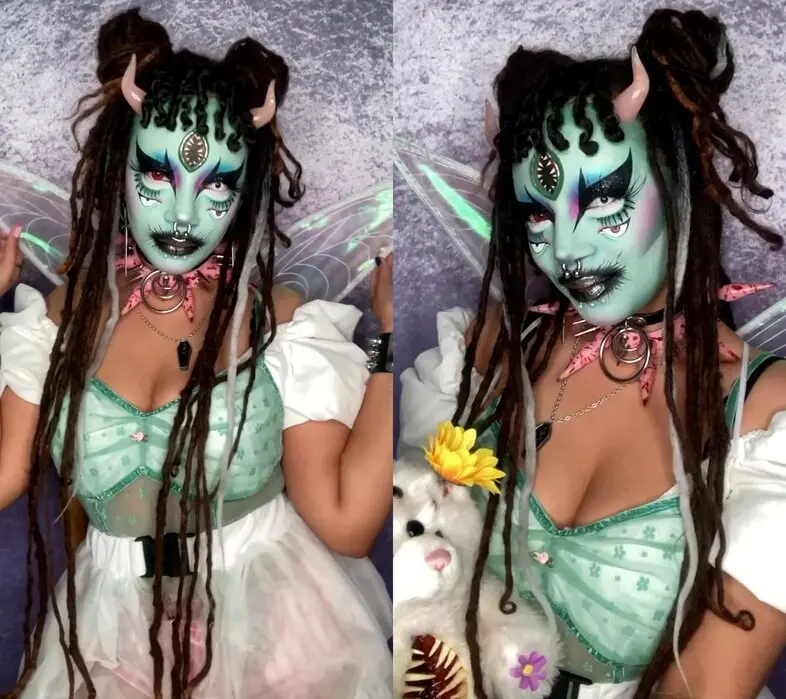
In an exclusive instructional retrospective, Von Kitsch demonstrates how to shatter the wholesome archetype of the woodland fairy, transforming it into something deeply unsettling, visually arresting, and profoundly cinematic. This comprehensive feature examines the anatomy of Von Kitsch’s viral make-up tutorial, exploring the technical methodologies, professional-grade products, and cultural philosophy driving the gorelesque movement into the mainstream consciousness of modern alternative beauty.
Detailed Chronology: Step-by-Step Breakdown of the Gorelesque Fairy Transformation
Executing a complex, multi-dimensional alternative drag look requires precision, architectural planning, and an intimate understanding of theatrical cosmetics. Vlad Von Kitsch’s approach to the "Scary Fairy" relies heavily on precise color theory, exaggeration of facial planes, and high-impact contrast. Below is the exhaustive chronological breakdown of the transformation process, detailing every technical stage from bare skin to finished masterwork.
Phase 1: Establishing the Undead Canvas and Base Architecture
The foundation of any theatrical look determines its longevity and visual impact under stage lights or photography. For this supernatural transformation, Von Kitsch bypasses conventional foundation lines in favor of heavy-duty theatrical pigments.
- The Custom Emerald Mix: To achieve an unearthly, forest-dwelling pallor, Von Kitsch formulates a custom base. This involves blending Mehron Clown White—a staple in professional clowning and drag for its unmatched opacity—with Grimas Crème Make-up (Shade 404). The resulting mixture yields a vibrant, saturated emerald green that immediately signals a departure from human anatomy.
- Carving Out the Ocular Space: Strategic zoning is crucial. The base is meticulously applied across the face while deliberately leaving negative space surrounding the orbital bones. This blank canvas is subsequently filled with stark white makeup. By enlarging the perceived eye area with white pigments, the artist creates an optical illusion of vast, hollow, or doll-like eyes, echoing classic anime and vintage clown aesthetics.
- Setting and Securing: Because alternative performance makeup is subject to sweat, movement, and prolonged wear, immediate and thorough setting is non-negotiable. The entire emerald and white base is locked down using translucent setting powder, pressing the product into the cream formulas to prevent cracking or shifting.
Phase 2: Dimensional Contouring and Gradient Color Theory
With the base secured, the dimension-building phase begins. Rather than relying on standard brown contours, Von Kitsch utilizes a progressive color gradient to sculpt the face into alien proportions.
- The Inner Corner Gradient: The process initiates at the inner tear ducts using the brightest, most vibrant pigment available in the palette. This color is intensely packed into the inner corner and softly blended along the bridge of the nose, drawing the viewer’s focus toward the center of the face.
- Layering Secondary Tones: A secondary shade—complementary yet distinct—is layered directly above the first, expanding the width of the eye contour.
- Deepening with the Deepest Shade: The third and deepest shade of the gradient is applied last. This dark tone is blended carefully, following the directional flow established by the first two layers. Furthermore, Von Kitsch repurposes this deep pigment to aggressively contour the bridge of the nose, the nostrils, and the apex of the chin, drastically altering the skeletal structure of the face.
Phase 3: Architectural Eyework and the Four-Eyed Illusion
Eyes are the focal point of human interaction, making them prime real estate for subversion in alternative drag. Von Kitsch elevates the traditional cat-eye into a surrealist statement.
- Precision Winged Liner: Utilizing Inglot’s AMC Eyeliner Gel mixed with Duraline—a silicone-based polymer liquid that liquefies gel liner and restores dried products while rendering them waterproof—Von Kitsch lays down the structural framework.
- Professional Pro-Tip: Von Kitsch advises drawing a preliminary guideline line above each natural eye. This acts as a map to ensure the dramatic wings connect symmetrically on both sides of the face, neutralizing the common asymmetry struggles familiar to makeup artists.
- The Four-Eyed Phenomenon: To truly sever the look from conventional beauty standards, Von Kitsch introduces an additional set of eyes painted directly onto the cheeks.
- Mapping Symmetry: The artist marks out the desired inner corners on both cheeks to maintain bilateral balance.
- Lash Line Mimicry: Eye shapes are sketched following the curvature of a natural lash line. Pupils are carefully dotted in the center.
- Dimension and Depth: To prevent the painted cheek eyes from looking flat, Von Kitsch applies precise contouring around the faux lash lines, creating a trompe l’oeil effect that makes the extra eyes appear to bulge or recess realistically into the skin.
Phase 4: The Signature Corpse Mouth and Botanical Fractures
No Vlad Von Kitsch look is complete without the signature "corpse mouth," a technique that merges the uncanny valley with botanical decay.
- Smoky Perimeter: The process begins by diffusing a rich black eyeshadow around the perimeter of the lips, blurring the natural lip line and creating a bruised, necrotic aura.
- Fracture Lines: Utilizing the same Inglot Gel Liner and Duraline mixture, fine, jagged lines are drawn outward from the corners of the mouth across the cheeks and lower face. The artistic goal is to mimic the branching patterns of tree roots or the spiderweb cracking of dry earth, symbolizing a fairy turning to petrified wood or biological decay.
- The Final Seal: The look is anchored with a heavy application of opaque black lipstick directly onto the lips, pulling the disparate elements of fairy folklore and horrific decay into a cohesive, terrifying masterpiece.
Supporting Context & Metrics: The Rise of Gorelesque and Alternative Beauty
To fully contextualize Vlad Von Kitsch’s tutorial, one must examine the broader cultural shifts occurring within the global beauty and drag industries over the past decade.
The Evolution of Drag: Beyond the Ballroom
Historically rooted in pageant culture, celebrity impersonation, and underground ballroom scenes, drag has undergone a massive democratization and diversification over the last ten years, largely accelerated by television platforms and social media. While mainstream drag has frequently prioritized hyper-femininity, glamour, and traditional standards of beauty, a parallel insurgency has taken place in the shadows.
Artists influenced by goth subcultures, punk rock, horror cinema, and industrial music have forged alternative lanes. "Gorelesque"—a portmanteau of gore and burlesque—represents the apex of this movement. It weaponizes the language of horror (blood, viscera, decay, monsters) and filters it through the high-drama performance standards of traditional drag.
The Economic and Cultural Impact of Specialty Cosmetics
The viability of looks like Von Kitsch’s scary fairy relies heavily on professional-grade specialty cosmetics that bridge the gap between theatrical stage makeup and everyday consumer products.
| Product Category | Key Brand / Item | Function in Alternative Makeup |
|---|---|---|
| High-Opacity Bases | Mehron Clown White | Provides impenetrable blank canvases; foundational for non-human skin tones. |
| Crème Pigments | Grimas Crème Make-up (404) | Offers blendable, rich color saturation designed for long-wear performance. |
| Gel Liners & Mediums | Inglot AMC Eyeliner Gel & Duraline | Delivers waterproof, ultra-pigmented lines; Duraline ensures fluid consistency. |
| Specialty FX | Liquid latex, fake blood, prosthetics | Adds tactile dimension, simulating wounds, decay, and non-human textures. |
Market analysts note that alternative beauty communities—though historically underserved by legacy cosmetic houses—exhibit remarkably high brand loyalty and drive viral engagement across platforms like Instagram and TikTok. Tutorials that break down complex, transformation-heavy looks regularly outperform conventional wearable makeup content in terms of shareability and save rates, proving that audiences crave spectacle, education, and escapism.
Official Statements and Artistic Philosophy
The philosophy underpinning Vlad Von Kitsch’s work transcends mere shock value. For Von Kitsch, horror and drag are fundamentally intertwined mechanisms for identity exploration and reclamation.
"Halloween is not merely a holiday; it is a vital psychological release valve," Von Kitsch notes in discussions surrounding their alternative aesthetic. "For 364 days a year, society forces individuals into rigid boxes of expectation, gender presentation, and aesthetic norms. Halloween offers a collective permission slip to tear those boxes apart."
Discussing the inspiration behind the gorelesque movement, Von Kitsch emphasizes that horror cinema has long provided a sanctuary for marginalized communities. Monsters, outcasts, and misunderstood creatures in classic horror films frequently serve as metaphors for queer identity, alterity, and non-conformity.
"When we take an archetype as universally beloved and sanitized as the woodland fairy and inject it with gore, decay, and asymmetry, we are reclaiming the narrative," Von Kitsch explains. "We are saying that beauty and monstrosity are not mutually exclusive. In fact, the most compelling art lives right in the uncomfortable space where they collide."
Industry peers have lauded Von Kitsch’s ability to deconstruct complex technical processes into accessible, educational formats. By openly sharing professional techniques—such as utilizing Duraline for precision lines or mapping symmetrical facial alterations—Von Kitsch empowers a new generation of aspiring alt-drag artists to experiment without fear of imperfection.
Future Outlook: The Future of Alternative Beauty and Theatrical Drag
As the beauty industry looks toward the horizon, the influence of alternative artists like Vlad Von Kitsch is expected to expand further into mainstream fashion, editorial photography, and digital entertainment.
The Blur Between Digital and Physical Artistry
With the rapid ascent of augmented reality (AR) filters, virtual try-ons, and digital avatars, the demand for hyper-imaginative physical makeup has paradoxically increased. Audiences accustomed to digital manipulation now look to real-world makeup artists to achieve physical feats that defy digital editing. The meticulous attention to detail required in Von Kitsch’s four-eyed fairy transformation—where facial planes are optically altered through shading and highlighting—serves as a masterclass in analog optical illusion.
Seasonal Surges to Year-Round Relevance
Historically, gorelesque and horror-themed drag were heavily relegated to the autumn months, peaking predictably around October 31st. However, shifting cultural appetites driven by horror-renaissance cinema, streaming platforms, and festival culture have transformed alternative beauty into a year-round phenomenon. Festivals, immersive theater experiences, and alternative nightlife scenes now demand high-concept transformations 365 days a year.
Conclusion: Embracing the Monstrous
Vlad Von Kitsch’s updated fairy tutorial stands as a testament to the enduring power of transformation. By stripping away the saccharine perfection of traditional fantasy and replacing it with emerald pigments, razor-sharp lines, and botanical decay, Von Kitsch invites us all to look closer at the monsters in the mirror.
As Halloween continues to evolve, the legacy of gorelesque reminds us that true artistry lies not in adhering to the rules of beauty, but in having the courage to break them entirely. Whether preparing for a packed underground club night or simply seeking a profound creative outlet, the modern alternative beauty enthusiast has a powerful blueprint in Vlad Von Kitsch—proving definitively that sometimes, four eyes are vastly superior to two.