Executive Overview
The failed execution of Christa Pike in Tennessee on September 30 has reignited an urgent, grim national debate over the mechanics and morality of capital punishment in the United States. Pike, who survived two botched doses of the sedative pentobarbital after administrators allegedly missed her veins and introduced the drugs into her surrounding arm tissue, was subsequently rushed to a hospital. There, she was intubated, placed on a mechanical ventilator, and later—upon regaining consciousness—shackled to a hospital bed. This agonizing ordeal left her trapped in a horrific legal and medical purgatory: alive, suffering, and facing the state’s inevitable second attempt to take her life.
Pike’s case is not an isolated malfunction; it is a symptom of a broader, systemic failure. For decades, the state-sanctioned death penalty has relied on a veneer of medicalized modernity—chiefly lethal injection—to shield the public from the raw, unvarnished brutality of execution. However, a growing body of medical evidence, autopsies, and witness accounts reveals that lethal injection is far from the quiet, peaceful procedure it is advertised to be.
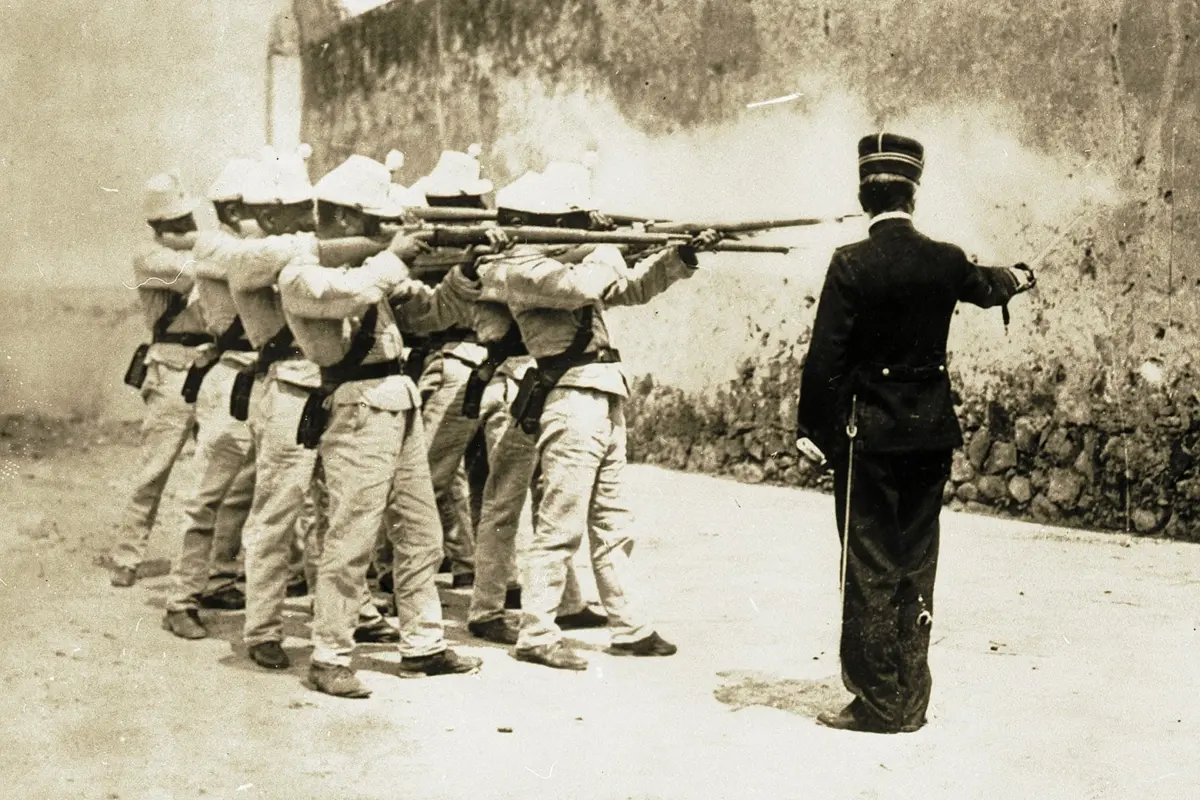
As states desperately search for alternative execution methods due to pharmaceutical boycotts and legal roadblocks, a startling perspective has emerged from death penalty abolitionists, spiritual advisors, and medical ethicists: compared to modern methods like nitrogen hypoxia or flawed lethal injections, the brutal transparency of the firing squad may paradoxically be a more humane—and honest—alternative. This investigative report explores the chilling realities of modern executions, the mechanics of state-sanctioned killing, and why the question of "how" we execute forces a much harder confrontation with "why" we execute.
Detailed Chronology: The Botched Execution of Christa Pike
The sequence of events leading up to, during, and immediately following Christa Pike’s scheduled execution exposes the profound risks inherent in attempting to apply clinical procedures to state killing.
- Pre-Execution Warnings (September): Knowing Pike’s medical history—specifically her small veins and a pre-existing blood condition—legal counsel retained Dr. Joel Zivot, an intensive care physician and outspoken critic of capital punishment. Zivot warned state officials that executing Pike via lethal injection posed an extreme risk of a painful, botched procedure due to vascular access failure. His warnings were ignored.
- The Execution Attempt (September 30): Tennessee Department of Correction officials attempted to administer a two-dose regimen of pentobarbital. Rather than entering her bloodstream cleanly, the lethal sedative reportedly infiltrated the surrounding tissue in her arm. Instead of peaceful unconsciousness, Pike experienced prolonged distress.
- Medical Intervention and Hospitalization: Recognizing the failure of the execution protocol, medical personnel intervened not to save her life out of mercy, but to stabilize her so the state could fulfill its legal mandate at a later date. Pike was rushed to an off-site hospital, intubated, and placed on a mechanical ventilator.
- Return to Consciousness (Early October): After days of intensive medical support, Pike regained consciousness. Rather than receiving ongoing rehabilitative care, the recovering inmate was shackled to her hospital bed, guarded continuously, and thrust back into the psychological terror of anticipating a rescheduled execution.
Legal analysts and medical professionals point out that Pike’s ordeal represents the ultimate breakdown of the "clinical illusion"—the state’s persistent effort to dress up murder in the sterile white coat of medical science.
Supporting Context & Metrics: The Myth of the "Humane" Execution
To understand why a firing squad is being discussed as a viable, or even preferable, alternative, one must examine the grim data surrounding current execution methods.
The Lethal Injection Facade
Lethal injection was popularized in the late 20th century precisely because it mimicked a clinical euthanasia procedure, sparing witnesses and executioners the visceral horror of the electric chair, the gallows, or the firing squad. Yet, autopsies and expert analyses tell a vastly different story.
Dr. Joel Zivot’s research into the autopsies of executed prisoners indicates that many individuals subjected to lethal injection do not merely drift off to sleep. Instead, drugs like paralytics and potassium chloride induce a terrifying internal reality: prisoners frequently experience a sensation akin to drowning in their own blood (pulmonary edema) while paralyzed and unable to gasp for air or signal their distress. Because paralytics mask outward signs of suffering, the audience is treated to a deceptive theater of serenity.
The Rise of Nitrogen Hypoxia
As pharmaceutical companies increasingly refuse to supply drugs for use in executions, states have cast about for alternative methods. Among them is nitrogen hypoxia, recently adopted by states like Alabama.
According to spiritual advisors and witnesses who have observed these protocols, nitrogen hypoxia is uniquely traumatic. The execution process involves strapping a tight-fitting mask—extending from the hairline to underneath the chin—onto the prisoner’s face and displacing oxygen with pure nitrogen.
- The Physical Toll: As the inmate suffocates, natural bodily fluids—saliva, mucus, tears, and gastric contents—accumulate inside the mask.
- The Visual Reality: Witnesses have described the horrifying sight of fluids pooling and cascading down the front of the mask like a waterfall, stripping away any illusion of medical dignity.
Official Statements & Expert Perspectives: Inside the Death Chamber
The Rev. Jeff Hood, a Catholic priest and founder of the Execution Intervention Project, has witnessed nearly a dozen executions across various methods. In an interview discussing the grim landscape of state executions, Hood offered an unflinching critique of the systems currently in use.
When asked whether he had ever witnessed a "good" execution, Hood was unequivocal:
"Well, none of them are good, but there are some that function certainly more systematically than others. I’ve seen, at this point, nine lethal injections and two nitrogen executions. And the nine lethal injections look like, you know, going to recess, in comparison to the nitrogen executions, which involve a gas chamber and a mask."
Describing the nitrogen hypoxia process, Hood emphasized the visceral and deeply disturbing nature of the procedure:
"The mask extends from the hairline to underneath the chin. It’s filled with nitrogen until the person practically suffocates to death. And so as fluids come out of the mouth and the nose, and boogers and saliva and eye gunk and all this kind of stuff is coming out, it’s catching at the front of the mask and drizzling down like a waterfall."
Asked to compare these modern methods to the historically reviled firing squad, Hood made a startling admission:
"If I had to choose between a nitrogen execution and firing squad, I would choose a firing squad every day of the week. If I had to choose between a lethal injection and a firing squad, I would choose a firing squad every day of the week… It’s a lot quicker. I think it’s a lot more humane, to be quite frank."
Hood argues that the primary reason the firing squad is shunned is not because it is inherently more brutal, but because it strips away the state’s plausible deniability. A firing squad forces the state, the witnesses, and the public to confront the absolute violence of the act.
"I think what it says is that executions are horrible no matter how they’re carried out. It forces everyone to see, to hear, to feel the execution in a way that other methods don’t."
Future Outlook: Where Does Capital Punishment Go From Here?
The botched execution of Christa Pike and the ongoing legal battles over nitrogen hypoxia and lethal injection formulas point toward an increasingly chaotic and legally fraught future for capital punishment in America.
- The Scramble for Methods: As legal challenges target the constitutionality of botched lethal injections and cruel gas protocols, a small subset of states are re-examining or legally permitting alternative methods, including the electric chair and the firing squad.
- The Transparency Dilemma: Proponents of the firing squad argue that if a state insists on taking a human life, it should do so transparently, forcing society to look at the blood it spills rather than hiding behind medicalized euphemisms. Conversely, opponents argue that normalizing the firing squad represents a regression into barbarism.
- The Core Abolitionist Argument: Ultimately, legal scholars and human rights advocates emphasize that debating whether a bullet, a cocktail of drugs, or a gas mask is "better" misses the fundamental point. As Hood noted, every execution is inherently horrific.
The case of Christa Pike serves as a grim inflection point. By dragging an incapacitated, recovering inmate back toward the execution chamber, the state of Tennessee demonstrates that the machinery of death cares little for human dignity, physical suffering, or medical warning. Whether by needle, gas, or bullet, the death penalty remains an exercise in state-sponsored cruelty—one that society grows increasingly incapable of sanitizing, no matter how hard it tries.