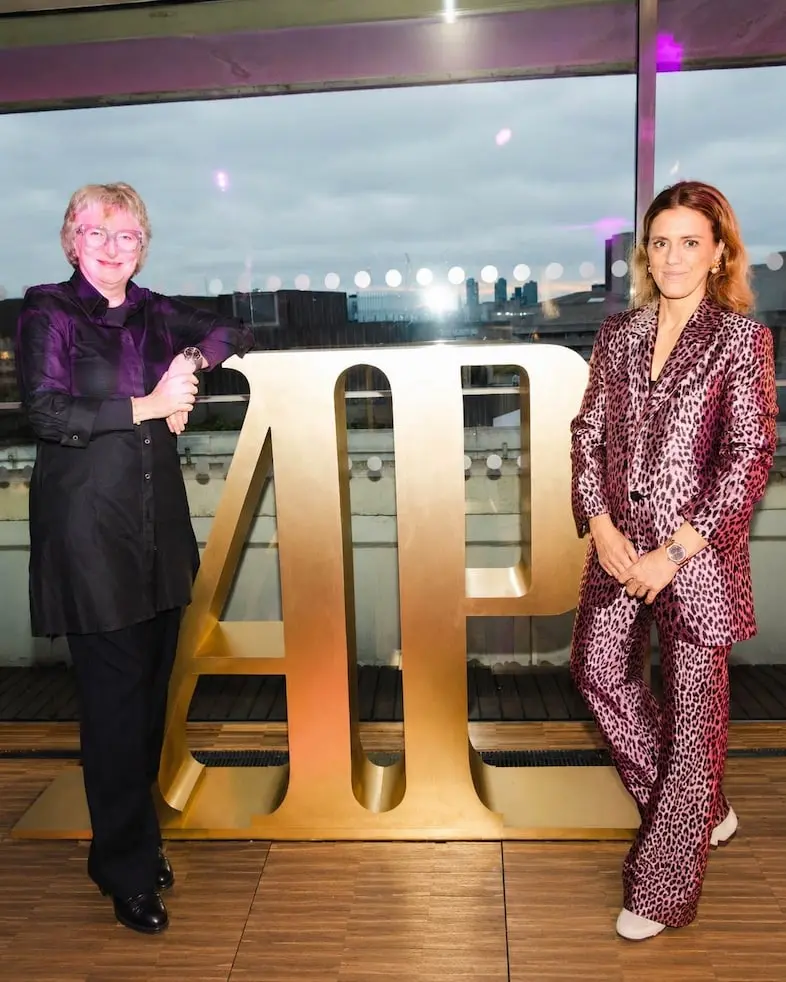
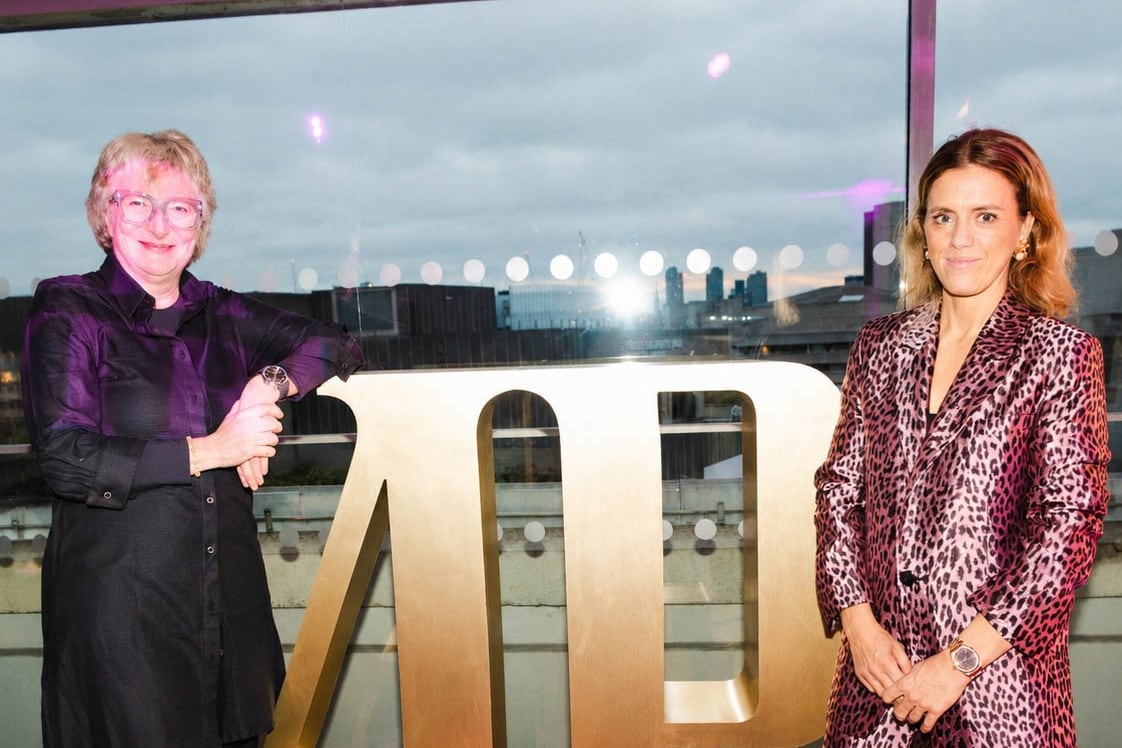
During the peak of London’s high-stakes autumn art season—when international collectors, curators, and institutions converge for the annual Frieze art fair—the intersection of luxury horology, contemporary visual culture, and architectural intervention yielded one of the week’s most compelling cultural moments. Dazed Club, the vanguard community arm of Dazed, joined forces with Audemars Piguet Contemporary to host an exclusive, multi-layered evening celebrating Swiss artist Renée Levi and her monumental public art commission at London’s Hayward Gallery.
Staged against the cinematic backdrop of the Southbank Centre’s St Paul’s Roof Pavilion, the event transcended the traditional boundaries of a corporate-sponsored cocktail party. Instead, it functioned as an intellectual salon and sensory immersion, bringing together members of the Dazed community, art world luminaries, and cultural critics to interrogate the evolving role of public art. At the core of the evening was Levi’s latest site-specific masterwork, September—a radical two-part painting that shatters the conventions of the traditional gallery wall by welding high-voltage color and industrial materiality onto the stark brutalist concrete of the Hayward Gallery’s iconic exterior.
This collaborative undertaking highlights a broader paradigm shift within the contemporary arts landscape: luxury brands moving beyond passive patronage to become active co-producers of public culture. By fostering a dialogue between Levi’s expansive practice, Audemars Piguet Contemporary’s curatorial vision, and the grassroots engagement of Dazed Club, the event underscored a shared commitment to democratizing contemporary art. It asked critical questions about where art belongs, who it serves, and how physical spaces can be radically re-contextualized to engage unsuspecting urban audiences.
Detailed Chronology: An Evening at the Southbank Centre
Dusk and Arrival: Setting the Scene
As twilight descended over the River Thames last week, the art-world celebrations running parallel to Frieze reached a fever pitch. Attendees making their way to the Southbank Centre’s St Paul’s Roof Pavilion stepped into a distinct atmosphere. Far removed from the hushed, sterile confines of traditional exhibition spaces, the venue offered a panoramic, cinematic view of London’s illuminated skyline at dusk.
Directly below the glass-walled pavilion and open-air balconies, a simultaneous spectacle unfolded: the red-carpet arrivals for a high-profile gala at the neighboring London Film Festival. This serendipitous overlap of cinematic glamour and contemporary visual art lent the evening an electric energy, emphasizing the vibrant cross-pollination of London’s creative industries.
Guests—comprising a curated mix of Dazed Club members, emerging artists, fashion insiders, and international curators—were greeted with bespoke cocktails and meticulously crafted canapés. Yet, even amidst the social buzz of networking and celebration, the primary anchor of the evening remained external and architectural: Renée Levi’s September, glowing against the brutalist facade of the Hayward Gallery just across the architectural complex.
The Critical Dialogue: Dissecting the Commission
The intellectual anchor of the night unfolded within the pavilion, where a panel discussion was convened, hosted by cultural strategist and writer Lewis Dalton Gilbert. Gilbert was joined by the artist herself, Renée Levi, alongside Audrey Teichmann, curator at Audemars Piguet Contemporary.
The conversation offered a rare, granular look into the genesis of September, exploring the multifaceted process of translating a studio-based painting practice into a massive, architectural-scale public intervention. Teichmann, who has collaborated closely with Levi and tracked her trajectory over years of conceptual evolution, spoke to the logistical and philosophical hurdles of mounting a work on a Grade-I listed brutalist landmark.
“Public art carries a profound responsibility,” Teichmann noted during the discussion, highlighting the institutional framework that allows Audemars Piguet Contemporary to support artists in realizing projects that might otherwise be deemed financially or logistically unviable within standard gallery systems.
Levi elaborated on her methodology, detailing how she views color not merely as a decorative medium, but as an active spatial agent. The artist discussed her long-standing fascination with the ways architectural forms dictate human movement and psychological states. By treating the Hayward Gallery’s structure as a dynamic canvas rather than a neutral backdrop, Levi forced both everyday commuters and dedicated art pilgrims to rethink their relationship with the physical city.
After-Hours Connection and Community
Following the formal discussion, the floor opened for an evening of extended discourse and connection. True to the ethos of Dazed Club—which routinely seeks to break down the barriers between institutional art and youth culture—the pavilion transformed into a vibrant networking hub.
Emerging creatives mingled freely with established museum directors, exchanging ideas on the future of spatial design, the democratization of cultural spaces, and the mechanics of modern patronage. Overlooking the glimmering Thames, the gathering exemplified the ultimate goal of contemporary art activations: to forge human connections rooted in shared aesthetic and intellectual curiosity.
Supporting Context & Metrics: Breaking the White Cube
To fully grasp the significance of the Audemars Piguet x Dazed Club event, one must examine the specific mechanics of Renée Levi’s intervention at the Hayward Gallery. Titled September, the commission represents a watershed moment in Levi’s career and a triumph for the ethos of public art.
+-----------------------------------------------------------------+
                 THE ANATOMY OF 'SEPTEMBER'
+-----------------------------------------------------------------+
  [Materiality]     Industrial mesh infused with fluorescent
                    acrylics and silver spray-painted details.

  [Architecture]    Wraps around the Hayward Gallery’s brutalist
                    concrete west façade and horizontal window.

  [Environment]     Responsive to changing natural light and
                    urban viewing angles; shifting constantly.
+-----------------------------------------------------------------+
The Architectural Canvas
The Hayward Gallery, designed by Norman Booth, John Bancroft, and Ron Herron of the Greater London Council architects’ department, is an uncompromising masterpiece of 1960s brutalist architecture. Characterized by its raw, board-marked concrete, heavy geometric masses, and labyrinthine outdoor sculpture terraces, the building is notoriously difficult to exhibit on. For decades, curators have debated how to animate its fortress-like exterior without compromising its monolithic integrity.
Renée Levi bypassed this challenge entirely by working with the architecture rather than against it. September is a two-part painting installed dynamically across the building’s west façade. By anchoring her intervention around the gallery’s distinctive long horizontal window, Levi utilized the building’s existing structural lines as formal compositional elements.
Materiality and Mutability
The installation is constructed from industrial mesh—a utilitarian material associated with construction sites and urban infrastructure—which Levi transforms through painterly intervention. Coated in high-intensity fluorescent acrylics, the mesh introduces an electric shock of color to the austere, monochromatic grey of the concrete.
Furthermore, Levi incorporated meticulous silver spray-painted details throughout the composition. These metallic elements are engineered to react dynamically to London’s notoriously volatile weather and shifting atmospheric light conditions. As the sun sets and artificial city lights flicker on, the installation shifts in appearance. From one vantage point, the colors appear hyper-saturated and solid; from another, they dissolve into shimmering, translucent veils. This optical mutability ensures that September is never experienced the exact same way twice, rewarding both the intentional gallery-goer and the accidental commuter.
The Evolution of Audemars Piguet Contemporary
The partnership between Audemars Piguet Contemporary and Renée Levi is part of a broader, sustained initiative by the Swiss watchmaker to support visionary artists worldwide. Established to commission works that explore the dialogue between contemporary art, craft, and technology, the program operates on a model of unrestrictive patronage.
Unlike traditional corporate sponsorships that prioritize immediate branding, Audemars Piguet Contemporary functions closer to a non-profit arts foundation. It grants artists the financial runway, technical resources, and institutional freedom required to realize ambitious, large-scale projects that transcend commercial viability. By partnering with platforms like Dazed Club, the initiative successfully bridges the gap between high-end horological patronage and youth-driven, counter-cultural discourse.
Official Statements and Curatorial Insights
The synergy between the collaborating entities was articulated through key statements emphasizing accessibility, spatial politics, and the enduring power of physical art encounters.
Audrey Teichmann, Curator at Audemars Piguet Contemporary:
"Working with Renée Levi is an exercise in challenging our preconceptions of scale and space. When you bring an artistic practice that is so deeply rooted in color and gesture out of the studio and into a public, architectural domain like the Hayward Gallery, the stakes change entirely. It forces us to ask: how can art reclaim public space from commercial saturation? Our mission with Audemars Piguet Contemporary has always been to empower artists to push the boundaries of their medium, and September is a testament to what is possible when institutional backing meets unbridled creative vision."
Renée Levi, Artist:
"Painting has historically been imprisoned by the white cube—framed, glazed, and sequestered behind closed doors for the privileged few. With September, I wanted to break those walls down quite literally. The brutalist architecture of the Southbank Centre is heavy, monumental, and unyielding. By introducing fluorescent color and industrial mesh to its skin, we create a dialogue between the rigid structure of the past and the vibrant, fluid energy of the present. Art should breathe with the city; it should intercept the everyday lives of people who never planned on visiting a museum today."
Lewis Dalton Gilbert, Curator and Cultural Strategist:
"Events like the one hosted by Dazed Club and Audemars Piguet remind us why physical gatherings still matter in an increasingly digital, algorithm-driven world. We are living through an era where public spaces are increasingly privatized, sanitized, and commercialized. Bringing people together to debate, question, and celebrate a public art commission on a London rooftop is an act of cultural reclamation. It proves that there is an immense, hungry audience for challenging contemporary art when it is presented outside intimidating institutional gatekeeping."
Future Outlook: The Reshaping of Public Art and Brand Patronage
As the dust settles on Frieze Week and London’s cultural calendar transitions into its winter programming, the ripple effects of the Audemars Piguet x Dazed Club collaboration are bound to resonate across the international art world.
The success of September at the Hayward Gallery serves as a compelling case study for future urban interventions. It demonstrates that public art does not need to pander to the lowest common denominator to be accessible. By deploying sophisticated, abstract painting techniques within an inescapable urban framework, Levi has proven that complex contemporary art can capture the imagination of a diverse public—from seasoned art critics to daily commuters crossing Waterloo Bridge.
Furthermore, the partnership sets a new benchmark for brand-led cultural philanthropy. As luxury houses increasingly seek authentic ways to engage with creative communities, the Audemars Piguet Contemporary model offers a blueprint: prioritize uncompromising artistic vision, invest heavily in public-facing rather than exclusive-access projects, and partner with cultural disruptors like Dazed to ensure the discourse reaches beyond traditional elite circles.
Ultimately, the night at the St Paul’s Roof Pavilion was more than just a Frieze Week highlight; it was a manifesto for the democratization of space. By championing works that escape the white cube, institutions and brands alike are signaling a future where art is no longer an isolated commodity to be consumed behind closed doors, but a living, breathing component of our shared urban fabric.
To experience Renée Levi’s monumental installation firsthand, visitors can view September at the Hayward Gallery in London. To escape the algorithm and receive cutting-edge cultural reporting straight to your inbox, subscribe to The Drop via Dazed.