Executive Overview
The modern endurance landscape is frequently dominated by narratives of extreme deprivation, punishing pre-dawn schedules, and relentless physical suffering. We are conditioned to believe that true athletic achievement requires absolute misery—that the path to a marathon medal must be paved with early alarms, physical burnout, and uncompromising rigidity.
Berlin-based designer and flight attendant Hong challenges this orthodox narrative entirely. Once firmly identifying as a "non-runner," Hong has systematically transformed her lifestyle to train for her seventh marathon—all while championing a philosophy of comfort, flexibility, and genuine enjoyment. Her approach proves that high-level athletic performance does not require sacrificing quality of life, sleep, or social connection.
By balancing a demanding international career with a comprehensive, holistic training regimen that includes yoga, strength conditioning, physiotherapy, and ample rest, Hong has redefined what it means to be an endurance athlete in the 21st century. This report examines her weekly training architecture, the physiological and psychological benefits of her comfort-first ethos, and the broader implications of sustainable athletic conditioning for everyday working professionals.
Detailed Chronology: A Week Inside Hong’s Training Ecosystem
To understand how Hong manages to prepare for elite-level endurance events while juggling a dual-career professional life, one must examine the granular execution of her weekly routine. Her schedule is not a sterile military operation; rather, it is a dynamic, living blueprint of how modern athletes integrate passion with daily responsibilities.
Monday: The Rhythm of the Start and Musical Motivation
Mondays for Hong begin with the familiar modern struggle: negotiating with the snooze button. Working simultaneously as a creative designer and a commercial flight attendant means her professional life is characterized by shifting time zones, unpredictable schedules, and frequent travel fatigue.
To combat early-week lethargy, Hong relies on an essential psychological anchor: her curated running playlist.
- The Psychological Lift: When motivation flags, upbeat tracks serve as an immediate catalyst, shifting her mental state from sluggish to engaged.
- Pacing Through Song: When physical fatigue sets in mid-run, Hong employs a unique pacing strategy. Rather than fighting her body’s signals of exhaustion, she slows her physical stride and begins to sing quietly. This instinctive adjustment forces her breathing rate back under control, naturally lowering her heart rate while injecting a sense of play into the workout. Passersby frequently smile at the sight of a designer-turned-runner joyfully vocalizing down a Berlin street.
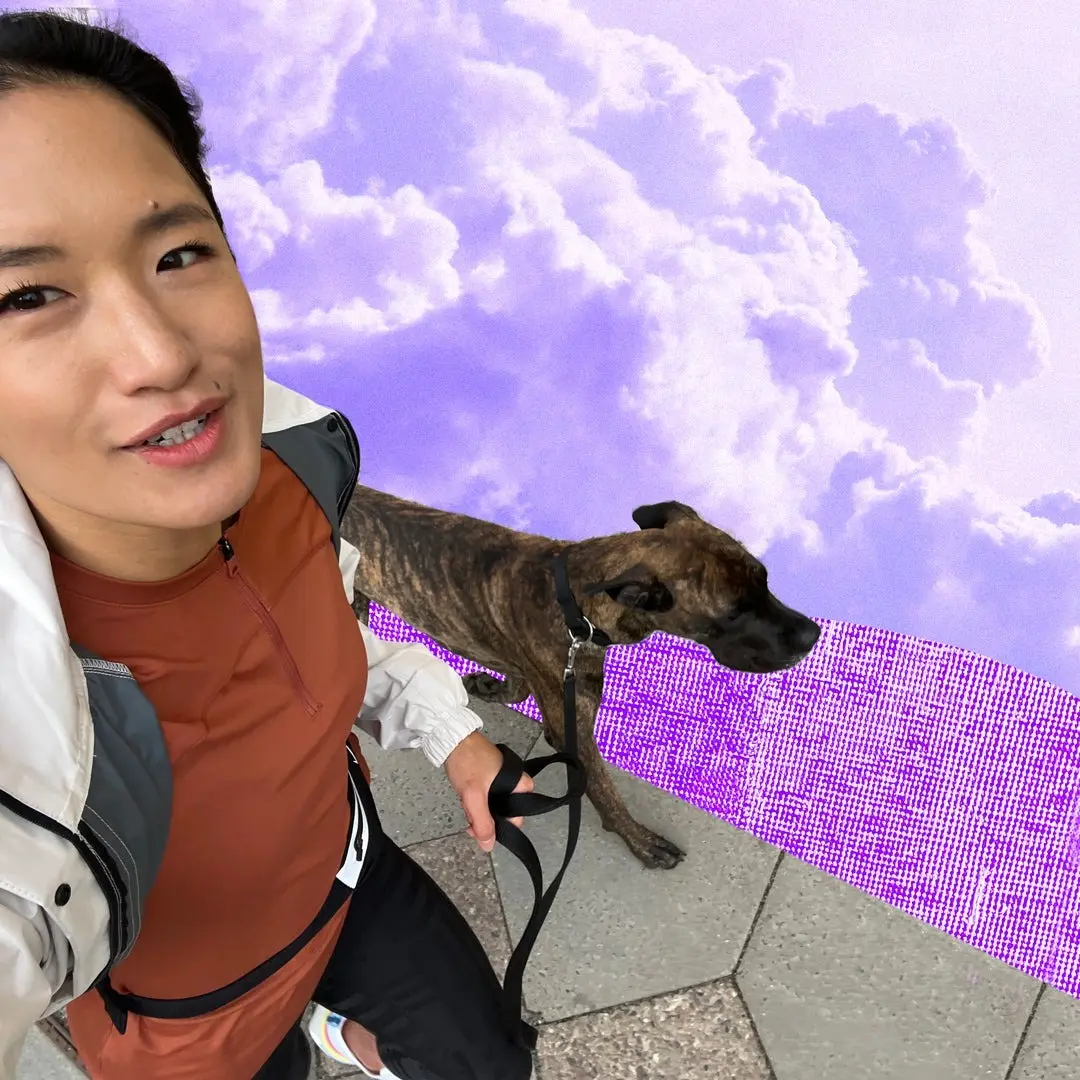
- K9 Companionship: On this particular Monday, Hong introduces an external variable to combat monotony: she borrows a friend’s energetic dog, Mia. The dynamic changes the nature of the run entirely. In the opening kilometers, Mia pulls Hong forward with unbridled canine enthusiasm; in the final stretch, as the dog’s energy wanes, Hong’s deep aerobic endurance takes over, allowing her to set the pace.
Tuesday: Cross-Training and Injury Prevention
True marathon preparation extends far beyond logging high mileage on asphalt. Tuesday represents a deliberate pivot away from running entirely. Hong dedicates this day to a triad of physical maintenance:
- Yoga Sessions: Focused on mobility, hip opening, and dynamic stretching to counteract the repetitive impact forces of running.
- Strength Conditioning: Targeted resistance work designed to fortify joints, build core stability, and protect injury-prone areas such as the knees, Achilles tendons, and lower back.
- Physiotherapy: Professional muscular maintenance to release tight fascia and address microscopic strains before they compound into chronic injuries.
This holistic scaffolding is the secret weapon that allows Hong to exit her comfort zone during intense runs without suffering debilitating physical repercussions. By ensuring her musculoskeletal foundation is robust, she mitigates the risk of overuse injuries.
Wednesday: Professional Realities and Active Recovery
With a career that spans international borders, Hong’s social architecture is just as important as her physical training. Wednesday serves as a crucial buffer day dedicated to professional commitments and interpersonal connection.
Because her time in Berlin is frequently compressed by flight rosters, she makes a concerted effort to anchor herself socially when she is home. Instead of squeezing in a low-priority recovery jog, she honors her need for mental rest by visiting a local art exhibition with friends. This mental disengagement from training metrics is scientifically proven to lower cortisol levels, facilitating deeper neuromuscular recovery.
Thursday: Pushing Limits with Track Work and Equipment
If Monday and Wednesday are about rhythm and recovery, Thursday is where the crucible of marathon preparation takes place. Dispelling the myth that elite runners naturally leap out of bed eager to crush high-intensity intervals, Hong readily admits she requires deliberate psychological preparation for hard track sessions.
- The Track Environment: Operating on a rubberized athletic track, Thursday’s session is designed to test anaerobic thresholds, lactate clearance, and speed endurance.
- The Gear Factor: Comfort remains paramount. During high-speed intervals, Hong relies on footwear engineered for impact absorption and energy return—specifically, the Nike Invincible 3. The shoe’s signature high-stack, bouncy foam midsole provides a secure, cushioned ride across variable surfaces, reducing the perceived exertion of high-mileage impacts.
- Embracing Competition: Rather than dreading the intensity, Hong channels a love for internal competition, treating the track session as a personal dialogue with her physical capabilities.
Friday: Creative Respite and Social Reintegration
The physiological toll of Thursday’s threshold workout demands absolute respect. Friday is structurally designated as a restorative day. Aside from a gentle, restorative yoga flow, Hong abstains from intense cardiovascular output.
Instead, she dives back into Berlin’s vibrant cultural ecosystem, meeting friends for gallery visits and exploring the city’s culinary offerings. For a frequent flyer, this conscious grounding in her home city is vital for mental health, preventing the burnout that plagues many single-minded endurance athletes.
Saturday: The Meditative Long Loop (Landwehrkanal)
Saturday morning marks the ritualistic execution of Hong’s standard long-run route along the iconic Landwehrkanal. This weekly pilgrimage offers a diverse sensory landscape: shifting transitions from hard asphalt to soft grass and damp dirt tracks.
- Sensory Modulation: Depending on her mental bandwidth, Hong either immerses herself in an engaging long-form podcast or completely disengages audio input, listening exclusively to the ambient urban soundscape of Berlin waking up.
- People-Watching as Fuel: Unlike runners who stare blankly at their sports watches, Hong enjoys observing her fellow citizens navigating their weekends.
- The Post-Run Reward: The run concludes not with immediate stretching and isolation, but at a local market stand in Kreuzberg, where she treats herself to artisanal coffee and a carefully chosen post-workout snack.
Sunday: Community and the Long Slow Distance (LSD)
The crowning jewel of Hong’s training week occurs on Sunday, executed in communion with her running collective, the Joy Run Collective.
- The Tiergarten Long Run: Sunday is reserved for the long, slow distance (LSD) effort through Berlin’s sprawling Tiergarten park. Operating in colder weather and over extended durations requires careful sartorial preparation—layering technical fabrics to maintain core body temperature without inducing overheating.
- The Social Reward Loop: The psychological incentive driving the final kilometers of a grueling Tiergarten run is remarkably simple yet powerful: shared food. This week, the collective gathers for a post-run brunch featuring handmade dumplings prepared by a host member—a culinary reward that Hong admits occupies her thoughts throughout the final miles of the run.
Supporting Context & Metrics: The Paradigm Shift in Modern Endurance
Hong’s trajectory is reflective of a massive demographic and psychological shift within the global running community over the past decade. The traditional archetype of the ascetic, obsessive marathoner training in isolation is giving way to a more holistic, lifestyle-integrated athlete profile.
The Rise of the "Comfort-First" Athlete
Historically, sports science emphasized grit and discomfort as primary performance drivers. However, contemporary physiological research underscores the critical importance of psychological safety and perceived comfort in athletic adherence.
- Injury Statistics: According to recent sports medicine studies, up to 70% of regular runners experience a running-related injury annually, primarily driven by overtraining and inadequate recovery structures. Hong’s integration of physiotherapy, yoga, and complete rest days acts as a structural defense against these statistics.
- The Mental Health Intersection: Studies published in behavioral psychology journals highlight that running communities (such as the Joy Run Collective) significantly increase long-term habit formation. Social accountability paired with culinary rewards (like post-run brunch) creates a positive dopamine feedback loop, making strenuous physical activity psychologically sustainable.
Comparative Training Metrics: Traditional vs. Holistic Approach
| Metric / Domain | Traditional Rigid Approach | Hong’s Holistic Approach |
|---|---|---|
| Primary Motivation | Pace, splits, and external validation | Enjoyment, consistency, and mental well-being |
| Recovery Protocol | Passive rest (often neglected) | Active recovery, yoga, physiotherapy, art, and socialization |
| Equipment Philosophy | Minimalist/Pain is weakness | High-cushion support (e.g., Nike Invincible 3) for joint protection |
| Social Integration | Often sacrifices social life for training blocks | Integrates friends, travel, and community collectives seamlessly |
Expert Perspectives & Reflections
To contextualize Hong’s journey, one must look at the profound psychological transformation that occurs when individuals reframe their relationship with physical exertion.
Having initiated her running journey just four years prior, Hong reached a milestone that surprises many: at age 30, she reports feeling physically healthier, stronger, and more metabolically fit than she did throughout her entire twenties. This challenges the common assumption that physical peak capacity necessarily declines sharply after entering one’s third decade.
"Losing your breath doesn’t mean your run is failing; it just means it’s time to change the tune—literally. When you stop fighting your body and start collaborating with it, everything changes."
— Hong, Marathon Runner & Designer
Psychologists note that endurance training functions as an incubator for general self-efficacy. By confronting physical discomfort in a controlled, supportive environment—and mitigating that discomfort with music, socialization, and proper footwear—athletes build emotional resilience that translates directly into their professional and personal lives.
As Hong prepares for her seventh marathon, her core realization serves as an authoritative takeaway for anyone hesitant to lace up their first pair of running shoes: Consistency and comfort do not have to be mutually exclusive. You do not need to suffer needlessly to achieve extraordinary goals.
Future Outlook: The Next Horizon
As the running world looks toward upcoming global marathon majors, the blueprint demonstrated by athletes like Hong points toward a healthier, more inclusive future for endurance sports.
- De-escalation of Toxic Hustle Culture: The future of fitness rejects the "no pain, no gain" dogma in favor of longevity, injury mitigation, and mental wellness. Brands, coaches, and athletes are increasingly prioritizing gear that maximizes comfort and reduces impact stress.
- The Growth of Hyper-Local Collectives: Informal running groups and collectives are replacing sterile corporate running clubs. These communities prioritize post-run social rituals—from market snacks to artisanal brunches—transforming endurance sports from a solitary trial into a rich cultural lifestyle.
- Sustainable Athletic Longevity: By refusing to burn out through over-commitment and valuing sleep, travel, art, and professional balance alongside mileage, athletes like Hong are proving that a running career can span decades rather than burning out in a single grueling season.
With her seventh marathon firmly on the horizon, Hong stands as living proof that the modern endurance athlete can have it all: high performance, deep community connection, creative professional fulfillment, and absolute comfort along every kilometer of the journey.