Executive Overview
Human minds are remarkably diverse, operating along an intricate and expansive spectrum that resists flattening into a single standard. How we process the world, receive comfort, and reach out to one another cannot be adequately captured by conventional definitions of communication. Recent data from the Centers for Disease Control and Prevention (CDC) reveals that approximately 1 in 31 children in the United States—translating to roughly 3.2 percent of the youth population—are classified as autistic. Behind this stark metric lie millions of individual children, each experiencing, interpreting, and interacting with their environment in profoundly distinct ways.
For many families and educators, navigating this landscape requires a fundamental shift in perception. It demands that we dismantle rigid assumptions about what communication, attention, and intelligence "ought" to look like. When spoken language is slow to emerge or manifests through alternative pathways, the imperative to listen shifts from passive hearing to active, empathetic attunement. This journalistic exploration examines how innovative frameworks—ranging from the Picture Exchange Communication System (PECS) and augmentative and alternative communication (AAC) devices to the intuitive power of music—are redefining connection. By looking at pioneering leaders, exceptional educators, and real-world encounters, we uncover a vital truth: human intelligence and emotion do not wait for spoken words to exist. They are already fully formed; we simply have to learn new ways of listening.
Detailed Chronology & Evolution of Alternative Communication
The journey toward recognizing and validating diverse communication modalities has evolved significantly over the past several decades. Historically, medical and educational models heavily prioritized verbal articulation as the primary indicator of cognitive capability and social engagement. However, the emergence of structured alternative communication systems marked a paradigm shift in special education and developmental psychology.
The Foundation of Visual Communication
In the late 20th century, pioneers in the field recognized that many autistic individuals possessed rich inner lives and cognitive capacities that were obstructed by traditional spoken-language requirements. This realization catalyzed the development of structured visual communication methods.
A cornerstone of this evolution is the Picture Exchange Communication System (PECS), championed by experts such as Dr. Andy Bondy. Designed to help individuals initiate communication through visual symbols, PECS revolutionized how children interact with their environments. Rather than waiting for spoken language to carry a message, a child could use a tangible picture to articulate a desire—such as requesting juice, asking to swing, or, over time, expressing far more complex thoughts and emotional states. This system established that intentional communication could occur independently of vocalization, paving the way for broader acceptance of alternative expression.
The Digital Revolution: AAC Devices
As technology advanced, the landscape of communication expanded from physical picture boards to high-tech augmentative and alternative communication (AAC) devices. These digital tools transformed the agency of non-speaking and minimally verbal individuals. Today, students utilizing AAC devices can dynamically navigate vocabularies, construct complex sentences in real-time, and participate actively in academic and social environments.
This technological progression mirrors a cultural evolution: moving away from forcing individuals to conform to standard neurotypical communication norms, and toward providing diverse tools that honor individual neurological profiles.
Supporting Context & Metrics: Navigating the Neurodiversity Landscape
To understand the urgency of transforming communication paradigms, one must examine the current epidemiological and societal context surrounding neurodiversity.
Statistical Prevalence and Societal Impact
According to recent surveillance summaries from the CDC, autism prevalence continues to be a prominent fixture of our shared human landscape. With roughly 3.2% of U.S. children identified as autistic, families across the nation are navigating complex educational, therapeutic, and social systems. These numbers represent a growing demographic of children whose neurodivergence brings extraordinary strengths—such as unique pattern recognition, deep focus, and innovative problem-solving—alongside very real systemic and daily challenges.
The Personal Dimension of Neurodiversity
For many, these statistics are not abstract data points; they are deeply personal. Autism frequently weaves itself into the fabric of family life, altering daily routines, reshaping family dynamics, and dismantling preconceived notions about human connection. When autism touches a family—through a beloved daughter or a cherished grandchild—questions of communication cease to be theoretical academic debates. They become immediate, daily realities that require families to slow down, notice what might otherwise be missed, and learn to see the world through entirely different eyes.
Redefining the Classroom: The Role of Extraordinary Educators
Bridging the gap between neurodivergent children and traditional educational environments requires exceptional pedagogical skill. Teachers who embrace neurodiversity act as quiet revolutionaries. Their true gift lies not merely in instructional delivery, but in the patience, deep knowledge, and profound empathy required to meet each child at their individual developmental level.
Observing master educators reveals a rare quality: quiet attunement. Where untrained observers might misinterpret behavioral resistance or frustration as defiance, skilled educators become deeply curious about what a student is attempting to communicate. They demonstrate that true communication is never a purely mechanical exchange of information. It requires active presence, rigorous attention, and a deep respect for a child’s unique timing. By noticing small shifts in facial expression, body orientation, and sustained focus—and by refusing to equate a lack of spoken response with a lack of understanding—these educators transform the classroom from a place of instruction into a sanctuary of trust.
Official Statements & Expert Guidance
The transformation of modern special education and neurodiversity advocacy relies heavily on the visionary leadership of clinicians, researchers, and educators who have dedicated their careers to championing children and their families.
Insights from Field Leaders
Experts such as Dr. Andy Bondy, co-creator of PECS, and Dr. Jack Naglieri, renowned for his work on cognitive assessment systems like the ASRS (Autism Spectrum Rating Scales), have provided invaluable personal guidance and international leadership. Their frameworks emphasize the necessity of evaluating cognitive potential and communicative intent through culturally and neurologically sensitive lenses.
Dr. Bondy’s work underscores that communication is a fundamental human right that must be scaffolded through practical, empirically supported tools. Meanwhile, Dr. Naglieri’s cognitive assessment models highlight the importance of measuring what an individual can do rather than relying solely on language-heavy metrics that may penalize neurodivergent learners. Together, their contributions have shifted clinical and educational standards toward a more holistic, respectful understanding of neurodiversity.
The Power of Collaborative Advocacy
In statements regarding family support and professional leadership, advocates stress that supporting autistic children requires an interconnected ecosystem. Families, educators, speech-language pathologists, and psychologists must operate as a unified front. Official guidance from developmental organizations increasingly highlights the necessity of early, respectful intervention—interventions that prioritize the child’s autonomy, emotional well-being, and preferred methods of expression over forced behavioral compliance.
Future Outlook: Music, Melody, and the Unspoken Horizon
As we look toward the future of neurodiversity inclusion, the boundaries of communication continue to expand into unexpected artistic and experiential domains. One of the most promising frontiers involves harnessing non-verbal creative mediums, such as music, to forge deep interpersonal connections.
Music as a Universal Language
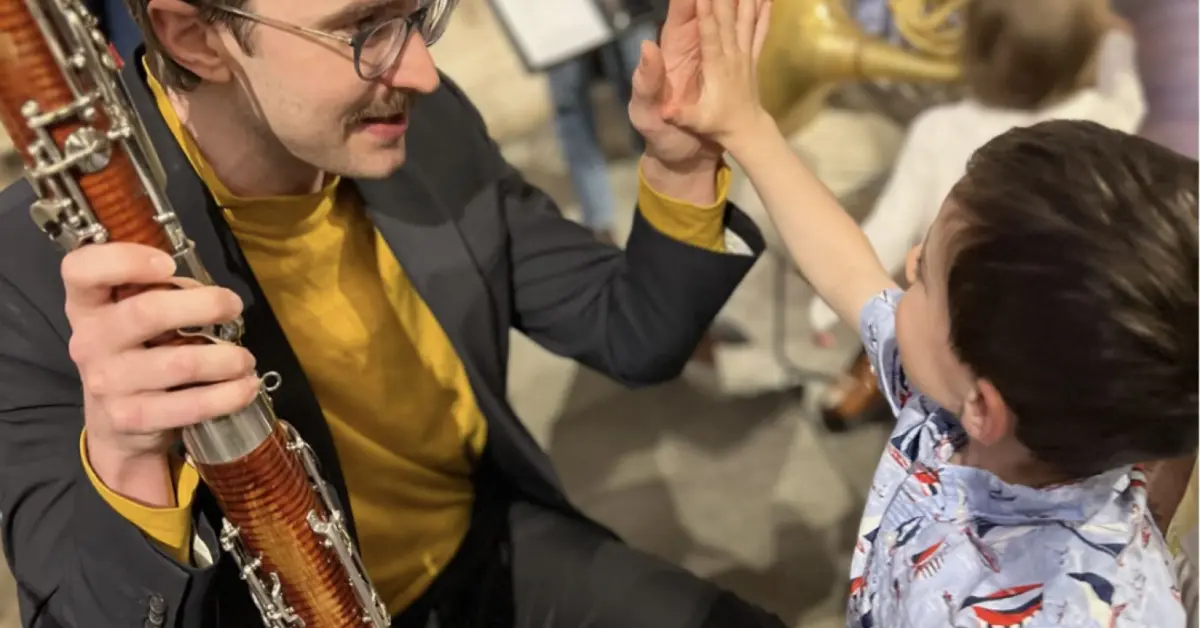
While music therapy is a specialized clinical discipline distinct from general artistic expression, the broader application of music offers remarkable possibilities for connection. Recent collaborative initiatives—such as high school assemblies featuring interactive programs like Mozart for Munchkins’ Live Music Lab—demonstrate how emotional expression can bypass verbal syntax entirely.
In these settings, diverse learners, including students utilizing AAC devices, take center stage to co-create soundscapes. A student might step forward, select a drum, and assign it an emotion: "Mad drum." Another might choose a violin to represent "Sleepy." Professional musicians immediately respond, translating those conceptual choices into live acoustic improvisations.
In these moments, no spoken conversation is necessary. The participants dance, laugh, and listen attentively to what frustration sounds like on percussion or what fatigue sounds like on strings. For those few minutes, emotion and music merge into a shared language. Syntax and articulation are rendered optional; choices transform into rhythms, and emotions become melodies.
Moving Toward Intentional Listening
Ultimately, the future of neurodiversity acceptance depends on society’s willingness to learn a new way of listening. Listening is vastly bigger than hearing spoken words.
What might happen if our communities paused to notice before rushing to interpret? If we consistently granted individuals the time they need to formulate a response? If we paid respectful attention to a gesture, a repeated phrase, a physical movement, a PECS card, or a musical rhythm without prematurely assigning a rigid definition to it?
Communication will always arrive through a multitude of channels—an AAC device, a fleeting glance, a customized card, or a collaborative melody. Whether it is articulated through complex spoken dialogue or encapsulated in two simple words like "Mad drum," the fundamental human desire remains the same: to be heard, to be understood, and to connect. When we truly listen, we open the door to a world where we finally understand one another.