Executive Overview
In a bid to redefine the boundaries of decentralized social media, Bluesky has unveiled a significant expansion of its platform strategy. Speaking at TechCrunch Disrupt 2026, the company announced the evolution of Attie—an experimental platform initially designed for building AI-curated custom feeds—into a full-fledged creation engine. The upgraded tool empowers everyday users and creators to generate interactive digital experiences, including bespoke websites, quizzes, games, polls, and micro-applications, without requiring traditional software development skills.
This shift marks a crucial strategic inflection point for Bluesky. By introducing what Chief Executive Officer Toni Schneider terms "social vibe coding," Bluesky is attempting to transform from a single microblogging application into an extensible ecosystem of interactive, user-generated environments. These lightweight applications do not exist in isolation; they are natively anchored to the underlying AT Protocol (ATProto) and published directly into "The Atmosphere"—the broader ecosystem of federated, decentralized social services built on Bluesky’s open infrastructure.
The strategic move comes at a complex juncture for the company. While Bluesky’s total registered user count has reached 47 million, the platform has grappled with post-growth engagement drop-offs, with a portion of early adopters migrating back to legacy platforms like X (formerly Twitter) or consolidating around Meta’s Threads. By providing creators with both generative AI tools and built-in audience distribution, Bluesky hopes to solve the primary friction point facing modern micro-developers: discovery. Furthermore, the company announced that ATProto is entering alpha testing for private data support, a long-requested feature set to roll out by the end of 2026 that will enable richer, permissioned social experiences.
Detailed Chronology
The evolution of Bluesky from a Twitter-incubated research initiative into a multi-product decentralized software engine reflects a rapid series of architectural and organizational shifts over the past year.
+-----------------------------------------------------------------------------------+
| CHRONOLOGY OF BLUESKY'S PLATFORM EVOLUTION                                        |
+-----------------------------------------------------------------------------------+
| March 2026      | • Jay Graber transitions from CEO to Chief Innovation Officer.  |
|                 | • Toni Schneider steps in as CEO.                               |
|                 | • Attie is originally launched as an AI custom feed generator.  |
+-----------------+-----------------------------------------------------------------+
| August 2026     | • Platform reaches 47 million registered accounts.              |
|                 | • Reports highlight active user churn as initial spikes stabilize.|
+-----------------+-----------------------------------------------------------------+
| October 2026    | • TechCrunch Disrupt 2026: Attie expansion announced.           |
|                 | • "Social Vibe Coding" introduced (interactive games/sites).     |
|                 | • ATProto Private Data feature enters alpha testing.            |
+-----------------+-----------------------------------------------------------------+
| Late 2026 (Est.)| • Target public rollout for ATProto Private Data primitives.    |
+-----------------------------------------------------------------------------------+
1. Executive Reorganization (March 2026)
The groundwork for Bluesky’s current strategy was laid in March 2026 during a major corporate restructuring. Foundational CEO Jay Graber stepped down from the top executive role to assume the position of Chief Innovation Officer, freeing her to focus entirely on protocol-level research and next-generation product experimentalism.
Toni Schneider—a seasoned technology executive who previously served as CEO of Automattic (the parent entity of WordPress.com) and as a partner at venture firm True Ventures—initially assumed the leadership role on an interim basis. Schneider was subsequently named permanent Chief Executive Officer, tasked with commercializing the network, expanding its developer ecosystem, and navigating the integration of generative artificial intelligence into the ATProto architecture.
2. The Launch of Attie as a Custom Feed Sandbox (March 2026)
Simultaneous with the leadership transition in March 2026, Bluesky debuted Attie. Originally conceived as a specialized experimental venue, Attie was designed to lean heavily into AI technology to democratize feed creation. Instead of requiring developers to write complex algorithmic logic in code to parse the ATProto firehose, Attie allowed users to use natural language prompts to assemble custom, highly tailored social feeds.
3. Expansion into Interactive Web Experiences (October 2026)
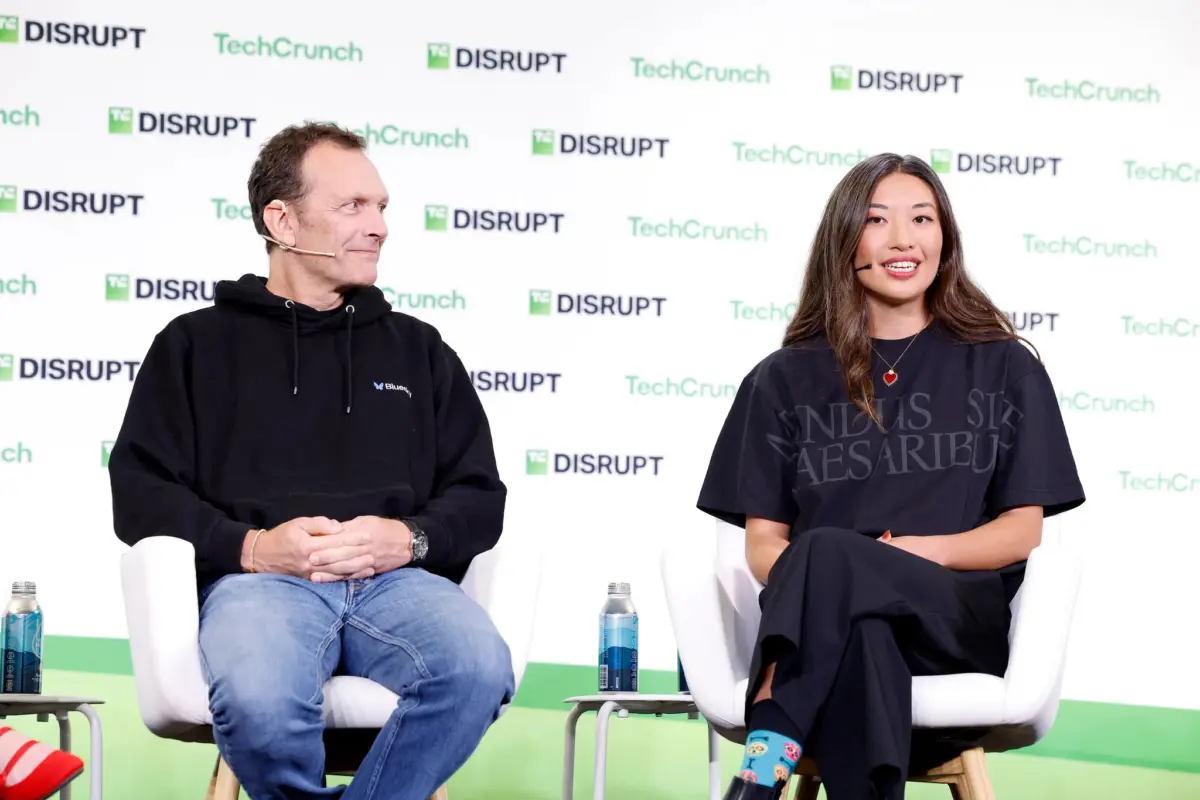
At TechCrunch Disrupt 2026, Schneider and Chief Operating Officer Rose Wang officially revealed the second generation of Attie. The platform was transitioned from an algorithmic feed generator into a broader, prompt-driven creation suite. Under this updated framework, users can build full interactive experiences—spanning casual multiplayer games and polling utilities to standalone community sites—that seamlessly integrate with a user’s cryptographic ATProto identity and Bluesky graph.
Supporting Context & Metrics
The 47 Million User Paradox: Growth vs. Retention
Bluesky’s strategic pivot is deeply connected to its operational metrics. According to public protocol data, the network has accumulated over 47 million registered users. However, metrics highlight a structural challenge common to emerging social networks: high account registration during period spikes (often driven by policy shifts or outages on competing networks) followed by an engagement plateau.
| Metric / Dimension | Bluesky / ATProto Status | Industry Context & Implications |
|---|---|---|
| Registered User Base | ~47 Million Accounts | Substantial top-of-funnel reach, yet prone to idle account accumulation. |
| Active Engagement Trend | Softening / Post-Peak Churn | Users testing the open web alternative, then oscillating back to centralized incumbents (e.g., X, Threads). |
| Protocol Architecture | ATProto ("The Atmosphere") | Federated, open-source, portable identity via Decentralized Identifiers (DIDs). |
| Key Developer Ask | Private Data Primitives | Alpha testing ongoing; necessary for direct messaging, private groups, and restricted-access micro-apps. |
To counter user churn, Bluesky is shifting focus away from competing strictly as a global broadcast platform (a direct replacement for the traditional "town square") and toward fostering niche, hyper-engaged communities through dynamic micro-apps.
Solving the "Distribution Bottleneck" for AI Creators
The rise of consumer-facing AI development tools—often referred to in tech parlance as "vibe coding"—has lowered the barrier to software creation. Platforms like Replit, v0, and Bolt allow non-technical individuals to build web applications using simple natural language prompts. However, creators using standalone AI coding tools face a persistent structural obstacle: distribution.
[ Traditional AI App Creation ]
  User Prompt  -->  Generative AI Tool  -->  Isolated Web Application  -->  No Audience (Distribution Deficit)

[ Bluesky's Attie Model ]
  User Prompt  -->  Attie (Generative AI) -->  ATProto Mini-App         -->  Instant Access via Bluesky Network Graph
Bluesky’s COO Rose Wang highlighted this dynamic as Attie’s primary value proposition. Apps built through Attie are natively embedded within the ATProto ecosystem. When a user creates a game or custom utility, it is instantly connected to their public Bluesky profile, feed, and social graph, providing built-in distribution to a ready-made audience.
Technical Foundation: Open Models and Decentralized Identity
Technically, Attie operates as an extensible framework atop ATProto:

- Model Agnosticism: Developers and everyday creators using Attie are not locked into a single proprietary AI model. They can plug in their own third-party API keys or utilize open-weight AI models to generate code and logic.
- Contextual Prompting: Attie leverages the creator’s public Bluesky profile metadata to suggest hyper-relevant applications to build, tailoring creation ideas to the specific domain interest or social dynamic of the creator’s follower base.
- Identity Integration: Every experience generated through Attie maintains cryptographic continuity with the user’s decentralized identity (DID). User scores in games, responses in polls, or interactions on mini-sites can be verified across any application operating within "The Atmosphere."
Official Statements
Toni Schneider on "Social Vibe Coding"
During his fireside presentation at TechCrunch Disrupt 2026, CEO Toni Schneider articulated how Attie changes the emerging paradigm of AI-assisted software generation.
"Vibe coding today is kind of a single-user, solo experience. And what I want to be able to do is build together or build for a group of people, and that’s what this product does."
Schneider emphasized that the company’s vision moves away from monolithic, universal social networks toward smaller, tailored, context-driven digital spaces.
"We’re adding a feature to our Attie product that allows you to build sites and social experiences again for a group of people. So think of it as… social vibe coding or vibe coding for your community."
"There should be lots and lots of these fun, small social experiences for your friends. We don’t all have to go communicate with the entire world all the time."
                     +-----------------------------------+
                     | TONI SCHNEIDER'S VISION           |
                     | FOR "SOCIAL VIBE CODING"          |
                     +-----------------------------------+
                                       |
        +------------------------------+------------------------------+
        |                                                             |
        v                                                             v
[ From Solo Development ]                                   [ To Collaborative Spaces ]
Single developer building in isolation;                      Community-driven tools, interactive
struggling with hosting, auth, & access.                     social experiences, & lightweight games.
Rose Wang on Network Effects and Audience Access
Chief Operating Officer Rose Wang focused on the economic and operational advantages offered to creators building within a pre-populated social graph, contrasting Attie with isolated AI coding interfaces.
"Everybody is building… But the big question is: Who’s using the thing you’re building, because we haven’t solved that problem with distribution. What makes Attie so interesting is that it comes with the Bluesky distribution, so it doesn’t stand alone."
Future Outlook
The Strategic Importance of Private Data on ATProto
While Attie’s expanded creation tools offer immediate front-end novelties, Bluesky’s long-term technical competitiveness hinges on the platform’s protocol-level evolution. Schneider confirmed at Disrupt that ATProto’s private data functionality is officially in alpha testing, targeting a broader rollout by the close of 2026.
Historically, ATProto was designed as a radically transparent, public-first protocol where all posts, likes, and profile changes were broadcast publicly across the relay network. This design choice, while beneficial for open data access and portability, severely limited the protocol’s utility for developers seeking to build:
- End-to-end encrypted direct messaging (DMs).
- Private, invite-only community hubs.
- Interactive apps (such as paid games or private quizzes) that require state persistence hidden from the public global feed.
The arrival of private data primitives will allow developers using Attie to build far more sophisticated applications, bridging the functional feature gap between decentralized protocols and walled-garden platforms like Discord, Facebook Groups, or Patreon.
+-----------------------------------------------------------------------------------+
| ROADMAP & TECHNICAL TRAJECTORY (Q4 2026 AND BEYOND)                              |
+-----------------------------------------------------------------------------------+
| Architectural Milestone   | Strategic Objective                                  |
+---------------------------+-------------------------------------------------------+
| Attie Suite Expansion     | Lower creation barrier for interactive social media.  |
| Open Model Integration    | Allow developers to leverage open-weight LLMs.        |
| Private Data Primitives   | Enable encrypted DMs, gated groups, & stateful apps.  |
| Federation Deepening      | Secure cross-app interoperability across Atmosphere.  |
+-----------------------------------------------------------------------------------+
Industry Implications and Challenges
Bluesky’s dual focus on AI-assisted application creation and decentralized identity places it at the intersection of two major technology trends: generative AI development and open social protocol federation.
- Competition with Legacy Social Networks: As platform fatigue grows around algorithmic content ranking on platforms like X and Threads, Bluesky is betting that community-led, customizable software environments will prove more resilient and stickier over time than generic broadcast feeds.
- Platform Moderation and Safety: Allowing users to generate custom web pages and interactive games programmatically introduces complex trust and safety challenges. Bluesky will need to adapt its composable moderation framework (Ozone) to handle executable micro-apps, malicious code generation, and phishing threats embedded within user-generated Attie sites.
- Sustaining Developer Ecosystems: By transitioning former Automattic executive Toni Schneider to full CEO, Bluesky is explicitly borrowing from WordPress’s historical playbook: build an open core platform, empower an ecosystem of third-party builders to extend its capabilities, and monetize infrastructure and convenience services around that open graph.
If successful, Bluesky’s transformation of Attie could serve as a blueprint for the next phase of the open web—where users do not merely consume content within standardized UI containers, but dynamically assemble the software platforms on which their digital communities reside.