Executive Overview
In a decisive move targeting the financial lifeblood of international cybercrime and the Russian wartime economy, the United Kingdom has unleashed sweeping economic sanctions against Cryptomus. Long flagged by blockchain intelligence firms and investigative journalists as a premier chameleonic cryptocurrency platform, Cryptomus has operated as a critical conduit for illicit financial flows. The platform has routinely facilitated payments for ransomware syndicates, global narcotics trafficking, darknet markets, widespread financial fraud, and cyberespionage services, effectively helping Russia bypass punishing Western financial restrictions.
Announced on October 8, the U.K. Foreign, Commonwealth & Development Office’s sanctions freeze any assets held by Cryptomus within British financial institutions and erect a rigid legal barrier preventing UK-based companies, individuals, and virtual asset service providers from engaging in any commercial relationship with the platform. Alongside Cryptomus, British authorities cast a wider net, targeting interconnected virtual payment networks including VexPay, TokenSpot, and the Tsunami Payments service.
This regulatory hammer blow represents a watershed moment in international anti-money laundering (AML) and counter-terrorism financing enforcement. While previous actions—such as a historic CAD $176 million fine levied by Canada in late 2025—proved largely symbolic and ultimately uncollectible, the imposition of formal U.K. sanctions threatens to functionally dismantle the operational machinery of Cryptomus and its modern incarnation, Heleket.
Compounding its geopolitical significance, analysts point out that this is the first recorded instance of a "Five Eyes" intelligence-sharing nation (Australia, Canada, New Zealand, the United Kingdom, and the United States) sanctioning a cryptocurrency enterprise originally incorporated inside the jurisdiction of another Five Eyes partner. The unfolding saga exposes a labyrinth of corporate shell games, questionable regulatory oversight tied to disputed territories in northwest Africa, and the staggering resilience of illicit crypto-to-cash pipelines operating in plain sight.
Detailed Chronology: From Certa Payments to Heleket
The operational lifespan of Cryptomus is a masterclass in corporate evasion, identity shifting, and regulatory arbitrage. Understanding how the platform evolved requires tracking a multi-year trail of corporate rebranding, regulatory evasion, and shell companies.
Emergence and Initial Expansion (2022–2023)
Emerging on the digital landscape in 2022, the platform initially operated under the corporate banners of Certa Payments and Xeltox Enterprises. Promoted heavily across Russian-language cybercrime forums and Telegram channels, Cryptomus quickly established itself as a go-to payment processor for dozens of Russian cryptocurrency exchanges and underground service providers.
During its formative years, the platform maintained a ghost footprint in North America, sharing a single Vancouver office address with dozens of other foreign currency dealers and money transfer businesses—none of which showed any tangible physical presence at the location. Behind this facade, the platform aggressively scaled up operations, offering frictionless, pseudo-anonymous transaction processing designed to evade standard regulatory scrutiny.
The Canadian Crackdown and the Birth of Heleket (2025)
As investigative spotlight intensified, blockchain forensics revealed the staggering scale of the platform’s operations. In October 2025, the Financial Transactions and Reports Analysis Centre of Canada (FINTRAC) hammered Cryptomus with a record-shattering CAD $176 million administrative monetary penalty for severe, systemic anti-money laundering violations.
Rather than folding, Cryptomus adopted a dual strategy of litigation and evasion. The platform formally appealed the Canadian penalty while executing a tactical rebrand. Recognizing that the "Cryptomus" moniker was becoming radioactive among compliance officers, the operators launched Heleket as a parallel service. While Cryptomus experienced a temporary dip in volume after attempting to implement superficial "Know Your Customer" (KYC) guidelines, Heleket stepped seamlessly into the vacuum, continuing to offer zero-KYC payment processing to high-risk actors and underground marketplaces.
The U.K. Sanctions and Operational Collapse (October 2026)
The turning point arrived on October 8, 2026, when the U.K. government officially designated Cryptomus under its Russia-related sanctions regime. The impact was immediate and catastrophic for the platform’s day-to-day operations.
Within hours of the announcement, users attempting to interact with the platform’s automated Telegram support bots were met with system-wide errors. Screen captures and intelligence logs from October 8 documented Cryptomus support agents abruptly informing inquiries that the platform was suddenly "unable to process transactions." Curiously, despite extensive technical and transactional evidence linking the two services, customer support agents for Heleket adamantly claimed on Telegram that their platform maintained no affiliation with Cryptomus—a transparent attempt to insulate Heleket from the newly minted U.K. designation.
Supporting Context & Metrics: The Scale of Illicit Flow
To fully grasp why Western intelligence and regulatory bodies targeted Cryptomus and its affiliates, one must examine the staggering macroeconomic scale of the illicit transactions moving through its ledgers.

Volume and Typology of Illicit Transactions
Independent blockchain analysis firms have spent years mapping the financial anatomy of Cryptomus. In April 2026, leading blockchain intelligence provider TRM Labs published an exhaustive intelligence profile revealing that Cryptomus had processed more than $7 billion in transactions since its inception in 2022.
The scope of criminal enterprise serviced by the platform spans the darkest corners of the digital underground:
- Ransomware Operations: Facilitating extortion payout splits for prominent Russian-linked ransomware affiliate networks.
- Darknet Markets & Narcotics: Processing high-volume escrow and direct vendor payments for global illicit drug distribution rings.
- Exploitation Material & Abuse: Acting as a monetary nexus for vendors trafficking in child sexual abuse material (CSAM).
- Terrorism Financing: Moving capital for state-sponsored and independent terrorist financing networks.
- Human Trafficking: Laundering proceeds generated by transnational human trafficking cartels.
Chainalysis and TRM Labs Insights
According to data compiled by Chainalysis, Cryptomus and its successor, Heleket, transcended the role of traditional payment gateways to become foundational infrastructure for the Russian wartime economy.
In an October 8 blog post analyzing the U.K. sanctions, Chainalysis noted:
"Cryptomus and Heleket have emerged as major payment hubs for illicit activity. Together, these services received more illicit funds across tracked categories than the mixers in our dataset, and the number of illicit counterparties surged to more than 900 in a single month in late 2025."
TRM Labs highlighted a significant tactical pivot in Cryptomus’s operational history: when the platform briefly instituted rudimentary KYC controls under mounting regulatory pressure, transaction volumes cratered. Rather than complying with global financial standards permanently, the operators simply birthed Heleket to recapture the lucrative unverified payment market, demonstrating a calculated disregard for international law.
Official Statements and Industry Analysis
The international response to the U.K. sanctions underscores a growing realization among Western policymakers: traditional regulatory fines are wholly insufficient when dealing with borderless cybercrime syndicates.
The Crucial Distinction Between Fines and Sanctions
Blockchain investigator and analyst Richard Sanders, who spent months painstakingly mapping out Cryptomus’s labyrinthine payment infrastructure and tracking its illicit customer base, championed the U.K.’s decisive intervention. Sanders drew a stark contrast between Canada’s earlier monetary penalty and Britain’s asset-freezing sanctions.
Writing on LinkedIn, Sanders emphasized:
"A fine doesn’t stop a cryptocurrency payment processor from processing payments. Sanctions kill the operation. The distinction matters."
Because Canada’s CAD $176 million fine was ultimately uncollectible—given that the corporate entities behind Cryptomus existed primarily as paper shells—the financial penalty functioned merely as a cost of doing business. In contrast, U.K. sanctions criminalize transactions with the platform, cut off access to vital Western banking pipelines, and legally compel global compliance software providers to block associated addresses.
A Historic Five Eyes Precedent
Sanders also highlighted the profound geopolitical implications of the move, noting that it marks the very first documented instance of a "Five Eyes" nation formally sanctioning a cryptocurrency entity incorporated within the borders of a fellow Five Eyes member state (Canada). This unprecedented cross-border enforcement action signals a new era of intelligence sharing and regulatory harmonization, where allied nations are no longer willing to tolerate jurisdictional blind spots exploited by sophisticated cybercriminals.

The Illusion of Legitimacy: Phantom Regulators and Western Sahara Shells
Perhaps the most surreal aspect of the Cryptomus enterprise is the elaborate, smoke-and-mirrors regulatory framework the operators constructed to project an aura of legitimacy to prospective banking partners and corporate clients.
The Ukrainian Principal and the Western Sahara Connection
An extensive 2024 investigative report by KrebsOnSecurity laid bare the corporate ancestry of Cryptomus, tracing its ownership back to Certa Payments. Public corporate filings revealed that the sole shareholder of Certa Payments was a 25-year-old Ukrainian woman.
Crucially, this individual did not merely run a payment processor; she simultaneously headed several other corporate entities, most notably the WS Management and Advisory Corporation. This firm marketed itself as an exclusive, authoritative regulatory body responsible for issuing operational licenses to cryptocurrency exchanges, foreign exchange (forex) brokers, and online gaming operators.
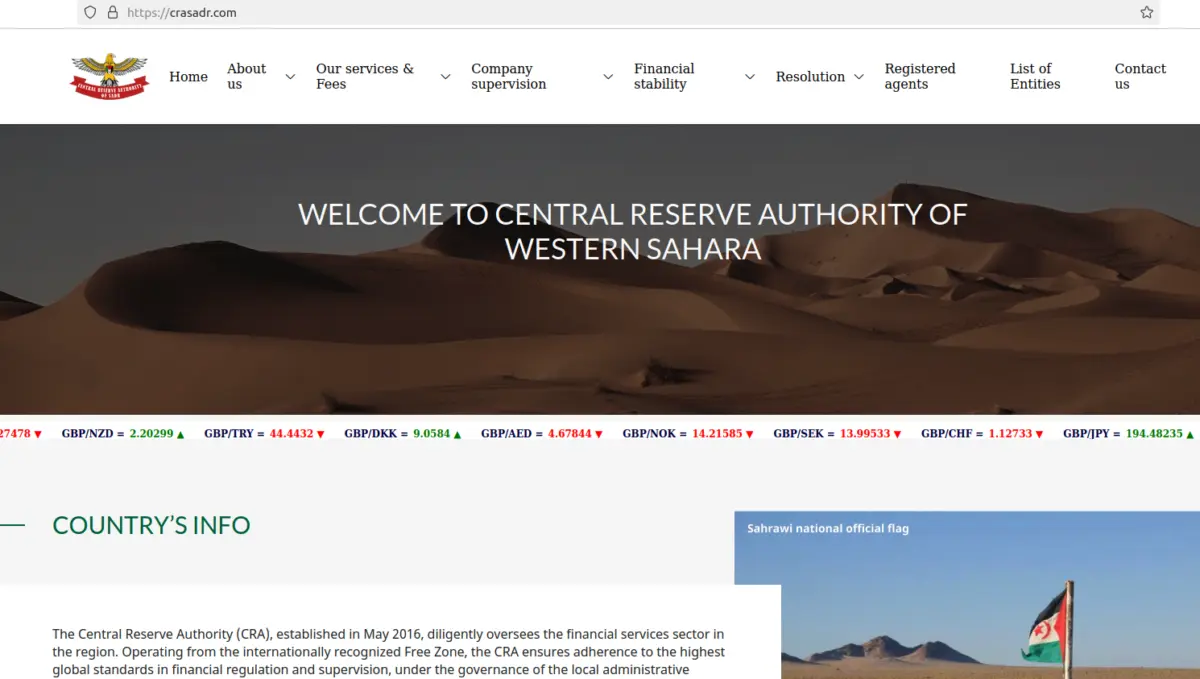
The catch? The jurisdiction allegedly granting this regulatory authority was the Western Sahara—a disputed region in northwest Africa not widely recognized as an independent sovereign nation by the United Nations or the global community.
Phony Regulators and Shared Servers
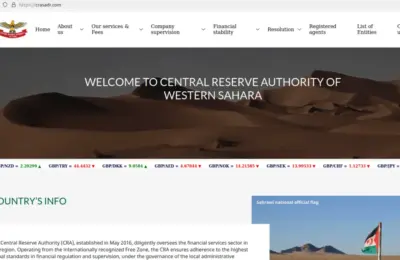
The operational hub of this regulatory theater was anchored by the website crasadr.com, which served as the digital storefront for the so-called Central Reserve Authority of the Western Sahara. This fictitious regulatory body published lists of ostensibly licensed entities authorized to handle global digital assets and fiat foreign exchange.
Digital forensics further exposed the web of deception: Certa Payments’ former corporate website (certa.website) shared a physical server domain footprint with a dozen other suspicious domains. Among them was rasd-state.ws, a digital portal dedicated to propagating the legitimacy of the Central Reserve Authority of Western Sahara.
By fabricating a regulatory body inside a disputed geopolitical zone, the architects of Cryptomus engineered a synthetic shield designed to dupe compliance checks, bypass standard banking due diligence, and provide a veneer of official sanction to what was, in reality, a high-volume criminal laundering machine.
Future Outlook: The Road Ahead for Crypto Enforcement
The coordinated crackdown on Cryptomus, Heleket, VexPay, TokenSpot, and Tsunami Payments marks a critical inflection point in the global fight against crypto-enabled financial crime.
However, closing down one hydra-headed payment processor rarely eradicates the underlying demand. Cybercrime syndicates, ransomware cartels, and sanction-evading Russian state actors have proven remarkably adept at morphing into new entities, adopting decentralized architectures, or migrating to jurisdictions entirely outside the reach of Western enforcement agencies.
Nevertheless, the U.K. sanctions signal a paradigm shift:
- Aggressive Jurisdictional Overreach: Allied governments are increasingly willing to cut through traditional bureaucratic red tape—and override domestic corporate incorporation anomalies—to neutralize systemic threats.
- The Obsolescence of Mere Fines: As Richard Sanders observed, regulatory bodies have recognized that nine-figure fines are toothless against shell corporations, making asset freezes and criminal trade bans the new baseline for enforcement.
- De-anonymization of Sham Regulators: Investigative journalism and advanced blockchain analytics are systematically dismantling the fake regulatory frameworks—such as the Western Sahara Central Reserve Authority—that underground payment processors rely on to fool traditional financial institutions.
As global law enforcement tightens the noose, platforms like Heleket may attempt further rebranding exercises or deeper integration into decentralized finance (DeFi) protocols. Yet, with major intelligence agencies, blockchain forensic giants like Chainalysis and TRM Labs, and specialized investigators collaborating in real-time, the operational runway for unverified, cybercrime-friendly payment gateways is growing perilously short.