Executive Overview
In an era defined by hyper-connectivity and globalized digital landscapes, mainstream social media platforms continue to cater overwhelmingly to dominant world languages. Despite boasting tens of millions of speakers globally, the Somali language has long remained on the periphery of digital product design. Major networks treat Somali as an afterthought, lacking native optimization, localized cultural context, and specialized artificial intelligence integration.
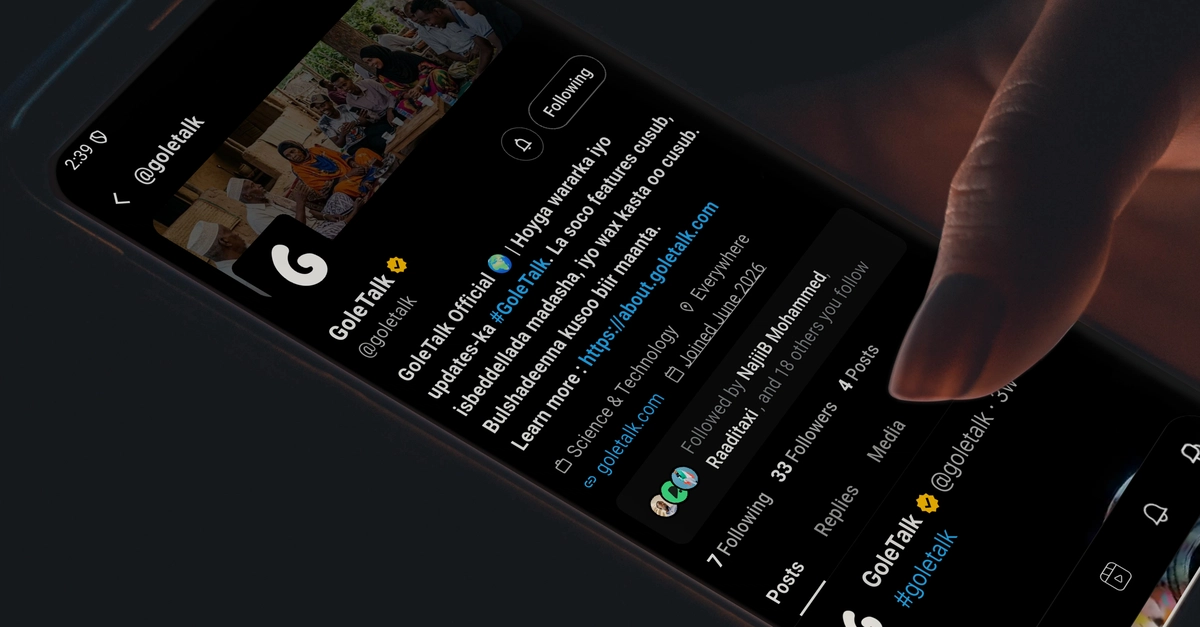
Enter GoleTalk—a pioneering, Somali-first social platform engineered from the ground up to address this exact digital exclusion. Conceived as more than just another microblogging site or networking app, GoleTalk is a comprehensive digital ecosystem designed to give Somali-speaking communities a dedicated space to connect, share ideas, discover content, and natively explore artificial intelligence in their own tongue.
By marrying a robust, modern technology stack—featuring Flutter, Laravel, Riverpod, and OpenRouter—with a deep understanding of Somali cultural nuances, the project’s creators are tackling complex engineering hurdles head-on. From optimizing client-side data synchronization to laying the groundwork for native language AI models, GoleTalk represents a critical shift toward linguistic equity in the tech sector. This article offers an in-depth look at the architecture, challenges, lessons learned, and future trajectory of a platform aiming to redefine the Somali internet.
Detailed Chronology: The Genesis and Evolution of GoleTalk
Phase 1: Identifying the Underserved Gap
The conceptualization of GoleTalk began with a glaring observation: while Somali-speaking internet users are exceptionally active on global platforms like X (formerly Twitter), Facebook, TikTok, and Instagram, they are forced to navigate environments where their language is structurally unsupported. Standard algorithms, character encodings, translation tools, and moderation pipelines frequently fail to capture the subtleties, idioms, and rich oral traditions of the Somali language.
The developer recognized that building a truly engaging platform required more than surface-level translation. It demanded a cultural and linguistic re-imagining of how a social network should function. The core thesis was simple: Somali language and cultural context must not be bolted on as secondary features; they must be baked into the foundational architecture of the product from day one.
Phase 2: Architectural Planning and Tech Stack Selection
Transitioning from a conceptual framework to a tangible build required a modern, scalable, and cross-platform technology stack capable of performing reliably even in regions with fluctuating network infrastructure. The engineering team meticulously selected tools that balance rapid mobile deployment with backend resilience:
- Frontend & Cross-Platform Development: Flutter was chosen to power the mobile application, ensuring a unified, high-performance user interface across both Android and iOS devices.
- State Management: Riverpod was integrated within the Flutter architecture to maintain predictable state management, streamline dependency injection, and ensure clean, testable code as the application scales.
- Backend & Infrastructure: Laravel, the robust PHP framework, serves as the backbone for the RESTful API and core platform infrastructure, providing secure authentication, routing, and database management.
- Local Persistence & Caching: To combat latency and intermittent connectivity, Isar—a blazing-fast NoSQL database for Flutter—was implemented for local caching, enabling a seamless, lightning-fast feed experience.
- Mobile Services: Firebase was leveraged to handle essential mobile infrastructure, including reliable push notifications and real-time backend analytics.
- AI Orchestration: OpenRouter was adopted to experiment with diverse Large Language Models (LLMs). This flexibility allows the platform to integrate cutting-edge AI capabilities without suffering from vendor lock-in with a single provider.
Phase 3: Solving the Complexities of the Social Feed
One of the most formidable engineering milestones in GoleTalk’s development has been the design and execution of the core social feed. Building a production-ready feed involves vastly more complications than simply executing a database query to return the most recent posts.
The engineering team had to design intricate systems for:
- Feed Synchronization & Deduplication: Ensuring that users do not see duplicate posts when pulling fresh data across unstable network states.
- Optimistic Publishing: Implementing user interface updates instantly upon content submission before server confirmation is received, making the application feel instantaneous.
- Differentiated Feed Experiences: Structuring dual algorithms for distinct user intents—specifically, a personalized "For You" discovery engine and a chronological "Following" timeline.
- Client-Side Caching: Utilizing local persistence layers to prevent redundant data fetches, thereby reducing bandwidth consumption and drastically accelerating app responsiveness.
These efforts transformed the feed from a basic functional requirement into a reliable, high-performance cornerstone of the user experience.
Supporting Context & Metrics: The Intersection of AI and the Somali Language
As artificial intelligence reshapes the global software landscape, the gap between dominant languages (such as English, Mandarin, and Spanish) and low-resource languages (such as Somali) has widened into what researchers call the "AI linguistic divide." GoleTalk is actively working to bridge this chasm by pioneering Somali-first AI integrations.
Why Linguistic AI Equity Matters
Standard commercial AI models frequently misinterpret Somali syntax, morphology, and colloquialisms. Because Somali is a rich, highly inflectional, and historically oral-dominant language, direct machine-translation models often produce unnatural or incomprehensible outputs.
GoleTalk’s approach focuses on making AI natively understand Somali users. By experimenting with multi-model routing via OpenRouter, the platform lays the groundwork for:
- Context-Aware Content Moderation: AI systems trained to recognize local idioms, cultural references, and regional dialects rather than relying on blunt, Western-centric keyword filters.
- Natural Language Processing (NLP) Tools: Developing assistants and automated search features that natively comprehend Somali morphology.
- Creator Empowerment: Equipping digital content creators with AI-assisted drafting, summarization, and engagement tools tailored to the Somali digital economy.
Key Engineering & Product Metrics
While GoleTalk is currently in its growth and community-testing phase, its development model offers valuable quantitative and qualitative metrics for low-resource software development:
| Engineering Dimension | Strategy Implemented | Primary Benefit |
|---|---|---|
| Performance | Flutter + Isar Local Caching | Sub-second feed loading times and offline-first resilience. |
| Scalability | Laravel Backend API | Decoupled architecture allowing independent scaling of mobile clients and server logic. |
| AI Flexibility | OpenRouter Integration | Freedom to swap, benchmark, and deploy optimal LLMs without rewriting core infrastructure. |
| Localization | Native Somali UX/UI Design | Elimination of translation friction, boosting user retention and organic engagement. |
Official Insights & Lessons Learned
Building a platform from scratch for an underserved community yields profound technical and philosophical insights. The lead developer behind GoleTalk has shared several critical lessons gathered throughout the development lifecycle:
1. Performance Under Constraint
“How does the app behave as content increases?” In regions where mobile data can be expensive and network infrastructure varies wildly, performance optimization is not a luxury—it is a prerequisite for survival. Implementing rigorous client-side caching and efficient state management ensures the app remains lean and responsive.
2. Data Synchronization Complexity
“How do we efficiently synchronize local and remote data?” Balancing offline-first capabilities provided by local databases like Isar with real-time remote updates from a Laravel backend requires meticulous conflict-resolution strategies and robust API design.
3. Maintaining Architectural Cleanliness
“How do we keep the codebase maintainable as features grow?” Utilizing structured state management solutions like Riverpod has been instrumental in keeping the Flutter codebase modular, ensuring that adding new social features does not introduce cascading bugs.
4. Community Value Proposition
“Why would someone choose this platform instead of the platforms they already use?” This remains the ultimate litmus test for any emerging social network. Users will not migrate simply out of national or linguistic pride; the product must offer a superior, culturally tailored experience that global giants are structurally incapable of providing.
5. Overcoming Historical Underservicing
“How do we build for a language and community that has historically been underserved?” Localization goes far beyond string translation. It requires listening directly to the community, understanding their digital habits, and iterating rapidly based on real-world feedback.
Future Outlook: Building the Broader Somali Digital Ecosystem
GoleTalk’s ambitions extend far beyond the boundaries of a conventional social media application. The long-term vision is to anchor GoleTalk as the foundational pillar of a broader, interconnected Somali digital ecosystem.
The Roadmap Ahead
- Community-Driven Iteration: Continuing rigorous testing cycles with Somali-speaking user groups to refine existing features, eliminate edge-case bugs, and discover precisely what modern users expect from a localized social utility.
- Expanding AI Integration: Deepening experimentation with LLMs to roll out native writing assistants, intelligent recommendation systems, and advanced content discovery algorithms designed specifically for Somali text and media.
- Empowering Creators and Businesses: Evolving the platform into a multi-faceted hub where creators can monetize their content, communities can organize around shared interests, and local businesses can reach targeted Somali audiences.
A Call to the Developer Community
Projects like GoleTalk serve as a blueprint for developers worldwide who are looking to empower other underserved linguistic communities. The core question posed by the creators remains deeply thought-provoking for software architects everywhere:
“If you were building a social platform for an underserved language community, what technical or product challenges would you focus on first?”
As GoleTalk continues to scale—bridging technology, language, and culture—it stands as a powerful testament to what is possible when software is engineered with empathy, precision, and an unwavering commitment to inclusivity.
For those interested in exploring, testing, or contributing feedback to the project, GoleTalk is actively engaging with the tech and developer community through platforms like Product Hunt: GoleTalk on Product Hunt.