Executive Overview
In the modern landscape of consumer technology, smartwatches have largely been pigeonholed as fitness trackers, notification relays, and minor extensions of our pocket-bound smartphones. From receiving DoorDash updates to taking hands-free calls in public spaces, the contemporary wrist computer handles myriad tasks with casual ubiquity. Yet, nestled deep within the menus of mainstream wearable operating systems—spanning the Apple Watch, Google Pixel Watch, and Samsung Galaxy series—lies a universally mocked, frequently overlooked feature: the software-driven smartwatch flashlight.
For years, critics and casual users alike have dismissed the feature as a gimmicky software inclusion. After all, turning an AMOLED or OLED display to solid white and cranking its brightness to maximum output pales in comparison to the dedicated, dual-tone LED arrays found on smartphones or the heavy-duty hardware flashlights built into rugged outdoor-centric watches like those manufactured by Garmin.
However, this widespread skepticism ignores a fundamental shift in user behavior and ergonomics. As users increasingly seek autonomy from their smartphones, the wrist becomes the most immediate point of interaction. Far from a useless novelty, the smartwatch flashlight offers an array of distinct practical advantages—from unmatched accessibility and genuine hands-free operation to targeted, low-intensity illumination that avoids the blinding glare of a traditional torch. It is time to re-evaluate the utility of the humble wrist-bound beacon and recognize it as an essential, everyday tool.
Detailed Chronology and Evolution of the Wrist-Torch
The journey of illumination on the wrist did not begin with modern smartwatches; rather, it evolved alongside portable micro-electronics.
The Era of Indiglo and Lume
In the pre-digital and early digital watch eras, lighting a watch face was purely an inward-facing endeavor. For decades, mechanical timepieces relied on phosphorescent paints ("lume") such as radium and tritium, which absorbed light to glow in the dark. In 1992, Timex revolutionized the casual watch market with the introduction of "Indiglo," an electroluminescent panel that illuminated the entire watch dial uniformly. While useful for reading the time in a dark movie theater or during a midnight run, these early lights were never intended to illuminate the broader environment.
The Rise of the Micro-LED and Rugged Wearables
As smartwatches emerged in the early 2010s, the primary focus remained on processing power, battery life, and screen fidelity. Early smartwatches utilized small LCD or low-res OLED screens that lacked the brightness thresholds required to cast meaningful ambient light.
The turning point for wrist-based illumination came with the rugged sports and outdoor watch sector. Brands like Garmin recognized that endurance athletes, hikers, and tactical operators frequently found themselves in total darkness without easy access to a handheld phone or flashlight. By embedding physical, high-lumens LED modules directly into the housing of watches like the Garmin Fenix series, manufacturers proved that a wrist-mounted light could serve as a primary survival tool.
The Mainstream Software Pivot
Meanwhile, mainstream tech giants—Apple, Google, and Samsung—approached the problem differently. Recognizing that adding physical LED hardware would increase production costs, complicate waterproofing, and drain precious battery real estate, these companies turned to software solutions. By leveraging the increasingly bright, high-density OLED and AMOLED panels already integrated into their devices, they introduced the software-driven "flashlight" mode.
Initially treated as an afterthought buried within control centers, this feature has steadily evolved. Today, modern watchOS, WearOS, and Tizen interfaces allow users to trigger the display flashlight instantly, adjust brightness levels, and in some cases, cycle through flashing red modes for nocturnal safety signaling.
Supporting Context, Ergonomics, and Practical Metrics
To understand why the smartwatch flashlight deserves a second look, one must analyze the physical ergonomics of light delivery in daily life.
+--------------------------------------------------------------------------+
|                        ERGONOMIC LIGHTING MATRIX                         |
+--------------------------+-------------------+---------------------------+
| Feature / Scenario       | Smartphone Torch  | Smartwatch Display Light  |
+--------------------------+-------------------+---------------------------+
| Hand freedom             | Zero (occupies 1) | Absolute (strapped on)    |
| Retrieval time           | 2–5 seconds       | Instantaneous (fraction)  |
| Glare / Night blindness  | High (harsh LED)  | Low (diffused OLED)       |
| Accidental drop risk     | High              | Zero (secured to wrist)   |
+--------------------------+-------------------+---------------------------+
The Tether-Free Advantage
The primary argument levied against the smartwatch flashlight is the existence of the smartphone camera flash, which is objectively brighter, more focused, and longer-lasting. This critique, however, misses a core tenet of modern device usage: the conscious separation from our phones.
A growing segment of consumers purchases smartwatches specifically to cultivate digital wellness—allowing them to leave their smartphones charging in another room, tucked away in a bag, or resting on a desk while they move about the house. When a sudden need for light arises in a dark hallway, a pitch-black basement, or under a heavy piece of furniture during a late-night search, the smartphone is rarely in hand. The watch, conversely, is already strapped to the user’s anatomy.
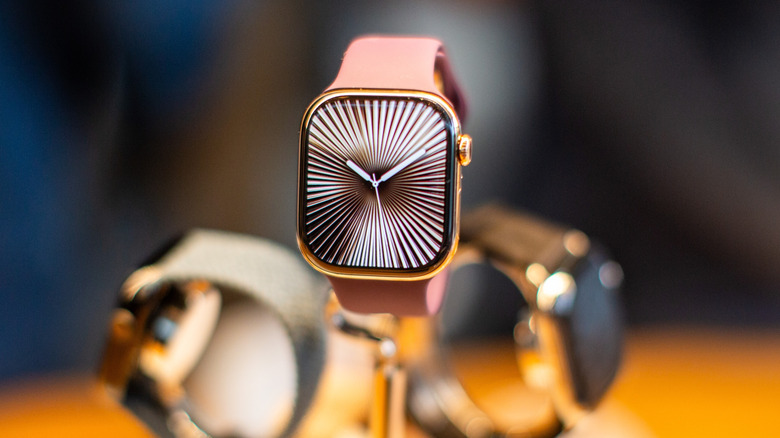
The Physics of Wrist-Mounted Illumination
Consider the physical limitations of holding a smartphone while attempting manual tasks. If a user drops a small item—such as a pill, an earring back, or a screw—deep into dark, confined spaces like a shag carpet or the mechanics behind a nightstand, both hands are frequently required to part fibers, move objects, or steadying oneself.
- The Smartphone Dilemma: Attempting to hold a smartphone while simultaneously using two hands to probe a dark area forces the user to awkwardly prop the phone against a wall, balance it precariously on a knee, or clamp it between their chin and shoulder.
- The Smartwatch Solution: Because the light source is physically secured to the wrist, the beam naturally tracks wherever the user points their hands. The illumination is entirely decoupled from manual dexterity. For extreme scenarios, adventurous users have even strapped their watches directly across their palms—an unorthodox configuration affectionately dubbed "Iron Man mode"—to project a steady, hands-free beam straight ahead without awkward wrist-bending.
Brightness vs. Utility
Skeptics frequently mock the output of a software-driven watch display, noting that it cannot pierce a dark backyard or illuminate a hiking trail. This is entirely accurate. A smartwatch display flashlight is not designed for search-and-rescue operations.
Instead, its utility lies in micro-illumination:
- Finding keyholes in pitch-black entryways.
- Locating dropped items under furniture without waking sleeping household members with harsh overhead lights.
- Navigating a dark bedroom or hotel room without stubbing toes on bedframes.
- Checking the fuse box or peering behind media consoles.
Furthermore, the diffused, wide-angle glow of an OLED screen acts as a soft floodlight rather than a piercing spotlight. This prevents the harsh glare and temporary night-blindness often caused by shining a high-intensity smartphone LED into confined, reflective spaces.
Industry Perspectives and Official Software Implementations
Major wearable developers have quietly refined their illumination software to maximize usability, treating the feature not as a joke, but as a critical accessibility and utility component.
Apple Watch: Precision and Color Modes
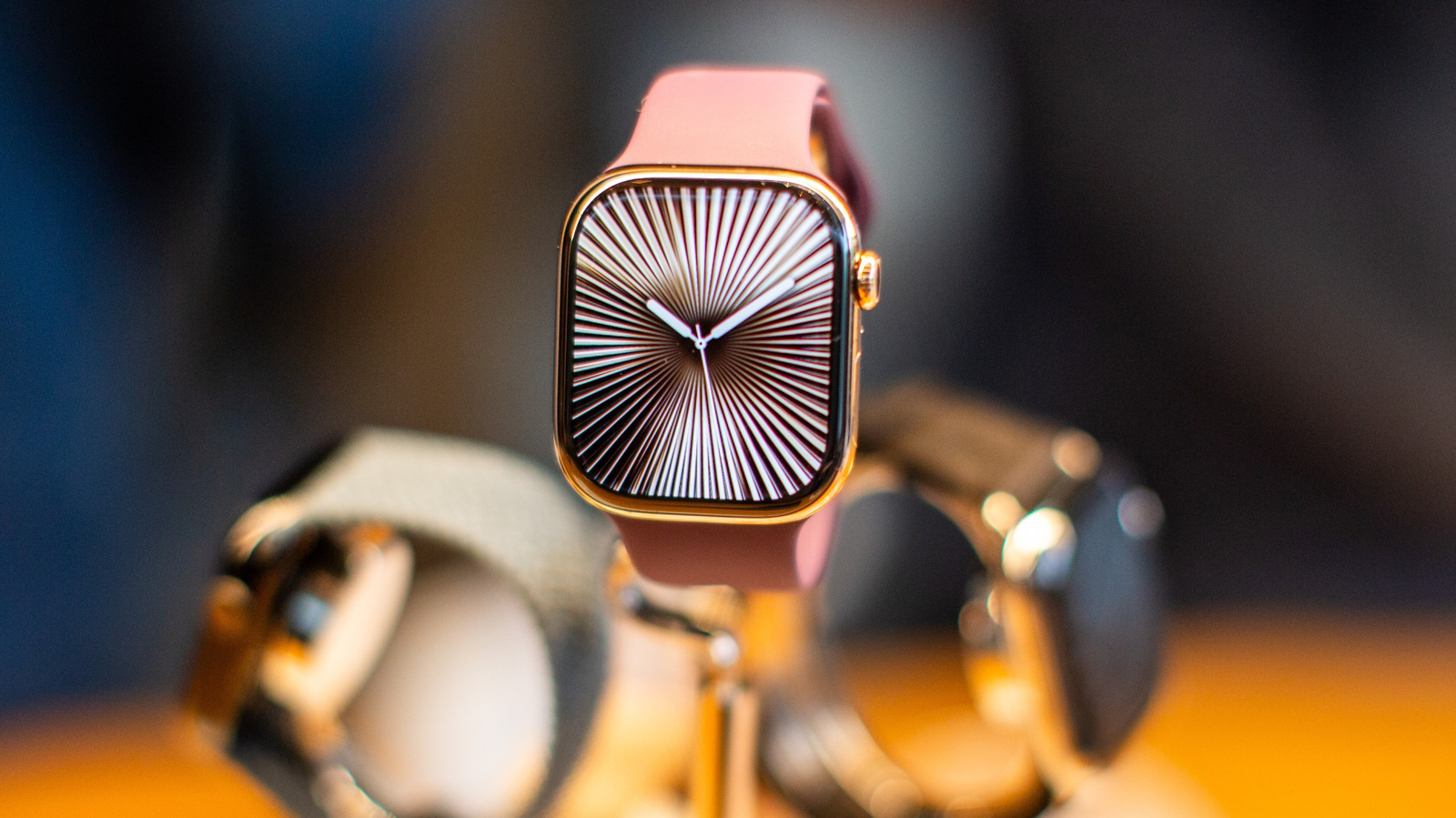
Apple’s implementation within watchOS offers a triple-tier approach depending on the model. Users can swipe up to the Control Center and tap the flashlight icon to initiate a solid white screen, a pulsating white strobe, or a solid red light.
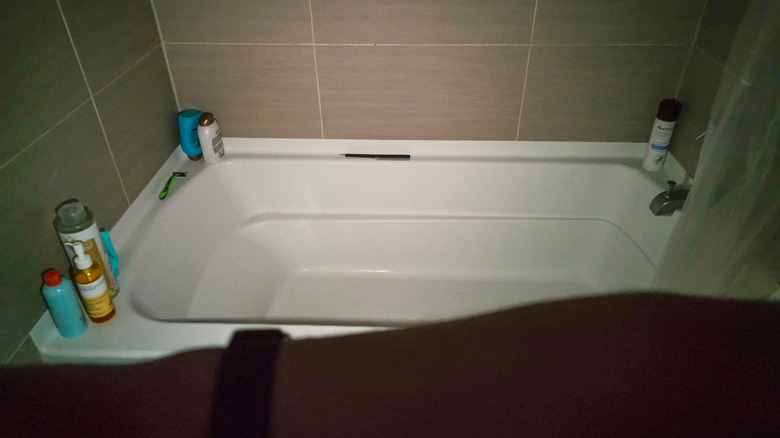
- The Red Light Utility: While white light provides maximum visibility, the red light mode preserves night vision—making it a favorite among astronomers, photographers, and parents checking on sleeping infants.
- Adaptive Brightness: Modern Apple Watches utilize ambient light sensors to dynamically adjust the display’s output, preventing blinding glare when transitioning from total darkness to looking directly at the wrist.
Google Pixel Watch: Seamless WearOS Integration
Google’s WearOS embeds quick-access tiles that place the flashlight utility mere millimeters from the user’s thumb. By prioritizing haptic feedback upon activation, WearOS ensures that users with visual impairments or those operating in pitch-black conditions receive tactile confirmation that the beam is active before raising their arm.
Samsung Galaxy Watch: Maximum Nit Output
Samsung’s focus on high-nit AMOLED displays across the Galaxy Watch lineup yields surprisingly potent wrist illumination. By pushing the panel to its absolute luminance threshold, Samsung devices generate enough ambient spread to safely navigate entire rooms, proving that software optimization can successfully bridge the gap where dedicated hardware is absent.
Future Outlook: The Next Generation of Wrist Illumination
As wearable technology continues to advance, the role of illumination on the wrist is poised for further evolution. Industry analysts and patent filings suggest several pathways for how manufacturers may improve this feature in upcoming hardware generations:
- Micro-LED Integration: As micro-LED technology matures and trickles down from high-end displays into mainstream consumer wearables, future smartwatches will feature panels capable of achieving significantly higher brightness levels without incurring the severe battery penalties associated with traditional OLED overdrive.
- Context-Aware Illumination: Future operating systems may automatically trigger low-level wrist illumination when ambient sensors detect sudden darkness combined with physical movement—such as a user getting out of bed in the middle of the night—eliminating the need to manually fumble through menus.
- Hybrid Optical Systems: While dedicated LED flashlights will likely remain the domain of rugged, outdoor-specific sport watches, mainstream manufacturers may experiment with bezel-integrated micro-optics that focus display light into a more directional, beam-like projection.
Conclusion
The skepticism surrounding the smartwatch flashlight is understandable at first glance. Against the backdrop of high-powered smartphone camera flashes and heavy-duty tactical torches, a glowing watch face appears diminutive, almost comical. Yet, utility is defined not by raw power, but by context, availability, and ergonomics.
By offering instant, tether-free, and truly hands-free illumination right where your hands naturally move, the smartwatch flashlight solves a very specific set of everyday inconveniences. It bridges the gap when our phones are out of reach and our hands are occupied. So, the next time someone scoffs at the glowing orb on your wrist as you navigate a dark room or search for a dropped item in the deep carpet, do not waver. Turn up the brightness, embrace the utility, and let your wrist-bound beacon shine.