Executive Overview
As Apple prepares for its highly anticipated product rollout this October, details continue to emerge regarding its most radical hardware departure in years: the iPhone Duo. First officially unveiled to the tech world during Apple’s landmark September showcase, the foldable device has commanded industry-wide attention as the company’s definitive answer to the burgeoning foldable smartphone market. While initial excitement centered primarily on the engineering feat of the folding display and the device’s physical footprint, subsequent leaks are beginning to paint a clearer picture of the software experience tailored specifically for this dual-screen form factor.
The latest intelligence, courtesy of a prominent system leak shared by reliable hardware tipster pdfu, offers an intimate preview of the iPhone Duo’s enhanced document handling capabilities—specifically, an optimized two-page PDF viewing mode integrated natively into iOS via Quick Look.
For years, power users, students, and professionals have wrestled with the inherent limitations of reading and annotating dense documents on standard, single-screen smartphones. While Apple’s iPad lineup has long reigned supreme as the go-to mobile device for portable document workflows, the iPhone Duo promises to bridge the long-standing gap between pocket-sized convenience and tablet-grade productivity. Combined with forthcoming Apple Pencil support slated for later this year, the iPhone Duo is shaping up to be far more than just a novelty folding phone; it may well be the first pocketable device to deliver a truly uncompromising document management experience.
Detailed Chronology: From Concept to the October Release Window
To fully appreciate the significance of the iPhone Duo’s document-viewing capabilities, it is essential to trace the device’s trajectory from tightly guarded Cupertino secret to its impending retail availability.
The Long Road to the Foldable iPhone
Rumors regarding an Apple-branded foldable device have circulated within supply chain circles for the better part of half a decade. Early reports indicated that Apple engineers were wrestling with significant hurdles, including crease minimization, hinge durability, and maintaining structural rigidity without sacrificing thinness. Unlike competitors who rushed first-generation foldables to market with visible software compromises, Apple adopted a notoriously patient—some would say deliberate—wait-and-watch strategy.
The September 2026 Unveiling
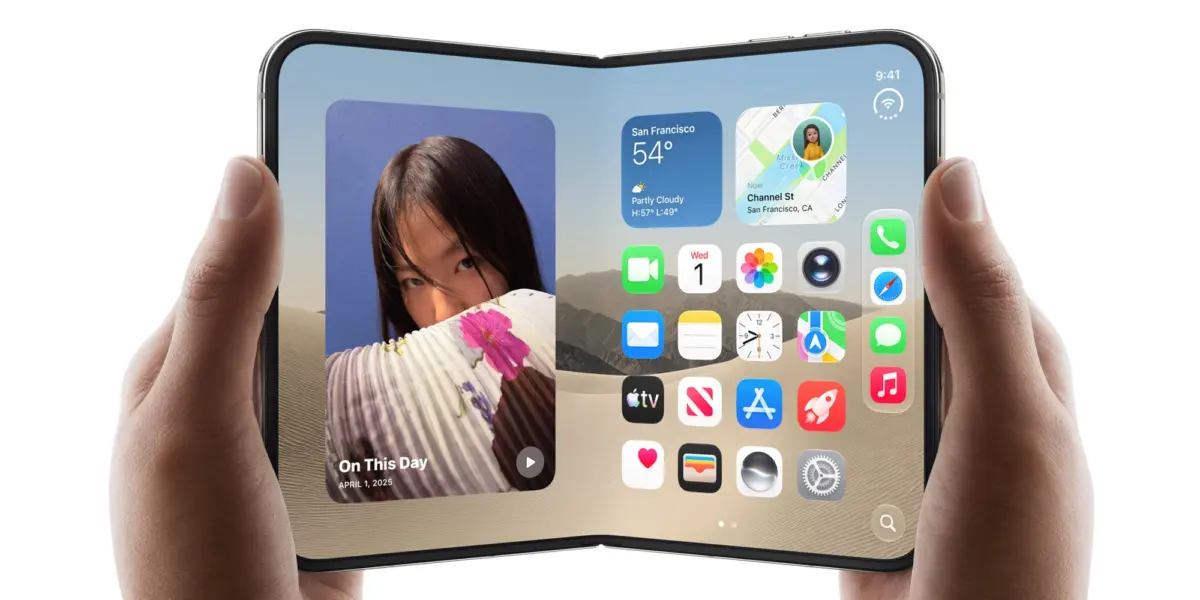
In early September, the Cupertino-based tech giant finally pulled back the curtain, officially introducing the iPhone Duo to the world. The initial presentation focused heavily on the device’s industrial design, showcasing a seamless internal folding OLED display that unfolded into a near-tablet-sized canvas while retaining a comfortable pocket footprint when closed. Apple executives emphasized the device’s dual nature, positioning it as a transformative tool capable of shifting fluidly between traditional smartphone tasks and expanded, multi-window workflows.
The Lead-Up to the October Launch
Following the September keynote, Apple entered its traditional pre-launch window, using the intervening weeks to seed developer betas, finalize localized supply chains, and coordinate its October hardware event—which industry trackers note will introduce a wave of complementary devices. It is during this quiet consolidation period that software features, interface adaptations, and proprietary system enhancements inevitably leak.
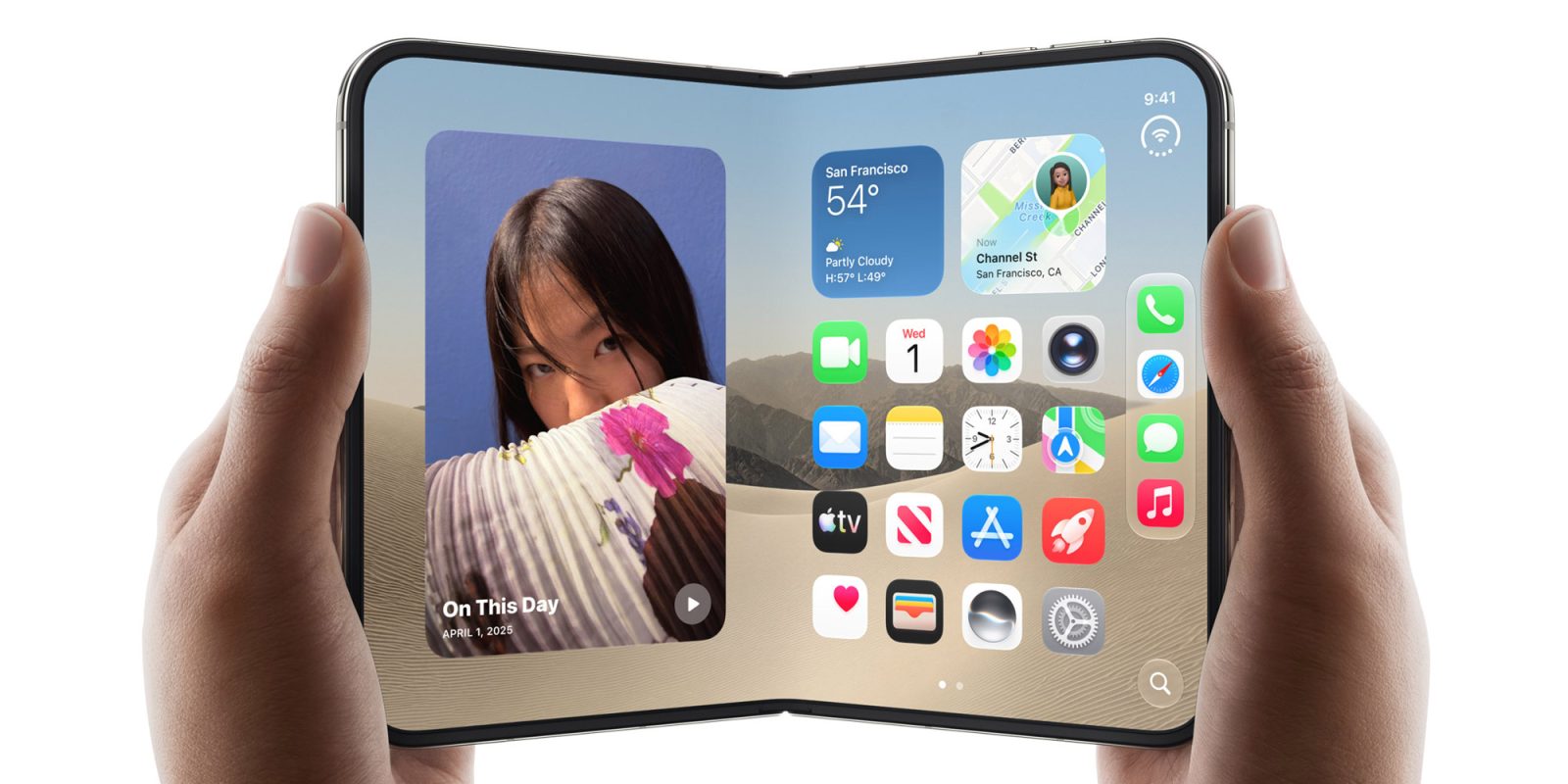
The latest disclosure regarding the iPhone Duo’s PDF handling does not arrive in a vacuum; it is part of a steady drip of software-focused revelations indicating that iOS has been fundamentally re-architected to take advantage of dual-screen and foldable canvases.
Supporting Context & Metrics: Solving the Mobile PDF Dilemma
To understand why a two-page PDF viewing mode is capturing headlines, one must analyze the historic friction points of mobile productivity.
The Traditional Smartphone Bottleneck
For millions of professionals, academics, and creatives, Portable Document Format (PDF) files are the universal currency of information exchange. Whether reviewing financial spreadsheets, academic journals, architectural blueprints, or legal briefs, documents are routinely formatted to standard Letter or A4 dimensions.
Viewing these documents on a traditional, vertically oriented smartphone screen requires constant compromise:
- The Scrolling Trap: Users must either view the page at a scale where text is microscopic and illegible, or zoom in to a readable size, forcing endless horizontal and vertical panning.
- Contextual Disconnect: Standard displays restrict users to a single page at a time, making it exceedingly difficult to cross-reference data from page one with a chart on page two without losing one’s place.
The iPad Benchmark
Conversely, Apple’s iPad lineup—particularly the iPad Pro and iPad Air ranges—has established the gold standard for mobile document consumption. With screen real estate comparable to a physical sheet of paper, tablet users enjoy comfortable single-page layouts and, when rotated into landscape mode, functional two-page spreads that mimic an open book.
However, the iPad requires a dedicated bag or sleeve; it cannot slide comfortably into a pair of jeans or a blazer pocket.
Enter the iPhone Duo: Metrics and Multitasking
While full hardware specifications for the iPhone Duo continue to be fine-tuned ahead of retail release, preliminary software leaks highlight how the device solves the mobile document dilemma through intelligent screen partitioning.

According to the leaked video demonstration published by pdfu via social media platform X, the iPhone Duo’s Quick Look feature dynamically adjusts when the device is opened to its expanded canvas. Rather than merely stretching a single smartphone page across a wider screen, the operating system shifts into a dedicated two-page spread mode.
| Metric / Feature | Traditional iPhone | iPad (Standard/Air) | iPhone Duo (Expanded Mode) |
|---|---|---|---|
| Portability | Pocketable | Bag/Sleeve Required | Pocketable |
| Simultaneous Page View | 1 Page (Scaled down) | 1 Page (Landscape offers 2) | 2 Pages (Native book-spread) |
| Input Method | Touch only | Touch + Apple Pencil | Touch + Upcoming Apple Pencil Support |
| Workflow Friction | High (Excessive zooming/scrolling) | Low | Low (Tablet-grade continuity) |
As demonstrated in the leaked footage, rendering two full pages side-by-side on the foldable internal display eliminates the perceptual crowding of standard phones. Users can scan a legal document, examine a textbook, or read a corporate report with the exact visual cadence of reading physical paper. Furthermore, even when utilizing single-page mode—ideal for dense text columns or portrait-oriented graphic design files—the sheer surface area of the iPhone Duo provides legibility levels previously exclusive to dedicated tablets.
Official Statements and Industry Reception
While Apple maintains its customary silence regarding unreleased features and leaks, the developer and analyst communities have been vocal in their assessments of the iPhone Duo’s software trajectory.
Industry analysts point out that hardware innovation in the foldable space has largely plateaued on the mechanical side; companies can successfully build hinges and flexible glass. The true competitive battleground has shifted entirely to software ecosystem maturity.
"Hardware is only half the battle when it comes to foldables," notes a prominent mobile software engineer closely tracking iOS development. "What Apple is demonstrating with these localized Quick Look adjustments is a deep understanding of continuity. They aren’t just blowing up phone UI elements; they are adapting tablet-class document architecture to a device that fits in your pocket."
Early user reception, measured via social media engagement and developer forums following the pdfu leak, has been overwhelmingly positive. Professionals who rely heavily on document markup have expressed cautious optimism, noting that the combination of a dual-screen pocket device and native file handling could drastically reduce the need to carry secondary computing hardware during meetings or field audits.
Future Outlook: The Apple Pencil Factor and Beyond
The introduction of the two-page PDF layout is merely the opening salvo in Apple’s strategy to redefine productivity on foldable hardware. The true inflection point for the iPhone Duo will arrive later this year with the introduction of Apple Pencil support.

Transforming Reading into Creation
Viewing documents is an essential baseline, but enterprise and educational users demand interaction. The integration of stylus support on a folding iPhone changes the paradigm from passive consumption to active creation:
- Markups and Annotations: Reviewers will be able to handwrite notes in the margins, sign contracts on the fly, and highlight text with precision.
- Split-Screen Utility: In a two-page spread, a user could theoretically keep reference material open on the left panel while sketching or jotting down notes on the right panel—or use an Apple Pencil to drag and drop text snippets across pages.
The Broader Ecosystem Impact
As developers begin optimizing their applications for the iPhone Duo’s expanded framework ahead of the October launch, we can expect a cascade of updates tailored to multi-window workflows, enhanced drag-and-drop mechanics, and responsive UI scaling.
If the iPhone Duo successfully delivers on the promise of merging the portability of a smartphone with the uncompromising document-handling power of an iPad, it may permanently alter consumer expectations for mobile form factors.
What Are Your Thoughts?
The evolution of mobile computing is entering its most ambitious chapter yet. Do you plan to incorporate the iPhone Duo into your daily workflow as a primary PDF and document viewer? What other productivity tasks—spreadsheets, coding environments, or creative design—do you hope this foldable device handles better than your current smartphone?
Let us know your thoughts in the comments below as we count down to the official October hardware launch.