The landscape of human-computer interaction has remained largely unchanged since the widespread commercialization of large language models. Users type a prompt, receive a response, evaluate the output, and submit a follow-up query. This iterative loop places the cognitive and execution burden entirely on the human operator. However, the emergence of human-friendly agentic AI platforms—most notably Claude Cowork—signals a structural shift away from reactive chatbots toward proactive, autonomous digital labor.
Evolving from Anthropic’s internal developer tool, Claude Code, Cowork bridges the gap between raw developer utilities and accessible desktop software. By packaging a sophisticated agentic engine into a user-friendly graphical interface, the platform empowers non-technical professionals to plan, build, and deploy multi-step cross-platform automations.
This report explores the mechanics of Claude Cowork, detailing how its core capabilities—autonomous planning, persistent memory, and context-aware tool use—distinguish it from legacy systems. Furthermore, this document provides an actionable, step-by-step implementation guide synthesized from insights shared by AI strategist Isar Meitis and host Michael Stelzner on the AI Explored podcast.
Detailed Chronology & Platform Evolution
From Terminal Utilities to Desktop Agents
To understand the significance of Claude Cowork, one must examine its origins. Anthropic initially built Claude Code as an internal utility to accelerate its own engineering teams. As developers used the system to navigate codebases, execute terminal commands, and solve complex debugging tasks, the broader market recognized that the underlying engine possessed capabilities far beyond basic code generation.
However, the command-line interface (CLI) inherent to Claude Code presented an insurmountable barrier to entry for the average business user, marketer, and entrepreneur. To democratize this agentic power, Anthropic developed Cowork.
By wrapping the agentic engine in a modern desktop UI, the platform provides:
Visual File Trees: Real-time visibility into connected local directories.
Active Execution Plans: Interactive checklists where steps are crossed off dynamically as the AI executes them.
Transparent Operations: Clear auditing paths allowing users to monitor precisely what system calls, data queries, or file modifications the AI is performing at any given moment.
The Three Pillars of Agentic AI Platforms
Standard chat interfaces operate within a strict single-turn or conversational memory paradigm. According to industry experts, true agentic platforms like Claude Cowork rely on three defining capabilities:
Autonomous Planning and Execution: In a standard LLM chat, the user dictates every micro-step. In Cowork, the user defines macro-goals, operational constraints, and accessible datasets. The AI formulates a comprehensive execution strategy, displays the roadmap to the user, and systematically executes each phase without requiring continuous directional prompting.
Persistent Memory Across Sessions: Legacy chats wipe their operational contexts upon closure. Cowork utilizes structured markdown files stored within designated local directories, allowing the platform to read, update, and reference institutional knowledge across multiple sessions. Brand voice guidelines, client onboarding histories, pricing structures, and standard operating procedures (SOPs) remain permanently accessible.
Context-Aware Tool Utilization: Cowork does not merely possess access to external applications; it understands the taxonomy of execution. The platform dynamically recognizes when to extract a call transcript from Fathom, when to update a CRM database (such as HubSpot or Salesforce), and when to draft an executive communication.
Supporting Context & Practical Use Cases
To ground these technical capabilities in real-world scenarios, business leaders are deploying Claude Cowork across high-friction operational silos. Two primary use cases illustrate the platform’s capacity to compress multi-hour workflows into minutes:
1. Automated Omnichannel Content Research and Production
Content creation often stalls at the research and synthesis phase. In an automated workflow powered by Cowork:
Trend Analysis: The AI autonomously researches top-performing content across industry channels to identify emerging thematic trends.
Contextual Cross-Referencing: The system cross-references these trends against the creator’s proprietary media library—including past podcast transcripts, YouTube videos, and community call recordings.
Asset Assembly: Cowork identifies moments where the creator has previously spoken on topics aligned with current market trends, generates draft posts, designs accompanying visuals, and cues video clips for human review.
Human-in-the-Loop Governance: No asset is published autonomously; the system packages everything into an organized dashboard for final sign-off.
2. Intelligent Sales Proposal Generation
When closing enterprise deals, speed is a decisive competitive advantage. Traditionally, generating a customized proposal following a discovery call required manual transcript review, client research, and document formatting.
Transcript Verification: Upon the conclusion of a discovery call, Cowork extracts the meeting transcript (e.g., via Fathom) and verifies specific client pain points and feature requests.
Market & Prospect Reconnaissance: The AI conducts automated web research regarding the prospect’s corporate profile, competitive landscape, and industry vertical.
Document Synthesis: Cowork drafts a comprehensive proposal document, updates internal CRM records, archives the file in Google Drive, and drafts an outbound email with the PDF securely attached.
Efficiency Metric: A process that traditionally required up to two hours of manual administrative labor is compressed into a ten-minute verification and approval cycle.
Implementation Framework: A Step-by-Step Methodology
Deploying AI automations effectively requires a disciplined, engineering-grade approach to workflow design. Experts recommend a structured four-part implementation strategy.
Step 1: Identifying High-Value Target Tasks
Automating inefficient processes begins with target selection. The ideal candidate task exhibits two characteristics: high frequency and low intrinsic enjoyment (e.g., administrative reporting, data entry, initial research synthesis).
Once identified, the task must be articulated in plain language—structuring the brief much like a consultation assignment for a human contractor. This brief should clearly define:
The assigned professional role.
The corporate context and brand positioning.
The operational frequency (daily, weekly, ad-hoc).
The precise origin point of raw input data.
The expected formatting and destination of final outputs.
Because AI excels at precise execution when provided with exact parameters, vague instructions lead to wasted tokens and suboptimal outputs. The tactical solution is the generation of a comprehensive Product Requirements Document (PRD).
Rather than writing extensive technical documents manually, practitioners can leverage Claude itself through an interactive interview process:
Provide Claude with a high-level conceptual overview of the desired automation.
Allow Claude to conduct an automated discovery interview, asking approximately 40 targeted questions over a 30- to 60-minute window.
Instruct Claude to synthesize the responses into a formal 25- to 40-page PRD.
Request a concise executive summary of the PRD to validate core assumptions before moving directly into development.
Step 3: MVP Development and Iterative Scaling
Attempting to build an entire end-to-end enterprise automation in a single pass introduces unnecessary risk. Instead, teams should adhere to Minimum Viable Product (MVP) principles:
Prioritization: Review the comprehensive PRD and ask Claude to identify the single component capable of delivering the highest-leverage "quick win" with the lowest architectural complexity.
Targeted Execution: Direct Claude to build solely the MVP component. For instance, in a sales proposal pipeline, the initial MVP should focus exclusively on parsing a transcript into a draft document, deferring CRM syncs and email triggers to subsequent iterations.
Continuous Guidance: In follow-up sessions, prompt the platform with structural check-ins: "Where are we in the development lifecycle, what do you suggest as our next milestone, and why?" This maintains human oversight over technical dependencies and workflow expansion.
Step 4: Establishing System Access and Integration Hierarchies
Secure, scalable integration forms the backbone of any agentic automation. Claude Cowork manages external systems through a structured access hierarchy:
1. Local File System Management
Cowork connects to local computing environments via a designated folder management interface. Best practices dictate maintaining a primary directory titled ClaudeCowork housing individual project subfolders. Connecting the platform at the root directory establishes a secure boundary, granting the AI access solely to explicitly designated project contexts.
2. Native Connectors
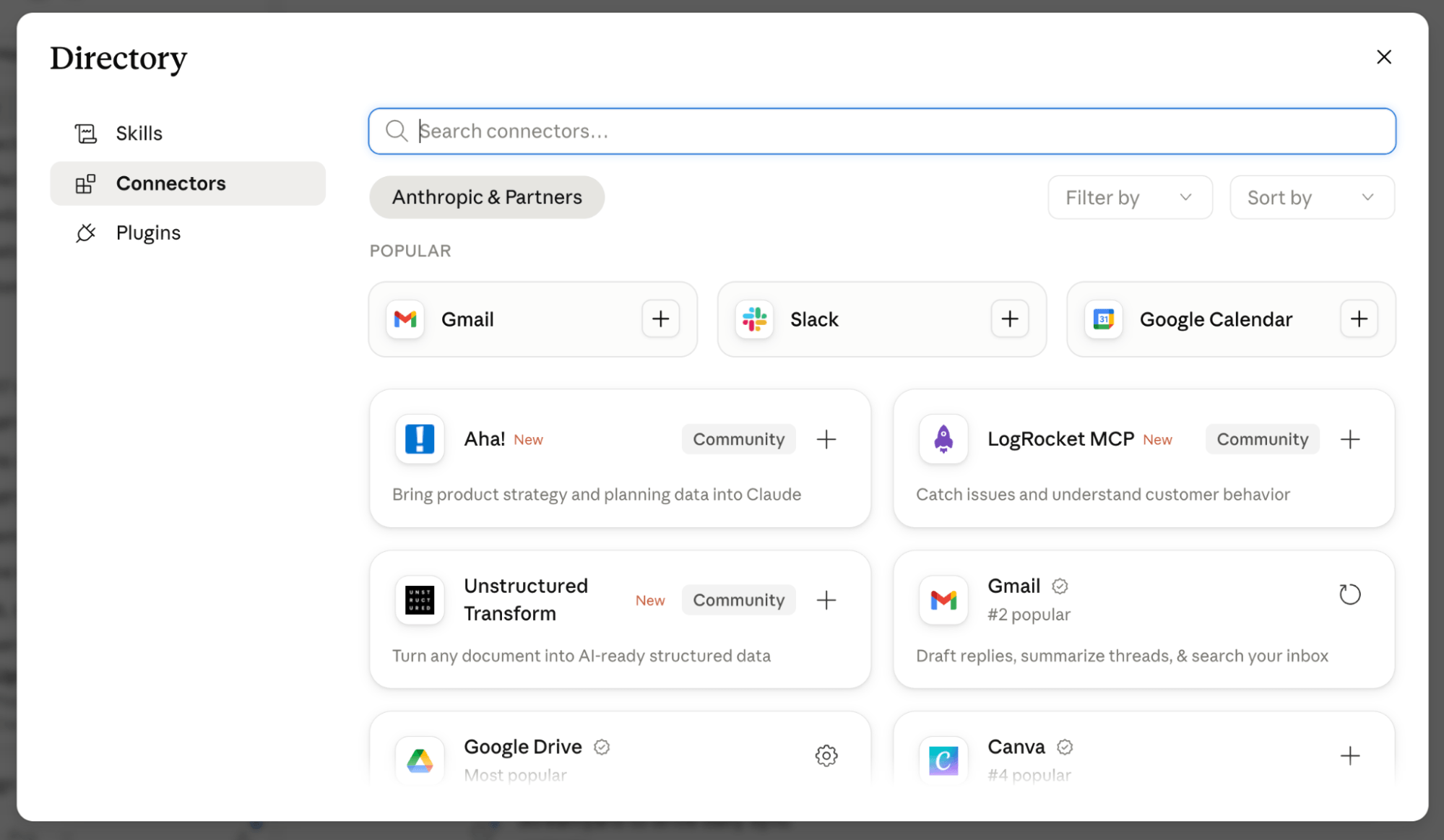
Anthropic provides pre-built, rigorously tested native connectors for major enterprise productivity suites, including Google Drive, Microsoft SharePoint, Notion, ClickUp, Asana, and monday.com. These should always serve as the primary integration vector.
3. Vendor-Published Model Context Protocols (MCPs)
The Model Context Protocol (MCP)—an open standard introduced by Anthropic—acts as the universal adapter of the AI ecosystem. If a third-party software vendor has published an official MCP, it provides a secure, standardized bridge for real-time data exchange.
4. Custom-Built MCPs
When an official MCP is unavailable, Claude can author custom protocols. By providing the platform with raw API documentation and functional specifications, Claude writes the integration code alongside a markdown operational manual. API credentials are stored securely within encrypted local keychains (such as macOS Keychain), ensuring the AI executes calls without directly exposing raw secrets.
5. Chrome Browser Extensions
For legacy software lacking APIs or MCP support, Claude can interface directly via a secure Chrome browser extension. The agent navigates interfaces, clicks buttons, and populates fields as a human operator would. For security compliance, the system halts and requests human authentication whenever it encounters secure login screens or credential fields.
Official Statements & Industry Perspectives
Industry analysts view the transition to agentic desktop platforms as a critical inflection point for modern knowledge work. As Isar Meitis emphasized during discussions on the AI Explored podcast:
"When you shift from prompting a conversational window to briefing an autonomous agent with persistent memory and tool access, the nature of work changes. You stop being the machine operator and start operating as the strategic director of a digital workforce."
Enterprise governance experts further note that while platforms like Claude Cowork dramatically accelerate operational velocity, organizations must maintain strict data governance protocols. By pairing human-in-the-loop review gates with granular local folder isolation, businesses can capture unprecedented efficiency gains without compromising data security or brand integrity.
Future Outlook
The commercial maturation of agentic platforms like Claude Cowork points toward a future where cross-application silos become invisible to the end user. As Model Context Protocols gain broader software industry adoption, the friction of custom API development will continue to diminish.
In the near term, professionals who master the art of writing comprehensive PRDs, structuring iterative MVPs, and orchestrating multi-agent systems will outpace competitors relying on legacy chat interfaces. The competitive edge in the modern enterprise no longer belongs to those who type the fastest, but to those who can effectively architect, govern, and deploy autonomous digital teams.