NASA’s long-anticipated return to the lunar surface has undergone a fundamental restructuring, shifting the trajectory of its flagship human spaceflight initiative. For years, the Artemis III mission was slated to be the milestone moment when astronauts would once again place boot prints on the dusty, cratered expanse of the moon. However, following the successful execution of the Artemis II lunar flyby, agency leadership and program engineers revised the mission sequence to prioritize vital technical integration and risk mitigation.
Under the updated roadmap, the upcoming Artemis III mission will no longer target a lunar touchdown. Instead, slated for 2027, the mission will execute a critical orbital test in low Earth orbit. During this flight, NASA’s crewed Orion spacecraft will rendezvous and dock with early-stage commercial lunar landing prototypes developed by aerospace heavyweights SpaceX and Blue Origin. This critical dry run is designed to validate life support systems, docking mechanisms, and procedural choreography before any humans attempt high-stakes maneuvers in deep space. Actual lunar landings have now been pushed back to Artemis IV, targeted for early 2028.
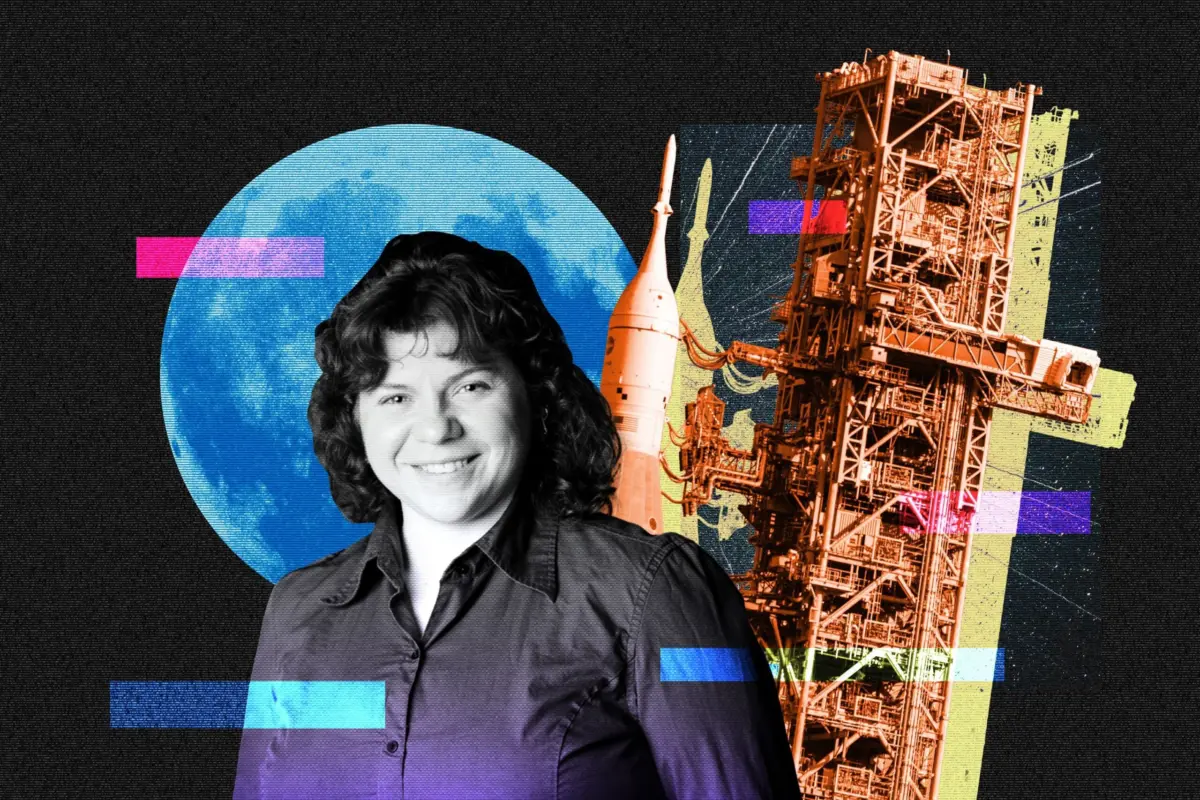
While the revised timeline is admittedly less visually dramatic than a crewed descent to the lunar highlands, aerospace experts argue it is entirely indispensable. The shift underscores a pragmatic, safety-first philosophy that balances the urgency of deep-space exploration with the immense technical realities of modern public-private space partnerships. To unpack the nuances of this strategic pivot, WIRED spoke with Dr. Barbara Cohen, a planetary scientist on the Artemis III project. The wide-ranging discussion explored the indispensable role of human intellect in an era of advanced automation, the methodologies of contamination control, and how the pockmarked face of Earth’s solitary satellite holds the key to understanding the violent, formative epochs of our solar system.
Detailed Chronology: From Flyby to Orbital Test and Beyond
The evolution of the Artemis program represents a masterclass in adaptive aerospace scheduling. Each flight in the sequence is deliberately engineered to stress-test specific architecture, hardware configurations, and human-machine interfaces before graduating to more perilous operational environments.
The Artemis Genesis and the Artemis II Milestone
The groundwork for humanity’s return to deep space was laid by the uncrewed Artemis I mission, which tested the Space Launch System (SLS) rocket and the Orion crew capsule in late 2022. Building directly on those successes, April 2026 marked a major historical turning point with the execution of Artemis II. This mission carried a four-person international crew—including NASA astronauts and Canadian Space Agency specialists—on a historic lunar flyby.
The success of Artemis II provided engineers with mountains of telemetry data, psychological insights regarding long-duration confinement, and unprecedented high-resolution observations of the lunar surface. Yet, rather than rushing directly into a descent profile for the subsequent flight, mission architects leveraged the momentum of Artemis II to re-evaluate the sequence of technical gates required for a safe lunar landing.
Artemis III: The Low Earth Orbit Integration Test
With the schedule revision, Artemis III has been repurposed from a lunar landing attempt into an Earth-orbiting proving ground. In 2027, NASA will launch the Orion capsule, carrying a human crew, into low Earth orbit. Simultaneously, commercial partners SpaceX and Blue Origin—tasked under separate multi-billion-dollar Human Landing System (HLS) contracts—will deploy uncrewed test articles of their respective lunar landers.
The primary objective of Artemis III is to test whether Orion can safely rendezvous, interface, and operate alongside these disparate commercial vehicles. Because SpaceX and Blue Origin are utilizing fundamentally different propulsion architectures, life-support integrations, and structural designs, a rigorous orbital dress rehearsal is paramount. By verifying these dockings in Earth orbit—where rescue and abort options are vastly more accessible than in lunar orbit—NASA dramatically reduces the margin of catastrophic failure for future landings.
Artemis IV and the Push Toward the Lunar South Pole
Following the successful completion of the Earth-orbit integration tests, the program will transition to Artemis IV, currently targeted for launch in early 2028. This mission will combine the proven spaceflight capabilities of the SLS and Orion systems with fully realized, flight-ready commercial landers, finally delivering human boots to the lunar surface. The targeted touchdown zone remains the lunar South Pole, a region uniquely prized for its permanently shadowed craters, which are believed to harbor vast reservoirs of water ice crucial for sustainable exploration.
Supporting Context & Metrics: The Science of Sample Preservation and Contamination Control
While planetary exploration captures the public imagination through its visceral displays of power and engineering triumph, the underlying scientific methodologies require meticulous precision. As Dr. Barbara Cohen explained during her conversation with WIRED, the Artemis missions are fundamentally classed as exploration and technology development initiatives rather than pure science expeditions. Nonetheless, the science team works tirelessly to extract maximum empirical value from every flight opportunity.
The Challenge of Terrestrial Contamination
One of the most delicate operational hurdles facing the Artemis III mission is serving as a "dress rehearsal" for extraterrestrial sample return. When geologists collect rocks from the lunar surface, those samples instantly begin to alter the moment they are removed from their native, ultra-dry, vacuum environment.
To prepare for future sample-return protocols, the Artemis III crew will deploy specialized "witness materials"—pristine, micro-engineered surfaces roughly the size of a coin, composed of high-purity aluminum foil, specialized Teflon, and advanced ceramics. Throughout the flight, the crew will periodically expose these clean surfaces to the internal cabin atmosphere.
By analyzing how these materials react to human respiration, shedding skin cells, cabin off-gassing, and localized humidity, researchers can baseline how human presence chemically alters sample environments. This data will allow curation scientists back on Earth to mathematically subtract human-induced alterations when analyzing pristine lunar cores and surface regolith.
[Deep Space Environment]
       │
       ▼
[Lunar Sample Collection] ──> [Immediate Exposure to Cabin Air] ──> [Witness Material Calibration]
                                                                             │
                                                                             ▼
                                                              [Accurate Terrestrial Analysis]
The Geochronology of Impact Craters
Beyond immediate operational protocols, the Artemis program aims to resolve long-standing mysteries regarding the dynamical history of the inner solar system. When observing the moon through binoculars or orbital imagery, one is immediately struck by its saturated crater density—every available square kilometer is marked by successive impacts.
Earth undoubtedly experienced this exact same cosmic bombardment roughly 4.5 to 4.0 billion years ago during the formative epochs of the solar system. However, Earth is an active planet. Through plate tectonics, continental drift, subduction, vulcanism, and intense atmospheric erosion, Earth has relentlessly erased its own geological history. The rocks that recorded the heavy bombardment period on our home planet have long since been recycled into the mantle or weathered away.
The moon, lacking plate tectonics and a dense atmosphere, acts as a pristine historical archive. By dating specific impact structures on the moon—particularly massive ancient impact features like the South Pole-Aitken Basin—scientists can establish a definitive absolute chronology for planetary impacts. This timeline not only illuminates the moon’s history but also provides critical insights into how volatile compounds, organic molecules, and water may have been delivered to a nascent Earth, potentially catalyzing the emergence of biological life.
Official Statements & Perspectives: The Human Element in Space Exploration
As artificial intelligence, robotic rovers, and automated sensors become increasingly sophisticated, a recurrent question faces modern space agencies: Why send humans at all?
Robotic assets have proven extraordinarily capable of navigating hostile planetary terrains, capturing high-resolution imagery, and drilling into rocky outcrops. Yet, according to Dr. Cohen, machines still lack the intuitive synthesis that defines human intelligence.
"If you just want to take pictures, you do that with robotic assets. Robots can take pictures. They do that all the time… With the Artemis missions, we’re trying to use the humans to their best capability, and what the humans are really good at is seeing a wide scene, zooming in on details very naturally, and then trying to interpret what they’re seeing and take the next step."
— Dr. Barbara Cohen, Planetary Scientist, Artemis III Project
Dynamic Observation vs. Pre-Programmed Execution
While the International Space Station allows scientists to request specific photographic tasks from orbit, those operations are constrained by static framing and pre-programmed parameters. In contrast, crewed deep-space missions leverage the spontaneous cognitive agility of human observers.
During the Artemis II flyby, NASA integrated real-time scientific prompts into the mission profile. Flight scientists engaged in direct dialogue with the crew, asking them to observe transient terrestrial and celestial phenomena—such as algal blooms, atmospheric storms, wildfires, or localized surface changes—and articulate their real-time hypotheses.
This human-in-the-loop methodology transforms astronauts from mere passengers into active field researchers. They are trained not just to record data, but to recognize anomalies, adjust sampling strategies on the fly, and formulate immediate inferences that no rigid robotic algorithm could anticipate.
Future Outlook: The Indispensable Prelude to the Lunar Economy
The decision to reconfigure Artemis III into a low Earth orbit rendezvous test is indicative of a maturing space program. Rather than clinging to arbitrary launch dates driven by political optics, NASA and its commercial partners are demonstrating a renewed commitment to systemic reliability.
The 2027 Earth-orbit test will serve as the ultimate crucible for the private-public partnership model. By proving that Orion can flawlessly integrate with commercial landers designed by competing corporate entities (SpaceX and Blue Origin), NASA is effectively laying the foundational infrastructure for a permanent lunar economy.
When humanity finally steps onto the surface of the lunar South Pole during Artemis IV in 2028, they will not merely be revisiting the triumphs of the Apollo era. They will be stepping onto a scientifically vetted, technologically secured stepping stone designed to support sustained habitation, resource utilization, and deep-space exploration. Through rigorous planning, thoughtful operational rehearsals, and a deep appreciation for the geological history preserved in lunar craters, the Artemis program is ensuring that humanity’s return to the moon is built to last.