Executive Overview
In the modern landscape of consumer electronics, Bluetooth has emerged as an omnipresent utility. It seamlessly pairs our smartphones to our ears, powers our daily podcast commutes, and frees our workspaces from the visual clutter of tangled wires. It is dependable, universally compatible, and remarkably convenient. Yet, when applied to the high-stakes, rapid-fire realm of modern video games, this convenience exacts a heavy toll.
For the casual gamer, Bluetooth’s inherent performance trade-offs might go unnoticed. However, for anyone engaging in competitive multiplayer titles, fast-paced action games, or rhythm-based challenges, relying on standard Bluetooth audio is akin to playing with a permanent handicap.
The primary culprit is audio latency—the agonizing delay between a visual or programmatic event on-screen and the corresponding sound reaching your eardrums. While measured in mere milliseconds, these fractions of time represent the difference between a clutch victory and a frustrating defeat. Furthermore, Bluetooth architecture struggles with bandwidth limitations, forcing severe audio degradation the moment a microphone is engaged for voice chat.
To achieve the precision, reliability, and sonic fidelity required for modern gaming, players must look beyond the standard Bluetooth profile. By examining the mechanics of alternative connection types—specifically dedicated 2.4GHz wireless and traditional wired peripherals—gamers can reclaim their competitive edge and experience virtual soundscapes as developers intended.
Detailed Chronology: The Evolution of Wireless Audio and the Gaming Bottleneck
To understand why Bluetooth falters in gaming scenarios, it is helpful to trace how personal audio evolved alongside the video game industry.
The Wired Era (Pre-2010s)
For decades, physical cables were the undisputed gold standard for audio transmission. Whether through a standard 3.5mm analog jack or early USB implementations, wired connections provided an uninterrupted, uncompressed electrical pathway from the sound card or console straight to the transducer drivers in the headphones. Latency was practically non-existent, and power management was a non-issue since energy was drawn directly from the host device. However, as mobile gaming surged and console setups migrated from cluttered desk spaces to living room couches, consumer demand for untethered audio reached a fever pitch.
The Rise of Bluetooth (2010s–Present)
Originally conceived as a short-range replacement for RS-232 data cables—designed to sync PDAs, mice, and keyboards—Bluetooth eventually evolved to handle high-profile audio streaming (A2DP). Its low power consumption and universal adoption across smartphones, tablets, and eventually PCs made it the default wireless standard for everyday listening. Unfortunately, Bluetooth was never engineered with interactive, real-time feedback loops in mind. It prioritizes energy efficiency and connection stability over raw speed, a design philosophy that directly conflicts with the demands of interactive gaming software.
The Counter-Revolution: 2.4GHz Wireless and Proprietary Dongles
Recognizing that Bluetooth’s inherent latency made it untenable for serious gaming peripherals, hardware manufacturers developed proprietary 2.4GHz wireless protocols. By utilizing a dedicated USB transceiver dongle rather than relying on a computer or console’s built-in Bluetooth chip, these headsets established a private, high-bandwidth radio frequency channel. This technological shift bridged the gap between the freedom of wireless play and the near-zero latency of wired connections, transforming the market for high-end gaming accessories.
Supporting Context & Metrics: The Anatomy of Latency and Bandwidth
To truly grasp why Bluetooth struggles in the gaming arena, one must dissect the underlying metrics of human reaction times, audio codecs, and bandwidth allocations.
The Mathematics of Latency
Standard Bluetooth connections introduce an average of 200 milliseconds (ms) of audio latency during real-world use. While specialized low-latency codecs (such as aptX Low Latency or LC3) can theoretically compress this delay under optimal conditions, hardware and software support remains frustratingly inconsistent across platforms.
Consider these biological benchmarks:
- Average Visual Reaction Time: Humans typically process visual stimuli in roughly 220ms to 280ms.
- Average Auditory Reaction Time: Auditory stimuli are processed slightly faster, typically between 170ms and 220ms.
- Elite Performers: Fighter pilots, competitive esports athletes, and professional racing drivers exhibit significantly accelerated response windows, often cutting those times down considerably.
When a standard Bluetooth headset adds 200ms of lag to an audio cue—such as an enemy’s footsteps around a corner or the distinct report of a sniper rifle—it effectively doubles the brain’s processing and reaction window. The sound arrives too late to inform a split-second defensive maneuver. In rhythm games, where note accuracy is judged within margins of 10 to 50 milliseconds, Bluetooth becomes entirely unusable, throwing off timing windows and destroying the player’s internal flow.
The Microphone Bandwidth Tax
Another critical failure point of Bluetooth architecture is its handling of simultaneous audio input and output (full-duplex communication). When a user activates a headset’s microphone for voice chat—whether coordinating strategies in Valorant or chatting with squadmates in Apex Legends—Bluetooth is forced to switch from its high-quality stereo profile to a low-bandwidth telephony profile (Hands-Free Profile or HFP).
The consequence of this protocol switch is catastrophic for sound quality: game audio is compressed into a hollow, tinny mono stream reminiscent of an old telephone call. For gamers who rely on directional audio cues to locate threats, losing fidelity in the middle of a firefight is a critical disadvantage.
Furthermore, console ecosystems reflect these hardware limitations. Major platforms like Sony’s PlayStation 5 do not natively support standard Bluetooth audio connections for headsets, necessitating proprietary USB adapters or controller-tethered workarounds.
Industry Perspectives and Alternative Solutions
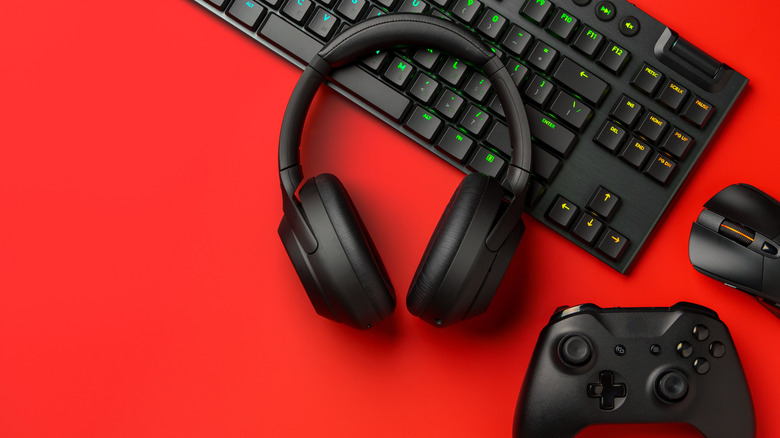
Hardware engineers and audio enthusiasts generally divide modern gaming audio into three distinct categories: Bluetooth, 2.4GHz wireless, and wired connections. Each approach handles latency, fidelity, and reliability differently.
1. The 2.4GHz Wireless Advantage
For gamers who refuse to deal with physical cables but demand uncompromising performance, 2.4GHz wireless gaming headsets are the premier choice.
- How it works: Instead of pairing directly to a motherboard’s built-in Bluetooth chip, these headsets communicate via a dedicated USB dongle that creates a point-to-point wireless bridge.
- Performance metrics: Most gaming-grade 2.4GHz models achieve latency figures under 20ms—a threshold so low that virtually no human player can distinguish it from a direct physical wire.
- Bandwidth: The wider radio frequency bandwidth allows for uncompressed or high-bitrate audio transmission, ensuring that game soundtracks and voice comms retain their clarity simultaneously.
The Catch: These specialized headsets are significantly more expensive than standard consumer headphones. Additionally, hardware compatibility can be restrictive; a headset engineered specifically for an Xbox console may require a different variant or a dedicated adapter to function on a PlayStation or PC.
2. The Unwavering Reliability of Wired Connections
Despite the wireless revolution, traditional wired headsets remain the benchmark for budget-conscious players and latency-sensitive purists.
- Zero Latency: Because electrical signals travel instantly across a copper or fiber medium, physical cables eliminate latency concerns entirely.
- Power Independence: Wired headphones require no internal batteries to charge, eliminating the dread of a headset dying mid-raid.
- Plug-and-Play Simplicity: Aside from optional manufacturer software suites for equalizer tuning, wired headsets demand no complex pairing processes, driver updates, or firmware patches.
Economic Value: Pound for pound, wired headphones deliver superior acoustic fidelity compared to wireless alternatives at the exact same price point. Manufacturers do not need to factor the costs of lithium-ion batteries, radio transmitters, and digital-to-analog conversion chips into the retail price, allowing more budget to be allocated toward premium speaker drivers.
Console Controller Integration: Modern gamepads—such as the PlayStation 5 DualSense, standard Xbox controllers, and the Nintendo Switch Pro Controller—feature built-in 3.5mm headphone jacks. While routing audio through a wireless controller introduces a negligible amount of transmission lag, users can often eliminate even this minor delay simply by hardwiring the controller directly to the console via USB-C during competitive sessions.
Future Outlook: Where is Gaming Audio Headed?
As wireless technology continues to mature, the gap between convenience and performance is steadily narrowing. Emerging standards such as Bluetooth LE Audio and the integration of advanced codec algorithms point toward a future where ultra-low-latency wireless audio might eventually become ubiquitous across all device categories. Companies are actively developing hybrid headsets that maintain a permanent low-latency 2.4GHz link for gaming while simultaneously maintaining a Bluetooth stream for phone notifications.
However, physics remains an immutable hurdle. Until radio frequency compression and interference management can completely eliminate packet loss and delay, the hierarchy of gaming audio remains clear:
- For absolute competitive integrity and budget efficiency: Wired connections remain king.
- For cable-free convenience without performance penalties: Dedicated 2.4GHz wireless headsets with USB dongles are the definitive standard.
- For Bluetooth: It should be treated as a secondary perk—exceptional for listening to music on a smartphone or taking phone calls on the go, but fundamentally ill-equipped for the demanding battlefield of competitive video games.