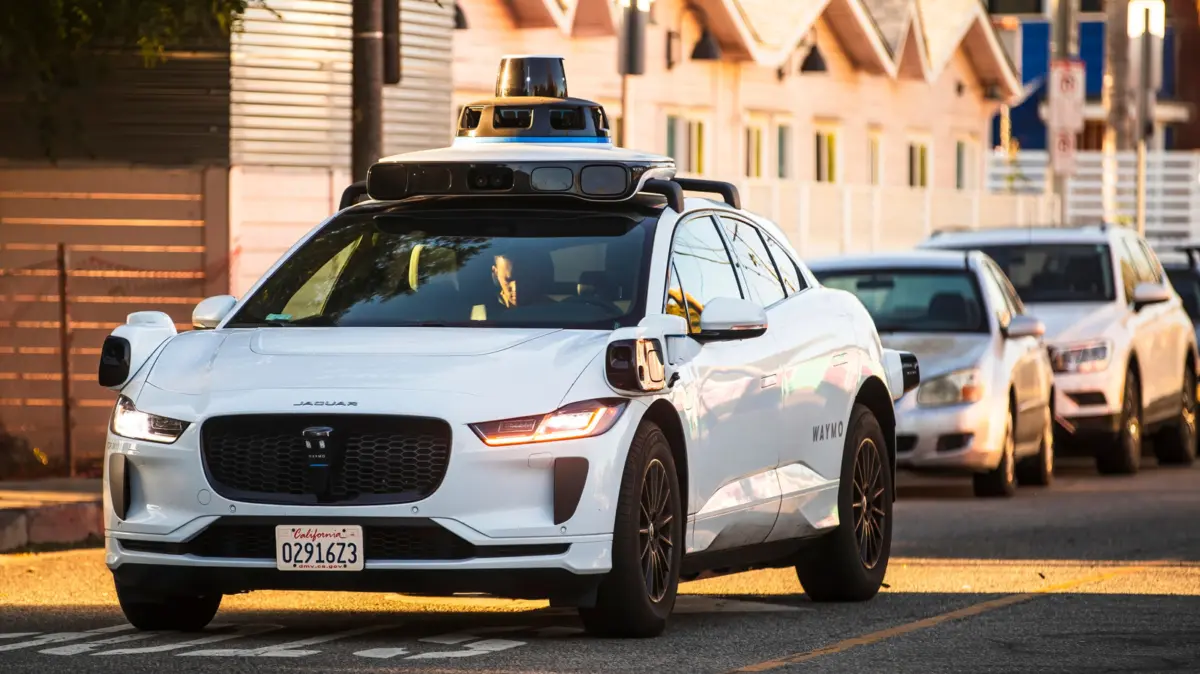
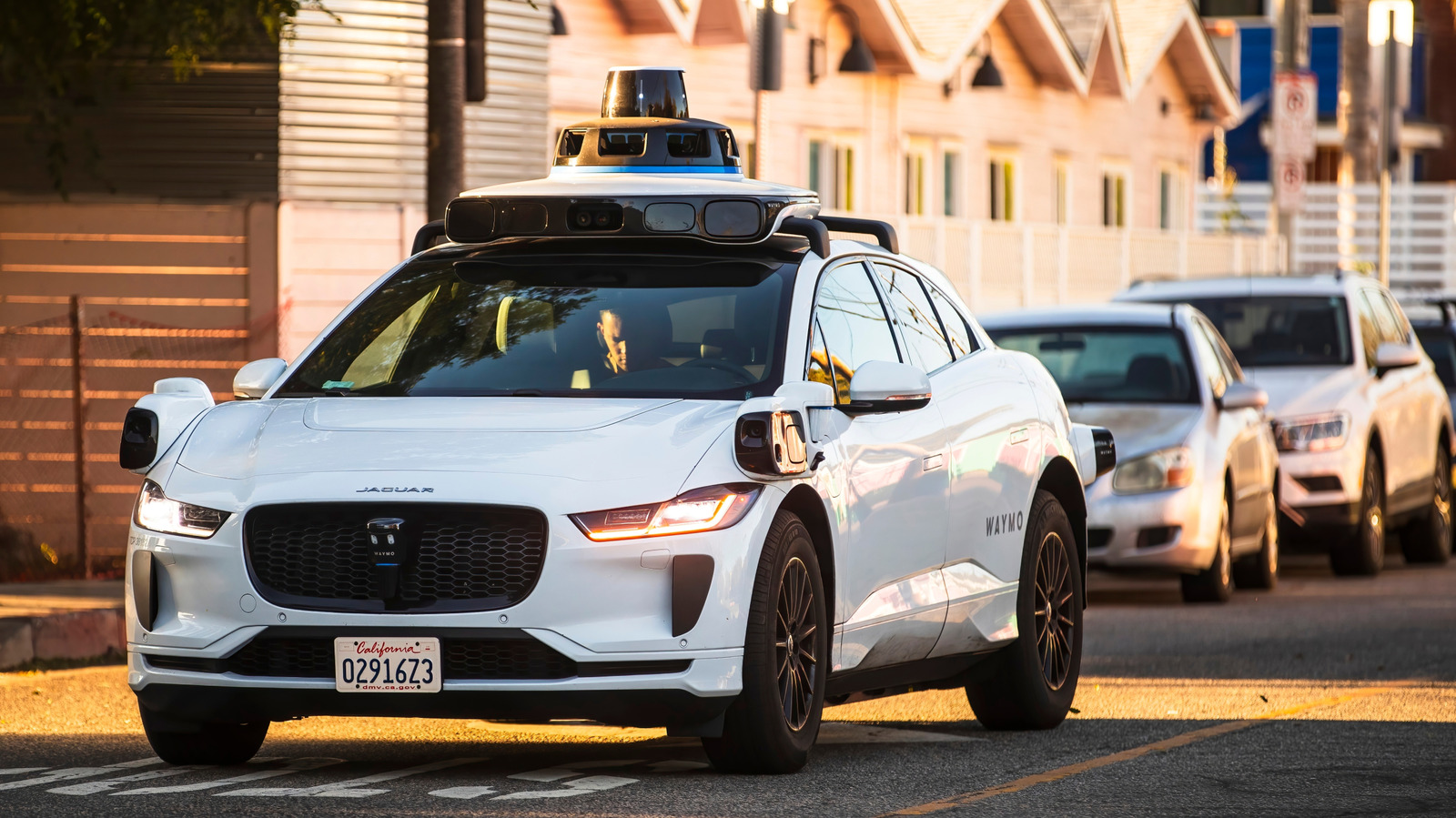
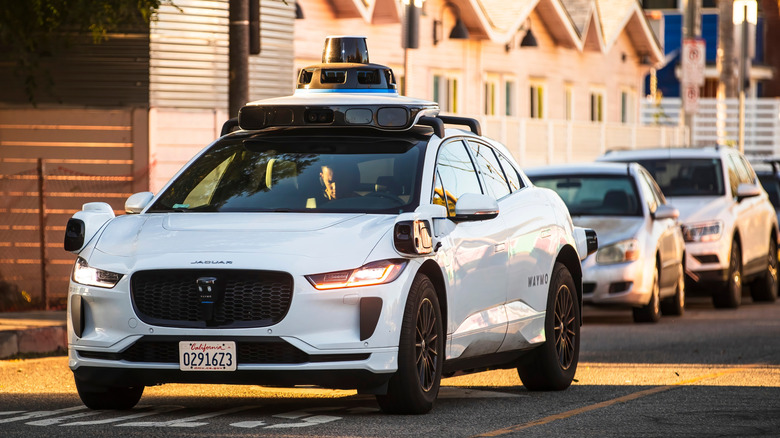
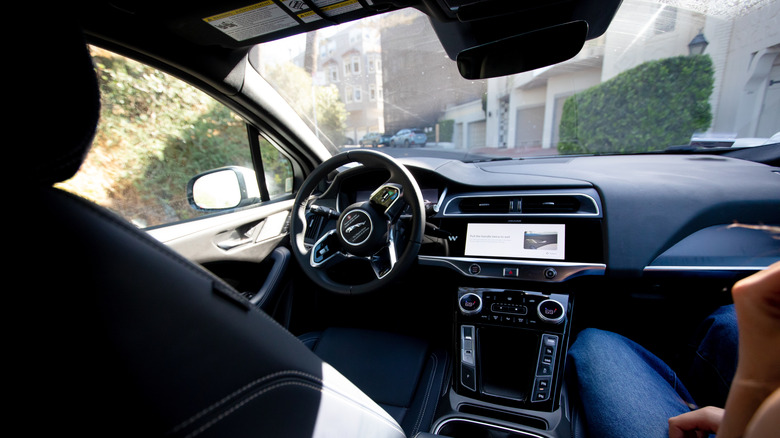
To the casual observer standing on a bustling downtown street corner in San Francisco, Phoenix, or Austin, the sight of a white Jaguar I-PACE gliding seamlessly through heavy urban traffic with a completely vacant driver’s seat feels nothing short of miraculous. There is no steering wheel jerking under phantom hands, no panicked human monitoring the horizon, and no safety driver poised to slam on the brakes. From the perspective of the passenger sinking into the rear leather upholstery, the vehicle is executing the entire journey entirely on its own.
Yet, under the standardized definitions established by the Society of Automotive Engineers (SAE) and adopted by regulatory bodies worldwide, this feat of engineering is classified as Level 4 automation—not the ultimate zenith of autonomous driving, which remains Level 5.
The persistent public misconception is that autonomy is measured purely by a car’s capabilities—how well it steers, stops, avoids pedestrians, and navigates complex intersections. But within the rigorous framework of automotive engineering, autonomy is fundamentally constrained by conditions. Level 4 systems, such as the proprietary "Waymo Driver," possess the intellectual and mechanical competence to pilot a vehicle without human intervention, but they can only do so within a strictly defined perimeter known as an Operational Design Domain (ODD). Level 5, by contrast, demands absolute, unconstrained universal capability: a vehicle that can drive anywhere, under any weather conditions, on any road surface on Earth, without needing a pre-mapped geofence or human oversight.
As companies like Waymo continually iterate on their technology—pushing out newer hardware generations, expanding into new metropolitan areas, and refining algorithms to cope with adverse weather—the chasm between Level 4 and Level 5 remains the defining technological hurdle of our era. This article explores the nuanced distinctions between these automation tiers, the operational realities of maintaining a Level 4 fleet, the monumental challenges of scaling to Level 5, and what the future holds for the autonomous transit landscape.
Detailed Chronology: The Evolution of Autonomous Frameworks and Waymo’s Ascent
To understand where autonomous vehicle (AV) technology stands today, it is essential to trace how the industry codified these milestones and how pioneers like Waymo navigated the path from experimental lab projects to commercial reality.
The Pre-Standard Era (Pre-2014): Autonomous research was largely decentralized, taking place in university laboratories, military-funded competitions (such as the DARPA Grand Challenges), and early secretive corporate skunkworks. Terminology was loose; terms like "self-driving," "driverless," and "autopilot" were used interchangeably and often misleadingly by marketing departments.
The SAE J3016 Standard Emergence (2014–2016): Recognizing the urgent need for a universal taxonomy, the Society of Automotive Engineers published J3016, establishing the six-tier framework (Levels 0 through 5). This standardized language gave regulators, engineers, and consumers a precise way to evaluate driving automation based on who is responsible for the Dynamic Driving Task (DDT).
Waymo’s Spin-Out and Commercial Pivot (2016–2020): Originally born in 2009 as the Google Self-Driving Car Project, the initiative spun out into Waymo under the Alphabet umbrella in December 2016. The company shifted its focus from experimental retrofitted fleet cars to commercialized deployment, systematically mapping out initial testing zones in Phoenix, Arizona.
The Launch of Waymo One and Level 4 Realization (2018–2020): Waymo launched its commercial ride-hailing service, Waymo One, in the Phoenix metropolitan area. By removing the safety driver entirely in select geographic pockets, Waymo officially crossed into SAE Level 4 territory. The system proved it could handle complex suburban and urban environments, but only within its rigidly defined ODD map boundaries.
Geographic Scaling and Generational Hardware Iterations (2021–2025): Waymo steadily expanded its footprint into dense, complex urban centers including San Francisco, Los Angeles, Austin, and Atlanta. Simultaneously, the company iterated through hardware suites, introducing its sixth-generation Waymo Driver. This new iteration was engineered with a more robust sensor array designed to handle a wider array of environmental stressors, including freezing temperatures and heavy precipitation.
Recent Real-World Stress Tests (2026): As fleet operations scaled into diverse geographies, edge cases emerged. In early 2026, Waymo vehicles deployed in Atlanta and San Antonio encountered severe flash flooding, driving into inundated roadways that forced the company to temporarily restrict operations. Concurrently, Waymo published extensive research data on collision-avoidance testing, highlighting the astronomical complexity of validating Level 4 safety across billions of simulated and real-world miles.
Supporting Context & Metrics: Breaking Down the SAE Automation Levels
To appreciate the distinction between Level 4 and Level 5, one must examine the entire spectrum of automotive automation. The National Highway Traffic Safety Administration (NHTSA) and the SAE divide vehicle automation into six distinct tiers:
[Level 0: No Automation] ---> [Level 1: Driver Assistance] ---> [Level 2: Partial Automation]
       |
       v
[Level 3: Conditional] ---> [Level 4: High Automation] ---> [Level 5: Full Automation]
Level 0: No Automation
The human driver is entirely responsible for all aspects of the dynamic driving task. The vehicle may issue warnings or momentarily intervene (such as an emergency braking system), but it does not maintain continuous control.
Level 1: Driver Assistance (Hands-On/Feet-On)
The vehicle features single automated systems designed to assist either steering or acceleration/braking. Examples include traditional cruise control or basic lane-keep assist. The human must remain engaged and ready to take over at a millisecond’s notice.
Level 2: Partial Automation (Hands-Free/Eyes-On)
The system can simultaneously control both steering and speed (acceleration and braking) under specific conditions. Popular consumer features like Tesla’s Autopilot, General Motors’ Super Cruise, and Ford’s BlueCruise fall into this category. Crucially, the human driver remains legally and practically responsible for monitoring the environment; looking away for extended periods can result in catastrophic failure.
This represents a monumental psychological and legal shift. At Level 3, the automated driving system (ADS) can handle the entire driving task under specific conditions. The human driver is permitted to look away from the road, engage in other activities, or rest. However, the human must remain available to take back control when the system issues a takeover request. Mercedes-Benz’s DRIVE PILOT is a prime commercial example of Level 3 implementation on restricted freeways.
Level 4: High Automation (Driverless Within Boundaries)
At Level 4, the human element is completely eliminated from the safety equation within the system’s operational domain. Once a Waymo vehicle is dispatched on a trip within its mapped service area, the occupants are strictly passengers. There is no expectation that a human will intervene, even if the system encounters an unexpected traffic bottleneck or system glitch—the vehicle is programmed to safely pull over or resolve the issue autonomously.
Level 5: Full Automation (Universal Unconstrained Operation)
This is the holy grail of mobility engineering. A Level 5 vehicle requires zero operational boundaries. It can navigate a dirt road in rural Montana during a blizzard, tackle chaotic roundabouts in Mumbai during monsoon season, and cruise down an unmapped coastal highway in South America—all without human input, pre-existing high-definition maps, or geofencing.
Official Statements and Industry Insights
The technical realities separating Level 4 from Level 5 are frequently articulated by the engineers and safety researchers building the systems.
Waymo’s official safety documentation and technical papers emphasize that their primary objective is not chasing an abstract Level 5 designation, but systematically validating the safety and reliability of the Waymo Driver within complex, real-world urban domains. In their published methodology on collision-avoidance testing, Waymo researchers note:
"Evaluating an automated driving system is profoundly complicated by the potentially enormous number of operational scenarios in which a hazardous situation might develop. Our methodology relies on synthesizing vast troves of human driving data, targeted automated-driving test logs, and expert domain knowledge to bound and test these risks."
Regulatory bodies echo this caution. NHTSA maintains that true Level 5 technology does not currently exist in any commercially available passenger vehicle on the market. Federal regulators stress that the SAE levels are intended as descriptive classifications of engineering capability rather than a linear checklist or developmental roadmap that companies can simply "speed run."
Furthermore, industry analysts point out that the business model of Level 4—operating localized robotaxi fleets within densely populated urban environments where ride-demand density is high—is vastly more economically viable than engineering a vehicle capable of driving everywhere, including sparsely populated rural areas where consumer demand cannot offset hardware costs.
Future Outlook: The Road Ahead for Level 4 Scaling vs. the Mirage of Level 5
As the autonomous vehicle industry matures through the mid-2020s, the strategic divergence between optimizing Level 4 and dreaming of Level 5 has become crystal clear.
The Expanding Boundary of Level 4
Rather than attempting the nearly impossible task of building a single software stack that can handle every conceivable driving condition on Earth, companies like Waymo are choosing to systematically widen their ODDs. This involves incremental, methodical expansion:
Geographic Scaling: Mapping and deploying into new metropolitan regions with distinct topographical and cultural traffic patterns.
Weather Mitigation: Upgrading sensor suites and machine learning models to process environmental edge cases—such as heavy downpours, snow-covered lane markings, and localized flooding.
Edge-Case Resolution: Leveraging petabytes of real-world driving logs to teach the neural networks how to gracefully handle erratic pedestrian behavior, emergency vehicle interactions, and unexpected road construction zones.
Why Level 5 Remains a Distant Horizon
The leap from Level 4 to Level 5 is not merely a matter of writing better code or adding more cameras; it is an intractable problem of infinite environmental variability. A Level 4 system relies heavily on hyper-detailed, pre-scanned High-Definition (HD) maps of cities to corroborate its real-time sensor data. Level 5 demands that a vehicle navigate environments it has never seen before, relying entirely on real-time interpretation without prior spatial context.
Consider the variables: unpaved logging roads in the Pacific Northwest, livestock wandering onto unmarked desert highways in Australia, missing road signs in rural developing nations, and catastrophic weather events that alter the physical topography of a landscape overnight. To account for every zero-probability, high-consequence edge case without human backup requires artificial general intelligence (AGI) levels of reasoning—a milestone that computer scientists agree is still decades away.
Conclusion
When we watch a driverless Waymo maneuver through city traffic, we are witnessing the bleeding edge of modern robotics. It is a technological marvel that successfully removes the human from the driver’s seat and redefines urban mobility. Yet, classifying it as Level 4 rather than Level 5 is not a slight against its capabilities; it is a precise engineering acknowledgment of boundaries.
The future of autonomous transit will likely not be defined by a sudden, magical leap to universal Level 5 vehicles parked in consumer driveways. Instead, it will be shaped by the relentless, methodical expansion of Level 4 networks—transforming our cities, one geofenced, impeccably navigated block at a time.