Executive Overview
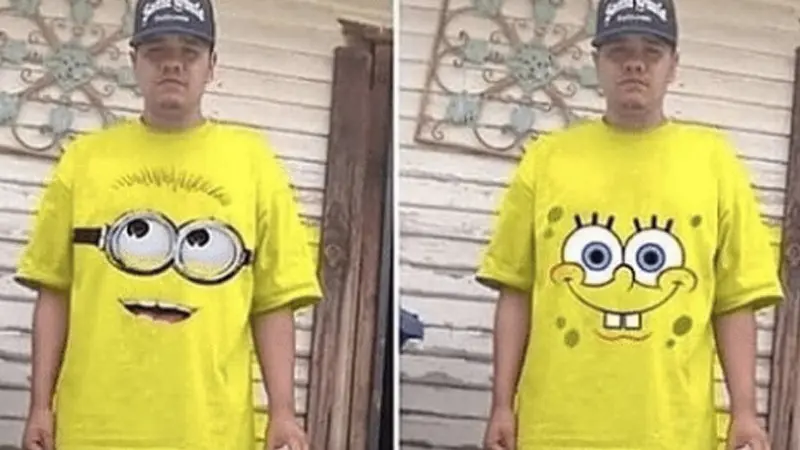
In the sprawling, hyper-accelerated ecosystem of modern internet culture, few phenomena capture the essence of post-ironic humor quite like "Minion or Da Bob." Emerging from the primordial soup of Facebook meme pages in late 2018, this peculiar viral sensation centers on a simple, digitally altered, side-by-side photograph of an anonymous man. In one half of the composite image, he proudly models a Minions t-shirt; in the other, he dons a SpongeBob SquarePants garment. Accompanied by the deceptively casual, grammatically informal prompt—"Minion or da bob fo today"—the meme rapidly transcended its humble origins to become a masterclass in internet absurdity.
What began as a low-effort binary choice quickly morphed into a complex canvas for digital satire, drawing in millions of users across Facebook, Instagram, iFunny, Reddit, and Twitter. Far from a mere fleeting joke, "Minion or Da Bob" reflects a broader evolution in millennial and Generation Z humor: one that weaponizes cognitive dissonance, surrealism, and hyper-referential storytelling. This investigative report explores the origins, meticulous timeline of escalation, cross-platform adaptation, and enduring legacy of a meme that forced the internet to ask one of the most absurdly difficult questions of the digital age.
Detailed Chronology
The trajectory of internet memes is often chaotic, yet tracing the lineage of "Minion or Da Bob" reveals a calculated progression from niche community humor to mainstream viral contagion.
The Genesis: October 2018
The earliest documented iteration of the "Minion or Da Bob" image made its quiet debut on the Facebook page officialctfuworld on October 11th, 2018. The post featured the now-iconic side-by-side photoshops of the man in competing cartoon-franchise attire, framed by the colloquial query regarding which character he chose "for today." Initially functioning as a straightforward surreal juxtaposition, the post accumulated over 500 reactions and shares within its first month—a modest start that served as the catalyst for a much larger cultural wildfire.
Cross-Platform Migration: Late October 2018
Within hours of its Facebook debut, the image was harvested and reposted across competing social networks. On the same day, October 11th, Instagram user @juicynignut shared the photograph, capitalizing on Instagram’s algorithmic reach to secure over 15,000 likes in a month.
Thirteen days later, on October 24th, the meme found a receptive audience on iFunny when user PerfectShinobi uploaded the image. While it achieved only moderate success on that platform with 105 "smiles," it planted the seed for a much more potent mutation.
The Political Crossover and the iFunny Boom: November 2018
The true inflection point for the meme occurred on November 6th, 2018—coinciding precisely with the United States midterm House elections. iFunny user TriggerWarning published a heavily layered edit fusing the "Minion or Da Bob" format with a deeply ironic, outdated political meme template: the classic "OMG! Trump is great" vs. "OMG! Trump is Evil" / "AND IM JUST OVER HERE LIKE" paradigm.
By juxtaposing high-stakes, polarizing modern political anxiety with the utterly trivial question of cartoon t-shirts, the post struck a chord with the platform’s user base. It garnered over 2,300 likes and inspired a wave of derivative edits by prominent iFunny creators.
Viral Acceleration via Reddit and Twitter: Mid-November 2018
The momentum generated on iFunny quickly spilled over into mainstream aggregation hubs. On November 8th, Redditor Deimos1724 cross-posted TriggerWarning’s iteration to the popular subreddit r/comedyheaven, where content so ironically funny it transcends humor is celebrated. The post surged, securing over 400 points with a 99% upvote ratio within a week. Concurrently, @juicybignut re-shared the image on Instagram on November 9th, driving an additional 16,000 likes in a week.
On November 13th, Redditor DinaCoffeeBean married the meme with cinematic blockbuster culture by placing the "Minion or Da Bob" text above an image of Thanos from Avengers: Infinity War, declaring, "The hardest choices require the strongest wills."
The following day, November 14th, Twitter user _ericcurtin tweeted a curated thread of multiple variations, netting over 1,300 retweets and 6,000 likes within 24 hours and cementing the meme’s status as a cross-platform juggernaut.
Supporting Context & Metrics
To fully understand the cultural footprint of "Minion or Da Bob," one must examine the underlying mechanics of its virality, platform metrics, and psychological appeal.

Quantitative Breakdown of Spread
| Platform | Key Contributor / Page | Date Posted | Engagement Metrics | Impact on Trend |
|---|---|---|---|---|
| officialctfuworld | Oct 11, 2018 | 500+ reactions, 500+ shares | Established the original template and phrasing. | |
| @juicynignut | Oct 11, 2018 | 15,000+ likes | Demonstrated high-velocity visual appeal for algorithmic feeds. | |
| iFunny | PerfectShinobi | Oct 24, 2018 | 105 smiles | Bridged the gap to alternative meme subcultures. |
| iFunny | TriggerWarning | Nov 6, 2018 | 2,300 likes | Integrated political satire, triggering a wave of complex edits. |
| Deimos1724 (r/comedyheaven) | Nov 8, 2018 | 400+ points (99% upvoted) | Validated the meme within mainstream curation communities. | |
| @_ericcurtin | Nov 14, 2018 | 1,300 retweets, 6,000 likes | Brought the meme into mainstream tech and media discourse. |
Psychological Mechanisms of the Meme
"Minion or Da Bob" succeeded not because it delivered a traditional punchline, but because it weaponized absurdist binary choices. By forcing an impossible, utterly meaningless decision upon the viewer—associating severe, pseudo-philosophical consequences with choosing either a Minions shirt or a SpongeBob SquarePants shirt—the meme parodied the hyper-polarized rhetoric of the late 2010s.
Furthermore, the intentional use of African American Vernacular English (AAVE) slang ("fo today") blended with mainstream corporate animation mascots created a jarring, surreal comedic dissonance. This linguistic stylistic choice aligns with what sociolinguists identify as digital minstrelsy or internet vernacular appropriation, which heavily drives modern meme dialect.
Official Statements and Cultural Commentary
While "Minion or Da Bob" emerged organically from anonymous online creators rather than corporate marketing departments, its cultural resonance caught the attention of digital media analysts and internet historians.
In a retrospective commentary on micro-trends from late 2018, digital culture researchers noted that the meme functioned as an "exhaustion valve" for internet users. Amidst an increasingly hostile political climate—typified by the contentious 2018 U.S. midterm elections—audiences actively sought out content that offered complete, nonsensical detachment from reality.
An anonymous archivist from the digital folklore repository Know Your Meme remarked during the peak of the trend:
"Memes like ‘Minion or Da Bob’ represent a psychological defense mechanism for the chronically online. When real-world decisions feel paralyzing and catastrophic, the internet redirects that anxiety toward a completely fabricated, absurd dilemma: Do you choose the Minion, or do you choose Da Bob? There are no correct answers, only escalating layers of irony."
Moreover, creators who participated in the trend pointed to its malleable nature. Because the core image required zero artistic skill to replicate or alter, it democratized participation, allowing anyone with basic photo-editing software to project their own cinematic, philosophical, or political anxieties onto a man in a cartoon shirt.
Future Outlook
As the internet continues to evolve at a breakneck pace, the legacy of "Minion or Da Bob" offers a fascinating case study in how simple concepts achieve digital immortality. While the acute search interest and daily output of derivatives peaked in late 2018, the structural DNA of the meme remains influential in contemporary shitposting and absurdist humor circles.
1. The Blueprint for Hyper-Surrealism
The success of "Minion or Da Bob" paved the way for subsequent absurdist formats that rely on "false profundity"—taking a completely mundane or nonsensical premise and treating it with the gravity of a Shakespearean tragedy or a blockbuster cinematic climax. Modern meme formats that juxtapose corporate mascots with existential threats owe a direct debt to the groundwork laid by TriggerWarning, Deimos1724, and @_ericcurtin.
2. Archival and Academic Recognition
As internet history solidifies into a recognized academic discipline, ephemeral jokes from platforms like iFunny and r/comedyheaven are increasingly studied for their sociological value. "Minion or Da Bob" is frequently cited in digital anthropology papers examining how online subcultures metabolize mass-media franchises (Despicable Me and SpongeBob SquarePants) into localized, esoteric folklore.
Conclusion
"Minion or Da Bob" may have started as a throwaway joke on a Facebook page, but it evolved into a defining artifact of 2010s internet culture. By stripping away conventional logic and replacing it with an inescapable, absurd binary, the meme captured the chaotic spirit of its era. Whether future generations choose the Minion or Da Bob, the phenomenon remains a testament to the boundless creativity—and delightful madness—of the digital age.