Executive Overview
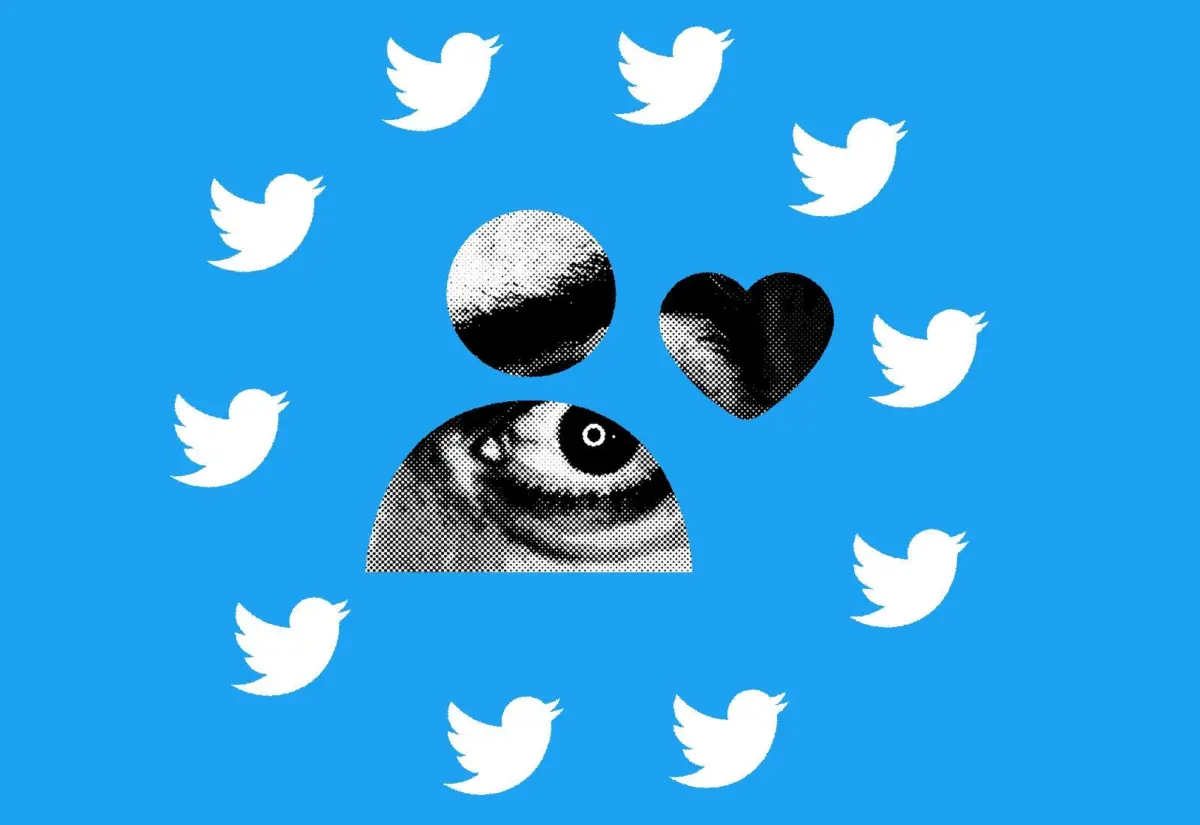
Launched with high hopes in August 2022, Twitter Circles was meant to be a modern sanctuary. Designed to offer users "the flexibility to choose who can see and engage with their content on a Tweet-by-Tweet basis," the feature promised a digital gated community. It was championed as a vital tool for cultivating intimacy, protecting marginalized groups, and offering a safer space for candid, vulnerable conversations away from the sprawling, unfiltered public eye.
Just eight months later—amid sweeping corporate restructuring, drastic downsizing, and a high-profile change in ownership—that foundational promise of privacy has catastrophically fractured. In early April 2023, users across the platform began discovering a jarring and alarming reality: posts intended exclusively for small, vetted groups of trusted friends were leaking directly into the algorithmic "For You" timeline, accessible to complete strangers and non-followers alike.
For many, this glitch was more than a mere software bug; it was a profound breach of digital trust. Ranging from casual gossip and inside jokes to sexually explicit photographs, intimate confessions, and sensitive disclosures by vulnerable individuals—such as closeted transgender users testing the waters of self-expression—private content was suddenly broadcast to the masses.
This deep technical failure has cast a harsh spotlight on the operational stability of Twitter under Elon Musk. Former engineers, digital culture experts, and affected users alike have tied the catastrophic glitch to the massive workforce reductions that gutted the company’s engineering and moderation teams. As questions mount over accountability and platform security, this incident serves as a stark cautionary tale about the fragility of privacy in modern social media ecosystems, raising a chilling question for internet users everywhere: If a purposefully walled-off feature can fail so utterly, can any digital space truly be considered safe?
Detailed Chronology: How the Twitter Circles Breach Unfolded
The Promise of Intimacy (August 2022)
When Twitter first rolled out Circles globally, it was marketed as a direct response to user demands for granular control over their digital footprint. Inspired by features like Instagram’s "Close Friends," Circles allowed users to handpick up to 150 accounts to view specific posts.
The feature was enthusiastically received by advocacy groups and everyday users alike. For instance, Belong To—an organization supporting young LGBTQ+ people in Ireland—hailed the innovation for putting "power into the hands of people on Twitter by creating a new way for them to control how they show up online and feel safe expressing themselves." For months, the feature functioned largely as intended, fostering a renaissance of micro-communities within the macro-infrastructure of the public square.
The Breakdown (April 7, 2023)
The illusion of security began to unravel on a Friday in early April. Adam Moussa, a New York-based media worker with a substantial following of roughly 40,000 users, posted to his Twitter Circle. Approximately 25 minutes later, he received a notification that completely disrupted his routine.
"I was like, wait, what?" Moussa recalled. Upon checking the interaction, he discovered that a user who did not follow him back and was explicitly not a member of his Circle had not only viewed the tweet meant for select eyes only, but had actively liked and saved it.
Moussa’s subsequent investigation revealed an even more systemic problem: it was not just original posts within his Circle that were leaking, but also his replies to other users’ Circle-locked tweets. These conversational fragments were actively being surfaced by Twitter’s algorithmic "For You" feed, exposing private dialogues to the general public.
The Spread of Sensitive Content
Moussa was far from alone. Across the platform, users began comparing notes and realizing the bug was widespread. Among those affected was author and journalist Abraham Josephine Riesman, who had recently published Ringmaster, a biography of former WWE chair Vince McMahon.
Riesman had posted a risqué photo from a recent boudoir shoot to her Twitter Circle, assuming it would remain safely contained within her curated group. To her shock, she awoke the following morning to find that a stranger—someone she did not follow and who was not in her Circle—had liked the photograph.
"It was, ‘Oh god, am I shoving my naked body in front of a load of people?’" Riesman said. "I’ve curated my Circles to people I thought wouldn’t mind, but the general public does not need to see me in my birthday suit."
Rather than an isolated incident, technical sleuths and affected users quickly realized that the algorithm driving the main timeline was routinely bypassing the access controls of Twitter Circles, treating restricted content as standard, public-facing media.
Supporting Context & Metrics: The Anatomy of a Platform in Decline
To understand how a core privacy feature could fail so completely, it is necessary to examine the seismic internal shifts that occurred at Twitter in the months leading up to the bug.
Following his acquisition of the company in October 2022, Elon Musk instituted an aggressive restructuring plan aimed at slashing operational costs. According to industry estimates and internal leaks, Musk fired or forced out significantly more than half of Twitter’s total workforce.
These layoffs disproportionately impacted critical departments:
- Core Engineering & Infrastructure: Teams responsible for maintaining backend architecture, database integrity, and algorithmic pipelines were drastically reduced.
- Trust and Safety: Moderation, policy enforcement, and privacy compliance teams saw massive attrition, leaving fewer safeguards to catch systemic software errors before deployment.
- Quality Assurance (QA): Automated and manual testing protocols were largely dismantled or streamlined, increasing the likelihood that feature regressions would slip into production un-vetted.
Former senior data scientist Melissa Ingle, who was laid off during the November 2022 cuts, did not mince words when assessing the situation. She categorized the Circles failure as "a major breach of confidentiality."
"Your Circle is your trusted group of friends, and to see those posts outside that group suggests the algorithm is lacking basic functionality," Ingle explained. "Unfortunately, under Elon Musk this type of thing is more and more likely to happen because of the severe staffing cuts and lack of expertise he has ushered in."
The metric of trust, once broken, is notoriously difficult to rebuild. For a platform already wrestling with advertiser flight, service outages, and erratic policy changes, a systemic privacy leak directly strikes at the psychological contract between the user base and the platform provider.
Official Statements and Institutional Reactions
When journalists and security researchers attempted to get official answers regarding the technical root cause of the Circles breach, they were met with institutional silence—or worse, derision.
An inquiry sent to Twitter’s press department regarding how and why the privacy lapse occurred was met with the company’s now-standard automated response: the poop emoji. This dismissal of media inquiries has become a hallmark of the platform’s public relations strategy under its current leadership, cutting off transparent communication channels during critical security crises.
Without corporate guidance, affected users and digital experts were left to diagnose the cultural and psychological fallout of the incident.
Ellen Walker, a researcher studying internet storytelling and narrative-curated digital culture at the Royal College of Art in London, noted that the Circles debacle highlights the inherent precarity of digital boundaries.
"As quickly as enclosed digital spaces can be curated, they can be taken away in a flash, by virtue of either technological enhancements, wider audience participation or, in the case of the Twitter Circles innovation, a severe misstep on the part of moderating forces," Walker observed.
Riesman, whose explicit photo was swept up in the algorithmic tide, echoed the sentiment of resignation felt by many long-term users. Rather than panicking, her decision to post about the incident was intended as a public service announcement.
"I long ago gave up on the notion that anything I post online will permanently remain secret," Riesman noted. "I’ve prepared for moments like this in my head. And it didn’t faze me." However, she expressed deep concern for others who relied heavily on the feature—specifically pointing out vulnerable demographics, such as closeted transgender individuals testing pronouns or discussing gender identity within trusted Circles, who faced potentially devastating real-world consequences if outed by the glitch.
Future Outlook: The Death of Digital Safe Spaces?
The Twitter Circles failure transcends a simple software patch; it touches upon a broader, existential anxiety regarding the future of user privacy in the web3 and social media eras. When platforms prioritize rapid algorithmic iteration and lean staffing over rigorous security testing, the collateral damage is borne entirely by the user.
Adam Moussa expressed a bleak outlook on the future of accountability on the platform. "It seems like the constant tinkering with whatever they want the For You algorithm to be has just fucked this up beyond belief," he said. "This kind of portends greater security issues across the board. If you maintain a locked account, what guarantee do you have at all that it will remain locked? It’s a breach. The trust has gone. No one can ever again actually be confident that this shit is not going to completely blow up in their faces."
As users navigate an increasingly volatile digital landscape, the Twitter Circles incident serves as a permanent punctuation mark on an era of naive trust in social media walled gardens. Whether users choose to abandon platforms prone to such infrastructural decay or simply adjust their behavior to assume zero privacy, one thing is certain: the illusion of the digital sanctuary has been shattered, and putting the pieces back together will require far more than an automated emoji.