Executive Overview
The intersection of commercial footwear branding and authentic subcultural storytelling has long been a delicate tightrope walk. Too often, corporate appropriations of youth culture feel hollow, engineered in sterile boardrooms rather than lived-in environments. However, PUMA’s recent multi-tiered rollout for its iconic Suede silhouette—culminating in the ambitious “Never Not Suede” campaign—defied this convention.
At the helm of the campaign’s visual narrative was the French director Natas. Shot against the textured, sun-bleached backdrop of Athens, Greece, the mini-film follows a tight-knit cohort of friends as they navigate unfamiliar terrain, mapping out their environment and forging bonds along the way. Rather than casting conventional models based purely on aesthetic metrics, Natas curated an ensemble of multifaceted creatives whose actual talents, energies, and real-world relationships bled seamlessly into the production.
This concluding feature of our behind-the-scenes (BTS) retrospective series—following insights from photographer Maxime Ballesteros and fashion director Imruh Asha—explores the anatomy of the “Never Not Suede” production. It examines how Natas translated a history deeply rooted in European skate culture, lifelong friendships, and unscripted human interactions into a globally resonant campaign for one of sportswear’s most enduring silhouettes.
Detailed Chronology: From the Alpine Slopes of Annecy to the Streets of Athens
1. The Genesis: Skateboards, Super 8, and Swiss Rap
To understand Natas’s directorial style, one must trace his journey back to Annecy, an Alpine town in southeastern France. Long before commanding high-budget commercial sets or collaborating with multinational sportswear giants, Natas’s creative awakening happened on four wheels.
"I started with videography and photography through skateboarding with my friends," Natas explains. In the skate community, the camera is rarely a passive observer; it is an essential piece of equipment, as vital as a deck or a pair of bruised shins. Documenting tricks fostered an intuitive understanding of movement, framing, pacing, and spatial geography.
This grassroots entry point naturally spilled over into neighboring creative ecosystems. Through the localized network of skaters and artists, Natas crossed paths with Dih-meh, a prominent Swiss rapper. Impressed by his visual eye, Dih-meh commissioned him to direct a music video. This inaugural project opened the floodgates. From underground hip-hop visuals, Natas smoothly transitioned into the broader European commercial and fashion videography circuit, carrying the raw, unpolished kinetic energy of skate videos into high-concept styling and brand storytelling.
2. The Move to Paris: The Power of the Collective
Transitioning from a provincial Alpine town to the bustling capital of European fashion—Paris—is a daunting leap for any young creative. Yet, Natas attributes his successful migration not to solitary ambition, but to collective solidarity.
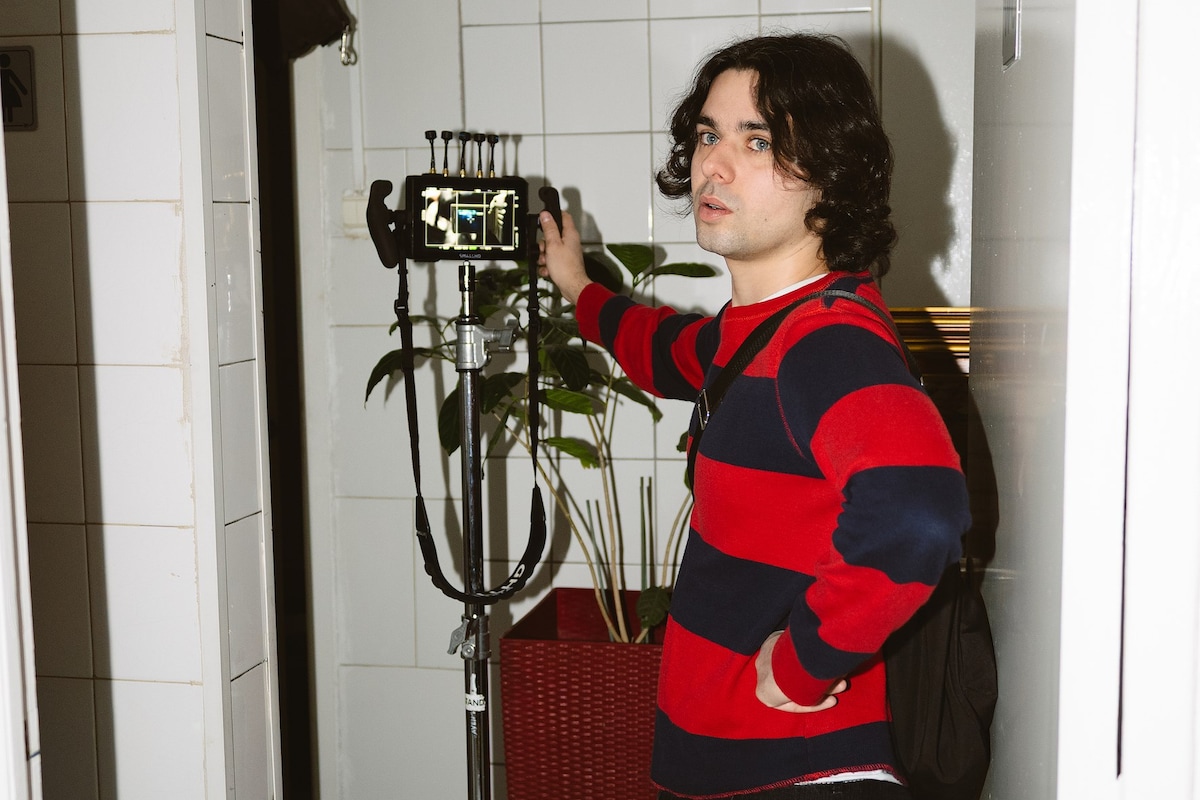
"My friends and I are a group of about ten skaters, all from Annecy; we’ve all been together since school," Natas reflects. "Being together as a group is what gave me the courage to come to Paris and immerse myself in what I wanted to do. They help me move forward."
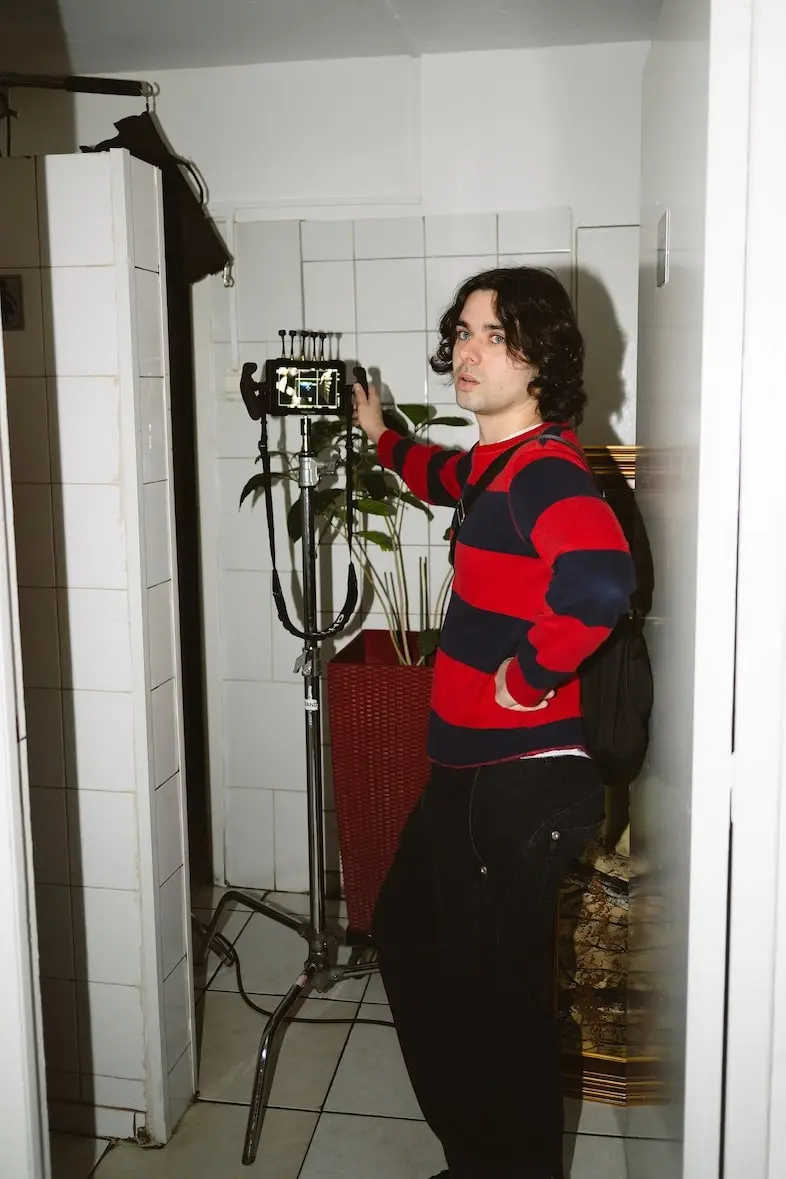
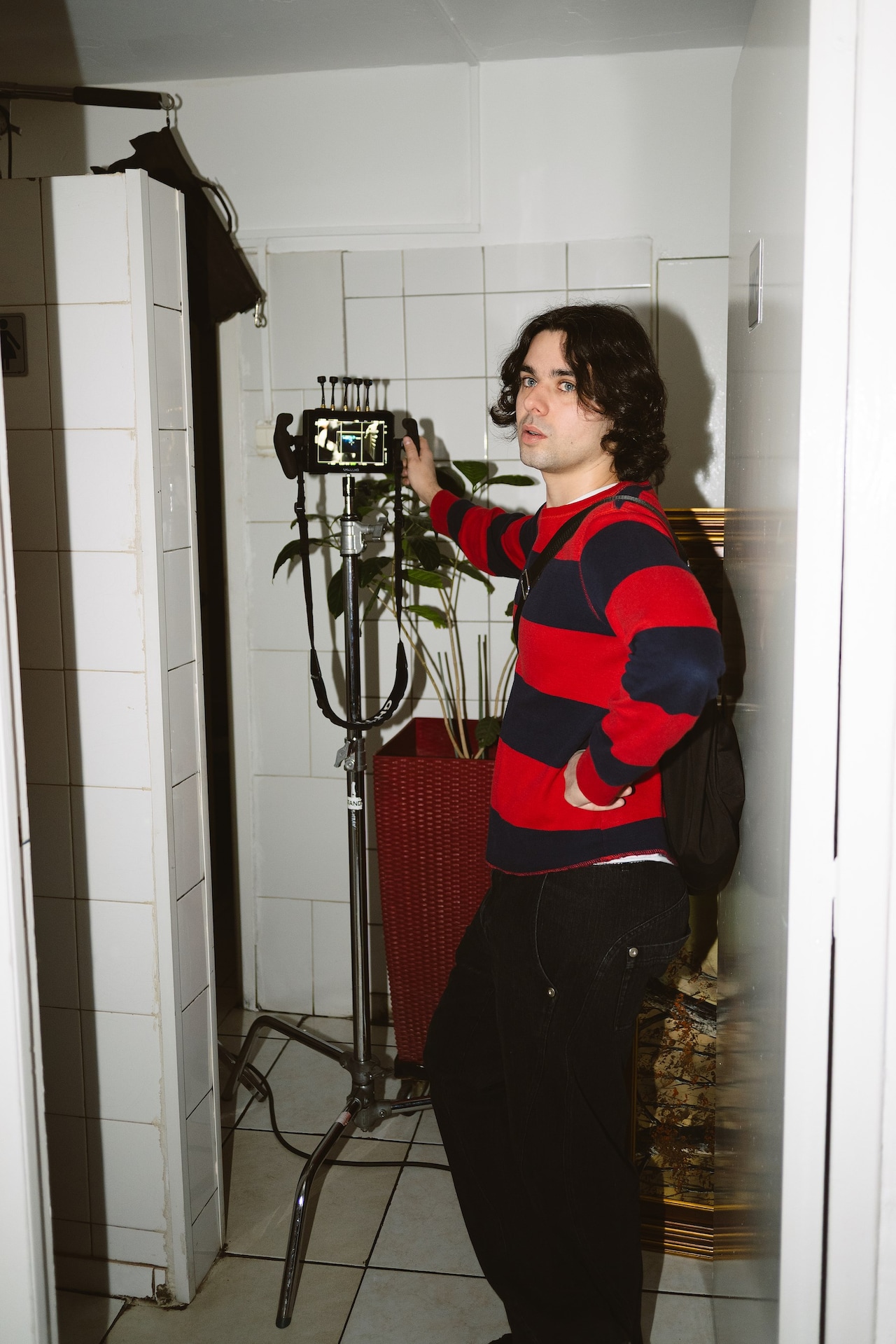
This ethos of the collective forms the invisible architecture of everything Natas touches. Over a decade into his professional career, this reliance on familiar faces remains non-negotiable. On the “Never Not Suede” set in Athens, this philosophy was manifested practically: his long-time friend and confidant Atalya operated as the chief camera operator. By surrounding himself with a trusted inner circle, Natas mitigates the sterile anxiety often inherent to commercial film sets, replacing it with an atmosphere of mutual trust, psychological safety, and shared artistic vision.
3. Hitting the Ground in Athens: Constructing the Narrative
When PUMA tasked Natas with breathing life into the final drops of the “Never Not Suede” campaign, the brief demanded a narrative that placed human connection at the forefront. The resulting mini-film opens with a group of friends arriving in Athens—a city rich with ancient history yet vibrating with contemporary underground youth culture.
Rather than scripting every step of their journey, Natas established loose narrative boundaries and let the cast’s natural chemistry take over. The narrative tracks them as they transition from spatial disorientation to familiarity, mapping out hidden alleyways, local haunts, and impromptu social gatherings.
Crucially, the cast members were selected for their individual creative passions rather than typical modeling portfolios. This decision paid creative dividends during production. Natas recalls a pivotal breakthrough during a night-out sequence meant for Drop 3:
"I knew that there was one member of the cast, Paul, who was a very good dancer, and I realised it in the moment. I was not expecting it, and it was a great surprise."
By remaining receptive to spontaneous moments, Natas allowed the personalities of the cast to override rigid storyboarding, injecting the campaign with an unscripted authenticity that corporate advertising scripts can rarely manufacture.
Supporting Context & Metrics: The Anatomy of a Modern Campaign
Deconstructing the "Never Not Suede" Ecosystem
The “Never Not Suede” initiative represents a masterclass in modern lifestyle marketing. To truly grasp the gravity of Natas’s contribution, it is vital to look at how the campaign was engineered across multiple disciplines:
- The Visuals (Maxime Ballesteros): Celebrated for his raw, flash-heavy, and unapologetically visceral photographic style, Ballesteros laid the groundwork by capturing still imagery that felt caught in motion—gritty, intimate, and bursting with atmospheric tension.
- The Styling (Imruh Asha): PUMA’s Global Fashion Director Imruh Asha curated wardrobes that bridged archival athletic heritage with contemporary streetwear sensibilities, ensuring the clothing functioned as a second skin for the cast rather than a restrictive costume.
- The Direction (Natas): Natas tied these elements together through moving image, prioritizing narrative pacing, spatial exploration, and documentary-style candor.
Location Scouting and Lived-in Authenticity
A standout feature of Natas’s directorial approach in Athens was his rejection of pristine, overly manicured commercial backdrops in favor of spaces carrying the patina of real life. His crowning achievement during the shoot was transforming an ordinary local restaurant into an improvised rave space.
"My favourite location has been the restaurant where we created a rave environment," Natas notes. "It reminds me of memories I have from moments in Paris or Marseille. We used this refrigerator cupboard, which is usually used to keep meat, as a DJ booth, and that is something I’ve actually seen in real life. These are the sort of details I love bringing to a campaign."
These minor, hyper-specific nods to real-world subcultural spaces are what anchor the campaign’s fictional premise in objective reality. The PUMA Suede is not showcased as a museum artifact behind glass; it is scuffed on dancefloors, worn through citywide explorations, and integrated into the messy, beautiful reality of youth counterculture.
Official Statements & Industry Insights
Reflecting on the collaborative spirit that defined the Athens shoot, Natas emphasizes that contemporary directing is less about autocratic control and more about orchestration:
"The idea is to weigh the maximum amount of ideas, see what works and what does not, and see how we can all be happy with the result."
This democratic approach to production extends directly to how he fields his production crews. By favoring lifelong bonds over transactional industry networking, Natas maintains an environment where creative friction produces innovation rather than burnout:

"What I love is having my creative friends on set. It really inspires and reassures me… I bring my friends along as much as I can, and we move forward together."
Industry observers have noted that this collaborative framework represents a shifting paradigm in fashion marketing. Brands are increasingly realizing that consumers—particularly Gen Z and millennial demographics—possess an acute radar for inauthenticity. By handing creative keys to directors like Natas, who operate organically within the worlds they depict, brands like PUMA successfully bridge the gap between commercial viability and cultural credibility.
Future Outlook: The Evolution of Subcultural Storytelling in Footwear
As the sneaker market matures, the playbook of slapping a heritage silhouette onto a billboard with an A-list celebrity is yielding diminishing returns. Modern consumers demand narrative depth, community representation, and structural transparency.
Natas’s work on “Never Not Suede” establishes a compelling blueprint for future campaigns. It demonstrates that the longevity of an icon like the PUMA Suede—which has maintained relevance across breakdancing, punk, hip-hop, and modern skate subcultures for nearly six decades—relies not on reinvention, but on contextualization. The shoe does not change; the world around it evolves, and the stories told through it must reflect contemporary truths.
For Natas, the success of this campaign marks another milestone in a career defined by community-driven progression. Whether he is returning to the skateparks of Annecy, orchestrating impromptu raves inside Athenian restaurants with repurposed meat refrigerators, or framing his closest friends through an Arri lens, his trajectory signals a healthy shift in commercial filmmaking.
The future of fashion direction belongs to those who refuse to work in isolation—those who understand that the most compelling stories are never solitary endeavors, but the collective echoes of a shared journey.