Executive Overview
The intersection of adolescent curiosity and legendary technological revolution has once again captured the attention of collectors and historians worldwide. RR Auction has officially closed bidding for a deeply personal piece of computing history: an eighth-grade science fair project handcrafted by a young Steve Jobs in 1968.
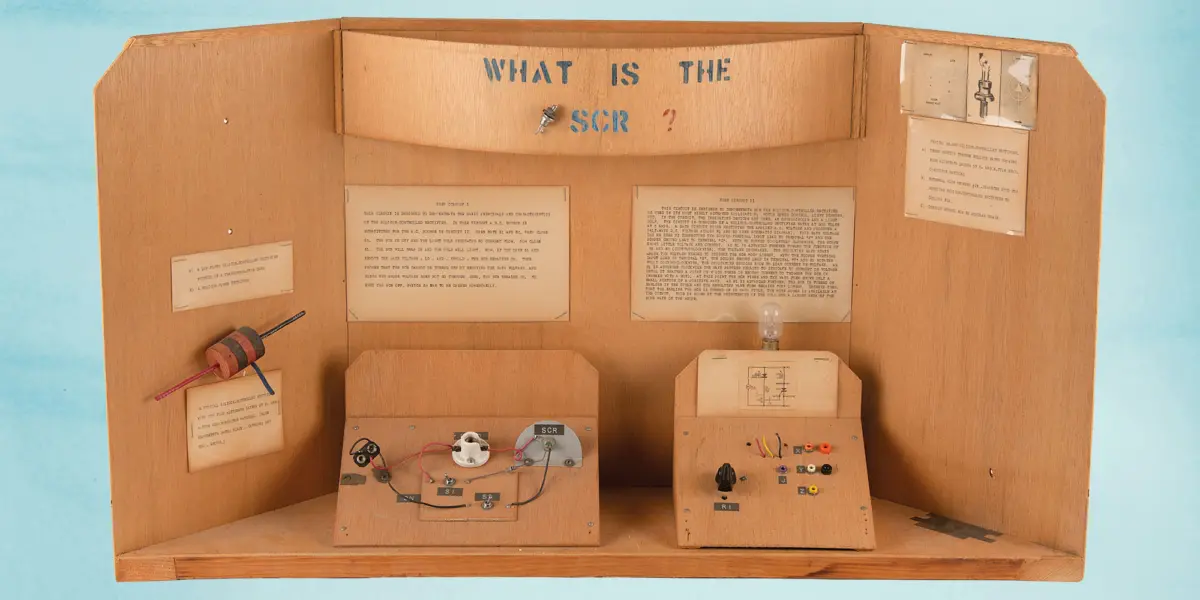
Long before the birth of Apple Inc., the creation of the Macintosh, or the reshaping of modern consumer electronics, a 13-year-old Jobs was already deeply immersed in the fundamentals of electrical engineering. The hand-built exhibit—centering on the silicon-controlled rectifier and featuring two functional demonstration circuits alongside a meticulous 10-page handwritten report—ultimately sold for $34,375.
This remarkable artifact was featured as a crown jewel in Part Two of RR Auction’s Steve Jobs & the Computer Revolution: The Apple 50th Anniversary Auction. While early online tracking showed the project languishing below the $3,000 mark, a fierce wave of late-stage bidding drove the price upward, reflecting the insatiable global appetite for foundational pieces of Apple lore.
Preserved for decades at the legendary "Apple Garage" property by Jobs’ family, the artifact offers an intimate look at the formative years of a visionary whose technological ambitions would go on to permanently alter human communication, industry, and culture.
Detailed Chronology: From a 1968 Middle School Classroom to the Auction Block
To truly understand the significance of the $34,375 winning bid, one must trace the timeline of the artifact from its humble origins in a California junior high school to its recent emergence in the high-stakes world of memorabilia collecting.
1968: The Budding Engineer
In 1968, Steve Jobs was an eighth-grade student navigating the suburban landscape of Mountain View and Los Altos, California—the geographic epicenter of what would soon become Silicon Valley. Long before the era of personal computers, hobbyist electronics were the primary playground for young innovators.

Fascinated by solid-state electronics, Jobs selected the silicon-controlled rectifier (SCR) as the subject of his middle school science fair project. The SCR, a four-layer semiconductor material that acts as a bi-directional switch, was a cutting-edge component at the time. Jobs did not merely write about the technology; he built it. The project included a comprehensive, multi-page handwritten report outlining the physics and application of the circuit, paired with two operational demonstration circuits constructed by his own teenage hands.
Decades in the "Apple Garage"
Following the exhibition, the project did not find its way into a landfill or a forgotten storage locker. Instead, it was carefully preserved by Jobs’ family.
For decades, the artifact resided at the iconic "Apple Garage"—the Los Altos property where Jobs, Steve Wozniak, and Ronald Wayne would later assemble the very first Apple-1 computers in 1976. According to family accounts, Jobs was repeatedly asked over the years to take the science project back, but he routinely declined, viewing it as a relic of a distant childhood.
Eventually, Jobs allowed his stepbrother, John Chovanec, to keep the artifact. It remained in Chovanec’s possession, quietly documenting the pre-history of the digital age, until it was consigned to RR Auction as part of the massive retrospective leading up to Apple’s golden anniversary.
The 2026 Auction Phenomenon
When RR Auction initially listed the piece under the Steve Jobs & the Computer Revolution: The Apple 50th Anniversary Auction (Part Two), early digital onlookers watched as bids hovered sluggishly under $3,000. However, historical tech memorabilia of this caliber rarely slips past serious institutional and private collectors unnoticed.
As the virtual auction clock wound down, a flurry of aggressive bids materialized. When the hammer finally fell, the final price settled at $34,375—a testament to the enduring mythos surrounding Apple’s co-founder and the immense value placed on tangible connections to his youth.

Supporting Context & Metrics: The Ecosystem of Apple Memorabilia
The sale of Steve Jobs’ eighth-grade science project did not occur in a vacuum. It was part of a meticulously curated catalog of nearly 150 rare Apple and technological artifacts designed to celebrate the upcoming 50th anniversary of the company’s founding.
To contextualize the $34,375 valuation of the science project, it is necessary to examine how it performed relative to other heavyweight lots in the auction catalog:
| Item Description | Historical Significance | Final Auction Price |
|---|---|---|
| Fully Functional Apple-1 Computer | Second batch of 50 units produced, housed in a unique Smith-Corona typewriter case with original documentation. | $499,363 |
| Signed Steve Jobs Business Card (c. 1983) | PSA Gem Mint 10 authenticated business card bearing Jobs’ authentic signature. | $156,658 |
| Personally Owned Computer Components | Assorted electronic parts long stored at the Apple Garage family home by Jobs. | $27,188 |
| 1983 Signed Typing Letter | Typed letter signed by Jobs declining a speaking invitation from the University of Michigan. | $24,695 |
| 1968 8th-Grade Science Fair Project | Hand-built silicon-controlled rectifier circuit and 10-page report preserved by the family. | $34,375 |
Analyzing the Market for Jobs Memorabilia
The financial metrics outlined above highlight a distinct tiered market within tech collecting. Hardware milestones—most notably the Apple-1, which commands near-half-million-dollar figures—represent the Holy Grail for investors. However, deeply personal items that offer a psychological window into Jobs’ early genius, such as the science project and his personal electronic components, consistently outperform generic corporate memorabilia.
The science project bridges the gap between historical documentary evidence and physical hardware. It proves that Jobs’ relentless drive to understand, deconstruct, and build technology began well before he ever met Wozniak or stepped foot in a garage to change the world.
Official Statements and Archival Insights
While Steve Jobs was notoriously protective of his privacy and rarely sentimental about his early days during the peak of Apple’s corporate dominance, those closest to him have occasionally pulled back the curtain on his formative years.
John Chovanec, Jobs’ stepbrother, shared insights regarding the provenance of the science fair exhibit during the consignment process. According to Chovanec, Jobs viewed the project with mild amusement rather than reverence. When offered the chance to reclaim the artifact during adulthood, Jobs repeatedly waved off the suggestion, instructing his family to hold onto it or discard it as they saw fit. This casual dismissal stands in stark contrast to the reverent treatment the object eventually received from historians and collectors.

Industry analysts and auction house representatives have continually emphasized the rarity of pre-Apple material. Bobby Livingston, Executive VP at RR Auction, noted in previous statements regarding Jobs-related sales that items carrying direct, physical proof of Jobs’ early intellectual pursuits are vanishingly rare.
"The artifacts that survive from his childhood and teenage years are the foundational blueprints of the digital revolution," Livingston noted during the broader assessment of the Apple 50th Anniversary catalog. "When you hold a circuit board built by a 13-year-old Steve Jobs, you are holding the exact spark that would eventually ignite the personal computer industry."
Future Outlook: The Preservation of Tech History
As Apple approaches its monumental 50th anniversary, the market for vintage computing artifacts has matured from a niche hobby into a major institutional asset class. Museums, private archives, and tech billionaires are increasingly competing for physical proof of the digital age’s inception.
The sale of the 1968 science fair project for $34,375 signals a broader trend: the historiography of Silicon Valley is shifting away from corporate press releases and polished keynote presentations toward raw, tactile artifacts of domestic creation. From bedroom workshops and school science fairs to the legendary garage in Los Altos, the physical origins of modern technology are being rigorously documented, authenticated, and monetized.
Looking ahead, as generation-defining pioneers like Steve Jobs pass further into history, the scarcity of authentic first-hand items will only intensify. Future auctions will likely see even fiercer competition for items that predate the corporate era of Apple. For now, the eighth-grade science project—once dismissed by its creator as a discarded school assignment—stands as a monumental testament to the fact that great minds do not simply appear overnight; they are forged in the quiet curiosity of a middle school classroom.