Executive Overview
Over the past decade, the 4X strategy genre has enjoyed a remarkable renaissance, marked by a steady influx of polished, deeply complex titles. Yet, few studios have left as indelible a mark on this ecosystem as Amplitude Studios. Known for its distinct blend of atmospheric world-building, asymmetric faction design, and striking visual artistry, the studio’s Endless series has long stood as a pillar of modern strategic gaming.
With the release of Endless Legend 2, published by Hooded Horse and slated for its 1.0 version launch on September 17, 2026, Amplitude has returned to its most beloved fantasy-tinged sandbox. Priced at $50/£45 and verified for the Steam Deck, Endless Legend 2 is a magnificent testament to why the developer remains so universally adored by strategy purists. Running smoothly on test rigs equipped with a Radeon RX 6800 XT, Ryzen 9 5900, and 32GB of RAM, the game delivers a modernized, rule-breaking sci-fantasy experience that avoids the stagnation plaguing lesser genre entries.
While certain design choices—such as simplified map iconography and tightly wound tactical combat mechanics—introduce minor points of friction, the overarching experience is a triumph. By introducing dynamic planetary shifts through the returning threat of a dying world, Amplitude has once again proven that it can innovate within a mature space.
Detailed Chronology and World-Building: The Dying World of Saiadha
The original Endless Legend provided a vital shock to a 4X genre that had grown safe and predictable. Twelve years after its debut, many of its core innovations—and those of its sister series, Endless Space—have become industry standards. Yet, despite how widely its ideas have been adopted, the desire for another journey into Amplitude’s unique universe remained potent.
This hunger is largely driven by the scarcity of genuinely good science fantasy. This is not the space opera of Star Wars, but rather a gritty fusion of sword and sorcery underscored by technological marvels. It is a setting defined by bows rather than blasters, wizards and monsters rather than star cruisers.
Endless Legend 2 returns players to this mesmerizing aesthetic: worlds where crash-landed starship survivors forge robotic golems, wield titanium swords, and channel magic that operates on forgotten nanotechnology. Saiadha, the setting for this sequel, shares a tragic parallel with the original game’s planet, Auriga: it is dying. However, the nature of its demise has evolved. Eons ago, the ancient precursor race known as the Endless sealed an unknown entity deep beneath Saiadha’s crust when they terraformed the planet from a sea of desert dunes into a treacherous expanse of storm-wracked oceans and isolated archipelagos.
Now, that ancient containment is failing, causing the planet’s oceans to drain inward toward its core. This cataclysm sets the stage for a gameplay loop that redefines territorial expansion:
- The Monsoon Cycles: Every few dozen turns, violent storms shroud the globe, blinding scouts and testing border defenses.
- Tidefall: As the monsoon subsides, the oceans recede. Sunken landscapes, ancient technologies, and forgotten dungeons are suddenly laid bare, ripe for colonization and exploitation.
This cyclical transformation breathes new life into the traditional 4X rhythm, ensuring that no single strategy remains viable for the entirety of a campaign.
Supporting Context & Metrics: Aesthetics, UI, and the Symphony of Saiadha
Visually and aurally, Endless Legend 2 maintains Amplitude’s reputation for crafting some of the most coherent and aesthetically pleasing environments in strategy gaming.
Visual Design and Aesthetics
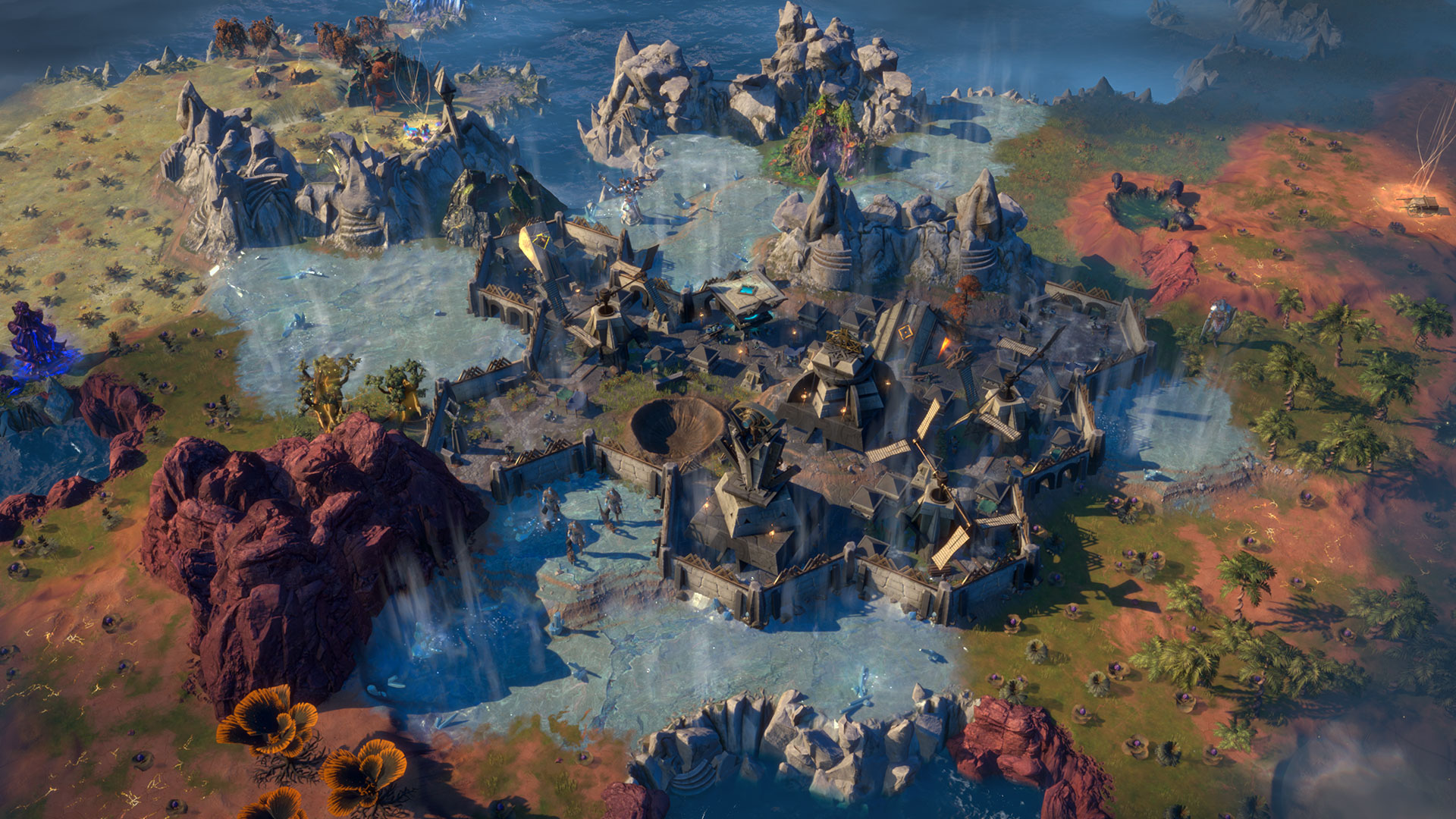
The game employs a painterly palette that gracefully balances matte and gloss finishes, rendering different biomes—from sun-baked earth and jagged stone to sprawling fields of living circuitry—with startling clarity. Terrain textures do heavy lifting to communicate the composition of the earth beneath a player’s armies.
However, visual critique must be leveled at the lighting engine. The illumination remains relatively flat, shifting primarily only during monsoons. While a more dynamic or directional lighting system might have enhanced the 3D models and environments, Amplitude wisely chose simplicity over complex effects that risk muddying the visual readability of the map.
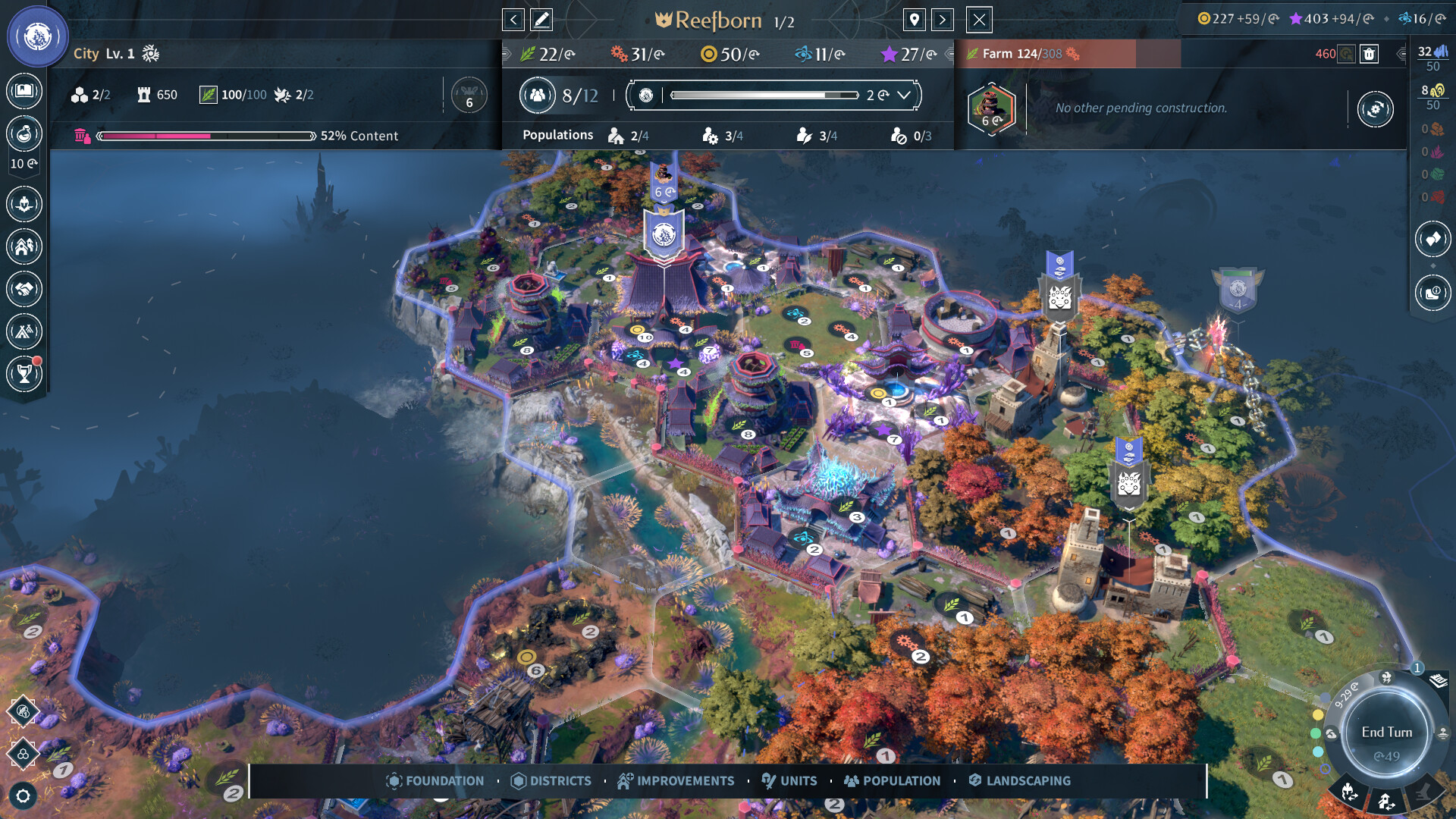
More troublesome is the evolution of the user interface (UI). While still vastly superior to many of its genre competitors, interacting with Endless Legend 2 lacks the crisp, immediate readability of its predecessor. Redesigned menus, resource bars, and action wheels are functional, but the game now relies heavily on abstract symbols on the main map to denote cities and armies rather than clear text labels. This requires players to perform unnecessary mental translation until they memorize regional layouts—an avoidable friction point during hectic campaigns.
The Sonic Landscape
Conversely, the soundtrack composed by Arnaud Roy is an unmitigated triumph. Utilizing an ethereal, ambient palette centered around the crystal organ, the score avoids repetitive loops by dynamically adapting to the player’s current screen and combat phases. Opening the diplomacy screen, for example, subtly dampens the bass frequencies, allowing the voice lines of faction leaders to cut through clearly without drowning in the broader mix.
Official Statements and Gameplay Mechanics: The FIDSI Economy and Asymmetrical Factions
While some veterans might worry that foundational mechanics like the classic FIDSI economy (Food, Industry, Dust, Science, and Influence) are growing routine, Amplitude’s refusal to fix what isn’t broken pays off. The resource systems remain transparent, reliable, and deeply satisfying, supported by tradeable luxury stockpiles that govern empire-wide upgrades.
What elevates the mechanics above standard genre tropes is the staggering asymmetry of the factions. Amplitude ensures that every group breaks fundamental rules of play:
- The Children of Sheredyn: A defensive powerhouse that prioritizes heavily fortified bastions over civic expansion.
- The Sandshapers: Living mineral constructs incapable of farming. They must scrape together rare resources and actively terraform the map back into desert biomes just to gather the materials required to sustain their population.
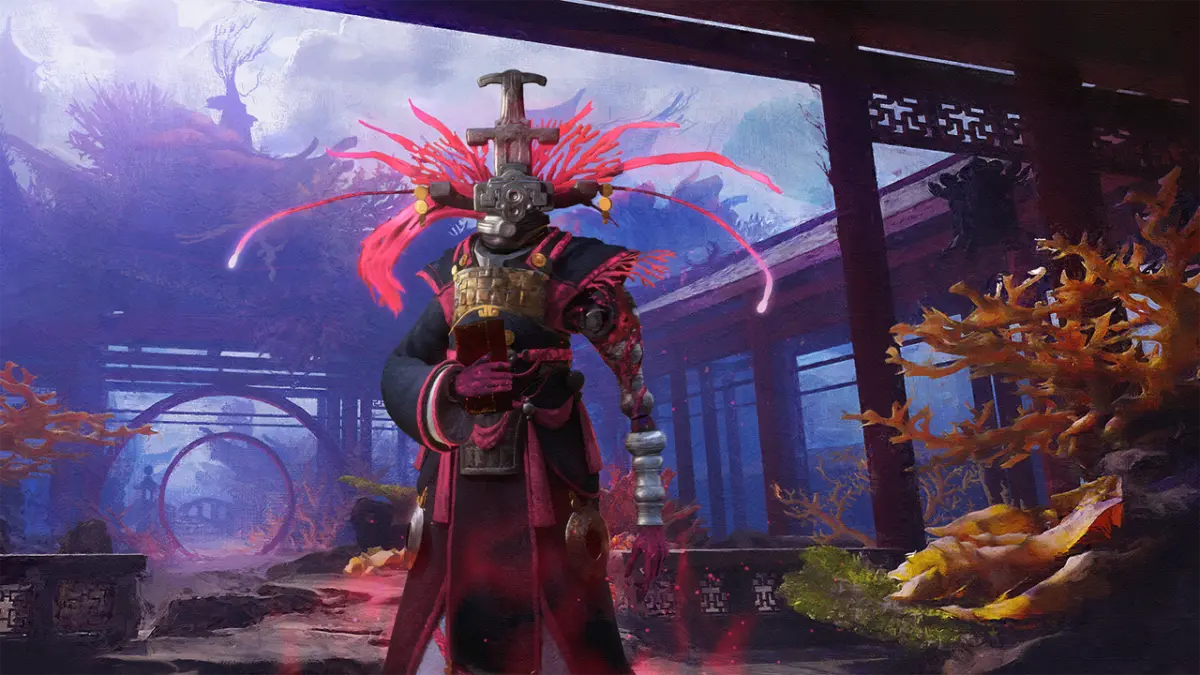
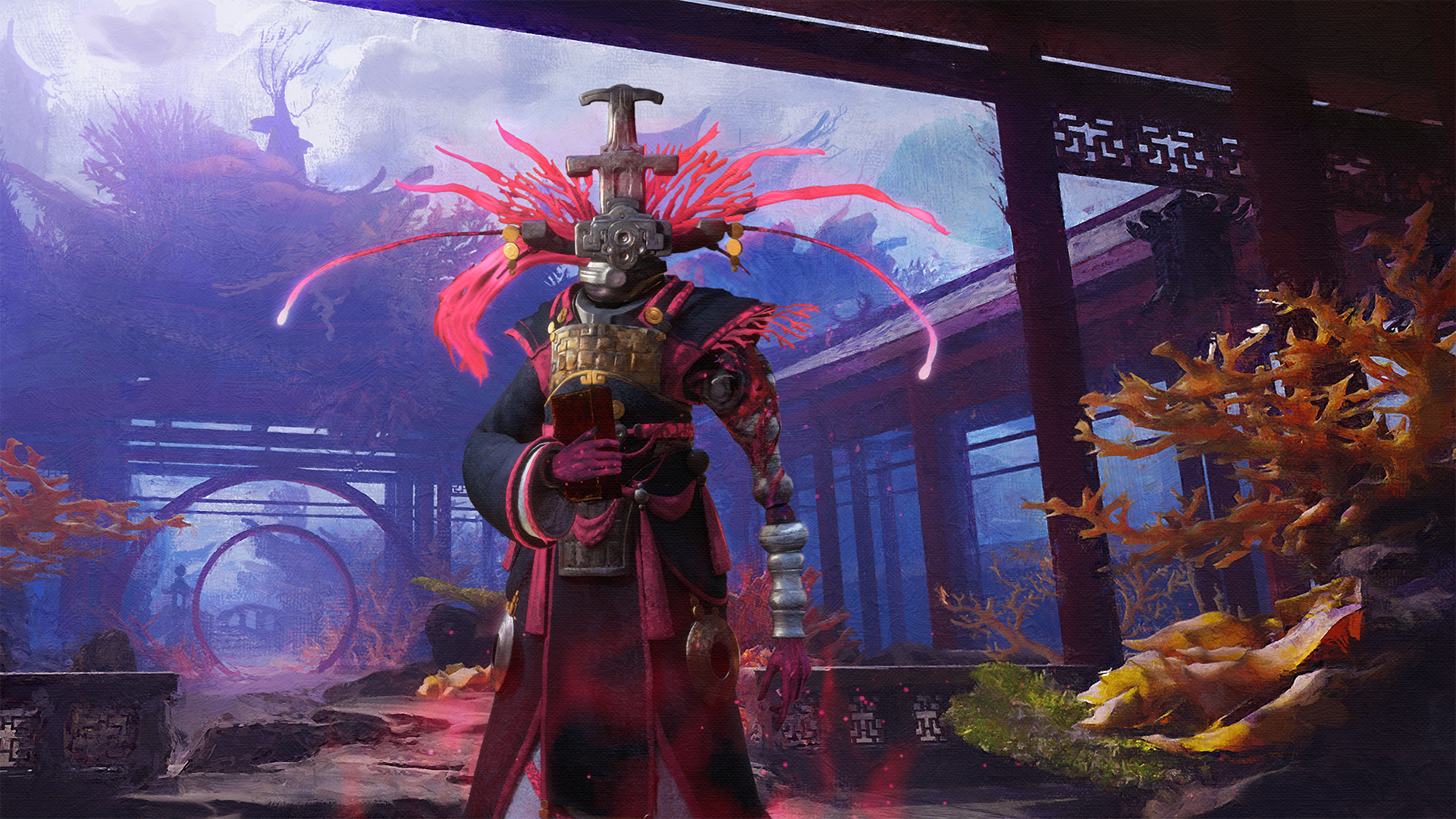
- The Aspects: A symbiotic fusion of living coral and robotics that leverage vast amounts of influence to force diplomatic treaties like peace and trade upon unwilling neighbors.
- The Necrophage: Confined to a single sprawling hive, this swarm is locked into a permanent state of aggressive expansion and enslavement, always justified in declaring war because, quite simply, they are hungry.
Future Outlook: Tactical Depth and Map Dynamism
The true genius of Endless Legend 2 lies in how it mitigates the late-game stagnation that plagues the 4X genre. Typically, once empires grow vast, matches degenerate into a tedious grind toward a predetermined victory condition.
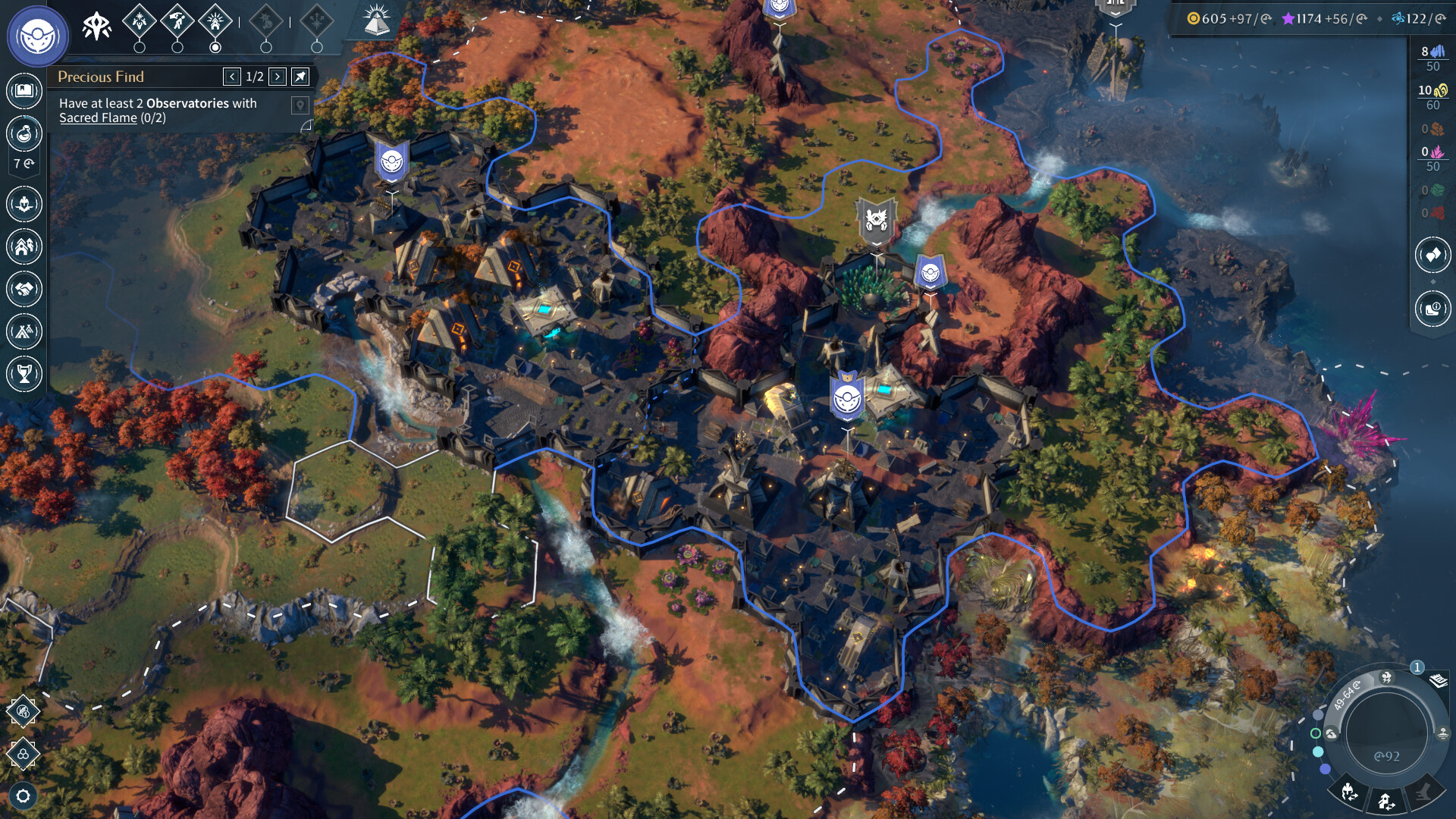
Saiadha’s recurring Tidefall events shatter this stagnation. As shorelines recede, isolated landmasses bridge together, hidden resource deposits emerge, and long-dead territories suddenly find themselves on rich new frontiers. A player’s safe, interior city can instantly become a vulnerable border outpost. By repeatedly thrusting players back into the chaotic, exploratory phase of the game, Endless Legend 2 keeps momentum high from turn one to the final victory screen.
Tactical Combat and AI Balance
Military units are similarly woven into the narrative fabric of the world. Armies are in constant motion—scouting curiosities, clearing minor factions, defending against the terrifying Doomwraiths spawned during monsoons, and positioning for the next oceanic recession.
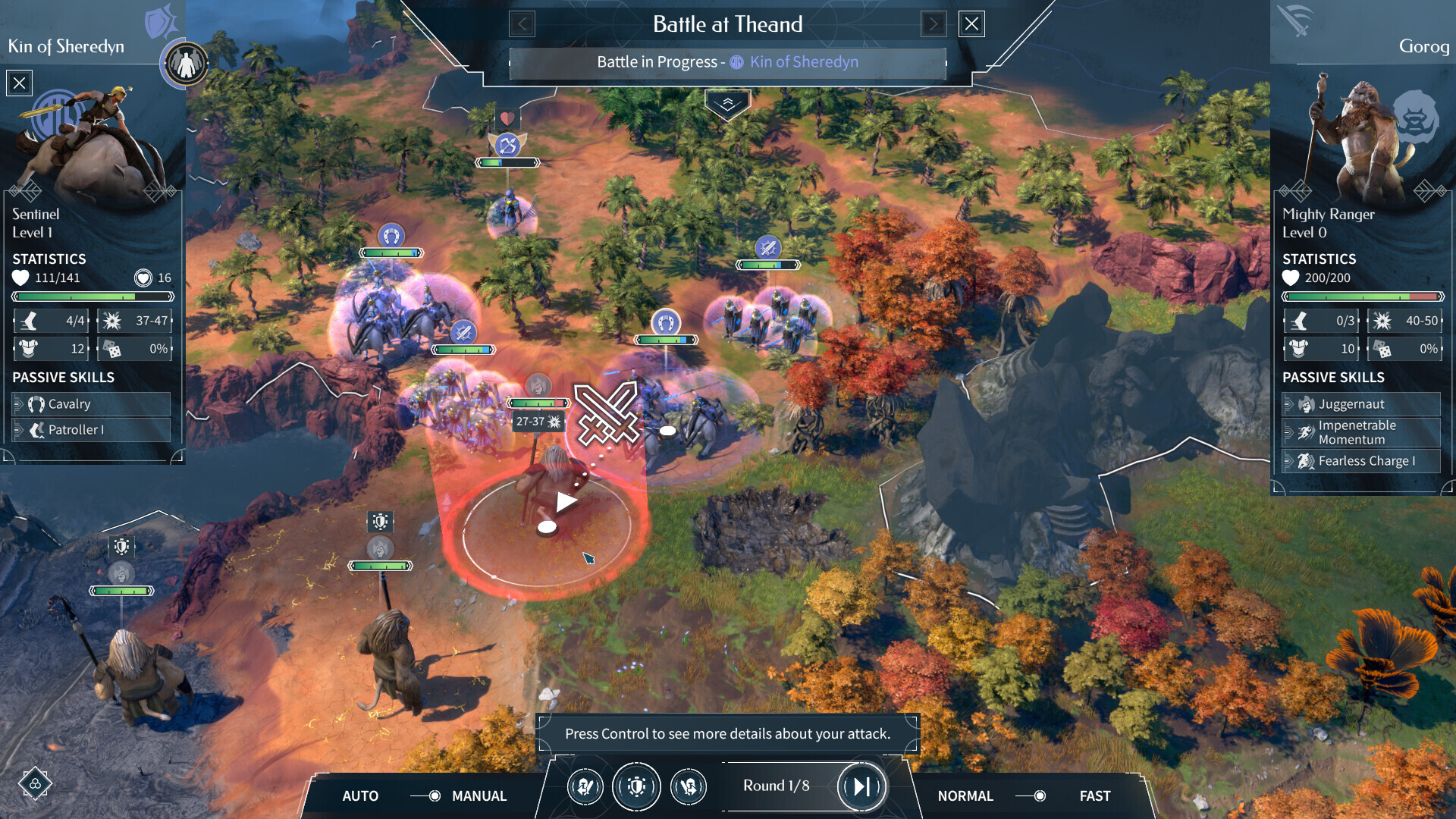
Tactical, turn-based combat on the natural map remains tactically satisfying through terrain exploitation and chokepoint management. Factions like the ranged-focused Tahuks or terrain-dependent Sandshapers derive immense tactical flavor from spatial control. However, the combat math can occasionally feel rigid; damage scaling often makes skirmishes feel like equal exchanges unless numerical superiority exceeds two to one, occasionally forcing players to lean on system exploits or buff-stacking to secure victory.
Pleasingly, the game’s difficulty balance is remarkably well-tuned out of the box. Higher settings scale the challenge in consistent, measurable steps. While top-tier difficulties still rely on the traditional 4X crutch of inflating AI resource production rather than rewriting underlying strategic competence, the resulting pressure ensures that every campaign demands absolute mastery of the faction’s unique eccentricities.
Verdict
Endless Legend 2 is a magnificent, rule-breaking triumph. It honors the legacy of its predecessor while carving out its own distinct identity through a dying, shifting world. For strategy fans, it is an essential journey into the heart of brilliant science fantasy.