Executive Overview
The landscape of interactive digital entertainment is undergoing a profound structural metamorphosis, and Epic Games has firmly positioned itself at the vanguard of this disruptive wave. In late 2026, the creator of Unreal Engine and the ubiquitous Fortnite announced a high-stakes competitive event: the 2026 Epic AI MegaJam. Initially billed as a mandatory showcase for artificial intelligence-assisted game development, the event immediately ignited a fierce debate across the global software engineering and game design communities.
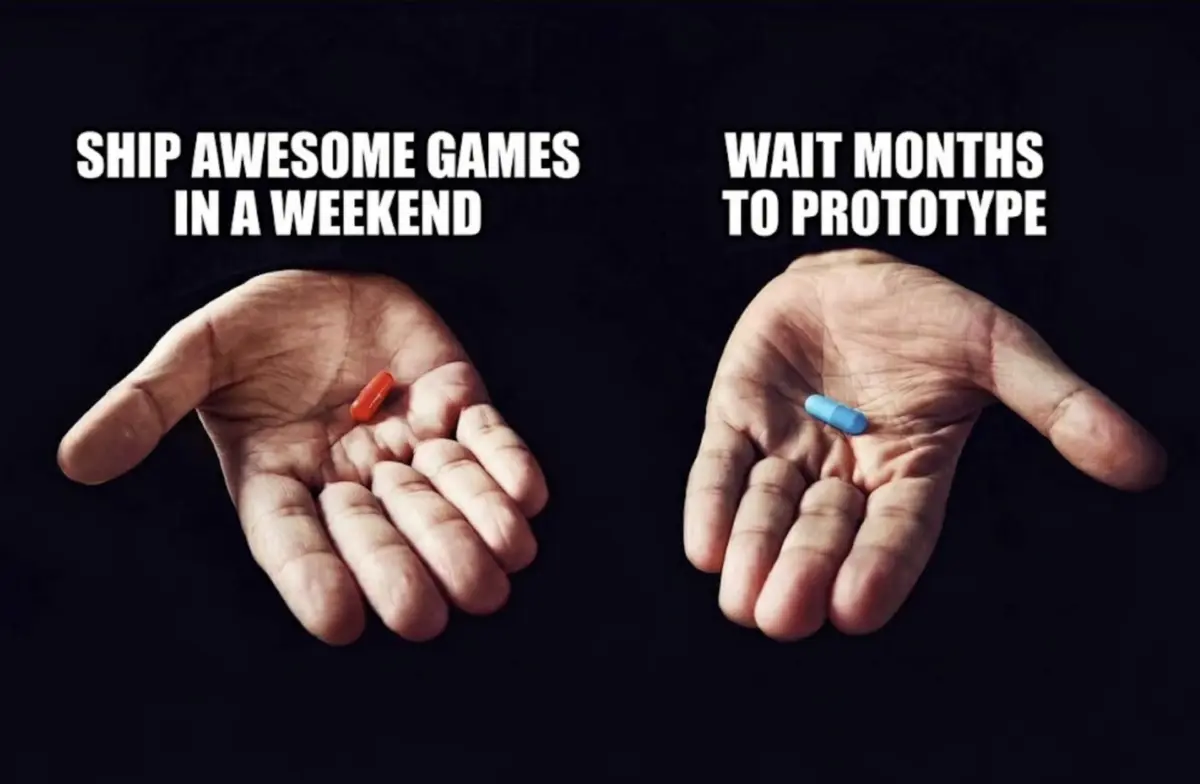
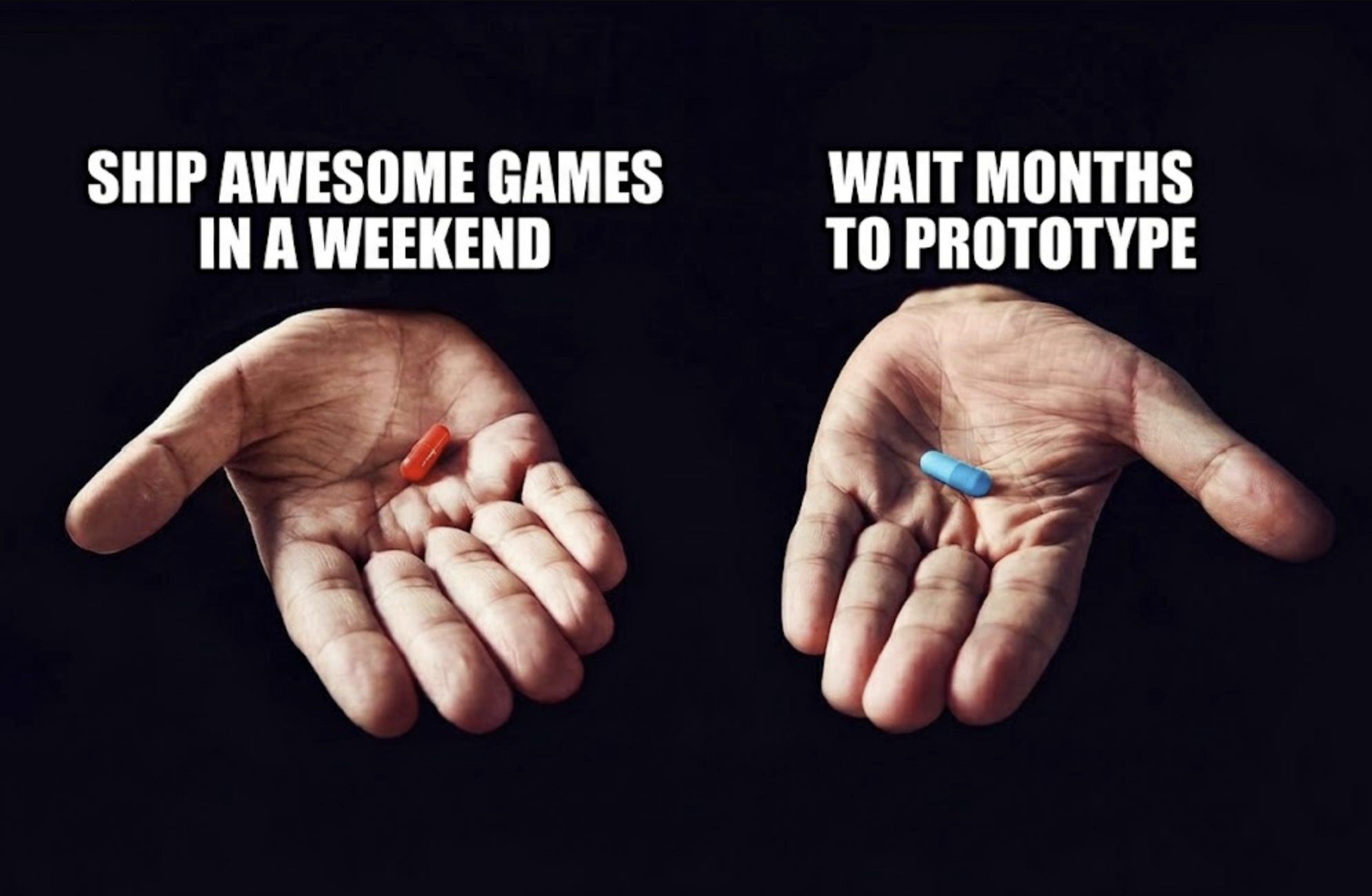
Promoted with provocative imagery—including a Matrix-inspired "red pill" versus "blue pill" dichotomy featuring a deliberately distorted, six-fingered AI-generated hand—the MegaJam offered substantial financial incentives. Creators were invited to compete for cash prizes totaling thousands of dollars per category, alongside lucrative "Development Continuation Grants" reaching up to $50,000 per team.
However, the requirement that participants actively utilize generative AI tools to rapidly prototype and ship games over a single weekend sparked immediate backlash. Critics argued that the mandate marginalized traditional, human-centric craftsmanship and undermined the core ethos of independent game jams, which have historically celebrated human ingenuity under tight temporal constraints. In response to the friction, Epic Games swiftly walked back the mandatory nature of the rule, clarifying that developers could utilize "as little or as much AI as you want."
Despite this regulatory retreat, Epic’s overarching corporate strategy remains unyieldingly pro-AI. Led by CEO Tim Sweeney, the company is systematically pivoting its internal infrastructure—ranging from flagship software launchers to high-profile cross-media crossover projects featuring Marvel and Star Wars intellectual properties—toward an "AI-first" paradigm. This comprehensive report investigates the origins of the 2026 Epic AI MegaJam, the broader industry implications of Epic’s pivot, the technical and philosophical divide separating developers, and the long-term outlook for human creativity in an increasingly automated development ecosystem.
Detailed Chronology: From Concept to Clarification
To understand the current friction between Epic Games and the independent developer community, it is essential to trace the timeline of events leading up to the announcement and immediate recalibration of the 2026 Epic AI MegaJam.
The Buildup to the AI-First Era
Throughout 2024 and 2025, major software conglomerates increasingly integrated large language models (LLMs) and generative neural networks into their pipelines. Epic Games, traditionally known for democratizing access to high-end game development tools via Unreal Engine, signaled a deeper shift in its internal corporate philosophy. Reports surfaced that Epic had directed internal development teams—specifically those managing massive, lucrative crossovers involving Disney, Marvel, and Star Wars intellectual properties—to transition away from legacy workflows and adopt "AI-first" development methodologies.
This philosophical shift culminated in mid-October 2026, when Epic publicly unveiled the newly redesigned Epic Games Store launcher. Dubbed by company representatives as "vibe coded," the updated launcher was lauded internally for outperforming competing platforms like Steam in raw responsiveness, a performance gain Epic directly attributed to AI-assisted coding frameworks.
The Announcement of the 2026 Epic AI MegaJam
On October 22, 2026, Epic Games formally announced the timeline and parameters for the 2026 Epic AI MegaJam. The promotional campaign leaned heavily into sci-fi counterculture iconography. Utilizing a reference to the famous red pill/blue pill scene from The Matrix, Epic framed AI-assisted development as an awakening that allowed creators to "ship awesome games in a weekend," contrasting it pejoratively with traditional, manual prototyping workflows that forced developers to "wait months to prototype."
Adding a layer of self-aware irony—or tone-deaf provocation, depending on one’s perspective—the promotional artwork featured a hand offering a red pill adorned with six fingers, a notoriously persistent artifact of early and mid-2020s generative image models.
According to the original promotional schedule:
- November 11, 2026: The official jam theme is revealed to the public.
- November 12–15, 2026: Participating individuals and distributed teams are given a strict 72-hour window to produce playable prototypes utilizing AI tools. A physical hub was established in San Francisco to host in-person development teams alongside continuous daily livestreams tracking real-time progress.
- Prizing Structure: Three primary categories offered $7,500 for first-place winners, complemented by secondary cash pools for runners-up, specialized accolades like "Best Team," and the coveted Development Continuation Grants of up to $50,000.
The Regulatory Walkback
Initial documentation accompanying the MegaJam FAQ explicitly stated that utilization of AI tools was a mandatory prerequisite for entry. This stipulation triggered an immediate firestorm across social media platforms, Reddit communities, and developer forums. Critics accused Epic of attempting to artificially manufacture a market dependency on generative software, while veteran jammers pointed out that rapid prototyping had been successfully executed without AI assistance for over two decades.
Recognizing the escalating public relations misstep, Epic Games issued a formal correction via its official Unreal Engine channel on X (formerly Twitter):
"Our FAQ originally said you had to use AI for the MegaJam. That’s our mistake. You can use as little or as much AI as you want. We’re updating the FAQ and rules to make that clear."
While the mandatory requirement was relaxed to an optional framework, the underlying message remained clear: Epic views artificial intelligence as the indispensable future of interactive entertainment creation.
Supporting Context & Metrics: The Economics and Realities of AI in Game Dev
The controversy surrounding the Epic AI MegaJam does not exist in a vacuum; it reflects deep economic pressures and technological shifts currently reshaping the global video game industry.
The Escalating Cost of AAA Development
Over the past decade, the cost of developing a AAA video game has skyrocketed. Budgets routinely cross the $200 million threshold, with development cycles stretching from five to eight years. This hyper-inflation of production costs has created a high-risk, low-tolerance business environment where a single commercial failure can threaten the survival of a century-old studio.
Generative AI is increasingly viewed by corporate executives as the primary lever to compress these timelines and reduce labor overhead. By automating repetitive coding tasks (boilerplate code generation, bug hunting, and regression testing) and accelerating asset pipelines (rough texture generation, placeholder 3D mesh creation, and initial level layout blocking), companies hope to slash development cycles by 30% to 50%.
Game Jams: Tradition Versus Technological Disruption
Game jams—such as Ludum Dare, Global Game Jam, and various company-sponsored jams—have traditionally served as sacred spaces for raw human creativity, technical experimentation, and community bonding. Established in the early 2000s, events like Ludum Dare challenged developers to build complete games from scratch in 24 to 48 hours.
The introduction of AI into these competitive environments fundamentally alters the dynamic. When a participant can prompt an LLM to write core mechanics or generate entire asset packs in seconds, the metric of success shifts from personal coding skill and artistic expression to prompt-engineering proficiency and tool curation. This shift has alienated a substantial segment of the independent developer community who view game jams as a sanctuary from corporate automation.
The Developer Divide: Statistics and Sentiment
Industry surveys consistently reveal a polarized workforce:
- The Corporate Perspective: C-suite executives and venture capitalists are heavily bullish, citing efficiency gains, democratization of technical barriers for non-programmers, and the potential to unlock unprecedented creative scale.
- The Practitioner Perspective: Many rank-and-file programmers, concept artists, writers, and independent developers express deep skepticism. Concerns range from copyright infringement and the unethical scraping of training data to the degradation of artistic authenticity and the eventual displacement of junior-level development jobs.
Official Statements and Industry Discourse
The ideological battle lines were drawn sharply across public forums following Epic’s announcements. The debate centers not merely on software utility, but on the philosophical definition of creativity itself.
Tim Sweeney and the "AI-First" Mandate
Epic Games CEO Tim Sweeney has emerged as one of the most vocal proponents of the generative AI transition within the games industry. Sweeney has consistently argued that survival in the modern software landscape requires aggressive adaptation rather than passive resistance.
In response to reports regarding the pivot of internal teams toward AI-first methodologies, Sweeney asserted that the industry’s collective goal must be to "survive the AI revolution" by fundamentally retooling workflows for maximum acceleration. Furthermore, Sweeney addressed the psychological barrier preventing many developers from openly embracing these technologies:
"Developers who are getting value from AI should speak up. There’s safety in numbers. MOST developers are doing it and loving it—and if they’re not talking about it it’s mostly out of fear for haters attacking them, their product, and their company."
Sweeney’s vision for the future posits that creative labor will increasingly transition away from manual execution—such as writing every line of code or drawing every pixel by hand—and evolve into a discipline focused on high-level curation, vision casting, and directorial oversight.
Community Backlash and Counter-Arguments
Despite the backing of tech-forward executives and investors, the pushback from independent creators has been fierce and articulate. Critics argue that corporate entities are leveraging financial incentives—such as the $50,000 grants offered in the MegaJam—to condition developers into accepting tools that ultimately threaten their long-term livelihoods.
One prominent community member captured the sentiment on social media, criticizing Epic’s framing of legacy prototyping as an archaic hurdle:
"So do yall think you invented the concept of a game jam or what? The Ludum dare game jam was only 24 hours in 2002, so like, a quarter of the time as your game jam. But you want to make it look like its only possible with AI with this ‘wait months to prototype’ narrative."
Critics emphasize that the romantic appeal of game jams lies precisely in the human struggle—the caffeine-fueled coding sessions, collaborative debugging, and uniquely human artistic quirks that emerge when a team pushes its biological limits over a weekend. Introducing generative AI into this equation, critics argue, sterilizes the creative process and replaces human friction with algorithmic homogenization.
Future Outlook: Navigating the Brave New World of Interactive Entertainment
As the dust settles on the initial controversy surrounding the 2026 Epic AI MegaJam, the broader trajectory of the video game industry remains fundamentally altered. Epic Games has made its ideological stance unmistakably clear: generative artificial intelligence is not a passing trend, but the foundational bedrock upon which the next generation of interactive software will be built.
Key Trends to Watch in the Post-MegaJam Landscape:
- Tool Integration vs. Replacement: While pure prompt-to-game solutions remain crude, deeply integrated AI assistants within engines like Unreal Engine and Unity will become standard fixtures. Developers will increasingly rely on contextual AI co-pilots for physics calculations, lighting setup, and optimization passes.
- The Rise of "Vibe Coding" and Curated Direction: As CEO Tim Sweeney predicted, the role of the developer is shifting. Junior roles focused on boilerplate code or asset generation face unprecedented automation pressure, while demand for visionary directors, system architects, and master prompt/model curators is projected to surge.
- The Counter-Culture Movement: Just as organic farming and handmade crafts experienced a resurgence during the industrial and digital revolutions, a distinct counter-culture of "artisanal" game development is emerging. Independent studios and traditionalists are explicitly marketing their games as "100% human-made," leveraging human craftsmanship as a badge of honor and a unique selling proposition against AI-saturated markets.
- Legal and Ethical Frameworks: The long-term viability of AI-assisted game development will depend heavily on emerging legal precedents surrounding copyright, training data licensing, and intellectual property protection. As courts begin to define the boundaries of machine-generated art and code, corporate strategies will inevitably adapt to comply with regulatory realities.
Ultimately, the 2026 Epic AI MegaJam serves as a microcosm of a larger cultural and economic wrestling match. Whether artificial intelligence proves to be the ultimate liberator of human creativity or the homogenizer of digital art remains one of the defining questions of modern technology. What is certain, however, is that the industry can never return to the way things were before the red pill was swallowed.