Nearly eight years after the Gutenberg block editor fundamentally shifted how content is authored in WordPress, the platform has reached a significant architectural milestone. With the release of WordPress 7.0, core developers have introduced a radically simplified method for building custom blocks: PHP-only registration.
For the past seven and a half years, developing a custom block required navigating a steep technical barrier. Developers had to build and maintain complex JavaScript build pipelines, orchestrate NPM packages, master React, and synchronize block registrations across both server-side PHP files and client-side JavaScript components. For classic theme developers, backend agencies, and solo maintainers managing legacy systems, this friction served as a major deterrent to adopting modern block themes.
WordPress 7.0 changes this dynamic by allowing developers to register and render fully functional blocks using exclusively PHP. By introducing the 'autoRegister' => true flag, the platform automatically generates the requisite client-side JavaScript and editor previews from server-side PHP code.
While this innovation drastically lowers the barrier to entry, it is not a silver bullet. Architectural limitations—such as a lack of real-time data reactivity, restricted attribute types, and detached post contexts—make PHP-only blocks ill-suited for building complex, highly interactive user experiences from scratch. Instead, the true value of this feature lies in its killer use case: serving as a seamless migration bridge for legacy PHP code, custom shortcodes, and classic widgets into the modern block ecosystem.
Detailed Chronology: The Evolution of Block Development
The Gutenberg Era Begins (2018)
When WordPress 5.0 introduced the block editor in December 2018, it marked the most dramatic paradigm shift in the platform’s history. Replacing the classic TinyMCE text area with a modular, React-based UI, Gutenberg aimed to democratize web design. However, the architectural foundation of the editor leaned heavily on modern JavaScript. To register a custom block, developers were required to write code in two distinct environments: PHP to register the block type on the server, and JavaScript (via @wordpress/blocks and JSX) to define the block’s behavior, edit interface, and save structure.
The Rise of Build Tooling and Complexity
As the block editor matured into the Site Editing era, the ecosystem standardized around @wordpress/scripts—a webpack-based configuration bundle. While powerful, this tooling introduced a heavy cognitive load for developers whose primary expertise was PHP and backend logic. Setting up Node.js environments, managing dependency updates, debugging Babel configurations, and compiling assets became mandatory prerequisites for extending WordPress. Over the years, community sentiment grew divided: while enterprise agencies embraced React-driven application architectures, thousands of solo developers, boutique shops, and long-standing site maintainers found themselves effectively locked out of modern block-based workflows.
The WordPress 7.0 Breakthrough
Recognizing the friction inhibiting full ecosystem migration, the core development team prioritized developer experience (DX) in WordPress 7.0. By introducing server-driven block auto-registration, the platform bridges the gap between traditional WordPress development and the block editor. Developers can now bypass local node modules, Webpack configurations, and React state management entirely, constructing functional block interfaces using the language that built the CMS: PHP.
Supporting Context & Metrics: Capabilities and Constraints
To evaluate whether the long wait for PHP-only blocks was justified, developers must weigh their impressive accessibility against their strict architectural boundaries.
The Mechanics of PHP-Only Registration
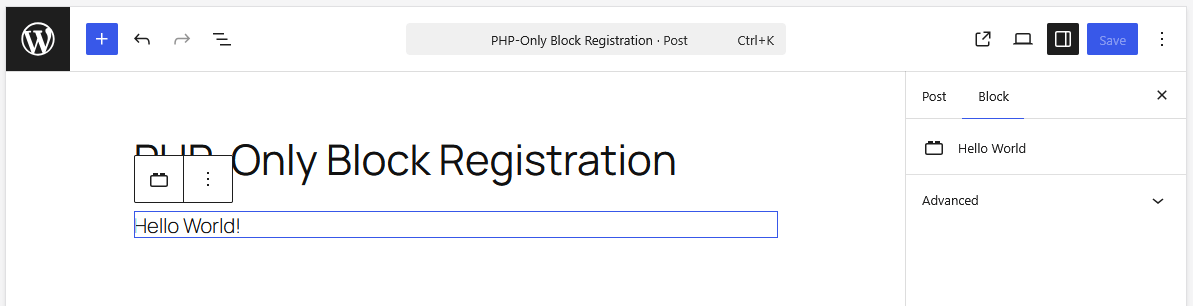
Under the new system, registering a basic block requires only a server-side function hooked into the init action. Consider the following example for a Hello World block:
The defining element here is the 'autoRegister' => true argument. This single flag instructs WordPress to dynamically generate the client-side code required for the block editor to recognize, preview, and render the block without needing a companion JavaScript file.
Adding Attributes and Sidebar Controls
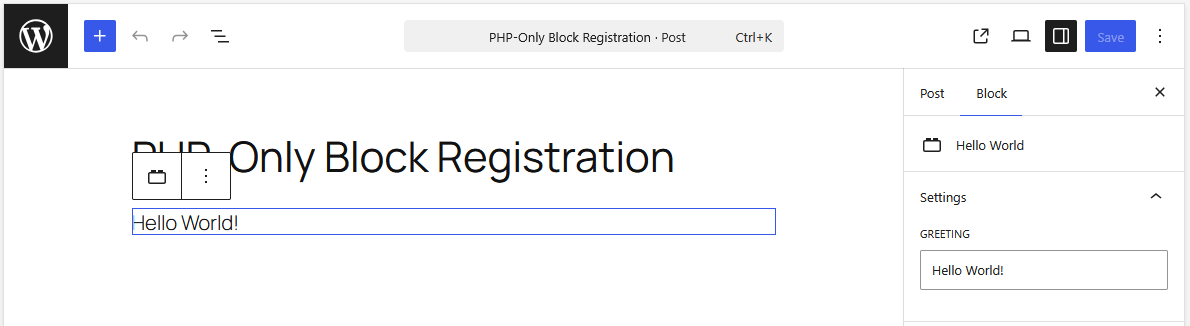
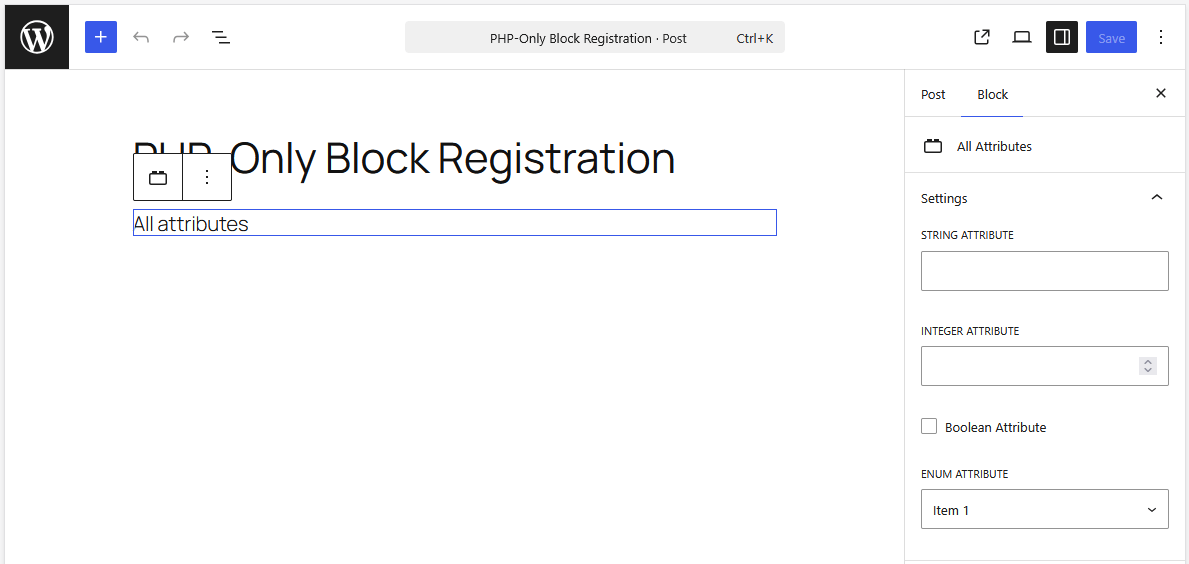
Attributes allow users to customize block behavior. In a traditional setup, developers must write React components to render UI controls inside the editor sidebar. With WordPress 7.0, defining attributes automatically generates corresponding input fields in the block’s settings panel:
Despite its elegance, the PHP-only approach comes with severe constraints stemming from how the editor communicates with the server:
No In-Editor Interactivity: Because the editor displays HTML returned by a PHP render_callback via a REST API endpoint, the block cannot leverage client-side single-page application (SPA) state. You cannot build inline-editable elements, nor can you attach complex JavaScript event listeners to the block’s preview DOM, as asynchronous re-renders will instantly destroy them.
Stale Data Access: PHP-only blocks bypass the client-side JavaScript data store. If a user modifies the post title or custom fields in the editor, a PHP-rendered block querying the database directly will display outdated data until the post is explicitly saved and the page is reloaded.
Stateless Post Context: REST API requests are stateless. Consequently, standard template tags relying on global state—such as get_the_ID() or the_title()—frequently fail inside the editor preview unless developers implement workarounds to pass local URL parameters (such as $_GET['post']) into custom attributes.
Restricted Attribute Types: WordPress 7.0 limits PHP-registered attributes to strings, numbers, and booleans. This maps to basic text inputs, number fields, checkboxes, and simple dropdowns. Advanced UI components like media uploaders, rich text formatting tools, and keyed array selectors are completely absent.
Official Statements and Industry Perspective
Leading voices within the WordPress ecosystem have shared mixed, highly pragmatic perspectives on the update. While JavaScript purists emphasize that React remains essential for modern, high-performance editor experiences, backend architects view the feature as an overdue release valve for legacy projects.
"For building rich, native-feeling interactive blocks, PHP-only registration is simply not enough. You need JavaScript. But that misses the primary point of the feature," notes lead architectural commentators. "This is not designed to replace modern JavaScript block development; it is designed to rescue thousands of legacy sites stranded on classic themes."
Agencies managing massive portfolios of older client sites have welcomed the change. By removing the mandatory build pipeline requirement, junior and intermediate developers who are proficient exclusively in PHP can now audit, upgrade, and transition older themes to modern block architectures in a fraction of the time previously required.
Future Outlook: Migrating Legacy Code and Best Practices
The Killer Use Case: Migrating Classic Themes
The ultimate justification for PHP-only blocks is theme migration. Historically, converting a custom widget, shortcode-driven header, or PHP template part into a block theme required rewriting entire codebases into JavaScript.
With WordPress 7.0, developers can wrap existing PHP markup inside a server-side rendered block. While the backend editor preview might lack advanced interactivity, the front-end output remains pixel-perfect. This drastically reduces migration timelines from weeks of specialized JavaScript development down to a few hours of straightforward refactoring.
Pro-Tips for Maximizing PHP-Only Blocks
Developers operating within these new constraints can optimize their workflows using several established patterns:
Differentiating Editor vs. Front-End Rendering: Use wp_is_rest_endpoint() alongside checks for the block-renderer REST route to alter output depending on whether the block is viewed on the frontend or inside the admin editor.
Injecting Post IDs Safely: Mitigate the lack of post context by mapping the URL’s post GET parameter to a local block attribute during registration.
Leveraging Block Supports: Enhance block utility by opting into core features via the supports API. You can hide utility blocks from the inserter ('inserter' => false), restrict instances per post ('multiple' => false), or enable global alignment controls ('align' => true).
Conclusion: Was the Wait Worth It?
For developers hoping to bypass JavaScript entirely while building next-generation web applications, WordPress 7.0’s PHP blocks will feel underwhelming. However, for the vast community of WordPress professionals burdened by legacy codebases and complex build setups, this feature is a triumph.
By prioritizing developer experience and lowering the barrier to entry, WordPress has provided a pragmatic bridge to the future. PHP-only blocks successfully rescue thousands of classic sites from technical stagnation, proving that—for the right use case—the seven-and-a-half-year wait was undeniably worth it.