
In the nearly two decades since mobile computing devices transformed from corporate utilities into ubiquitous extensions of human life, the consumer electronics industry has fallen into a predictable, highly choreographed rhythm. Tech giants stage grandiose product announcements filled with hyperbolic marketing jargon, leaving cynical observers to roll their eyes at yet another iterative smartphone or incremental laptop upgrade.
Yet, every so often, a disruptor emerges that cuts through the noise. Flipper Devices is one of those rare entities. When the company makes an announcement, it doesn’t just generate polite interest; it triggers unalloyed excitement. It is the kind of passion that bypasses pragmatic thoughts like, "Oh, that could be useful on my work phone," and slams squarely into, "I am going to block out an entire weekend to tinker with this."
Last month, Flipper broke from its traditional playbook. Instead of offering the usual drip-feed of tantalizing, closed-door teasers designed to manufacture artificial hype, the company flung its doors wide open, inviting the global hacker and developer community to participate directly in the genesis of its next major device: the Flipper One.
"The main reason we opened up all parts of Flipper One before release is that we want to invite the community into the development process, so everyone can contribute and get involved without waiting for the final product," declared Flipper CEO Pavel Zhovner in no uncertain terms.
By marrying a fully customizable Linux operating system, software-defined radio (SDR), satellite communications, and edge artificial intelligence into a pocket-sized form factor, Flipper is attempting to redefine what open hardware can achieve. But building a dream cyberdeck in an era defined by global component shortages, supply chain volatility, and the looming shadow of generative AI "slop" is no small undertaking. This is the inside story of how Flipper is tackling its most ambitious project yet—by letting the world watch, test, and build right alongside them.
Detailed Chronology: Count to Zero, Then One
To understand the magnitude of the Flipper One, one must first examine its predecessor. Flipper’s maiden hardware voyage, the Flipper Zero, achieved legendary status within the global pentesting, ethical hacking, and maker communities. Its cheeky, cyberpunk-inflected pwnagotchi interface instantly endeared it to enthusiasts who found any excuse imaginable to whip it out in public. Beneath its playful exterior, however, lay a formidable arsenal of radio-protocol tools packed into a palm-sized chassis. Its utility was so profound that it quickly became a staple in the toolbelts of serious information-security heavy-hitters.
"The Flipper Zero is one of my favorite devices of all time," says Josh Bressers, Vice President of Security at Anchore and co-host of the Open Source Security podcast.
While the infosec community remains fiercely fond of the Flipper Zero, the landscape has shifted, and users are hungry for the next chapter. "I think it’s a continuation of what Flipper Zero started," Bressers notes. "The features of the Flipper Zero are certainly a bit stale these days."
In the relentless crucible of technology, standing still is a death sentence. Flipper aims to stay at the front of the pack, and the forward-thinking architecture woven into the Flipper One is proof of that ambition. Remarkably, the product concept was dreamt up long before the underlying silicon to support it even existed.
"Since 2020, I’ve been talking about the separation of Flipper Zero and Flipper One," Zhovner reveals. "One of the reasons we didn’t do this sooner was the lack of a suitable SoC [system on a chip] that was simultaneously fast, energy-efficient, and sufficiently open. In 2024, the RK3576 came out, and once we realized it was open enough, we decided the time was right."
By refusing to settle for off-the-shelf compromises, Flipper positioned itself for a technological tomorrow that has finally arrived. The blueprints are nothing short of breathtaking. The Flipper One takes the multi-tool radio concept that made its predecessor a household name in hackerspaces and anchors it to a fully customizable Linux operating system.
Serving up the redoubtable Linux userland is FlipCTL, a utility that wraps command-line interface (CLI) tools for seamless manipulation within a cyberdeck form factor—a dream long harbored by Linux purists. Much like the Steam Deck revolutionized portable PC gaming, the Flipper One requires little more than a portable keyboard and monitor to transform into a fully functional desktop workstation. While mainstream consumer tech abandoned this modular flexibility years ago, the Linux hardware community has kept the torch burning.
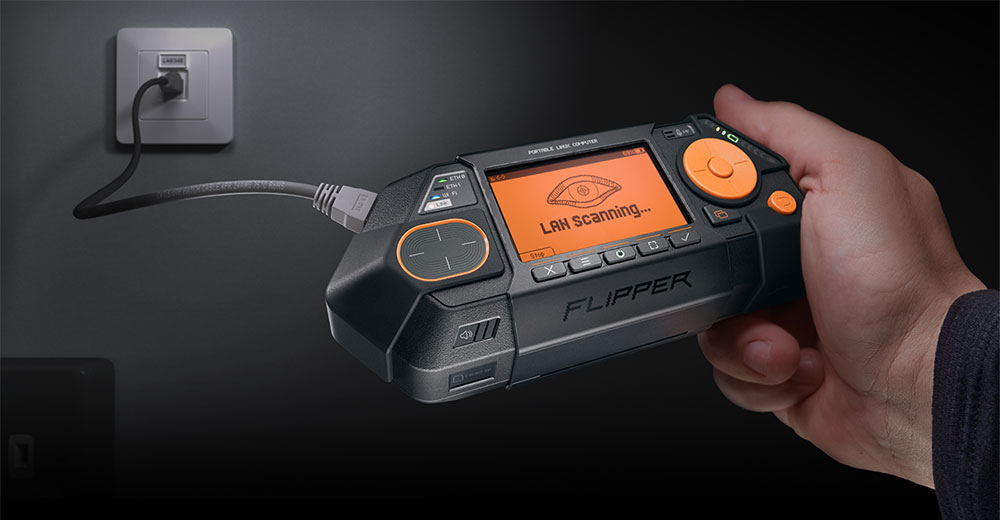
Networking hardware, however, is where the hacker demographic will truly lose its collective mind. For starters, the Flipper One boasts a full software-defined radio (SDR)—a capability guaranteed to electrify amateur radio operators and the rapidly expanding ecosystem surrounding decentralized communication projects like Meshtastic. Complementing this is a built-in satellite modem, arriving precisely as satellite communication security becomes a critical frontier and corporations begin exploring orbital data centers.
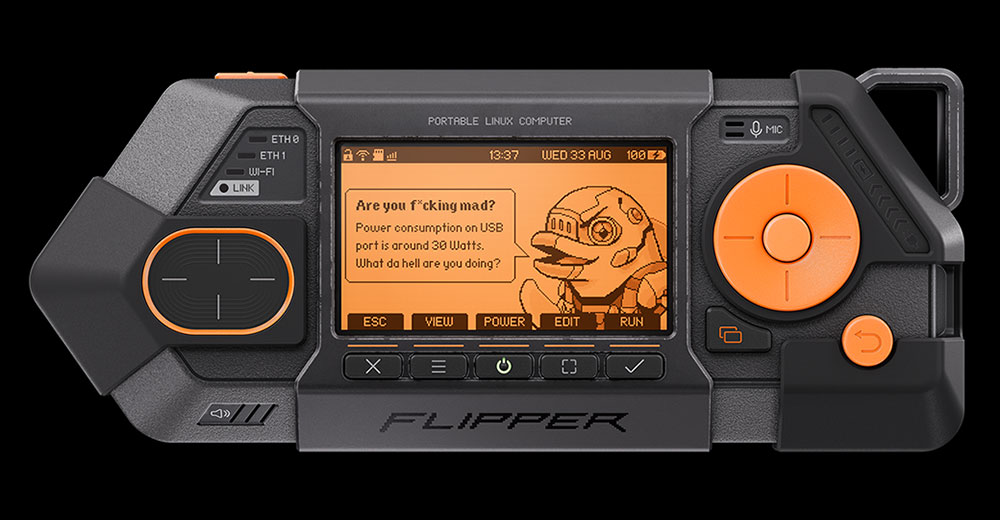
Furthermore, by building around a single-board computer (SBC) equipped with a neural processing unit (NPU), the Flipper One could very well secure the crown as the first end-user Linux device to ship with a localized Large Language Model (LLM) pre-installed. While Microsoft claimed historical precedence by bringing the first LLM-equipped Windows PCs to market, the open-source community has long sought an alternative untethered from corporate telemetry and proprietary restrictions.
Supporting Context & Metrics
Achieving this vision requires clearing significant technical hurdles, starting with software integration. In committing to true "open hardware"—the physical world’s equivalent of open-source software—Flipper aims to craft a device that runs unadulterated, stock Linux kernels without relying on proprietary binary blobs or dirty workarounds. Accomplishing this requires "mainlining," the process of contributing the drivers and modules that operate the Flipper One’s hardware directly into the official Linux kernel source code tree.
"Almost everything Flipper One needs is already in the mainline kernel… So we’re not worried about this at all," Zhovner asserts with characteristic confidence. "And fortunately, we’re not the only ones interested in mainlining the RK3576—other companies are working on it, too."
Industry veterans agree that this goal is attainable. Bressers views the prospect of mainlining the required kernel modules as a standard, if rigorous, engineering process. "I have no doubt the Linux kernel will take any contributions that follow their rules," he observes.
The RK3576 system-on-chip, engineered by Rockchip and available since late 2023, was designed specifically to power the burgeoning AIoT (Artificial Intelligence of Things) device class. By blending localized AI inferencing with IoT connectivity, the chip facilitates sophisticated edge-compute data processing. Leveraging it to drive an open end-user SBC represents yet another masterclass in how Flipper re-imagines tomorrow’s technology using today’s silicon building blocks.
However, cramming this much capability into a handheld chassis introduces immense quality-assurance challenges. Every additional hardware subsystem exponentially increases the testing matrix required to ensure harmonious interoperability.
"The current work is systematically identifying all potential side effects across hardware combinations, which requires the firmware to be mature enough to run multiple features concurrently," Zhovner explains. "So in a sense, the testing and the development have to advance together."
Official Statements & Community Collaboration
Where Flipper is truly venturing into uncharted territory is its reliance on pre-launch community contributions. As exemplary citizens of the open-source world, Flipper published the Flipper Zero’s firmware after the hardware had already shipped to backers. But the philosophy behind the May announcement was fundamentally different: the company is actively soliciting collaborative engineering for work that remains unfinished. To achieve this, Flipper has torn down the traditional corporate wall of secrecy.
"With Flipper One, we decided to go even further and open up the task tracker as well, so anyone can see how the team communicates internally and how we make decisions," Zhovner says.
For prospective developers wondering how they are supposed to write code for a device they do not yet own, Flipper has published comprehensive documentation outlining compatible off-the-shelf development boards already available on the market.
Yet, this unprecedented openness invites modern complications. The very innovation that made the RK3576 so attractive as a foundational processor—artificial intelligence—also presents the single greatest threat to managing an open-source project in the 2020s. Generative AI coding assistants have flooded the developer ecosystem, forcing open-source veterans to institute strict governance policies to maintain code integrity.
"For the community contributions that [Flipper is] looking for, which will affect the base operating system, those will probably need a policy that evolves with the contributions proposed," notes Bressers.
Flipper is acutely aware of this vulnerability and has experienced its initial friction firsthand. Though the precise regulatory framework is still evolving, the contours of a formal AI policy are taking shape within the organization.
"Yes, the AI slop problem has hit us, too," Zhovner admits bluntly. "So yeah, it’s a challenge, we’re figuring out how to guard against it, and working on establishing some ground rules."
Future Outlook & Economic Realities
As the project barrels toward production, one critical question hangs heavy in the minds of prospective backers: Can Flipper hit its aggressive price target?
In an electronic components market ravaged by supply chain crunches, inflationary pressures, and aggressive silicon hoarding by AI hyperscalers, threading this needle is vastly more difficult than it was during the Flipper Zero campaign. The team is currently targeting a baseline price of roughly $350 for the entry-level configuration, which will omit the cellular modem.
This is where the collective faith of Flipper’s fanbase becomes the ultimate determining factor. Because manufacturers command better wholesale pricing only through volume commitments, securing supplier discounts requires front-loading customer capital.
"That’s why hitting a significant Kickstarter funding goal is critical—it directly affects the terms our suppliers offer us," Zhovner emphasizes. "Given the ongoing component and RAM shortage, this is no easy feat right now."
Industry observers believe the target is within reach. Bressers estimates that a $350 price point for a device of this caliber is entirely realistic when stacked against comparable hardware.
"I think it’s plausible. A Raspberry Pi 5 with 16GB of RAM is about $300," Bressers points out. "The Flipper One is supposed to have 8GB, so less RAM, but there are other added costs like the screen and radios."
With an official Discord community boasting more than 116,000 active members, Flipper commands a dedicated vanguard of enthusiasts. This critical mass of die-hard supporters should provide the purchasing leverage necessary to secure component allocations and fund the initial production run.
When the Flipper One finally lands in the wild, what kind of consumer tech landscape will greet it? As a self-proclaimed Flipper Zero devotee and a core member of the target demographic, Bressers views the project not necessarily as a disruptive force that will rewrite industry paradigms, but as an essential evolution for an underserved audience. It remains the ultimate starter pack for the next generation of hardware hackers.
"It won’t change the industry, but it sounds like it will continue to be an easy way to start a hardware hacking journey," Bressers concludes.
For an industry increasingly locked down by walled gardens, proprietary firmware, and digital rights management, an open-source, Linux-powered cyberdeck built by the community, for the community, is precisely the kind of fresh air the tech world desperately needs.