Executive Overview
The global scientific community stands on the precipice of a new era in astrophysical observation as NASA prepares for the imminent launch of the Nancy Grace Roman Space Telescope. Scheduled to lift off no earlier than 7:26 AM Eastern Time on August 30, this flagship observatory represents a monumental leap forward in our technological capacity to probe the deepest mysteries of the universe. Encapsulated securely within a SpaceX Falcon Heavy fairing at Launch Complex 39A at NASA’s Kennedy Space Center in Florida, the telescope is poised to embark on a mission that will redefine our understanding of dark energy, cosmic expansion, and extrasolar planetary systems.
NASA’s live broadcast of the event will commence at 6:20 AM Eastern Time on August 30, offering global audiences front-row access to a milestone in space exploration. Should weather constraints or technical evaluations necessitate a delay, backup launch windows have already been secured for August 31 at 7:22 AM Eastern Time.
Named in honor of Nancy Grace Roman—NASA’s pioneering first Chief of Astronomy affectionately dubbed the "Mother of Hubble"—this state-of-the-art infrared observatory carries the heavy mantle of its predecessors while introducing revolutionary technological capabilities. Boasting a field of view at least 100 times larger than that of the Hubble Space Telescope, the Roman Space Telescope will fundamentally alter how astronomers survey the cosmos. By simultaneously capturing vast swaths of the sky with unprecedented resolution, the mission aims to answer some of the most enduring questions in modern physics, casting light upon the enigmatic forces accelerating the expansion of our universe and searching for habitable worlds beyond our solar system.
Detailed Chronology: From Testing to the Tarmac
The journey toward the launch pad has been a masterclass in aerospace engineering, meticulous quality assurance, and dynamic scheduling adjustments. The timeline leading up to the August 30 liftoff reflects both the rigorous demands of spaceflight preparation and the agile collaboration between NASA and its commercial partners.
Late Spring Milestones and Pre-Launch Inspections
As the mission timeline entered its final quarter, engineering teams at NASA faced the critical task of verifying the structural and optical integrity of the observatory. In late May, specialists completed the final, exhaustive inspection of the telescope’s primary mirror. This delicate process was designed to ensure that the mirror had sustained zero degradation or physical damage during the exhaustive environmental testing phases, which simulate the punishing acoustic and vibrational stresses of a rocket launch. With the mirror receiving a clean bill of health, the mission crossed a vital psychological and technical threshold.
Following the successful mirror evaluation, NASA announced a strategic acceleration of the mission schedule in early June. Originally slated for a September deployment, the launch window was moved up to August 30. This adjustment was made possible by the accelerated efficiency of pre-flight processing teams at the Kennedy Space Center, who streamlined integration procedures without compromising safety protocols.
Integration and Payload Encapsulation
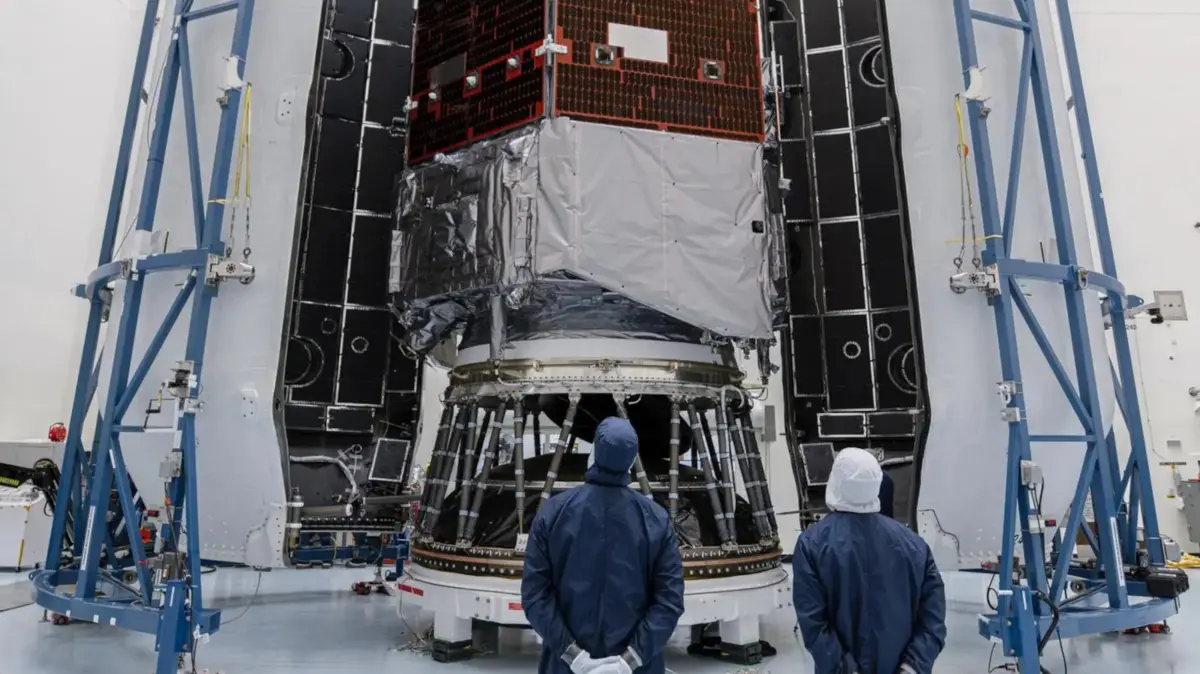
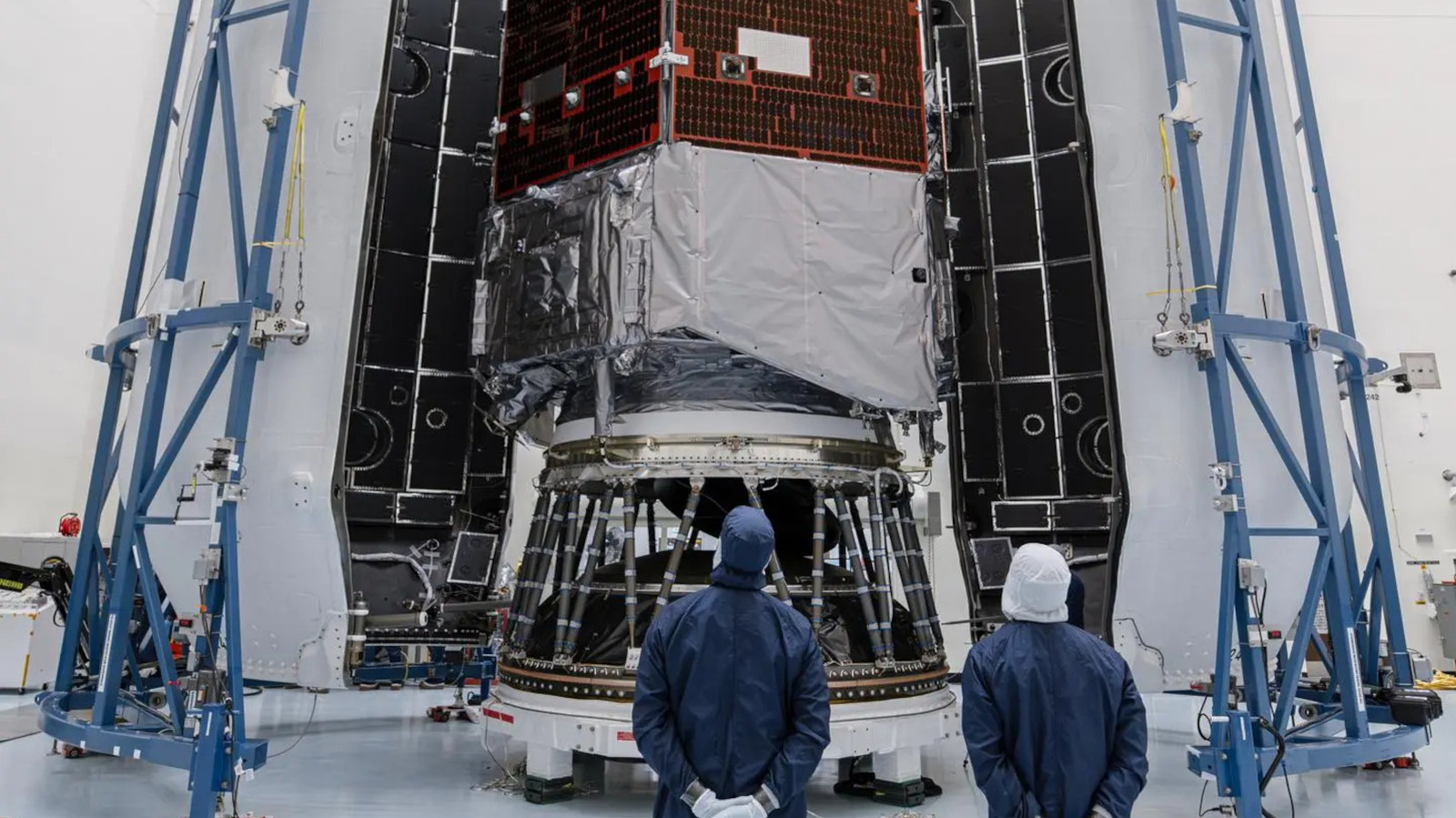
By mid-summer, the physical integration of the observatory reached its climax. The infrared telescope was carefully hoisted and encapsulated within the protective payload fairing of a SpaceX Falcon Heavy rocket. This configuration positions the Roman Space Telescope atop one of the most powerful operational launch vehicles in the world, ensuring the tremendous thrust required to propel the spacecraft out of Earth’s immediate gravitational well and toward its ultimate operating destination.
Pre-Launch Briefings and Contingency Windows
Understanding the immense public and scientific interest surrounding the deployment, NASA has orchestrated a comprehensive media and outreach schedule leading up to the main event. On August 29 at 9:00 AM Eastern Time, NASA will broadcast a specialized mission science briefing featuring key members of the Roman telescope team. This session will be immediately followed by an official prelaunch news conference, providing journalists and researchers with final updates on telemetry, weather forecasts, and mission parameters.
The primary launch window opens on August 30 at 7:26 AM Eastern Time, with live coverage kicking off an hour and six minutes prior at 6:20 AM. Recognizing that aerospace operations are chronically subject to the whims of terrestrial weather and complex system checks, NASA and SpaceX have established a synchronized backup opportunity for August 31 at 7:22 AM Eastern Time, ensuring that mission momentum can be swiftly maintained in the event of a scrub.
Supporting Context & Metrics: Engineering Marvels and Scientific Objectives
To fully appreciate the significance of the Nancy Grace Roman Space Telescope, one must examine the staggering metrics of its design and the specific astrophysical challenges it has been engineered to conquer.
Technological Specifications and Capabilities
The Roman Space Telescope is an engineering marvel designed to maximize observational efficiency. Its primary optical system features a mirror identical in diameter to Hubble’s (2.4 meters), yet its architecture is fundamentally re-engineered to provide a field of view that is at least 100 times greater. This means that a single image captured by the Roman telescope will contain a wealth of astronomical data equivalent to dozens of traditional Hubble observations, drastically reducing the time required to map large regions of the sky.
Equipped with advanced infrared sensors, the observatory is optimized to peer through dense cosmic dust clouds that routinely obscure visible-light instruments. This infrared sensitivity is crucial for observing distant supernovae, mapping the large-scale distribution of galaxies, and identifying cool, faint celestial objects such as brown dwarfs and rogue planets.
Furthermore, the telescope incorporates cutting-edge starlight-blocking technology—specifically, an advanced coronagraph instrument. By artificially eclipsing the blinding light of parent stars, the coronagraph will allow scientists to directly image and analyze faint exoplanets orbiting nearby stars, gathering crucial spectroscopic data to determine their atmospheric compositions and potential habitability.
Confronting Cosmic Mysteries: Dark Energy and Exoplanets
The primary scientific drivers of the Roman mission address two of the most profound inquiries in contemporary science:
- Unraveling Dark Energy: Discovered in the late 1990s, dark energy is the mysterious, repulsive force driving the accelerated expansion of the universe. Making up roughly 68 percent of the total cosmos, its true nature remains entirely unknown. The Roman telescope will employ multiple independent techniques—including wide-field galaxy surveys and the observation of hundreds of distant Type Ia supernovae—to measure the expansion history of the universe across billions of years with unprecedented precision. This data will help physicists determine whether dark energy is a constant property of space or a dynamic field that changes over time.
- Exoplanet Census and Habitability: Beyond cosmology, the mission will serve as a premier exoplanet hunter. By utilizing gravitational microlensing surveys—a technique that detects planets by observing how their gravity bends and amplifies light from background stars—the telescope will discover thousands of new worlds, including planets far from their host stars and small, rocky bodies akin to Earth. This extensive planetary census will provide statisticians and astrobiologists with the robust data sets needed to understand how common solar systems like our own are and what planetary characteristics foster habitable environments.
Official Statements: Honoring a Legacy and Embracing the Future
The impending launch has prompted reflections from leadership across the scientific and aerospace communities, underscoring both the human legacy behind the instrument and the institutional collaboration required to bring it to fruition.
Honoring Nancy Grace Roman: The Mother of Hubble
The decision to name the observatory after Dr. Nancy Grace Roman is a profound tribute to a visionary who spent her career dismantling institutional barriers and shaping the trajectory of modern space astronomy. Serving as NASA’s first Chief of Astronomy from 1961 to 1963, Roman was the first woman to hold an executive position at the space agency.
During her tenure, she tirelessly championed the concept of space-based observatories at a time when most astronomers still relied exclusively on ground-based optical telescopes. Her relentless advocacy, organizational acumen, and strategic planning laid the indispensable groundwork for the development and successful deployment of the Hubble Space Telescope. By bearing her name, the Roman Space Telescope serves as a permanent monument to her foundational contributions, ensuring that her legacy of scientific discovery continues to illuminate the dark corners of the universe.
Institutional Collaboration and Agency Remarks
The realization of the Roman Space Telescope is the culmination of decades of international and interdisciplinary collaboration, uniting NASA’s Goddard Space Flight Center in Greenbelt, Maryland, with the Jet Propulsion Laboratory (JPL) in Southern California, the Space Telescope Science Institute (STScI) in Baltimore, and numerous industrial and academic partners worldwide.
In recent mission updates, NASA leadership has emphasized the transformative impact the observatory will have on our collective cosmic perspective. Agency spokespersons have noted that the integration of the spacecraft into the SpaceX Falcon Heavy fairing marks the transition from years of meticulous assembly to the execution phase of humanity’s next great astronomical quest. The seamless partnership between NASA and SpaceX highlights the growing reliance on commercial heavy-lift capabilities to execute complex, high-stakes planetary and deep-space missions safely and efficiently.
Future Outlook: A New Epoch of Discovery
As the final countdown begins at the Kennedy Space Center, the broader astronomical community is already looking ahead to the operational phase of the Roman Space Telescope mission. Once the observatory reaches its designated vantage point—orbiting the Sun-Earth Lagrange point 2 (L2), approximately one million miles away from Earth—it will undergo a comprehensive commissioning phase, calibrating its instruments and testing its intricate optics.
The implications of the mission extend far beyond the immediate data returns expected in its initial months of operation. The multi-petabyte archives generated by the Roman telescope will serve as a foundational resource for astrophysicists, cosmologists, and data scientists for generations. By providing deep, wide-field surveys of unprecedented fidelity, the telescope is expected to uncover unexpected cosmic phenomena—anomalies, transient events, and structural formations that theorists have not yet even hypothesized.
In an era defined by rapid technological acceleration and profound existential questions about our place in the cosmos, the Nancy Grace Roman Space Telescope stands as a testament to human curiosity and ingenuity. As it roars skyward aboard the Falcon Heavy on August 30, it will carry with it the hopes of scientists worldwide who seek to measure the invisible forces shaping our reality and to find, amid the infinite expanse of the stars, answers to the oldest questions asked by humanity.