Executive Overview
In the spring of 2023, the streets of Paris transformed into a living theater of civil disobedience. What began as organized, union-led resistance against President Emmanuel Macron’s controversial pension reforms—specifically the elevation of the retirement age from 62 to 64—erupted into a wave of spontaneous, youth-driven uprisings. As tear gas choked the iconic boulevards and riot shields clashed with burning barricades, millions of viewers across the globe did not watch these historic events through traditional evening news broadcasts. Instead, they experienced them in real-time, unedited, and raw, through the small screen of a smartphone.
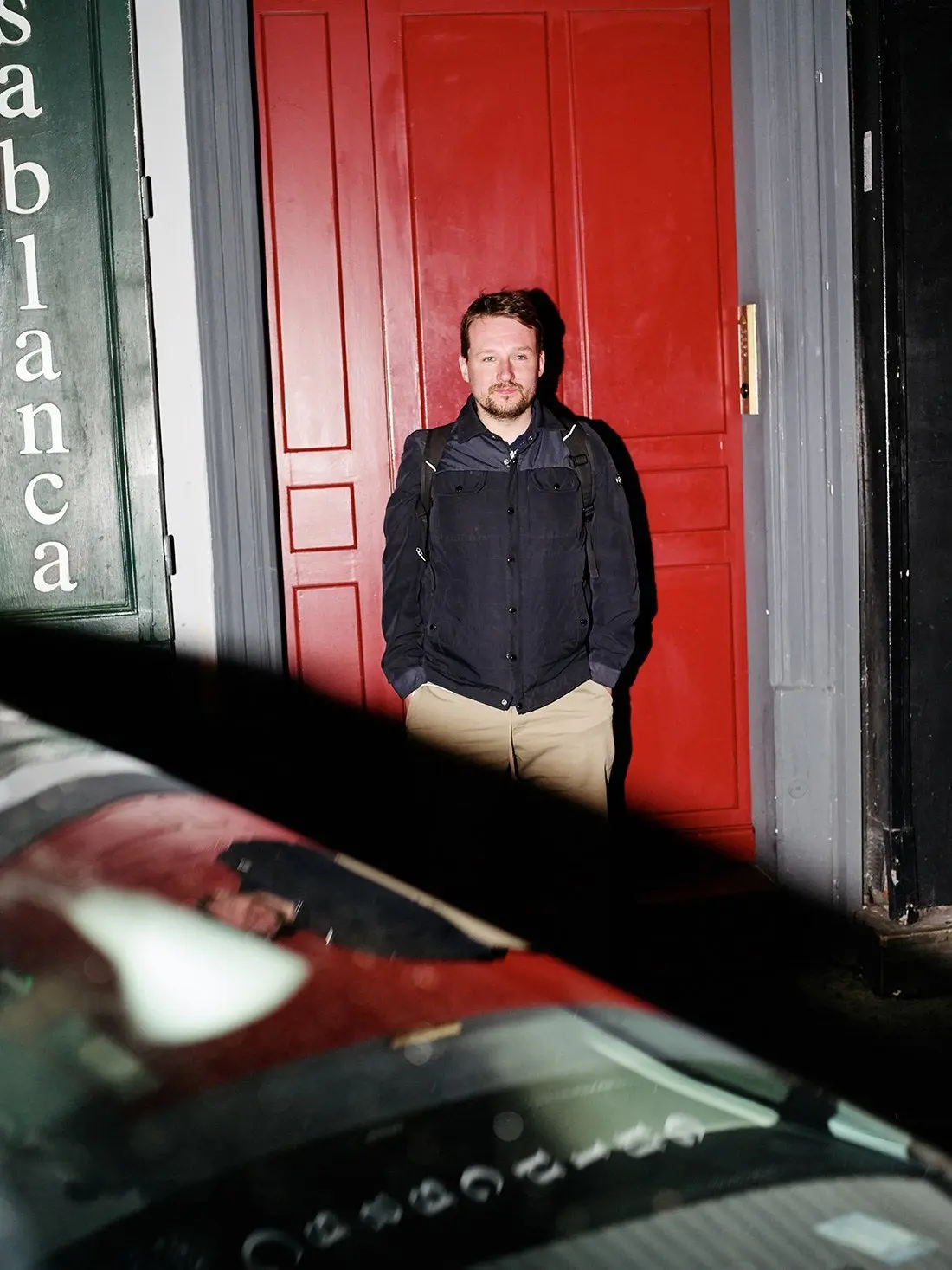
At the center of this paradigm shift in digital news consumption is Rémy Buisine, a 32-year-old video journalist for the French online media outlet Brut. Merely blending into the crowd in a navy puffer jacket and blue jeans, Buisine has become an improbable yet indispensable icon of modern journalism. His marathon, multi-hour livestreams from the frontlines of the French protests—spanning platforms like TikTok, Facebook, and the Brut app—have redefined how a generation consumes breaking news.
This deep dive examines the anatomy of Buisine’s ground-level reporting during a pivotal day of unrest on April 6, 2023. It explores the mechanics of his hyper-engaging style, the socioeconomic context of France’s youth movement, the personal toll of chronic frontline exposure, and the broader implications of live-streamed journalism in an era of deep democratic distrust.
Detailed Chronology: Anatomy of a Frontline Protest
The spring mobilization of 2023 was characterized by a combustible mix of institutional anger and digital connectivity. To understand Buisine’s impact, one must trace the literal and figurative geography of a single day on the Paris protests’ volatile frontlines.
The Gathering Storm: Pre-March Preparations
By the time Buisine met up with press observers on the afternoon of April 6, the demonstration had already been surging for half an hour. Estimates of the crowd size varied wildly—ranging from 57,000 according to police tallies to upwards of 400,000 claimed by union organizers. Yet Buisine walked among them without his neon-yellow press armband initially visible, seamlessly integrating into the massive populace of blue jeans and jackets.
Before the chaos truly commenced, Buisine meticulously prepared for the environmental hazards of modern civil unrest. Outside the Montparnasse station near the Brut offices, he equipped himself with the tools of the modern conflict journalist: hermetically sealed safety goggles, a gas mask slung across his neck, and a specialized tear-gas decontaminant spray tucked safely into his jacket pocket. Juggling two phones—one dedicated to professional communications and social media updates, the other for personal use—he moved through the swelling crowds while managing a relentless stream of interruptions from fans, volunteer medics, and peers.
The First Salvos at Boulevard du Montparnasse
At 3:29 p.m., a loud, unidentified explosion echoed down the boulevard. The crowd immediately responded with a mix of cheers and jeers, chanting anti-police slogans with distinct French accents. As Buisine pushed toward the vanguard, knots of black-clad, masked youths loitered near the Vavin metro station exits. Just feet away, near the historic Café de la Rotonde, a line of gendarmerie—a militarized branch of the French law enforcement—formed a solid wall across the boulevard with riot shields raised.
Moments later, at 3:37 p.m., the gendarmerie fired their first unmistakable warning shots. The atmosphere instantly crystallized into high tension. While segments of the crowd retreated, Buisine deliberately pushed forward, phone in hand, capturing the sudden mobilization of black-clad youths dismantling infrastructure and banging metal barricades against the asphalt. As police protocol shifted toward active dispersion, the first tear gas canisters arched into the sky. Buisine was already broadcasting live.
Escalation, Kettling, and the Place d’Italie Finale
As the day progressed into evening, the violence and destruction escalated. Buisine filmed protesters breaking into properties after residents threw objects from windows, and captured the alarming moment the awning of the Café de la Rotonde burst into flames. For roughly half an hour, he found himself trapped inside a battered bank surrounded by law enforcement units.
By nightfall, the center of gravity shifted to the Place d’Italie. Here, police implemented a classic crowd-control tactic known as "kettling," trapping the most defiant demonstrators at the entrance of a metro station. In a surreal display of digital-age celebrity, the trapped protesters began chanting in Buisine’s honor: "Ah Rémy, allez, allez, allez!"
Even after police released the crowd and barricades of burning wood and garbage bins were erected along Avenue d’Italie, Buisine maintained his post. He conducted impromptu interviews with French deputies who had arrived without their traditional tricolor sashes, before pivoting back to his audience to thank new followers by name. At 10:54 p.m.—after seven and a half hours on his feet and more than 28,000 recorded steps—he finally terminated his livestream. On TikTok alone, 1.8 million viewers had tuned in to watch the culmination of the day’s events.
Supporting Context & Metrics: The Rise of Digital-First News
The meteoric rise of Brut and Rémy Buisine is not merely a testament to individual endurance; it represents a fundamental shift in media consumption habits, particularly among demographics alienated by traditional institutional journalism.
The Numbers Behind the Streams
The scale of Buisine’s reach during the 2023 pension protests was unprecedented for French digital media:
- Audience Spikes: Individual livestreams routinely attracted concurrent viewerships of up to 70,000 people at their peak, with cumulative views scaling into the millions per broadcast (e.g., 1.8 million on TikTok for a single session).
- Follower Growth: Over the span of a single month at the height of the protests, Brut’s TikTok account surged by one million followers, cementing its total audience at over 4.2 million.
- International Appeal: Buisine’s audience extended far beyond France. Global viewers frequently demanded English translations, though Buisine’s linguistic repertoire remained largely limited to announcing that he was broadcasting "live in Paris."
From Periscope Pioneers to Institutional Force
Buisine’s journey into journalism defies conventional elite pathways. Growing up in a working-class village in northeastern France without familial connections to media, and struggling with traditional academic metrics, he attended a horticultural technical high school. He initially managed social media accounts for professional soccer players before migrating to Paris in 2013 to work as a community manager for radio stations.
In 2015, capitalizing on the nascent livestreaming application Periscope, Buisine began broadcasting the contentious El Khomri labor law protests in his spare time. He learned the craft on the ground—studying audience reactions in real-time and conferring with veteran journalists stationed at the barricades.
When Brut was founded in 2016 as a digital-native, social-media-exclusive outlet, Buisine was brought on as a founding member. Initially, the French political establishment viewed the platform with deep skepticism, wary of engaging on decentralized digital networks. By 2020, however, that dynamic had inverted entirely: Buisine led a landmark two-and-a-half-hour livestreamed interview with President Emmanuel Macron himself.
The Psychology of Engagement
What drives millions to watch hours of chaotic, tear-gas-filled street reporting? According to young activists like 18-year-old Ritchy Thibault, the appeal lies in Buisine’s radical willingness to listen. Unlike traditional news packages that distill complex grievances into 30-second soundbites, Buisine routinely grants ordinary protesters ten to twenty minutes of uninterrupted airtime to articulate their socioeconomic frustrations.
Furthermore, the interactive nature of livestreams creates a parasocial bond of shared peril. Viewers witness Buisine absorbing the realities of frontline reporting—experiencing tear gas, dodging projectiles, and occasionally enduring physical violence from law enforcement despite press protections. Ironically, whenever Buisine is directly targeted or injured during a broadcast, audience metrics skyrocket. The comment sections transform into digital support groups, punctuated by persistent, lighthearted fan demands for "a girlfriend for Rémy," contrasting sharply with the grim reality on the ground.
Official Statements and Institutional Tensions
The friction between street-level digital journalism and institutional power structures highlights the broader political crisis in France under President Macron.
The Democratic Deficit
The catalyst for the intensive, youth-heavy phase of the 2023 protests was not merely the pension reform bill itself—raising the retirement age from 62 to 64—but the manner in which it was enacted. On March 16, when the French government utilized Article 49.3 of the Constitution to force the legislation through the National Assembly without a parliamentary vote, it galvanized a new demographic.
Over 6,000 people spontaneously converged on the Place de la Concorde. For many under the age of 30, this bypass of legislative procedure was viewed as an authoritarian subversion of democracy. Buisine’s coverage captured this exact sentiment, giving voice to citizens who felt systematically ignored by traditional political elites.
Policing the Press and Protesters
The presence of journalists on the frontlines has repeatedly placed media organizations at odds with law enforcement agencies. Despite legal protections safeguarding accredited press members during civil unrest, journalists covering French protests frequently report instances of targeted aggression, including truncheon blows and indiscriminate exposure to tear gas.
While Buisine maintains a pragmatic approach—focusing his lens squarely on police actions and running toward conflict zones rather than away from them—his archives serve as an unvarnished historical record of state-citizen friction. The Gilets Jaunes (Yellow Vests) movement of 2018 left deep psychological scars on Buisine, who routinely witnessed catastrophic injuries, including open skull fractures and lost limbs. In contrast, while the 2023 pension protests featured intense property damage and violent clashes, they unfolded against a backdrop of established digital documentation networks that ensured no police overreach or protester grievance went unrecorded.
Future Outlook: The Toll and Evolution of Live Journalism
As the adrenaline fades from the Parisian boulevards, the physical and psychological toll on frontline digital journalists becomes increasingly apparent.
The Exhaustion of Perpetual Connection
For Buisine, the boundary between professional duty and personal existence has effectively dissolved. Operating largely without a family life—single, living alone, and working without tracked hours—his life is entirely subordinated to the news cycle.
A typical day during a crisis period defies normal human limits: finishing a high-intensity, seven-hour livestream past 10:30 p.m., enduring an adrenaline-fueled insomnia that delays sleep until 3:00 or 4:00 a.m., and waking up by 9:30 a.m. to lead editorial meetings as Brut’s head of short-form content. Even when sitting down to eat after inhaling copious amounts of tear gas—where physical exhaustion leaves him barely able to stand—he continues editing and posting clips to Instagram and TikTok.
Beyond Paris: The Expanding Frontier of Mobile Reporting
The model pioneered by Buisine and Brut has permanently altered the journalistic landscape. The illusion that major historical events can be adequately curated solely through delayed, evening broadcasts has been shattered by an audience that demands radical transparency and immediate presence.
The durability of this reporting style was underscored immediately following the conclusion of the Paris protests. After finally securing his first full day off in three weeks, a catastrophic building collapse triggered by an explosion in Marseille prompted Buisine to immediately pack his bags, board a train, and resume livestreaming from the disaster zone.
As long as civil unrest, political friction, and urban crises continue to unfold, journalists like Rémy Buisine will remain tethered to their dual-phone setups and gas masks—streaming the raw, unfiltered pulse of society directly into the palms of millions.