Executive Overview
At the intersection of glittering illusion and harrowing reality lies Pretty Babies, the arresting, uncompromising feature directorial debut from 31-year-old filmmaker Tyler-Marie Evans. Premiering to a rapturous—and occasionally polarized—audience at the Edinburgh International Film Festival, the film marks the arrival of a distinctive new auteur whose vision has been forged in the crucible of extreme isolation and profound cinematic awakening.
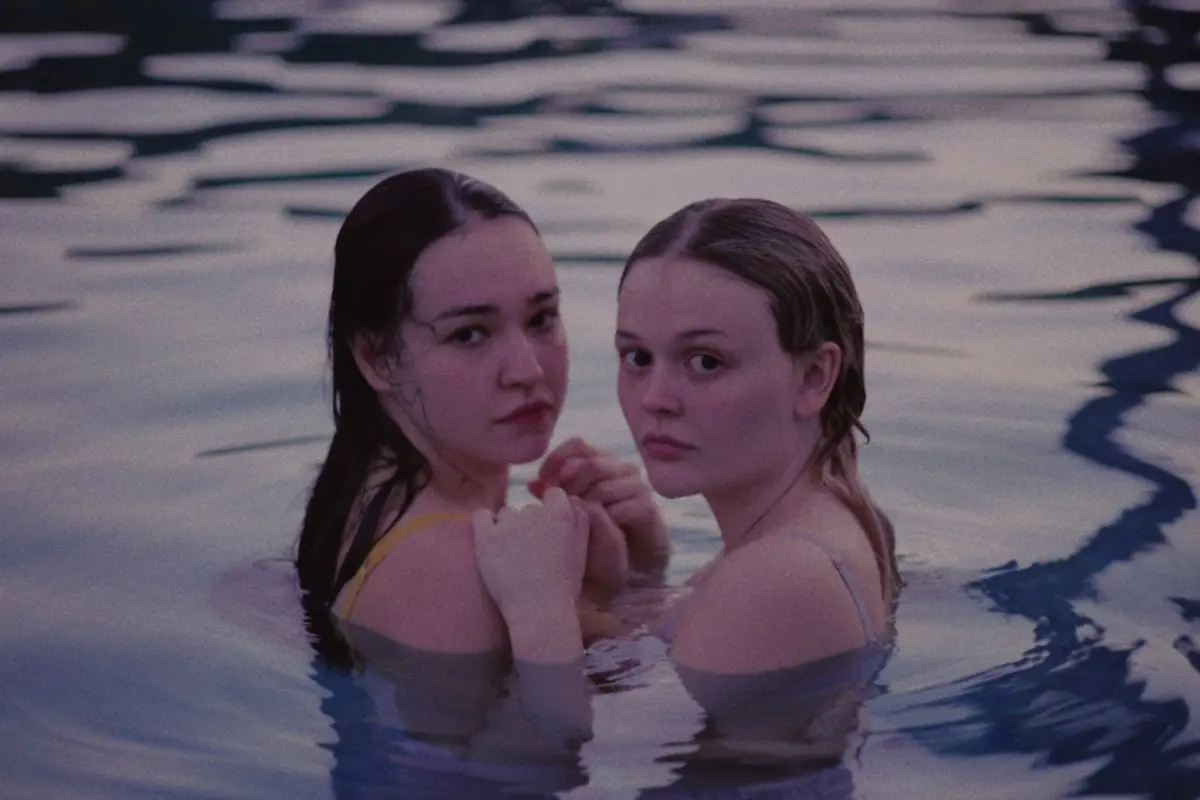
Described by its creator as a collision between Larry Clark’s Thirteen and Sofia Coppola’s The Virgin Suicides, Pretty Babies is a hypnotic, Malick-ian odyssey through toxic friendships, consuming cinephilia, and the pervasive, systemic threat of violence against women. The narrative follows two schoolgirls, Marie (Emily Alyn Lind) and Luna (Sadie Stanley), whose lives are upended after a brutal act of sexual violence sets them on a desperate, neon-lit road trip to Hollywood. Instead of the Golden Age stardom they romanticize, they are pulled into the shadows of survival sex work, guided—and imperiled—by older strangers played by Madelaine Petsch and Ashley Benson.
For Evans, the film’s exploration of lost identity, the "broken female gaze," and the collision between adolescent fantasy and brutal reality is deeply personal. Raised in a severe, restrictive Texas cult where she was prohibited from interacting with the outside world or watching any media produced after 1960, Evans views cinema not merely as a medium of expression, but as the literal instrument of her salvation. In this comprehensive feature, we examine the making of Pretty Babies, the meticulous research underpinning its portrayal of survival sex work, and the unwavering resolve of a filmmaker poised to reshape contemporary independent cinema.
Detailed Chronology: From a Restricted Texas Childhood to the Edinburgh World Premiere
The Celluloid Sanctuary
Tyler-Marie Evans’s journey to the director’s chair is nothing short of cinematic. Growing up in a hyper-restrictive religious community in Texas, her universe was rigidly defined and severely policed. "I was in this cult-y church," Evans recalls, reflecting on an adolescence devoid of standard social development. "I wasn’t allowed to talk to people outside the church. My sense of life was restricted."
Under the draconian rules of her upbringing, popular culture was strictly forbidden, and the moving image was heavily censored. She was barred from viewing any film made after 1960, effectively cutting her off from decades of social progress and contemporary storytelling.
The turning point came at age 19 when Evans summoned the courage to break away from the church entirely. Suddenly thrust into a vast, terrifyingly unfamiliar world, she sought refuge in the one place that had offered a forbidden glimpse of humanity: the local cinema.
"I left the church when I was 19 and decided that every Sunday I’d go to the movies," she says. "The Angelika Theatre in Dallas became my salvation." Hours spent absorbing classic Hollywood icons, foreign art-house masterpieces, and modern independent cinema laid the foundational grammar for her future career as a filmmaker.
The Genesis of Pretty Babies
Through her twenties, Evans hustled through a series of disparate jobs—some tethered to the film industry, others entirely removed from it—while tirelessly writing scripts and directing short films on the side.
The spark for Pretty Babies ignited during the quiet, isolating months of the 2020 COVID-19 lockdown. While folding clothes, a striking, haunting image crystallized in her mind’s eye: "In my mind, it was these two girls hitchhiking on the side of a dusty road, and they have this sweaty, gross hair with glitter stuck in it. And I was like, ‘They’re smiling with their little thumbs because they’re replaying an Old Hollywood movie in their head.’"
Initially pitched in 2023 as "when Spring Breakers meets The Virgin Suicides," the project evolved into an even more intense psychological exploration. Evans leaned into the philosophical, satirical weight of Harmony Korine’s work while retaining the tragic lyricism of Sofia Coppola. By the time production commenced, backed by heavyweight producers Jordan Wagner and Christine Vachon, the film had solidified into its definitive form: an immersive, deeply subjective dive into Marie’s fractured consciousness.
Supporting Context & Metrics: Deconstructing the "Broken Female Gaze"
Cinematic Form and Narrative Structure
Pretty Babies deliberately defies traditional linear storytelling, functioning instead as a stream-of-consciousness psychological map. The film perpetually leaps backward and forward in time, oscillating fluidly between disparate film styles, vibrant color palettes, traumatic flashbacks, glitzy cinematic illusions, and raw archival footage of black-and-white movie icons like Rita Hayworth and Cary Grant.
Evans purposefully manipulates cinematic grammar to mirror her protagonist’s psychological state. When Marie flirts with a casual acquaintance, the frame abruptly flashes to a clip of Cary Grant, visualizing her habit of superimposing Old Hollywood tropes onto mundane teenage interactions. Joyous, drug-infused hangouts with her best friend are juxtaposed against self-shot audition tapes that capture pure, unadulterated play.
Crucially, Evans subverts audience expectations during moments of high trauma. When Marie endures a harrowing rape scene, the camera refuses to indulge in exploitative cutaways; instead, the viewer’s gaze is directed upward toward a faded, peeling poster of Gilda on the wall—a stark reminder of the protagonist’s desperate psychological dissociation. In contrast, during painful telephone calls, the lens lingers relentlessly on Marie’s tear-stained, vulnerable face.
"Something I want to explore, not just in this movie but in my career in general, is how a character views their dream world through that lens, and then having a stark contrast with reality," Evans explains. "You show a character having these hopes and dreams, and then we feel that crash… In my editing, I linger for a few beats longer in the characters’ dreams, even though we have to come back to reality."
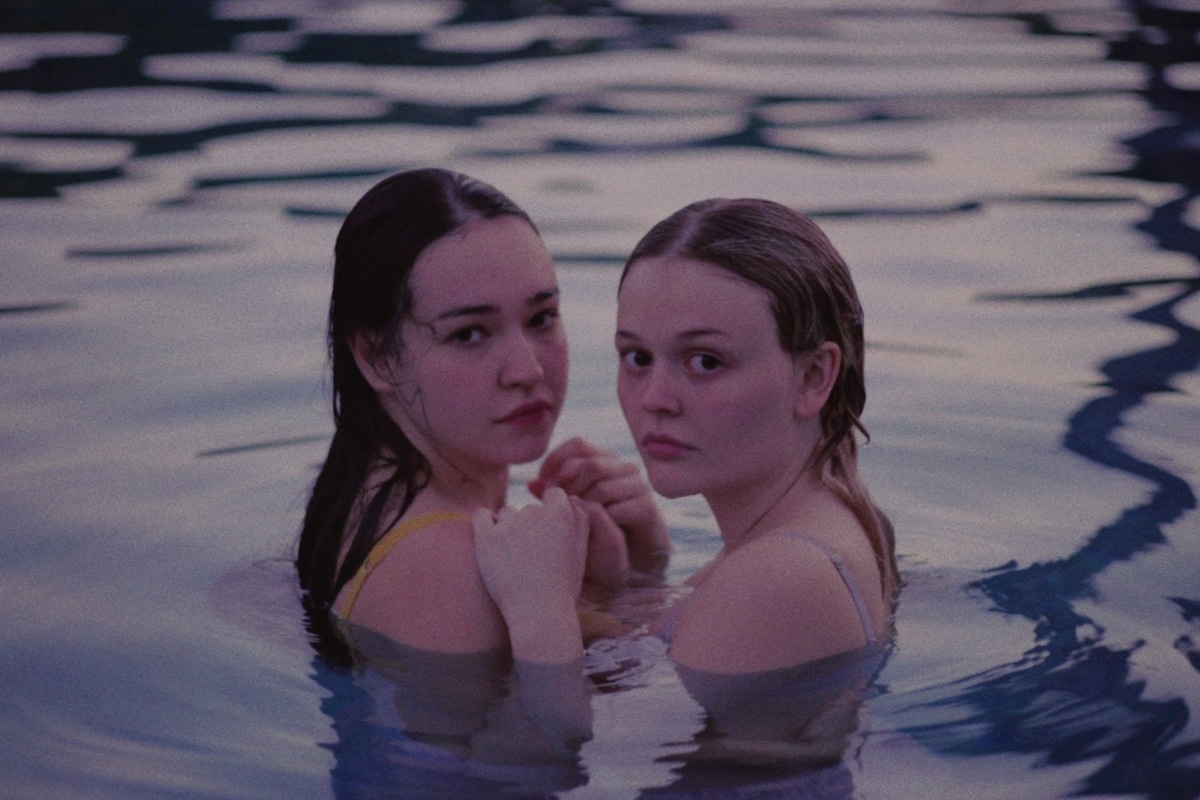
She characterizes the film’s distinct perspective as a "broken female gaze"—the internal landscape of a young girl who has fundamentally lost her sense of self.
Grounding the Narrative in Reality
While the film is heavily stylized, its depiction of the sex industry is rooted in extensive, grassroots research. Seeking to avoid the superficial tropes often found in Hollywood depictions of sex work, Evans immersed herself in real-world spaces, networking through friends and visiting strip clubs across New Mexico, Oklahoma, and Los Angeles.
These interactions exposed her to the complex duality of the industry: the remarkable strength, resilience, and camaraderie of the women she met, balanced against profound, systemic heartbreak.
"I met someone in Tulsa, Oklahoma who’d been in the industry for 13 years," Evans recalls. "She said most women get into sex work because of rape or survival. That’s why the rape is such a specific moment in the film. I wanted audiences to understand that Marie is losing control of her body, and that propels her into losing control of her identity."
Evans draws a sharp distinction between the interiority of adult sex workers and that of underage girls thrust into the trade out of desperation. Her research revealed an alarming systemic vulnerability: an underground economy that actively targets minors who, due to trauma and fear, are unlikely to report the severe violence inflicted upon them.
Official Statements & Industry Reception
The uncompromising nature of Pretty Babies inevitably positions it as a challenging work. Featuring scenes of raw sexual violence alongside cocaine-fueled adolescent euphoria, the film has sparked intense debate among critics and festivalgoers alike. However, backed by visionary producers Jordan Wagner and legendary indie producer Christine Vachon (co-founder of Killer Films and producer of Boys Don’t Cry), Evans felt steadfastly empowered to preserve her uncompromising vision.
"Jordan pushed for the authenticity, and Christine made Boys Don’t Cry at a very unpopular time," Evans notes, reflecting on the institutional support that kept her vision intact. "It felt like confirmation that this film had to be made. People will shame and point their finger at sex work. I’m not saying that sex work is the issue; I’m saying that violence in and outside of the industry is the issue. Violence on women is the issue—and yet we try to blame it on an industry."
Despite the film’s dark subject matter and polarizing elements, its world premiere at the Edinburgh International Film Festival yielded a profoundly emotional moment of connection. Following the screening, Evans was deeply moved when a line of young girls—estimated to be between 14 and 17 years old—waited patiently to share their reactions.
"This one girl came up to me, holding her mother’s jacket, and she goes, ‘This is my favourite film I’ve ever seen,’" Evans beams, visibly touched. "It made me so happy. I’m so glad this film touches people. I want it to speak to these young girls. It starts a conversation about their own identities that I’m excited for them to have."
Future Outlook: A Prolific Career Taking Flight
If Pretty Babies serves as Tyler-Marie Evans’s explosive introduction to international cinema, it is merely the opening salvo in what promises to be a remarkably prolific career.
Operating at a blistering pace to make up for lost time, Evans wrapped production on her second feature film, I Wish I Never Had Sex with Him—another vehicle starring Madelaine Petsch—just weeks prior to her Edinburgh appearance. Looking further ahead, she has already slated her third feature for March 2027: Girls in London, 1999, a self-penned erotic thriller she describes intriguingly as "if Eyes Wide Shut was from Nicole Kidman’s perspective."
In the immediate term, Pretty Babies is securing international distribution, with Wagner Entertainment managing worldwide sales. As the film prepares to find its wider audience, Evans remains fiercely protective of its core artistic ethos.
"It’s playing with the specificity of these girls’ internal worlds, against the landscape of sex work," she concludes. "It’s not a judgement on sex work at all. I love seeing the love for this movie. I think it’s going to find its audience."
For a filmmaker who spent her formative years locked away from the cultural conversation, Tyler-Marie Evans is no longer just watching the flickering light on the silver screen—she is authoring it, frame by uncompromising frame.